Why long commutes reward consistent habits
A long suburban commute is repetitive by nature. The same highway on-ramp, the same school-zone crawl, the same merge before the bridge. That repetition works against you when habits are poor, but it works in your favor when habits are dialed in. Small inefficiencies compound daily. So do small improvements.
The U.S. Department of Energy has documented that aggressive driving, speeding, rapid acceleration, and hard braking can lower gas mileage by roughly 15 to 30 percent on the highway and 10 to 40 percent in city conditions. On a 30-mile round trip, those numbers translate into real money by the end of the month. For a fuller picture of what your commute costs in total, see what your daily commute actually costs.
The habits below are grounded in how engines and fuel systems actually work, not folklore. Each one is worth building into your routine because the payoff accumulates over hundreds of drives.
Driving habits with a measurable effect
How you operate the throttle and brakes has more direct impact on fuel economy than most vehicle upgrades. The engine burns the most fuel during hard acceleration, and every hard stop wastes the momentum it took fuel to build. Smooth, gradual inputs keep the engine in more efficient load ranges.
Accelerate gradually from a stop rather than pressing the throttle hard
Hard acceleration forces the engine into a high-load state where it consumes fuel at its fastest rate. Gradual acceleration keeps the engine in lower load ranges, improving combustion efficiency. Over dozens of daily starts, the difference in fuel consumed is not trivial.
Anticipate stops and coast down early instead of braking late
Braking converts forward momentum into heat rather than allowing it to coast into the next segment of travel. Lifting off the throttle 200 to 300 feet before a red light or known stop wastes less energy and reduces brake wear as a secondary benefit.
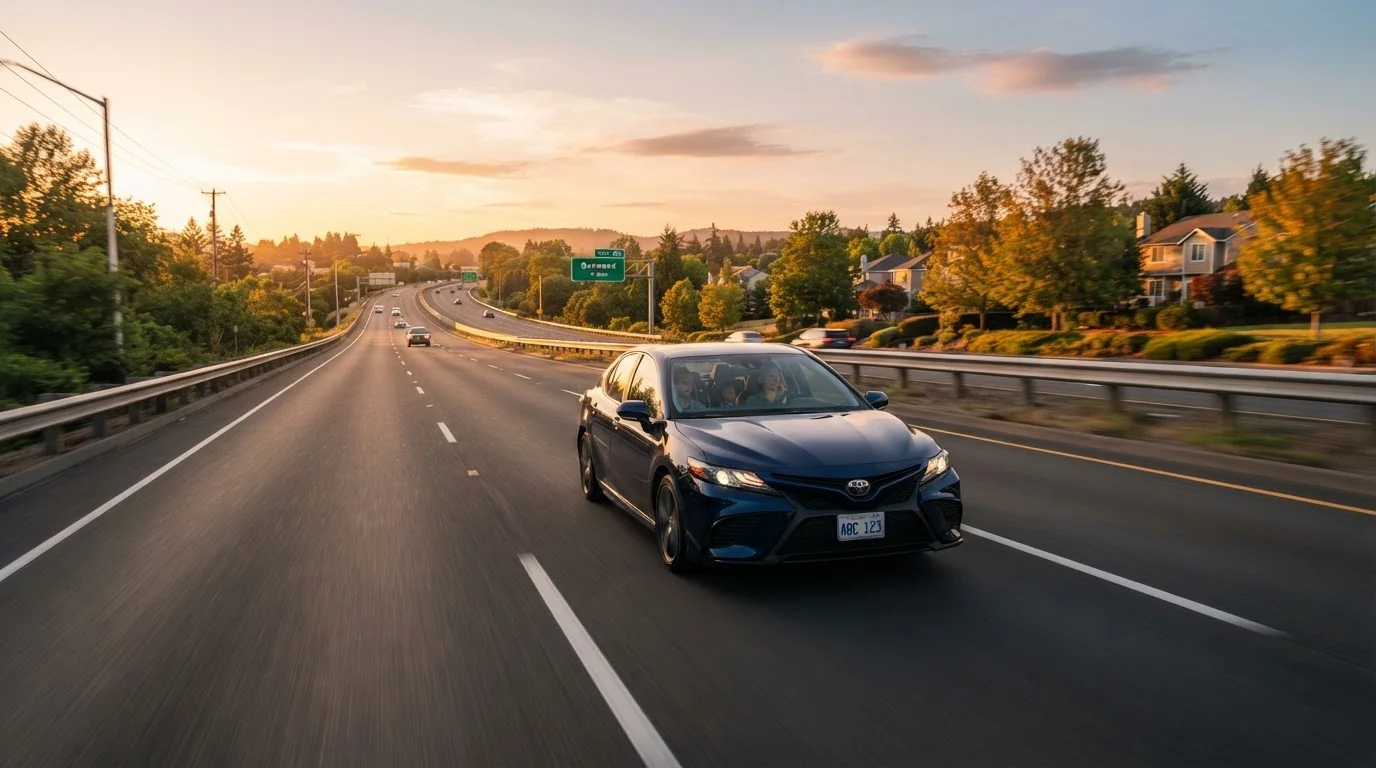
Keep highway speed consistent using cruise control where road conditions allow
Speed fluctuations on the highway, even small ones, cause repeated cycles of acceleration that burn extra fuel. Cruise control maintains a steadier throttle input than most drivers manage manually on flat terrain.
Remove cargo and equipment from the vehicle when it is not in use
Unnecessary weight requires more energy to accelerate and maintain speed. Aerodynamic accessories like roof racks increase drag even when unloaded, adding to fuel consumption at highway speeds.
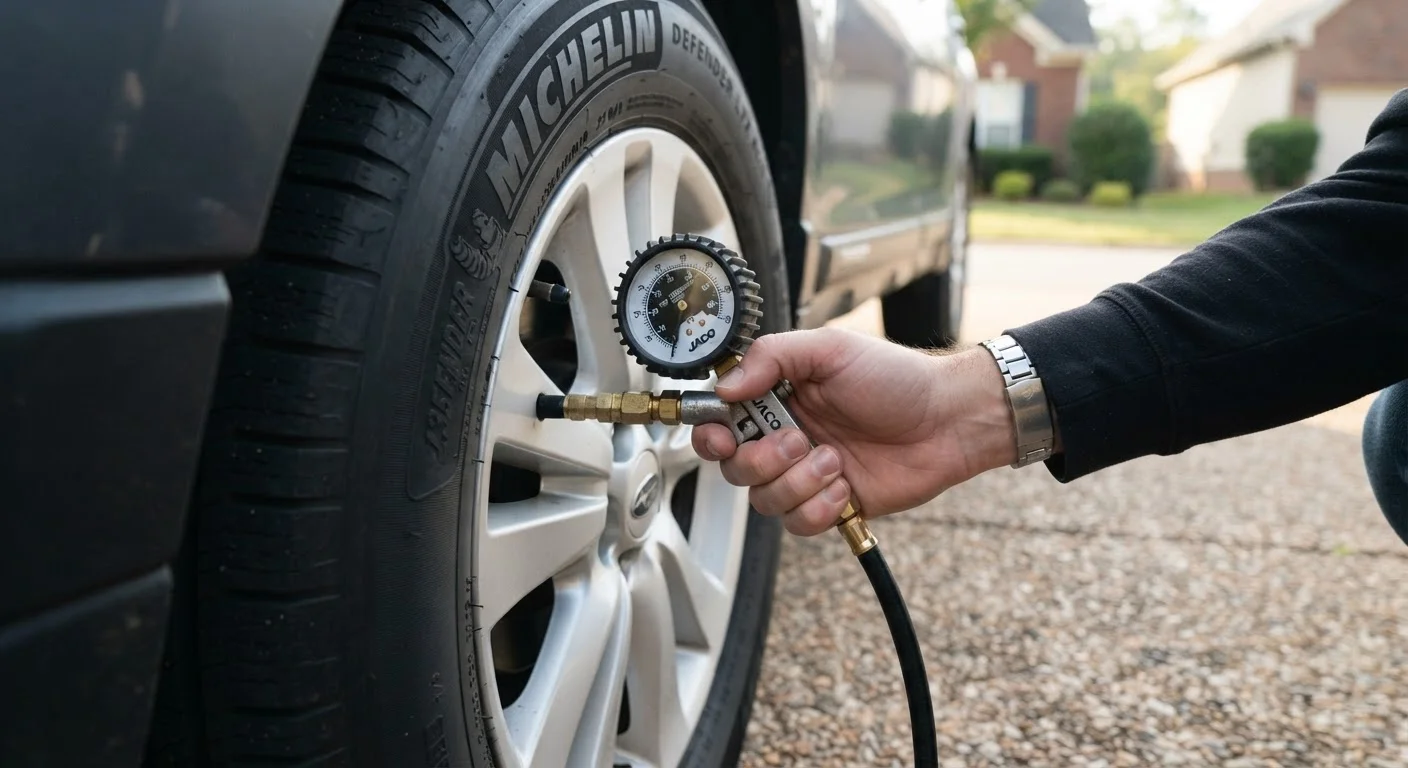
Check and correct tire pressure monthly, before long drives, and after temperature drops
Underinflated tires have a larger contact patch and more rolling resistance, which the engine must overcome continuously. Tire pressure drops roughly 1 psi for every 10-degree Fahrenheit drop in ambient temperature, so seasonal changes require active monitoring.
Speed also matters significantly. Most gasoline-powered vehicles reach peak fuel efficiency somewhere between 45 and 60 mph. Above that range, aerodynamic drag increases sharply, and fuel consumption rises. Dropping from 75 mph to 65 mph on a highway stretch typically improves fuel economy by a measurable margin. For a deeper explanation of how throttle inputs interact with your transmission and engine load, see the science of efficient driving.
Maintenance checks that protect efficiency
A well-maintained vehicle burns fuel the way its engineers intended. When small items slip, efficiency slips with them.
Tire pressure is the most commonly overlooked item. The U.S. Department of Energy estimates that tires underinflated by just 1 psi reduce fuel economy by about 0.2 percent per tire. On a vehicle with all four tires running 5 psi low, that adds up. Check pressure monthly when the tires are cold, using the figure on the door jamb sticker rather than the maximum printed on the tire sidewall. For a full checklist of routine checks worth tracking, see small checks that protect your fuel budget.
Air filters, spark plugs, and motor oil grade also affect combustion efficiency. A clogged air filter restricts airflow to the engine. Using a motor oil viscosity heavier than the manufacturer specifies increases internal friction. Neither failure is dramatic on its own, but both reduce the mpg you actually get versus the mpg your vehicle is rated for. These topics are part of a broader car maintenance routine worth reviewing seasonally.
Route and timing choices that cut fuel waste
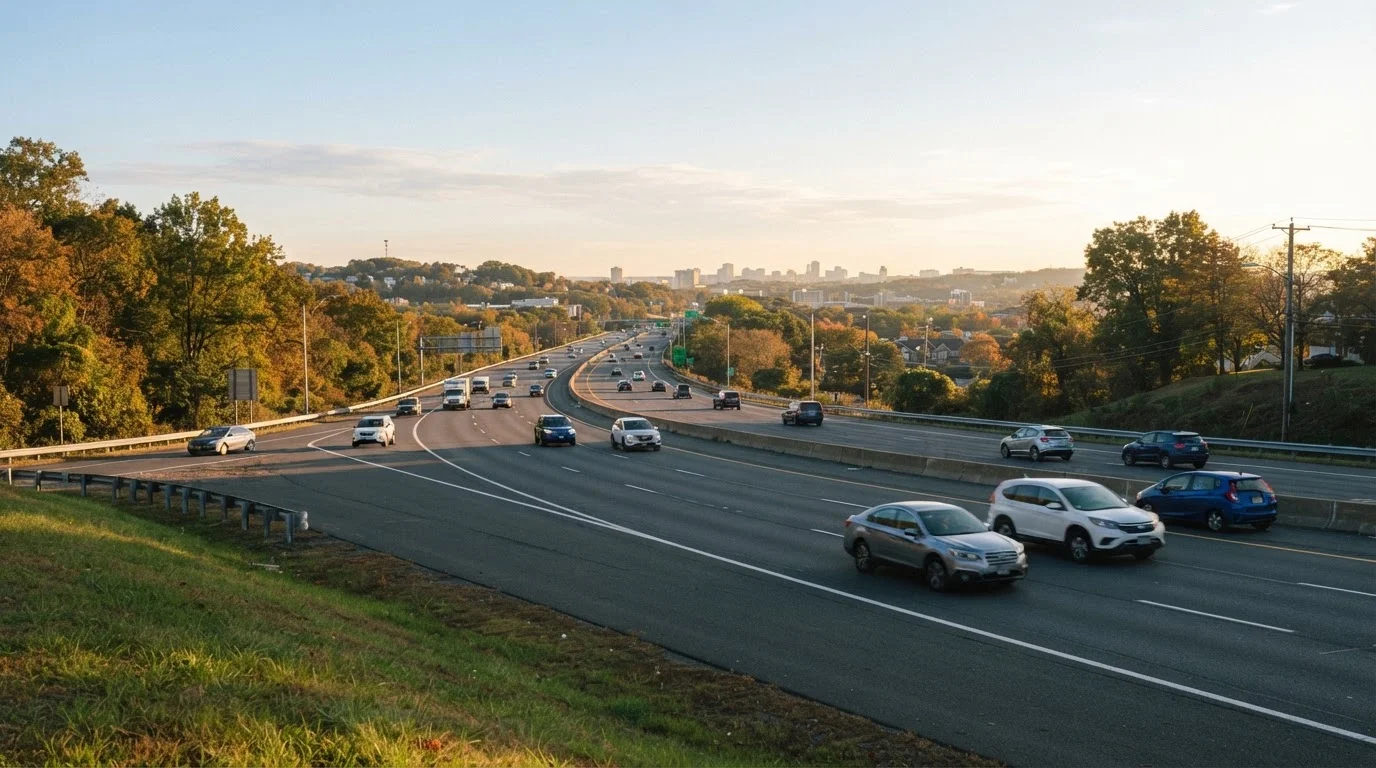
Stop-and-go traffic is a fuel drain that driving technique alone cannot fully offset. Every full stop from highway speed and subsequent re-acceleration costs far more fuel than steady-speed cruising. Where you can choose between a slightly longer route with consistent speed and a shorter route through heavy signals, the longer route often wins on fuel consumption.
Leaving earlier reduces the likelihood of sitting in peak congestion. It also reduces the temptation to accelerate aggressively to make up lost time. Leaving five minutes earlier is a low-cost adjustment with compounding benefits on both fuel and commute stress.
If your schedule allows any flexibility, checking real-time traffic before departure and choosing a departure window that avoids the worst bottlenecks is a practical option. Navigation apps that account for current traffic conditions help avoid adding unnecessary miles to an already long route.
Load, climate control, and other variables
Vehicle weight affects fuel consumption directly. The EPA notes that every extra 100 pounds in a vehicle can reduce fuel economy by about 1 percent. Roof cargo carriers add aerodynamic drag even when empty. If a roof rack or cargo box is not needed for a particular week, removing it is a straightforward fuel-saving step.
Air conditioning adds load to the engine and burns additional fuel. At highway speeds, the fuel cost of running the AC is generally lower than the drag penalty from open windows. In slow suburban driving below roughly 40 mph, open windows are typically more efficient. Seat-of-the-pants judgments are imprecise here, so the practical approach is to use AC conservatively: pre-cool the cabin briefly rather than running it at maximum output for the full commute.
Some commuters also explore carpooling versus driving solo as a way to share fuel costs across the route. That option has trade-offs in flexibility but can reduce per-person fuel expenditure substantially on long routes. Before acting on any of these ideas, a practical fuel efficiency primer covers the foundational concepts worth understanding first. And if you have encountered claims about miracle fuel additives or other shortcuts, fuel-saving claims that do not hold up separates the evidence from the marketing.