
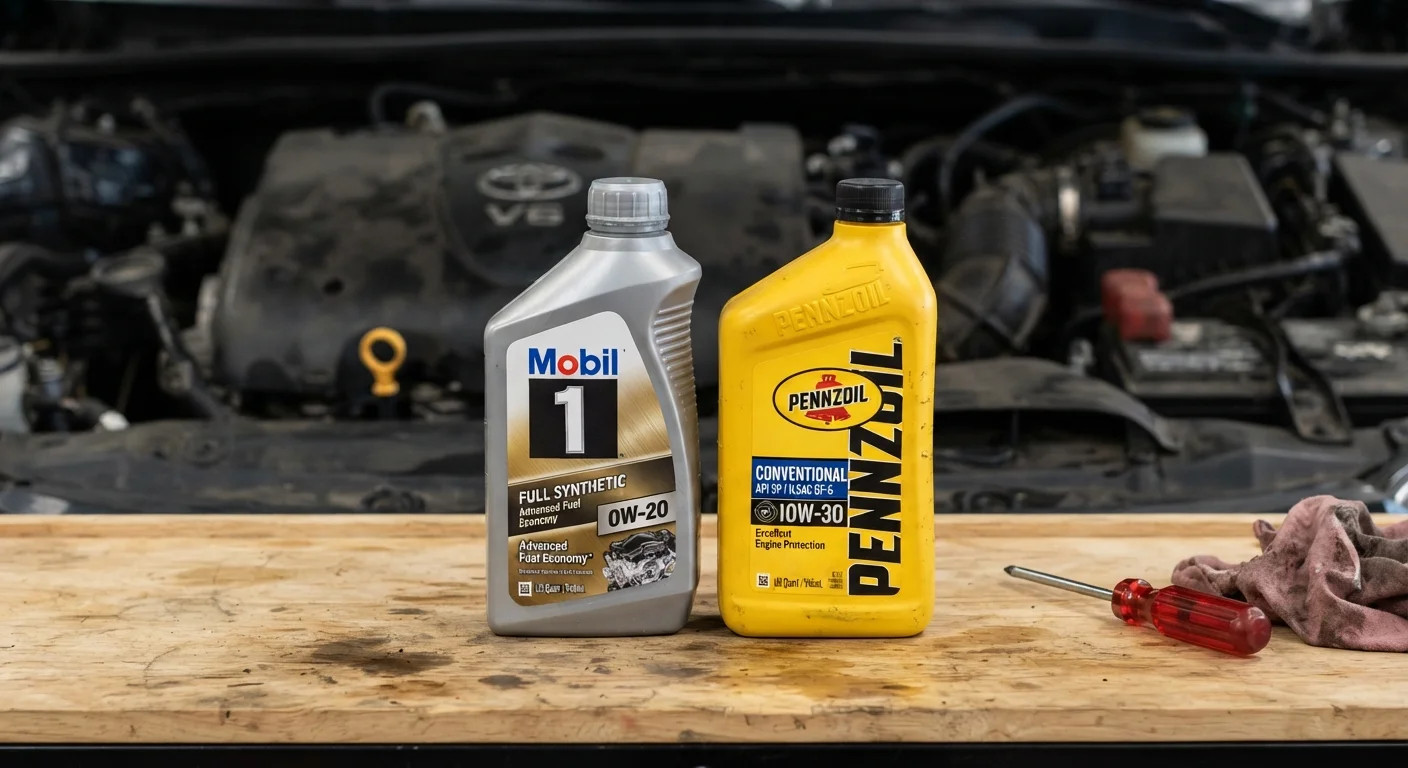
How each oil type is made
Conventional motor oil starts as crude oil pumped from the ground. Refiners remove many of the impurities, but the result still contains molecules of varying sizes and shapes. Those irregular molecules are less predictable under pressure and heat.
Synthetic oil goes through additional chemical processing. Engineers break down base stocks and rebuild them into uniform molecules designed to do specific jobs: reduce friction, resist oxidation, and stay fluid at low temperatures. Some synthetics also include a percentage of conventional base stock, which is why you see labels like "synthetic blend" sitting between the two pure categories.
The practical consequence is consistency. A quart of full synthetic has fewer molecular irregularities than a quart of conventional, and that uniformity is what drives most of the performance differences you will read about below.
Viscosity and temperature behavior
Viscosity describes how easily oil flows. Motor oil grades follow a standardized numbering system established by the Society of Automotive Engineers (SAE). A grade like 5W-30 tells you two things: the "5W" is the cold-weather (winter) flow rating, and "30" is the viscosity at operating temperature.
Conventional oil thickens noticeably in cold weather and thins under high heat, which means the actual protection it delivers at startup or in a summer traffic jam differs from its rated behavior at the test temperature. Synthetic oil's uniform molecules hold their viscosity more consistently across a broader temperature range. At a cold start, synthetic flows to critical engine parts faster, which matters because most engine wear happens in the first seconds after ignition.
For suburban drivers in climates with cold winters, that cold-start difference is one of the most concrete reasons to consider synthetic oil for a newer vehicle.
| Criterion | Synthetic motor oil | Conventional motor oil |
|---|---|---|
| Base stock | Chemically engineered molecules | Refined crude oil |
| Typical change interval | 7,500 to 15,000 miles | 3,000 to 5,000 miles |
| Cold-start flow | Faster, more consistent | Thickens more in cold weather |
| Heat resistance | Higher resistance to breakdown | Degrades faster under sustained heat |
| Cost per quart | Higher | Lower |
| Annual change frequency (avg.) | 2 to 3 times per year | 4 to 6 times per year |
| Required by some engines | Yes (turbocharged, newer models) | No modern engine requires it specifically |
Change intervals and real-world cost
Conventional oil degrades faster because its irregular molecules oxidize and form sludge more readily. Most conventional oil change intervals fall between 3,000 and 5,000 miles. Synthetic oil resists oxidation longer, and most vehicle manufacturers that specify synthetic recommend intervals of 7,500 to 15,000 miles, depending on driving conditions and the specific oil.
The per-quart price of synthetic is higher, sometimes two to three times the cost of conventional. However, if synthetic allows you to go from four oil changes a year to two, the annual outlay may be similar or even lower once you factor in service fees. The math depends on your vehicle's capacity, how much you drive, and whether you do the work yourself or pay a shop.
For reference on how oil changes fit into the broader picture of scheduled maintenance, see your full maintenance schedule breakdown.
Synthetic blends: a middle option
Synthetic blend oils mix conventional and synthetic base stocks, typically offering better thermal stability than pure conventional at a lower cost than full synthetic. They can suit drivers who want some performance improvement without the higher per-quart price. Check your owner's manual to confirm whether a blend meets your manufacturer's specification before switching.
Which oil your engine actually needs
The most reliable guide is your owner's manual. Manufacturers specify oil type and viscosity grade based on engine tolerances, warranty requirements, and emissions compliance. Some modern engines, particularly turbocharged ones, require full synthetic because their tighter tolerances and higher operating temperatures demand more consistent lubrication. Using conventional oil in an engine that specifies synthetic can reduce protection and may affect warranty coverage.
If your manual says conventional oil is acceptable, synthetic is still a compatible alternative in most cases. The reverse is not always true. You should not substitute conventional for synthetic in an engine that requires it.
Mileage also matters. High-mileage vehicles (generally over 75,000 miles) sometimes use a specialized high-mileage oil formulated with seal conditioners. These are available in both conventional and synthetic versions and are worth considering if an older engine has minor seepage around gaskets.
This article is for general informational purposes only. Consult a qualified mechanic for advice specific to your vehicle and driving situation.