Why fluids matter more than most drivers realize
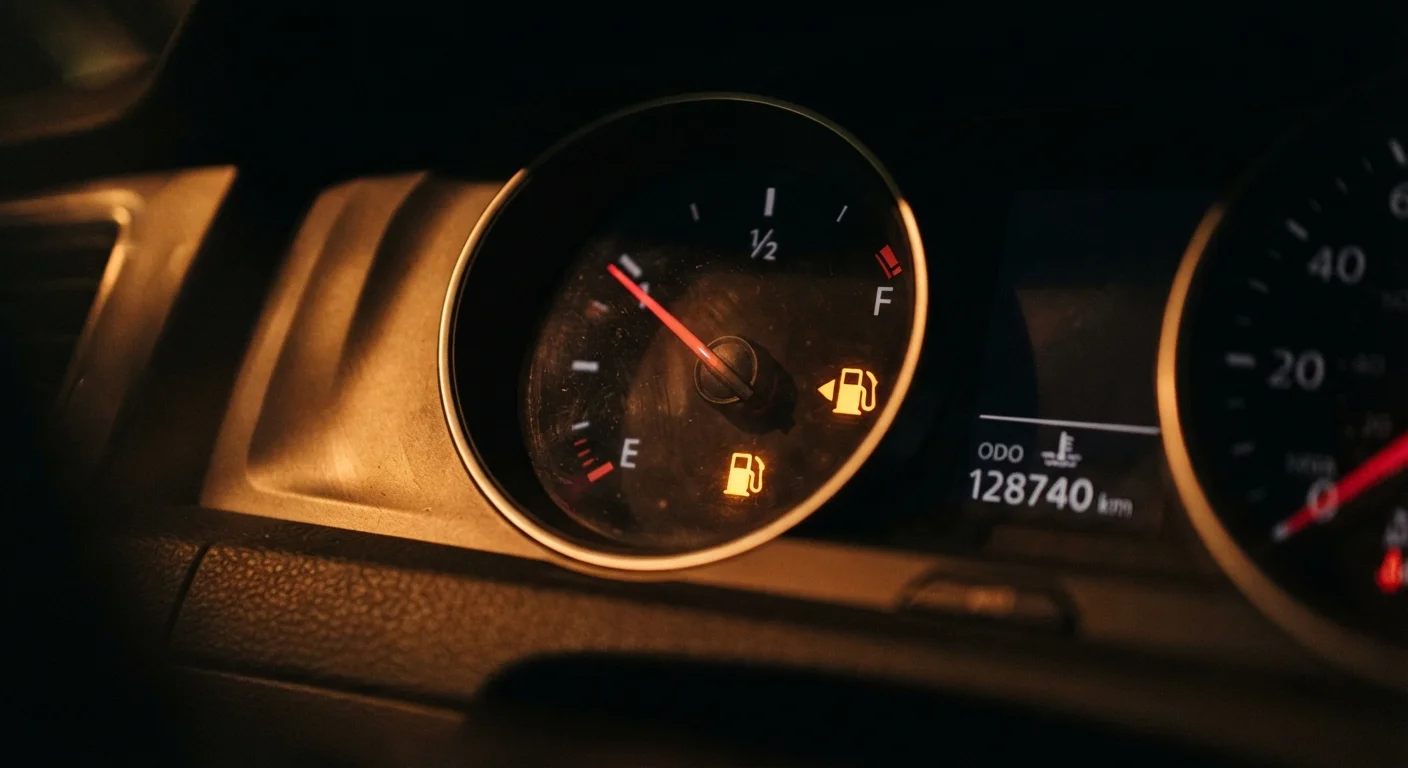
Metal components moving against each other at high speed, extreme heat cycling through an engine, hydraulic pressure stopping a two-ton vehicle in seconds: none of it works without the right fluid in the right place at the right level. Yet most drivers only think about fluids when a warning light appears, which is often too late to avoid a costly repair.
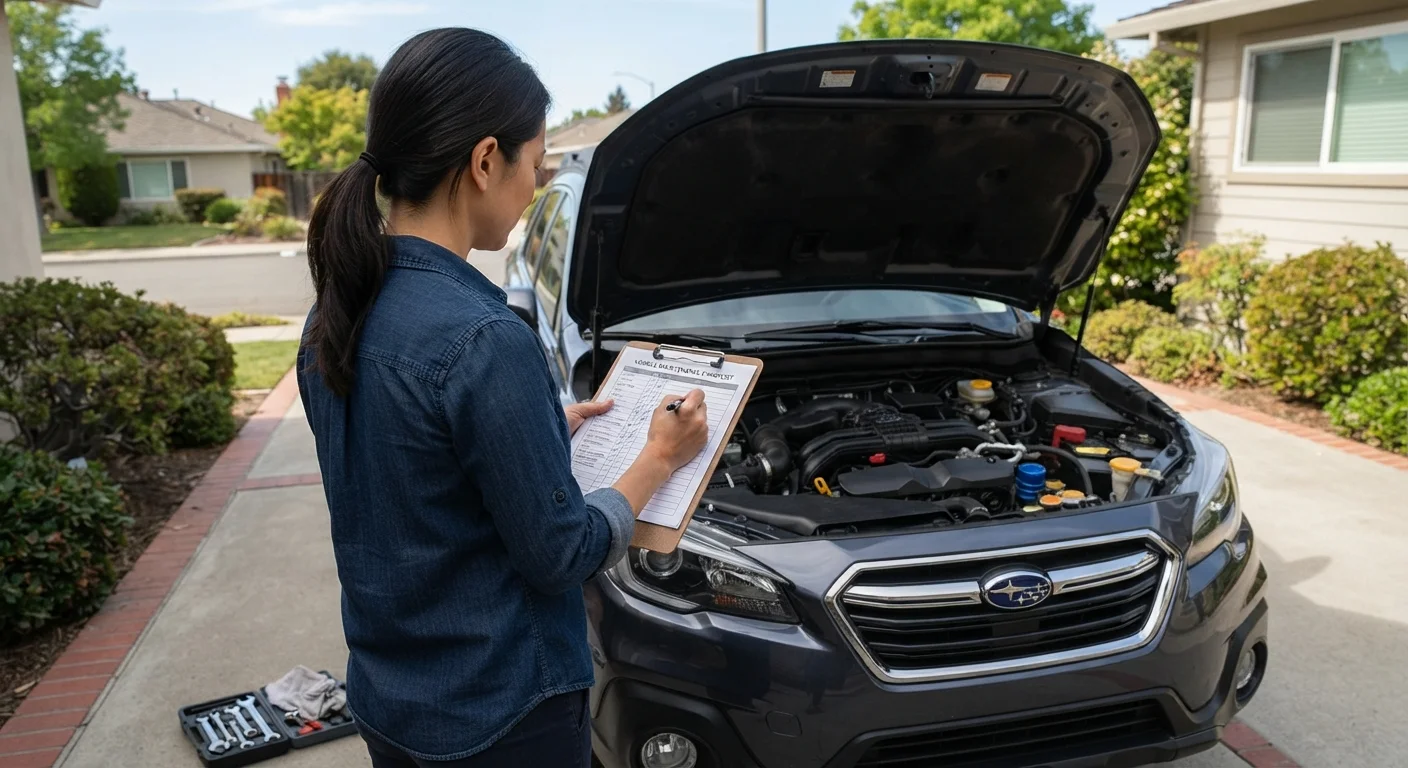
Each fluid in your vehicle has a specific job. Letting any of them degrade or drop below the safe range puts other components under stress. This reference covers what each fluid does, where to find it, and what early warning signs look like. For a broader view of how fluids fit into your full service schedule, see your vehicle's maintenance schedule decoded.
| Number of major fluid systems | 6 in most passenger vehicles |
| Brake fluid moisture absorption | Can absorb up to 3% water by weight in 1 to 2 years of normal use (General industry guidance; check your owner's manual for specific intervals) |
| Coolant flush interval (typical) | Every 2 to 5 years, depending on coolant type and manufacturer spec (Refer to your vehicle's owner manual) |
| Transmission fluid check | Many late-model vehicles have no dipstick; requires shop inspection |
| Engine oil check frequency | Monthly or before long trips (Standard industry recommendation) |
The six fluids every driver should know
Engine oil
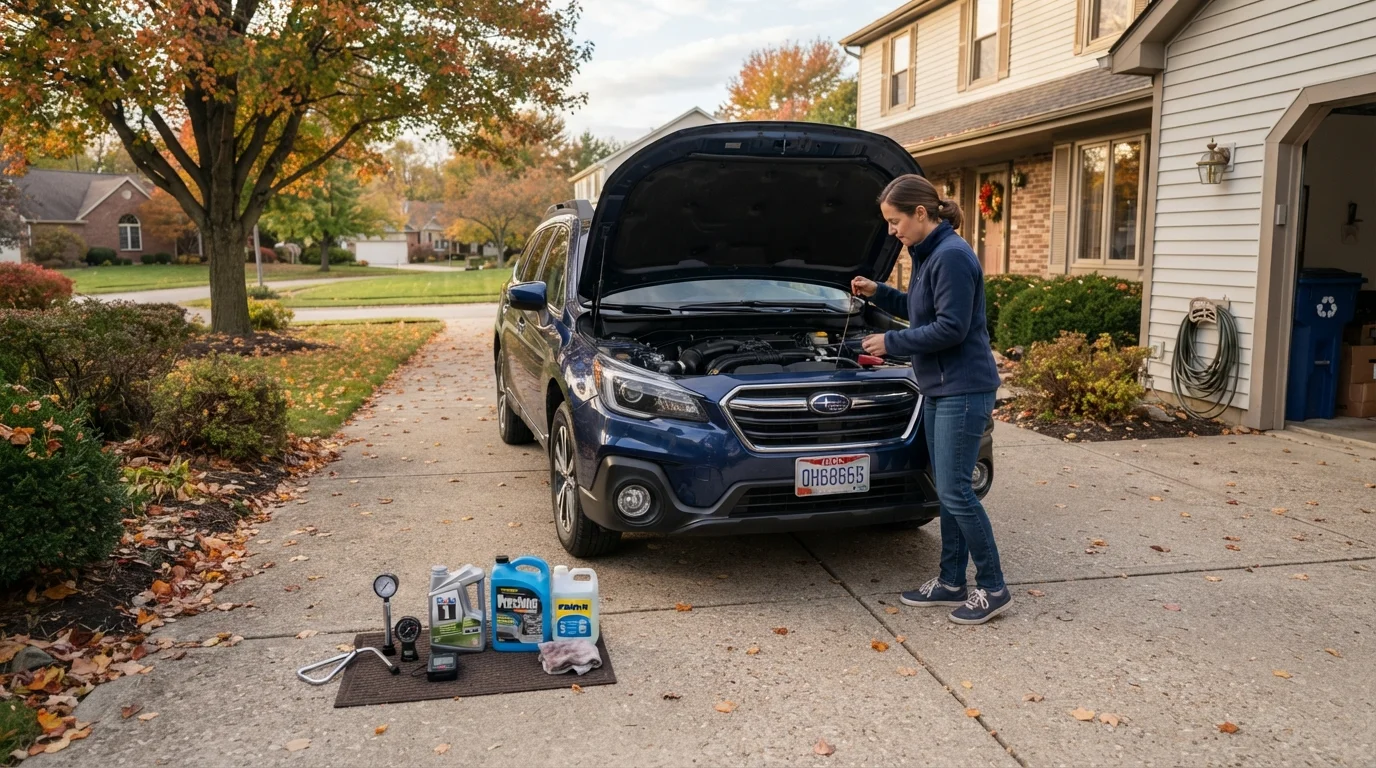
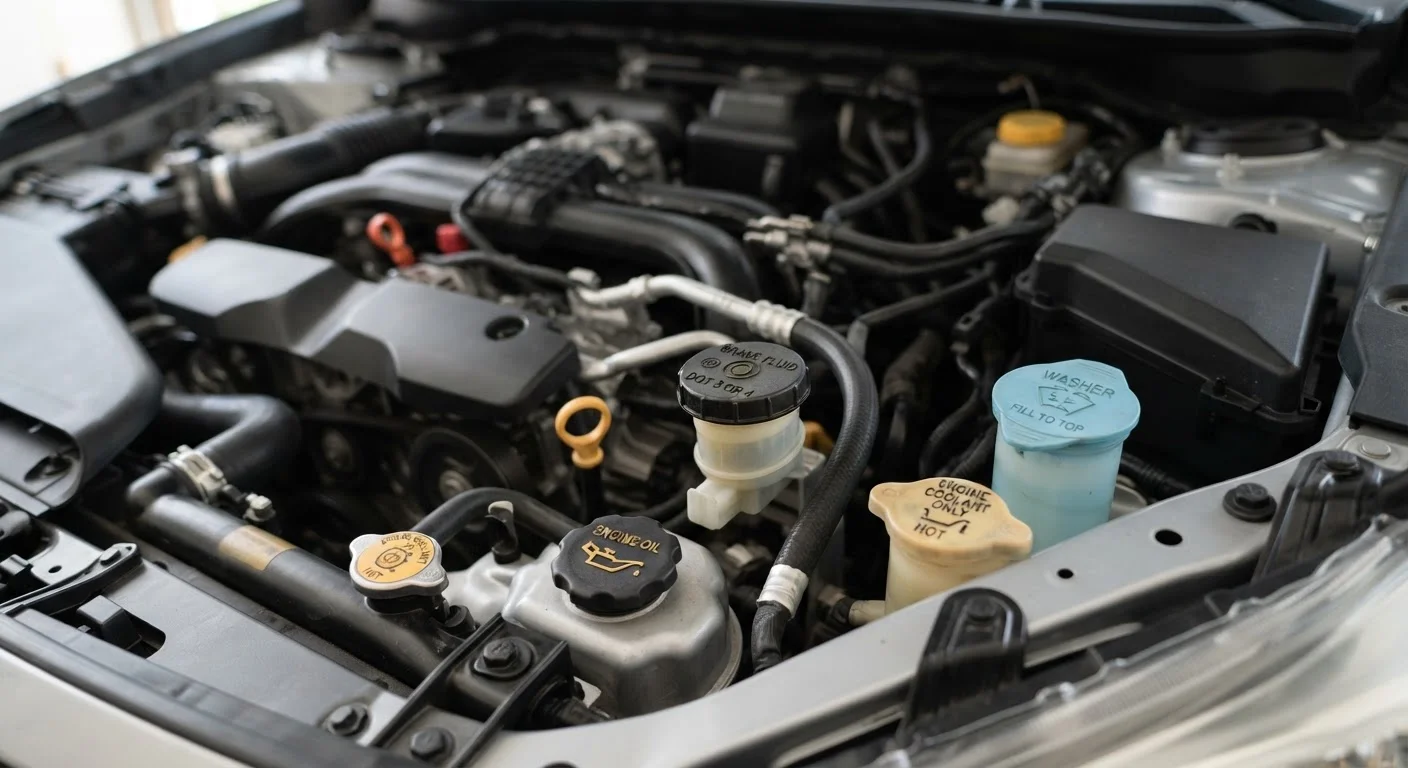
Oil lubricates the engine's moving parts and carries heat away from the combustion chamber. Check the level monthly with the dipstick when the engine is cool. Oil that looks black and gritty has broken down and needs changing. A milky or foamy appearance points to coolant mixing with oil, which is a serious problem requiring a mechanic's diagnosis.
Coolant (antifreeze)
Coolant circulates through the engine and radiator to regulate temperature. The reservoir is usually a translucent plastic tank near the radiator. Check the level when the engine is cold. Low coolant causes overheating; the wrong coolant type can corrode aluminum components. Most vehicles use either a green, orange, or pink formula, and they should not be mixed.
Brake fluid
Hydraulic pressure from brake fluid is what transfers your foot's force to the brake calipers. The reservoir sits on top of the master cylinder, usually near the firewall on the driver's side. Brake fluid absorbs moisture over time, which lowers its boiling point and reduces stopping performance. A spongy pedal feel or a brake warning light are the clearest signs something is wrong. Because brake system work directly affects safety, have a qualified mechanic inspect anything beyond a simple level check.
Transmission fluid
Automatic transmissions rely on fluid for lubrication, hydraulic pressure, and cooling. Many modern vehicles have a sealed transmission with no dipstick, so checking requires a lift and a professional. On vehicles with a transmission dipstick, healthy fluid is pink or red and nearly transparent. Dark brown fluid with a burnt smell signals degradation. Rough shifting or delayed gear engagement are the most common symptoms of low or deteriorated fluid. Low transmission fluid can also contribute to worse fuel economy; see why your car burns more fuel than it should for more context.
Power steering fluid
Most newer vehicles use electric power steering and have no fluid reservoir at all. On older vehicles with hydraulic systems, the reservoir is typically a small capped bottle near the power steering pump. Low fluid causes a whining noise when turning. A leak is usually visible as a reddish or clear oily puddle near the front of the vehicle.
Windshield washer fluid
The only fluid on this list that has no mechanical consequence if it runs low, but a dry reservoir at highway speed with a dirty windshield is a real safety risk. Use a proper washer fluid rated for your climate; plain water freezes in cold weather and can crack the reservoir or pump.
Viscosity
A measure of how thick or thin a fluid is and how easily it flows. Engine oil viscosity ratings (such as 5W-30) indicate how the oil performs at cold starts versus operating temperature.
Hydraulic pressure
Force transmitted through a confined fluid. Brake and power steering systems use hydraulic pressure to multiply the force a driver applies, making it possible to stop or steer a heavy vehicle with modest effort.
Boiling point
The temperature at which a fluid vaporizes. For brake fluid, a lower boiling point (caused by moisture absorption) means the fluid can vaporize under heavy braking, creating a spongy pedal and reduced stopping power.
Sealed transmission
A transmission design with no external dipstick. The manufacturer specifies a fluid change interval, but checking or adding fluid requires specialized equipment and is typically a shop-only task.
Spotting trouble before it becomes a repair bill
Fluid leaks often show up as spots under a parked car. Location and color help narrow down the source: reddish puddles near the center or rear of the vehicle usually point to transmission fluid; a clear or light-brown puddle near the front corners is often brake fluid; green or orange near the front means coolant. Engine oil leaks are brown to black and typically appear directly under the engine.
Keeping a basic check habit, once a month or before any long trip, catches most problems while they are still inexpensive to fix. The seasonal car care checklist includes fluid checks alongside tires, battery, and wipers as part of a complete pre-season review.
This article is for general informational purposes only. Brake system, transmission, and other safety-related fluid services should be performed or confirmed by a qualified mechanic. Always consult your vehicle's owner manual for fluid specifications and service intervals specific to your make and model.