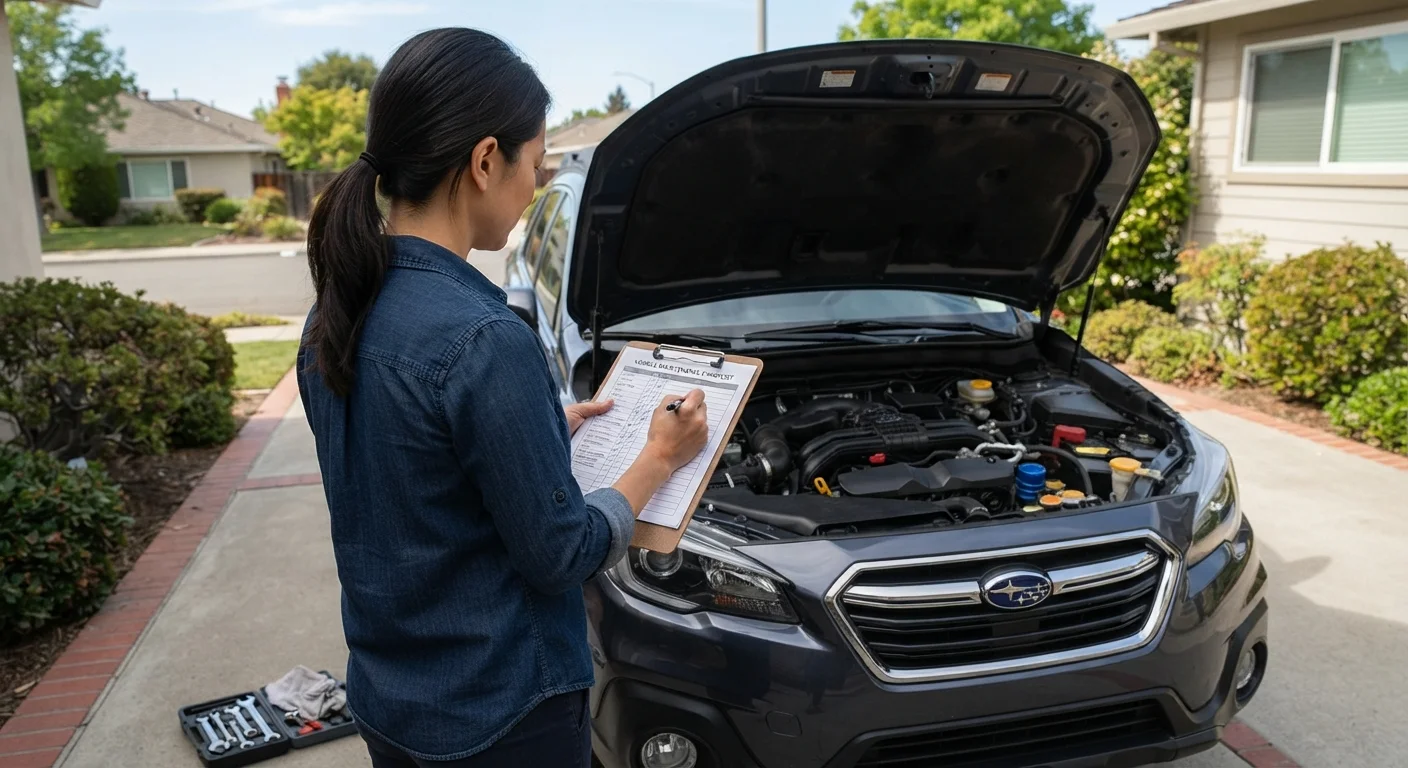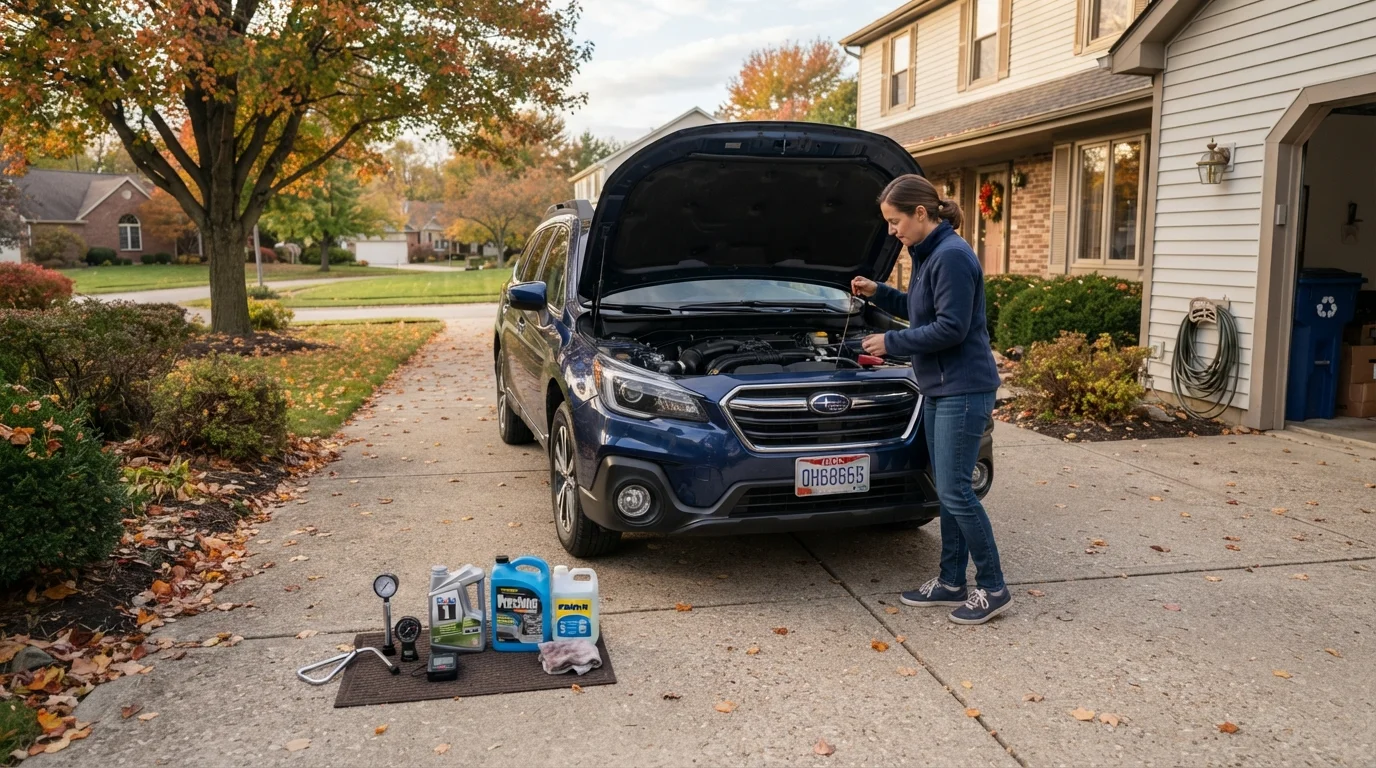
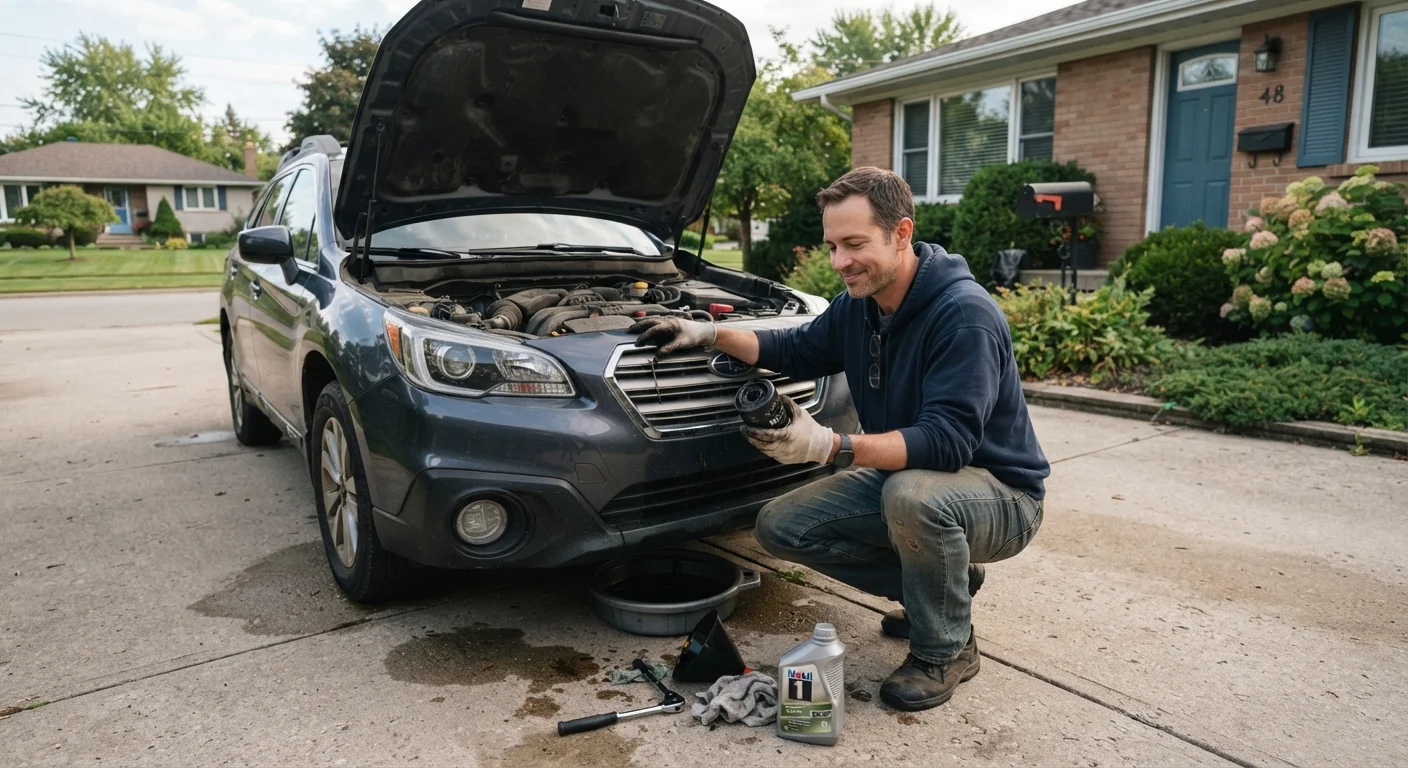
What actually separates a DIY job from a shop job
The dividing line is not skill level alone. Three factors determine whether a task belongs in your driveway: the tools required, the safety consequences of an error, and whether the job affects systems covered by your warranty. A task that scores low on all three is a reasonable DIY candidate. Any task that scores high on even one of them deserves a second look.
Most suburban drivers can safely handle consumable replacements: engine air filters, cabin air filters, wiper blades, and basic fluid top-offs. These jobs require common tools, have clear instructions in the owner's manual, and carry low risk if the part is installed slightly wrong. An oil change sits at the next level: manageable for confident beginners, but it does involve getting under the vehicle and disposing of used oil properly, which some municipalities regulate.
On the other side are jobs where an error has immediate safety consequences. Brake pads, rotors, calipers, wheel bearings, and steering components fall here. So does anything involving the fuel system or high-voltage components in hybrid and electric vehicles. For those, a licensed mechanic is not optional, it is the right call. See the practical framework for DIY vs. professional decisions if you want a consistent way to apply this logic across home and vehicle repairs alike.
The real cost of DIY
Labor savings are real, but they are not the whole picture. A DIY oil change typically costs less in parts than a shop service, but that assumes you already own the drain pan, socket set, oil filter wrench, and funnel. First-time tool purchases can erase the savings on the first job. After that, those tools pay for themselves across future jobs, so the math improves over time.
Time is the other variable most drivers underestimate. A shop technician with a lift can complete an oil change in under 20 minutes. A first-timer working on the ground can spend 90 minutes on the same job. For a family already stretched thin on weekends, that trade-off is worth calculating honestly.
| DIY maintenance | Professional mechanic | |
|---|---|---|
| Typical tasks | Filters, wipers, fluid top-offs, oil changes | Brakes, suspension, timing, electrical diagnostics |
| Upfront cost | Low (parts only, after tool investment) | Higher (parts plus labor) |
| Time required | Variable, often longer for beginners | Faster with professional lift and tooling |
| Safety risk if done incorrectly | Low on routine tasks | N/A: professional assumes responsibility |
| Warranty implications | Minimal for consumables, check for powertrain | None if using authorized service |
| Tools needed | Basic hand tools for most tasks | Specialized equipment included in service |
For a deeper look at which service intervals actually require hands-on attention versus routine monitoring, the decoded maintenance schedule guide breaks down what each interval means for long-term reliability.
Tasks to handle yourself
These jobs are within reach for most drivers who are comfortable reading instructions and working carefully:
- Engine and cabin air filter replacement
- Wiper blade replacement
- Tire pressure checks and inflation
- Battery terminal cleaning
- Topping off windshield washer fluid, coolant reservoir, and power steering fluid (where applicable)
- Replacing burnt-out exterior bulbs on most vehicles (check your model, as some require bumper removal)
Oil and filter changes are also DIY-viable for drivers willing to invest in a few tools and handle used oil disposal correctly. Check your local municipality's guidelines on used oil recycling before starting.
Seasonal checks on tires, fluids, wipers, and battery condition are another area where a disciplined DIY habit pays off across the year.
Tasks that belong in a shop
Some jobs should go to a qualified mechanic regardless of your confidence level:
- Brake pad, rotor, and caliper replacement (brake failure has direct life-safety consequences)
- Wheel bearing replacement (requires specialized press tools and precise torque specs)
- Suspension and steering component work
- Timing belt or timing chain service
- Transmission service beyond fluid checks
- Any repair requiring a scan tool to clear codes or calibrate systems (ADAS sensors, TPMS reset on some models)
- All high-voltage system work on hybrid and electric vehicles
Do not attempt high-voltage EV repairs at home
Hybrid and electric vehicle battery systems operate at voltages that can cause fatal injury. Even with the ignition off, these systems retain a charge. Any work on high-voltage components must be performed by a technician trained and certified for that specific system. This is not a matter of confidence or experience: it is a hard safety boundary.
Warranty status matters here too. If your vehicle is within the manufacturer's powertrain warranty period, confirm with your dealership which services can be performed outside the dealer network without affecting coverage. Unauthorized modifications to emissions systems are illegal under federal law regardless of warranty status.
For context on which beliefs about car care are actually costing drivers money, the car maintenance myths article is worth reading before you commit to a service schedule.