Why the DIY-or-pro decision deserves a real framework
Most homeowners default to one of two modes: they DIY everything to save money, or they call a contractor for anything beyond changing a lightbulb. Neither extreme serves a family well. The goal is a clear-eyed process that matches each job to the right person based on skill, risk, and regulatory requirements, not habit or pride.
The seasonal maintenance calendar approach works best when you already know which items on that list belong to you and which belong to a licensed trade. Without that clarity, you either over-hire (and pay for it) or under-hire (and pay for it later, at greater cost).
This framework gives you four honest questions to answer before touching a tool or dialing a number.
The four questions to answer before every repair
Work through these in order. If any question produces a clear "no" or "uncertain," stop and call a professional.
1. Is this work regulated or permitted in your area?
Many repairs trigger permit requirements that vary significantly by state and municipality. Electrical panel work, HVAC installation, load-bearing wall removal, and any gas line modification typically require a licensed contractor and a pulled permit in most U.S. jurisdictions. Doing this work without a permit can complicate a home sale, void homeowner's insurance in the event of a claim, and create liability if something goes wrong. Contact your local building department before you start, not after.
2. What happens if it goes wrong?
A dripping faucet DIY gone wrong means a damp cabinet. A gas line DIY gone wrong can mean an explosion. Frame your decision around the realistic worst-case outcome. If the failure mode involves fire, flooding, structural collapse, or personal injury, the job belongs to a professional.
3. Do you have the skill and the right tools?
YouTube tutorials are genuinely useful for many tasks. However, watching a video is not the same as having practiced a skill. Be specific: have you tiled before, or would this be your first time? Renting an unfamiliar tool and learning on your home's systems simultaneously multiplies the chance of error. Short preventive tasks are a good place to build that experience before attempting a full repair.
4. Do you have the time to do it properly?
A job started and left half-finished creates its own hazards: exposed wiring, open flooring, interrupted plumbing. Be realistic about whether your schedule allows you to complete the work, including cleanup and any required inspections, within a safe window.
Jobs that almost always belong to a licensed professional
Some categories are not judgment calls. For these, hire a licensed, insured professional and verify they pull the required permits:
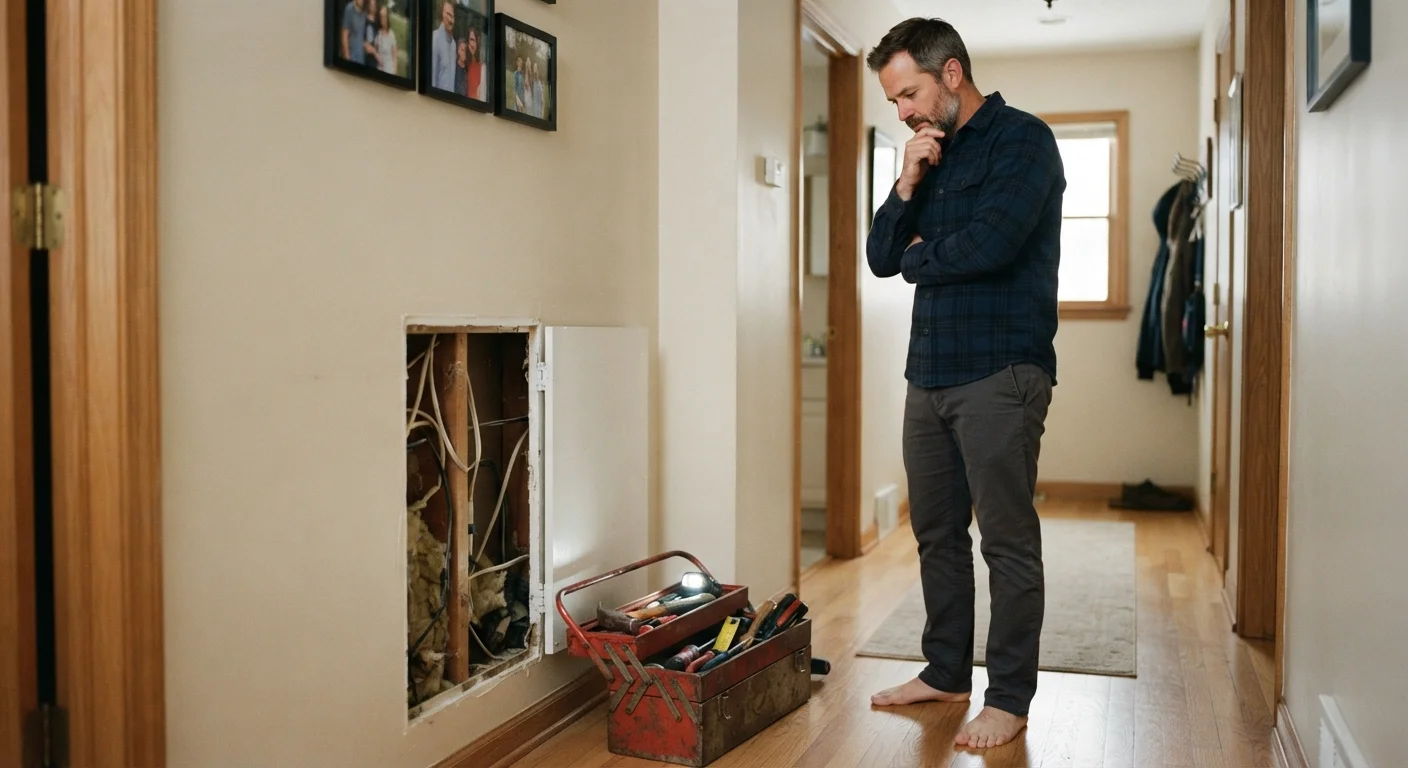
- Any work on the main electrical panel, service entrance, or circuit wiring inside walls
- Gas line connections, repairs, or rerouting
- Structural modifications including load-bearing walls, beams, and foundations
- Roofing that involves decking replacement or structural repair (surface patching on a low slope is a different conversation)
- Main drain or sewer line work
- HVAC installation or major refrigerant-handling repairs, which require EPA Section 608 certification
For a full-season view of which professional inspections to schedule and when, the autumn home walkthrough covers heating systems and structural checks worth booking before cold weather arrives.
Jobs most capable homeowners can handle
A wide range of repairs are genuinely within reach for a homeowner with basic tools and careful attention to manufacturer instructions:
- Painting interior walls and trim
- Replacing outlet covers, light switches (with power off at the breaker), and light fixtures on existing circuits
- Caulking windows, tubs, and door frames
- Fixing running toilets and replacing faucet washers or cartridges
- Patching small drywall holes
- Installing pre-hung interior doors on existing rough openings
- Sealing and weather-stripping exterior doors and windows
These are also the tasks that, done regularly, prevent the expensive repairs described in the first category. The seasonal home refresh guide can help you decide which of these to schedule each season versus which to deprioritize.
Budgeting the decision, not just the job
Homeowners often compare only the up-front cost of DIY versus a contractor quote. A more complete comparison includes the cost of renting tools you do not own, any materials wasted during learning, the value of your time, and the potential cost of correcting errors. For family budgeting purposes, a failed DIY that requires a professional to redo the work typically costs more than hiring out in the first place.
One practical approach: set a personal skill threshold. If you have done a task at least twice before and completed it without major problems, consider it within your DIY range. If it is new to you and the failure cost is high, get at least two contractor quotes before deciding. The same logic applies to vehicle maintenance decisions, where the DIY-or-pro calculus follows nearly identical principles.
This article is for general informational purposes only. Building codes, permit requirements, and licensing rules vary by location. Verify all regulatory requirements with your local building department and consult a licensed professional for any work involving electrical, gas, structural, or other hazardous systems before proceeding.