Why the gap type decides the product
Both caulk and weatherstripping block air movement, but they do it through different mechanisms. Caulk is an adhesive sealant that cures into a semi-flexible solid. It bonds to surrounding surfaces and bridges a gap permanently. Weatherstripping is a compressible material, typically foam, felt, rubber, or vinyl, that creates a seal under pressure when a door or window closes.
The deciding question is simple: does either surface on either side of the gap move? If the answer is no, caulk is the correct choice. If one surface moves repeatedly, weatherstripping is the only option that will hold up. Caulk applied to a door stop will flex and crack within weeks because the door impacts it every time it closes, breaking the bond.
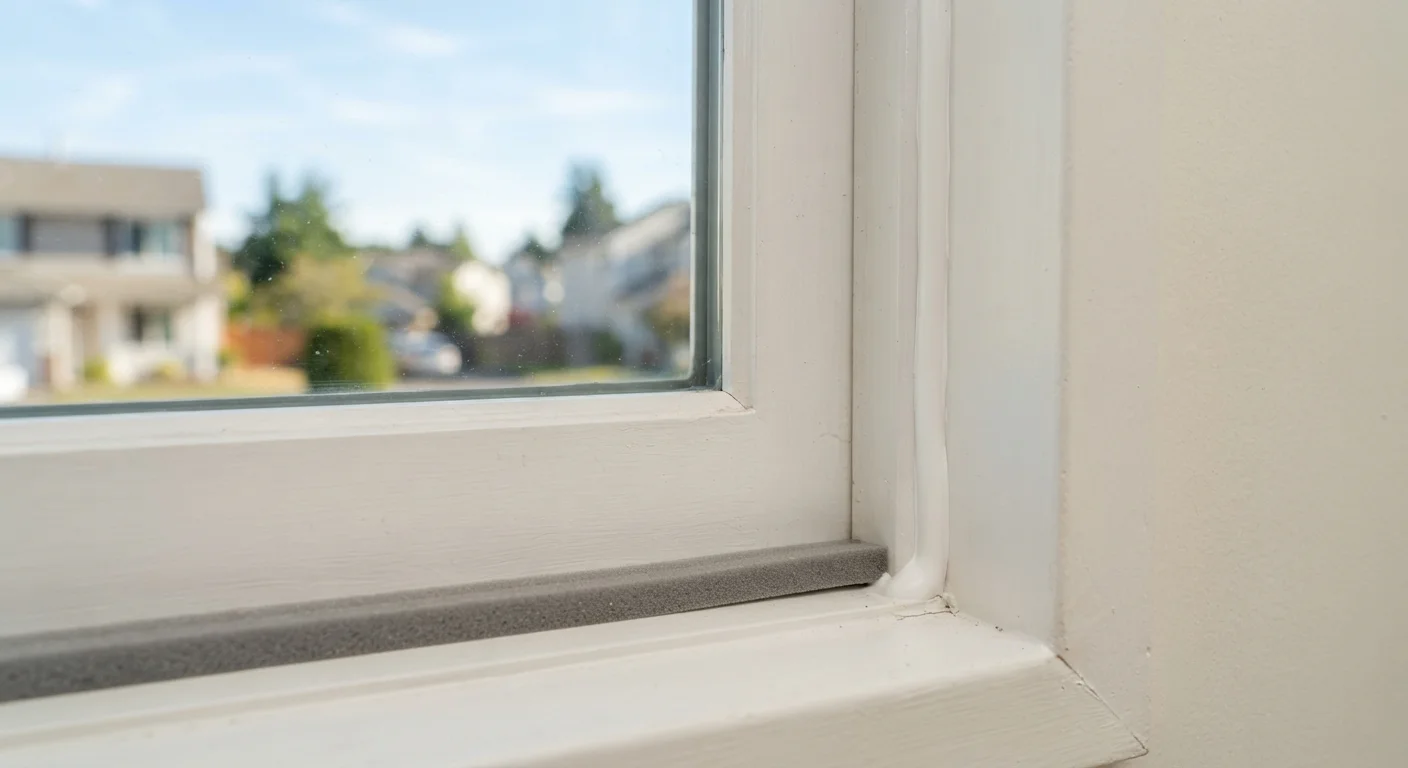
Common stationary gaps suited to caulk include the joint between window frames and exterior siding, gaps where pipes or wires enter an exterior wall, and cracks between interior trim and drywall. Common moving surfaces suited to weatherstripping include the perimeter gap around an exterior door in its frame, the bottom sweep gap under a door, and the channel where a double-hung window sash slides closed.
How to choose the right caulk
Caulk comes in several formulations, and matching the formulation to the location matters. Silicone caulk handles outdoor exposure and temperature swings well. It bonds to glass, metal, and masonry, and it does not shrink as it cures. The trade-off is that most silicone formulations cannot be painted.
Latex (acrylic latex) caulk is easier to apply and clean up, accepts paint readily, and suits interior trim work well. It handles mild outdoor exposure around windows if the product is rated for exterior use, but it degrades faster than silicone in harsh conditions. Hybrid siliconized latex caulk splits the difference: paintable and more durable than plain latex outdoors.
For gaps larger than about a quarter inch, regular caulk will slump or crack before it cures. Backing rod, a foam backer material pressed into the gap before caulking, gives the caulk something to bond to and keeps the bead at the right depth.
| Criterion | Caulk | Weatherstripping |
|---|---|---|
| Best application | Stationary gaps and cracks | Moving doors and operable windows |
| Movement tolerance | None; cracks if surfaces move | Designed for repeated compression |
| Typical lifespan | 10 to 20 years outdoors | 2 to 5 years depending on material |
| Paintable | Latex yes; silicone generally no | No |
| Skill level needed | Low; requires steady hand | Low; mostly peel-and-stick |
| Tools required | Caulk gun, utility knife | Scissors or utility knife, screwdriver |
| Gap size limit | Up to 1/4 inch without backer | Sized to fit; available in many widths |
How to choose the right weatherstripping
The material affects how long the weatherstripping lasts and how well it seals under varying pressure. Foam tape is inexpensive and simple to apply to window sashes and attic hatches, but it compresses permanently over time and typically needs replacement within two to three years. Rubber or vinyl bulb seals last longer and handle the repeated compression of a heavy exterior door better. Door sweeps, which attach to the bottom of the door itself, come in rubber, brush, and automatic drop-down versions; automatic sweeps rise when the door opens and drop when it closes, reducing wear on carpet.
For the sides and top of an exterior door frame, look for V-strip (tension seal) weatherstripping. It springs open against the door surface without bulk and handles years of compression well. The right choice depends on the door's frequency of use and how well the door fits its frame. A door that binds slightly needs a thinner profile strip than one with a large, visible gap.
Applying each product efficiently
Caulk application goes faster with preparation. Clean the gap of old caulk, dust, and paint flakes first. Dry surfaces accept caulk better than damp ones. Cut the tube tip at a 45-degree angle to a hole slightly smaller than the gap width, and apply steady, even pressure as you draw the gun along the joint. Smooth the bead with a wet finger or a plastic tool before the caulk skins over. Most latex caulks skin in 30 minutes; silicone can take longer in cool or humid conditions.
Weatherstripping application is usually faster than caulk work because most products use peel-and-stick adhesive backing. Close the door or window to find where the gap is largest, mark those areas, then apply the strip with the door open. Press firmly along the full length. For door sweeps, hold the sweep against the door bottom with the door closed to mark the screw holes, then open the door to drill and attach it. Check the sweep clearance on any threshold or carpet before final fastening.
A single afternoon is usually enough time to caulk all the window frames on one exterior wall and install new weatherstripping on two exterior doors.