Why screen-free is worth the effort
Tablets and phones solve the short-term problem of a restless child, but they often create a harder one: the moment the battery dies or the signal drops, there is nothing left in reserve. Parents who rely entirely on screens tend to arrive at their destination with kids who are cranky, overstimulated, and unwilling to engage with wherever they actually went. Building a mix of screen-free options does not mean banning devices. It means the drive does not collapse when the device does.
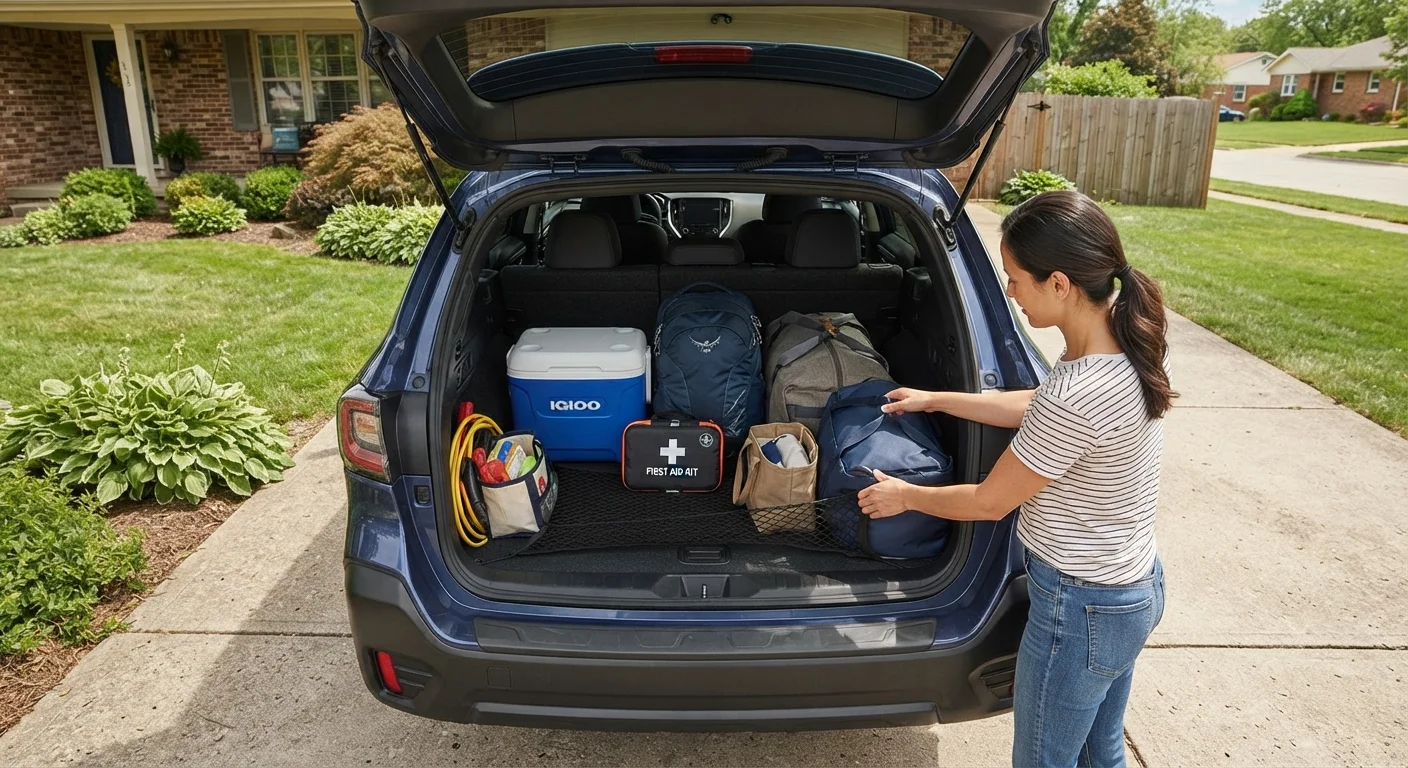
The activities below work across a range of ages and trip lengths. None require expensive gear, and most can be set up at home the night before. For a full pre-departure checklist, see what to pack before leaving the driveway.
Audiobooks chosen for the whole car
A well-chosen audiobook keeps kids ages 5 and up absorbed for 45 minutes to over an hour at a stretch. The trick is picking a title that adults can tolerate too, since everyone in the car is listening. Middle-grade adventure series, classic chapter books, and humorous stories with strong narrators tend to hold mixed-age groups. Public libraries offer free digital lending through apps that work offline once downloaded, so you do not need a data connection on the road.
For children under 5, short story collections with distinct sound effects work better than a single long narrative. Queue a few in advance so switching between them takes seconds.
A library app downloaded before departure means free audiobooks even in dead zones.
Verbal games that need nothing but voices
20 Questions, the alphabet game (finding letters on signs), and license plate bingo require zero materials and scale naturally with age. Older kids can run their own rounds while a parent focuses on driving. Younger children do better with simpler call-and-response formats: naming animals that start with a given letter, or spotting specific colors on passing vehicles.
I Spy works well on two-lane roads with varied scenery but stalls on featureless interstate stretches. Swap it for storytelling games where each person adds one sentence to a shared story, which tends to produce enough absurdity to keep everyone laughing.
Storytelling rounds where each person adds one sentence consistently outlast I Spy on long interstate stretches.
Activity kits built before departure
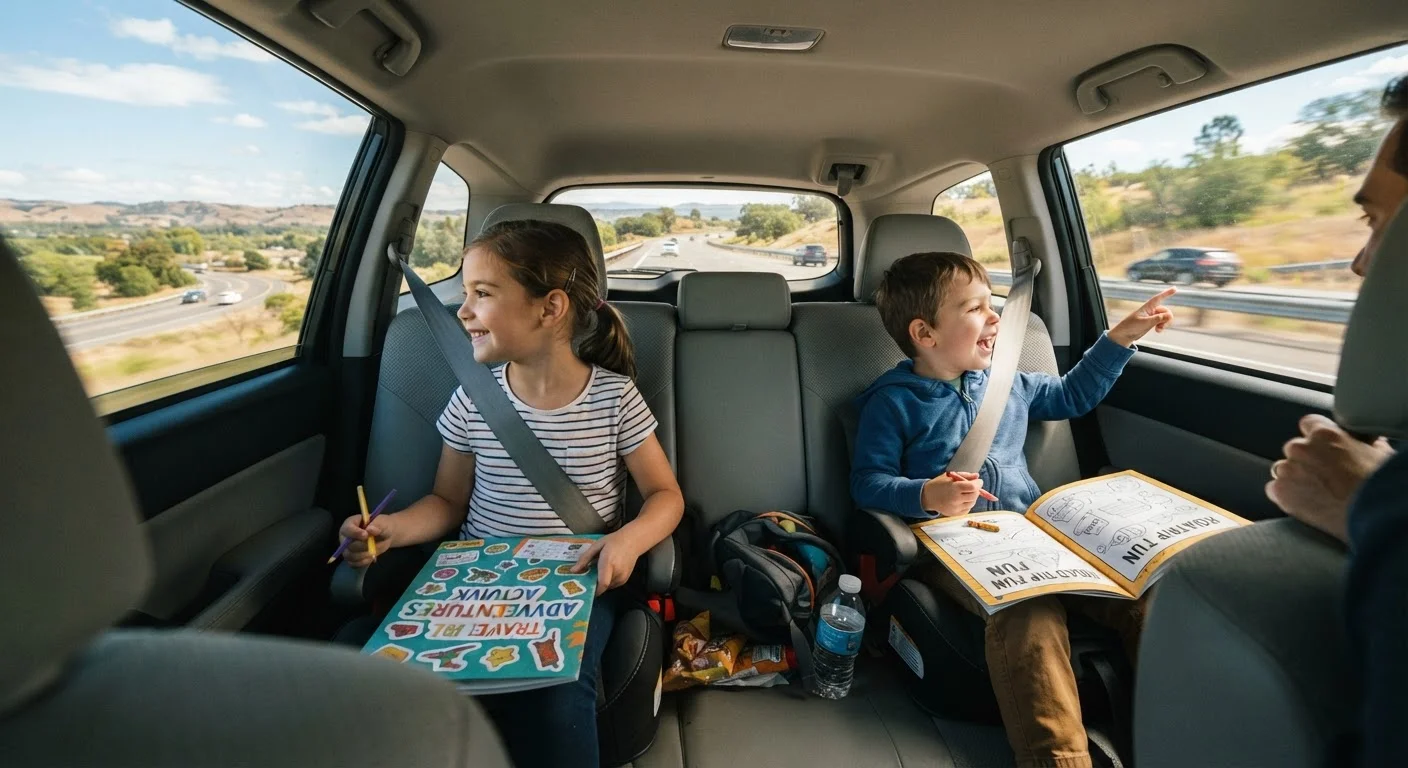
A gallon zip bag or small pouch per child, packed the night before, removes mid-drive rummaging. Good contents for ages 4 to 8: a small spiral notebook, washable markers, a few sticker sheets, and two or three simple card games. For ages 9 and up, swap stickers for a puzzle book, a set of dot-to-dot sheets, or a travel journal with prompts.
Avoid anything with small loose pieces. Beads, building sets, and board games with cards all end up on the floor within the first twenty minutes. Magnetic drawing boards and dry-erase activity books survive the trip better because nothing falls out.
Magnetic drawing boards and dry-erase books beat loose-piece toys because nothing ends up under the seat.
Podcasts and radio shows made for kids
Several podcast series are produced specifically for children and work well in a car because they are episodic, short, and designed for listening without visuals. Science, history, and mystery formats tend to pull in curious older kids, while call-in or interactive-style shows engage younger ones who enjoy answering questions out loud. Many episodes run 15 to 20 minutes, which maps neatly onto the attention span of most children between stops.
Download episodes before leaving. Streaming quality on rural interstates is inconsistent, and buffering mid-episode is more disruptive than no audio at all.
Fifteen-minute episodes map well onto how long most kids can focus between rest stops.
Structured pit stops as part of the plan
Children's restlessness in a car is partly physical: sitting in a fixed position for more than 90 minutes causes genuine discomfort. Building two or three short stops into the route rather than treating them as setbacks changes the dynamic. A 15-minute break at a rest area with room to run, a stretch, and a snack resets focus more reliably than any activity.
Giving kids a specific role at each stop, such as finding a new state license plate in the parking lot or picking the next snack from a pre-approved list, extends the engagement from the stop back into the drive. Pair this with a simple mileage tracker kids can mark themselves to give them a concrete sense of progress. Planning where you go next? kid-friendly destinations across the US can help narrow the options.
Giving kids a small job at each stop carries their engagement back into the next driving stretch.
Travel journals and observation prompts
A blank notebook with a short prompt list tucked inside turns out the window into a task. Prompts like "draw the most unusual building you've seen today" or "write down three things that were different from home" work for ages 6 and up and require no parent involvement once the child understands the format. Older kids often treat these as genuine keepsakes and pull them out again after the trip.
This pairs well with a window-seat rotation so each child gets unobstructed views for part of the drive. It also tends to generate better conversation at the destination than "what did you think of the drive?" ever does.
A prompt-driven travel journal turns window watching into something kids return to after the trip ends.
Making it stick on the road
The difference between a smooth drive and a miserable one is usually preparation, not luck. Pack activity materials into a small backpack or zip bag the night before so kids can access things without digging through luggage in the trunk. Rotate options rather than handing everything over at once: save the audiobook for the second hour, the activity kit for after the first stop, and the verbal games for stretches when everyone is flagging.
Pack activity kits the night before
Assembling each child's kit before departure means you are not searching through luggage at 70 mph. Use one zip bag per child and seal it. Hand them out after the first stop, not at the start, so novelty lasts longer into the drive.
Long road trips feel longer when the only goal is the destination. Framing two or three waypoints as intentional stops, not inconvenient delays, gives kids something to look forward to every hour or two. For more on what quietly drains patience on family drives, see why long road trips feel longer than they should. If you are juggling school runs and longer drives in the same vehicle, the dynamics shift considerably; commuting with kids in the car covers that specific challenge.