The cost gap between the two options
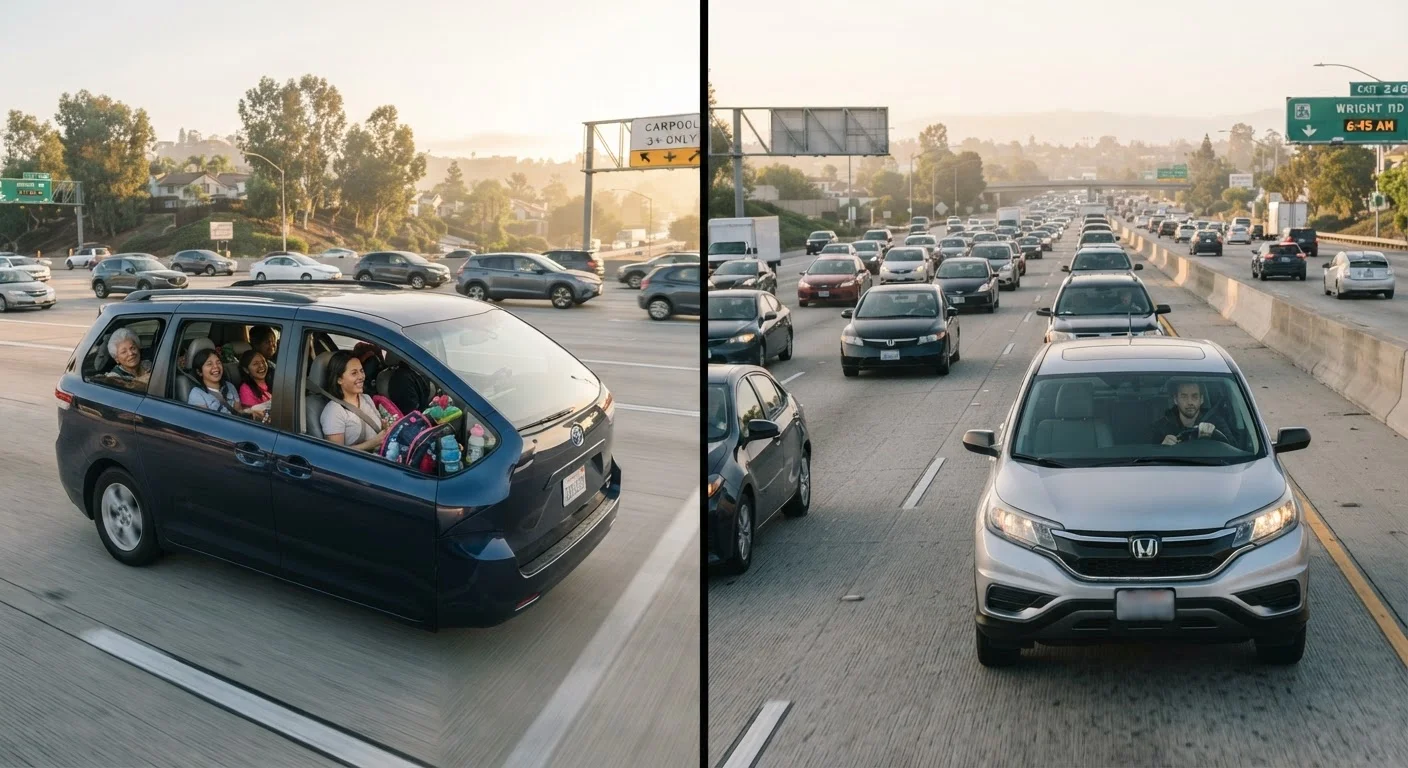
The most direct way to compare these options is to look at what each costs per mile and per month. Solo driving means you absorb 100 percent of fuel, tolls, and parking. In a two-person carpool, those costs split in half. Add a third person and per-rider costs drop further.
For a 30-mile round-trip commute, the American Automobile Association estimates total driving costs (fuel, depreciation, maintenance) at roughly 60 to 80 cents per mile depending on vehicle type. At that range, a 22-day work month means $396 to $528 in total vehicle costs for one commuter. A two-person carpool cuts each person's share to $198 to $264 per month, before accounting for parking.
Calculating your actual commute cost requires tracking fuel, parking, and wear together, not just gas receipts. Wear and tear is where solo drivers most consistently undercount their costs.
| Criterion | Carpooling | Driving solo |
|---|---|---|
| Monthly fuel cost (30-mile round trip) | Split equally among riders | Full cost to one driver |
| Parking costs | Shared or one spot between group | Full cost per commuter |
| Schedule flexibility | Low: depends on group agreement | High: leave and return at will |
| Vehicle wear and tear | Shared across vehicles by rotation | All wear on one vehicle |
| Setup and coordination effort | Moderate to high upfront | None |
| Environmental impact | Lower emissions per person | Higher emissions per person |
| Suitability for parents with school pickups | Low unless pickups are predictable | High |
Flexibility and the family schedule problem
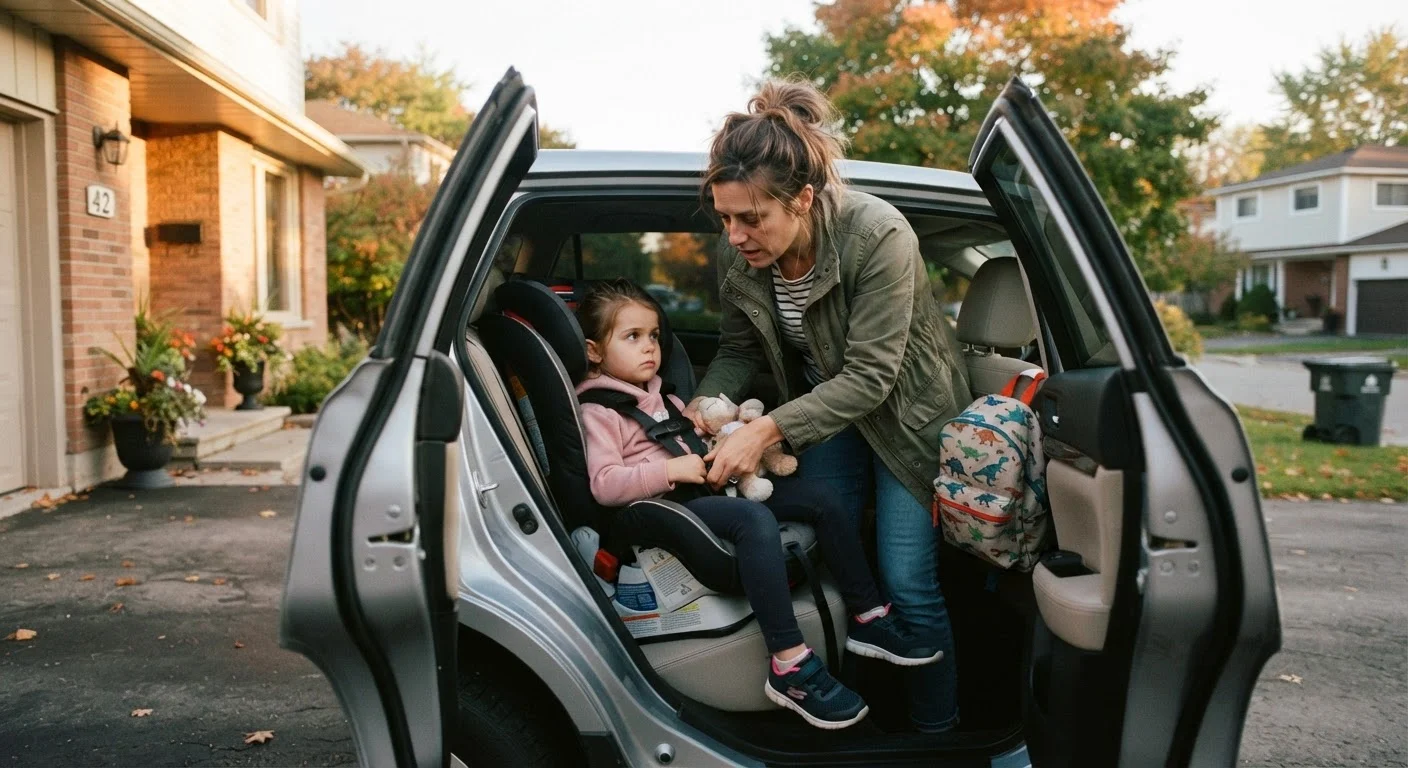
Carpooling's biggest practical weakness for suburban families is schedule dependency. If your partner's car is in the shop, a child has an unexpected doctor's appointment, or you need to stay late for a meeting, your carpool arrangement either strains or collapses. That vulnerability is not hypothetical for most parents: it is a routine consideration.
Solo driving absorbs schedule changes without negotiation. You leave when you need to, stop where you want, and are not obligated to anyone else's timeline. For families managing school runs alongside work commutes, that autonomy is a genuine operational asset.
Carpooling works best when anchor points in your week are fixed: a consistent start time, a stable end time, and a route that does not require detours for pickups or errands. When those conditions hold, the coordination cost shrinks significantly.
Stress, time, and the commute experience
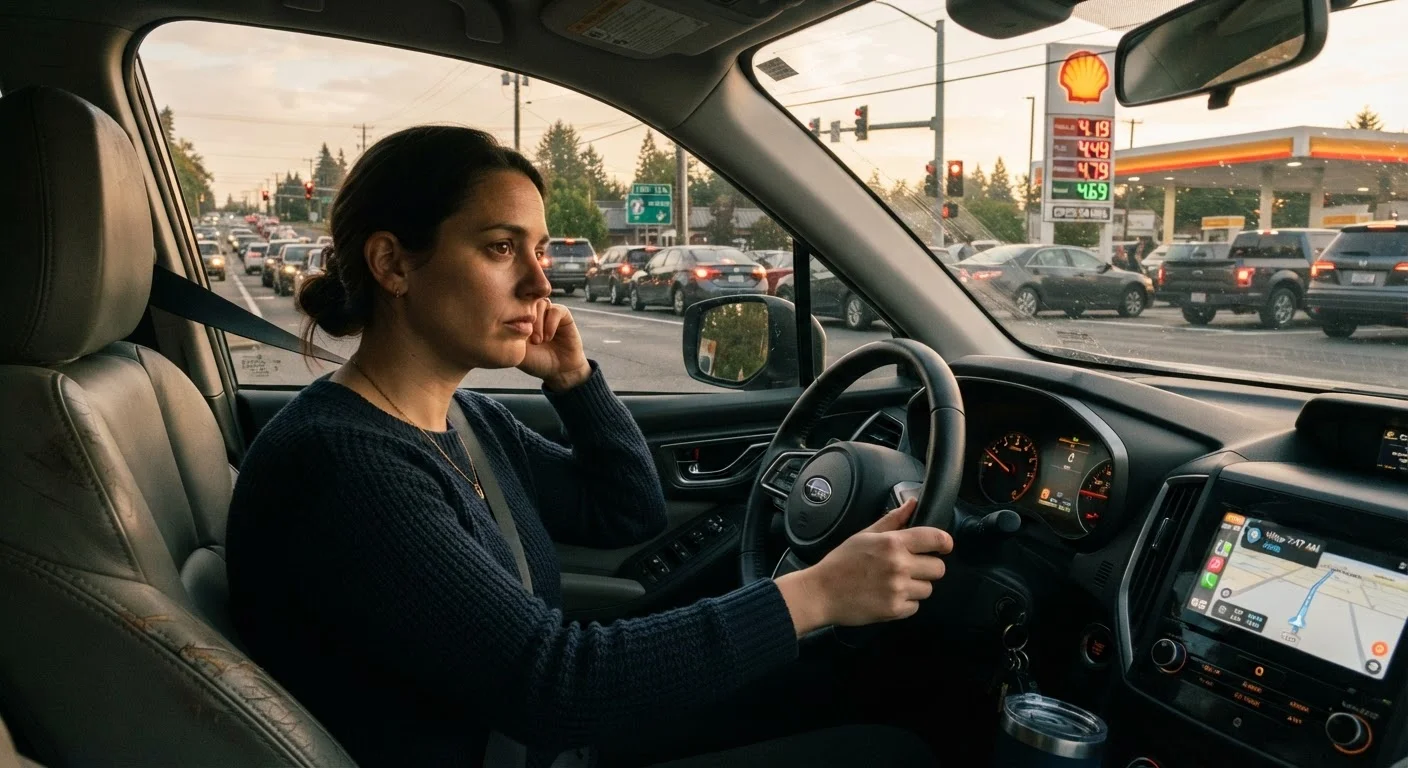
Driving solo in heavy suburban traffic is not inherently relaxing. Studies from traffic research organizations have consistently linked long solo commutes to elevated stress, particularly when the driver has no control over delays. The difference is that solo drivers absorb that stress alone while carpool riders can share the driving burden across the week.
Rotating driving duties in a carpool means each member gets non-driving days where they can read, rest, or handle email. That is time recovered in a week. At the same time, some commuters use solo drive time as deliberate decompression, a mental boundary between work and home. Whether that matters to you depends entirely on your situation.
Traffic timing is worth considering separately. A well-coordinated carpool that leaves slightly earlier or later to avoid peak congestion can reduce total commute time compared to solo driving at the worst hour. That requires agreement among carpool members, which is another coordination cost to factor in.
Making a hybrid approach work
Many suburban commuters do not treat this as a binary choice. A part-time carpool, three days per week with two solo days, can recover 60 percent of the cost savings while preserving flexibility on the days that need it most. The logistics require a clear agreement upfront: who drives when, what happens if someone cancels, and how fuel costs are tracked.
Building better habits on solo driving days also narrows the cost gap. Fuel economy habits on long suburban routes can reduce consumption by 10 to 15 percent without changing your vehicle, which matters more the more solo miles you drive.
The right split depends on your route, your schedule stability, and whether you have a willing carpool partner whose commute aligns closely enough to make the arrangement practical rather than forced.