Why seasonal checks beat waiting for warning lights
Warning lights are reactive. By the time a low-tire-pressure indicator trips or a battery voltage warning appears, you are already behind. A structured seasonal review lets you get ahead of wear patterns that predictably follow temperature swings, road salt exposure, and changes in driving load.
Most of the checks below require nothing more than a tire pressure gauge, a flashlight, and a clean rag. A few call for a multimeter or a trip to a shop for a load test. For a fuller picture of how these tasks fit into your vehicle's broader service schedule, see your car's maintenance schedule, decoded for context on service intervals and why they matter.
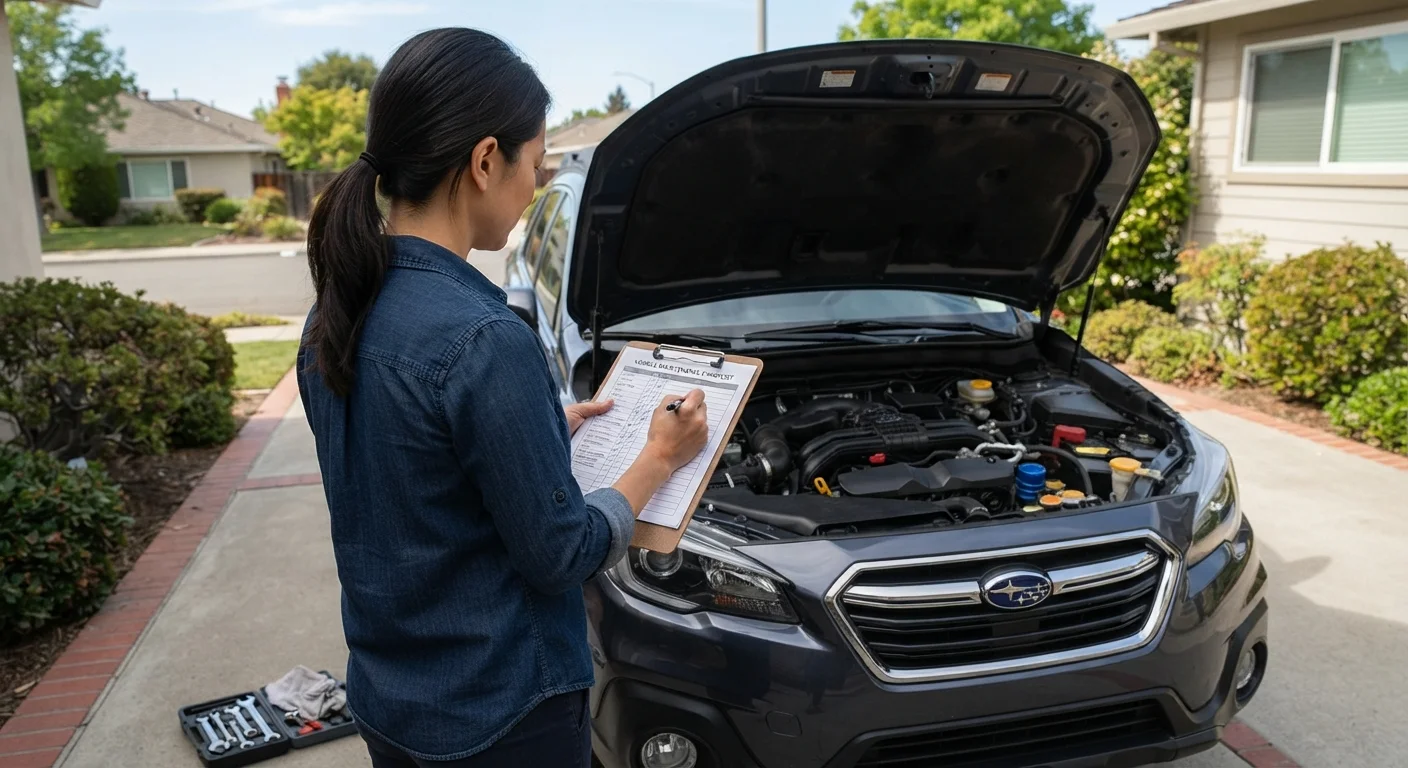
Work through this checklist four times a year: once before each season begins. Budget 30 to 60 minutes per review. Catching a cracked wiper blade in late August costs nothing. Catching it on a rainy January commute costs time, stress, and potentially much more.
Brake and coolant system work carries real risk
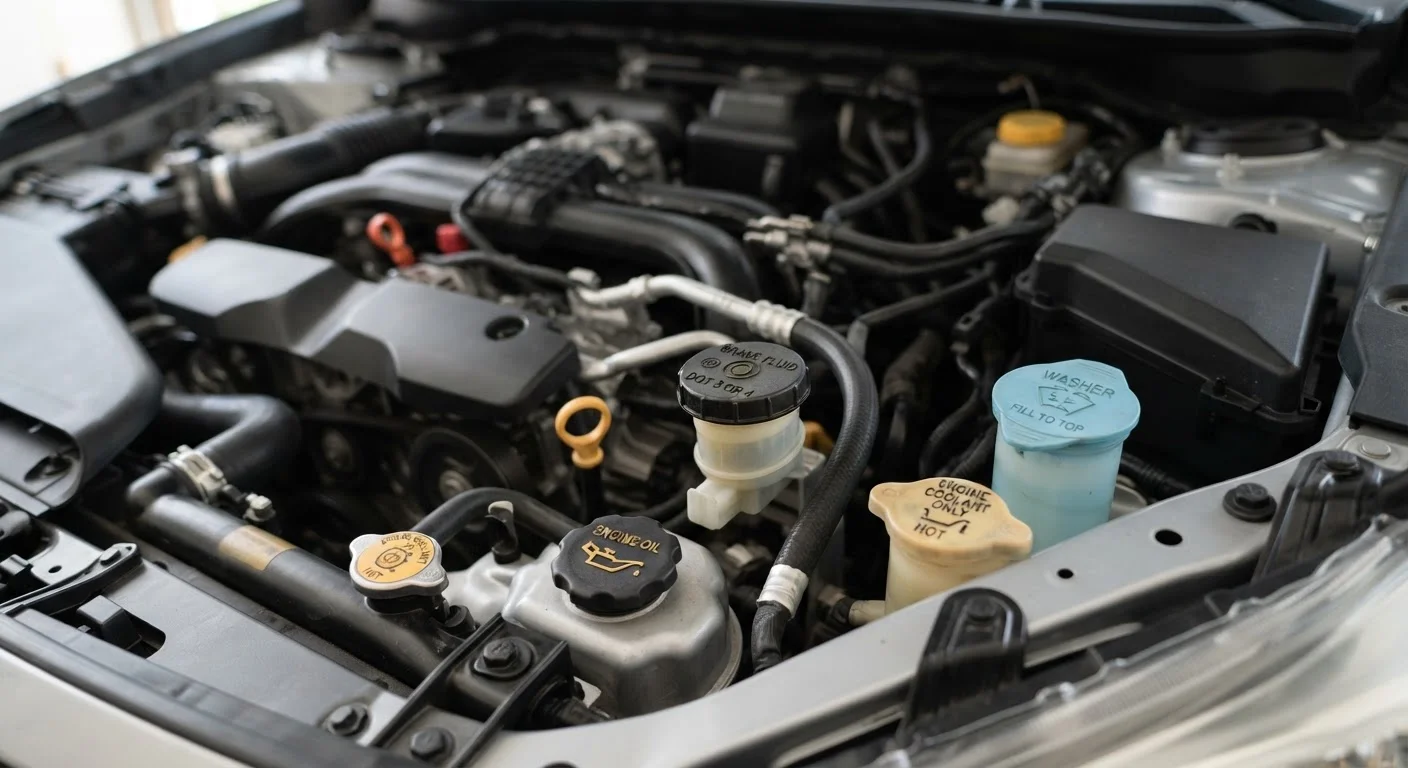
Checking fluid levels visually is a safe driveway task, but any work involving brake lines, bleeding brakes, removing the radiator pressure cap on a hot engine, or flushing the cooling system should be done by a qualified mechanic. Mistakes in these systems can cause brake failure or engine damage. If a fluid level is significantly low, have a professional inspect for leaks before simply topping it off.
Tools you will need
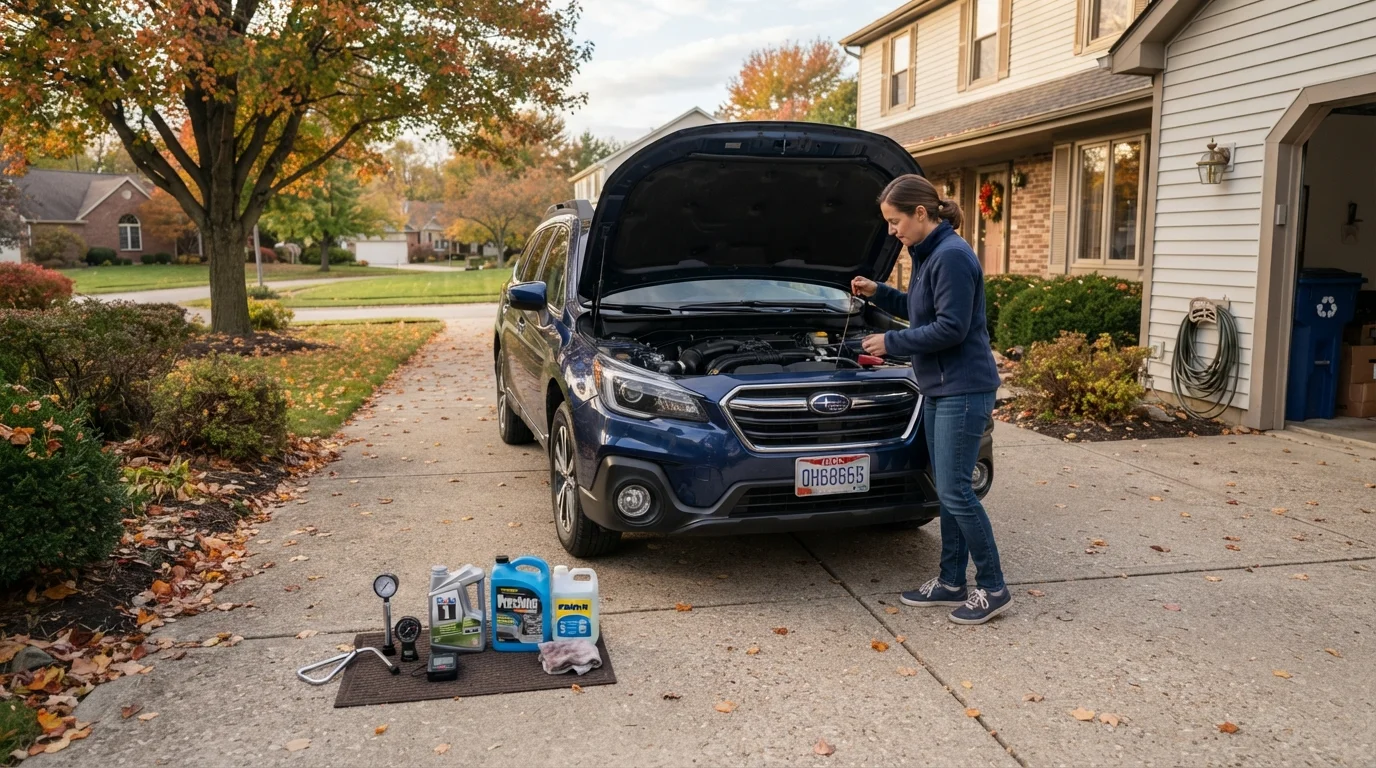
Most checks require only a handful of inexpensive items. Having them ready before you start saves you from stopping mid-inspection.
Tire pressure gauge
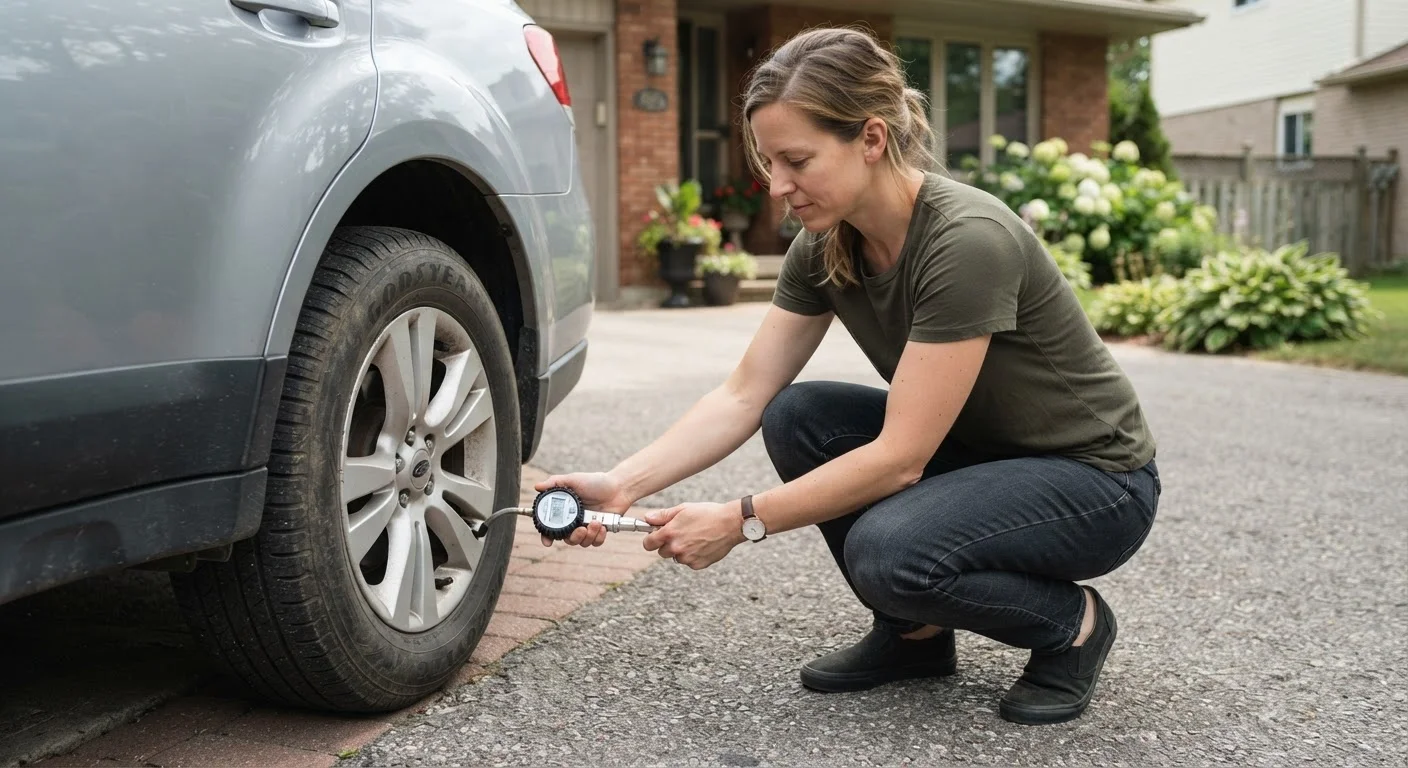
Measures PSI in each tire so you can inflate to the manufacturer's specification.
Tread-depth gauge
Gives a precise measurement of remaining tread to determine whether tires are safe.
Flashlight or work light
Illuminates wheel wells, the engine bay, and the undercarriage for a thorough visual inspection.
Digital multimeter
Checks battery voltage to flag batteries that may fail under load; a resting voltage below 12.4V warrants further testing.
Battery terminal brush
Removes corrosion from battery terminals to restore a clean electrical connection.
Clean rags and nitrile gloves
Keeps hands protected when handling fluids and allows accurate dipstick readings on a clean surface.
The seasonal inspection checklist
The items below are grouped by system. Work through them in order, or focus on the groups most relevant to your region's seasonal shifts. Items flagged as must are not optional if you want reliable transportation. Items flagged as should are strongly recommended. Nice to have items add margin and convenience.
For a deeper look at tire-specific maintenance beyond pressure, tire care from the ground up covers tread measurement, rotation schedules, and when alignment matters. And if any of these checks reveal a fluid you are not familiar with, the fluids quietly keeping your car alive explains what each one does and where to find it.
Tires
Battery and electrical
Fluids
Wipers and visibility
Brakes and undercarriage
DIY versus shop: knowing the boundary
Checking tire pressure, topping off washer fluid, and swapping wiper blades are legitimate driveway tasks for most drivers. Battery load testing, brake fluid condition assessment, and anything involving the cooling system pressure cap or brake lines generally warrant a trained mechanic, particularly if you are not already familiar with those systems.
DIY car maintenance vs. taking it to a mechanic walks through the specific criteria for deciding which jobs stay in the driveway and which go to a shop. When in doubt, a seasonal multi-point inspection at a reputable independent shop typically costs little and covers everything on this list in one visit.
Once your vehicle is ready for the season, your weekly commute prep checklist can help you keep smaller checks on a rolling weekly rhythm so nothing slips between seasonal reviews.