Why room-by-room matters
A pet that is perfectly safe in an adult-only home can become a hazard source the moment a crawling infant or curious toddler enters the picture. The reverse is also true: small children introduce choking-sized toys, dropped snacks, and unpredictable movement that can stress or injure a pet. A whole-home approach helps, but the risks are room-specific, so a room-by-room walkthrough is the most practical way to work through them.
This checklist is designed for families who already share a home with at least one pet and at least one child under eight. Use it as an audit tool: walk each room, tick off what is already done, and flag what needs attention. For households preparing to bring an animal home for the first time, see our guide to introducing a new pet for the full setup walkthrough.
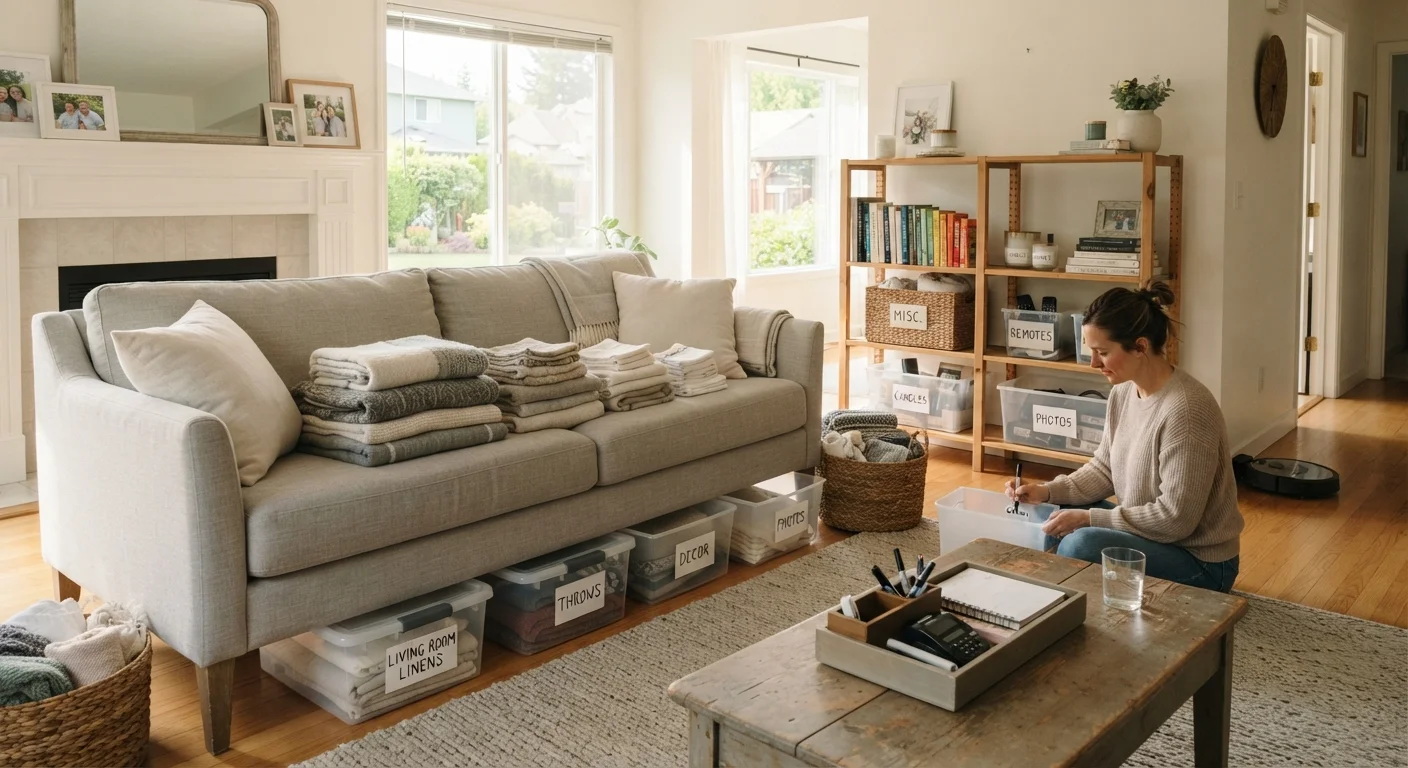
If you want to go deeper on how your home is organized more broadly, this room-by-room organization guide is a useful companion resource.
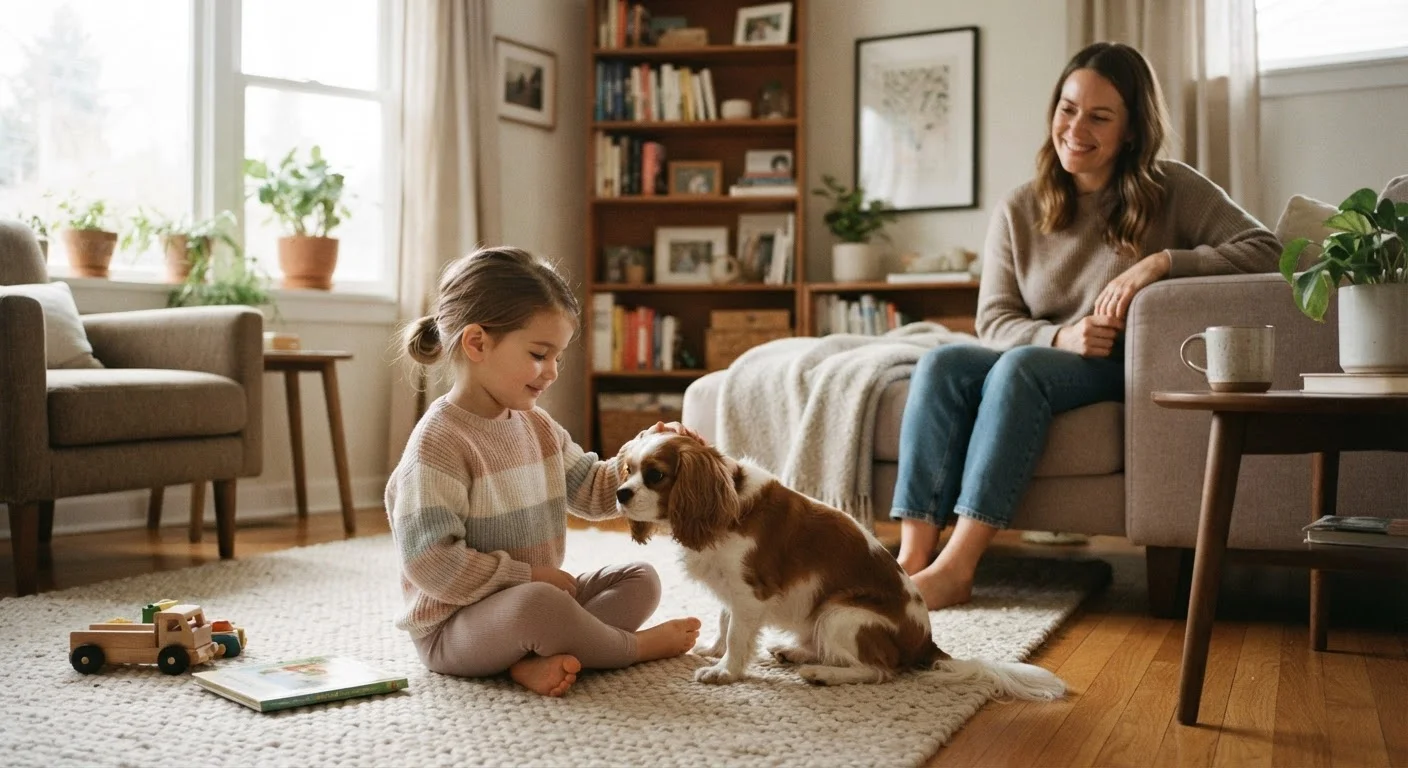
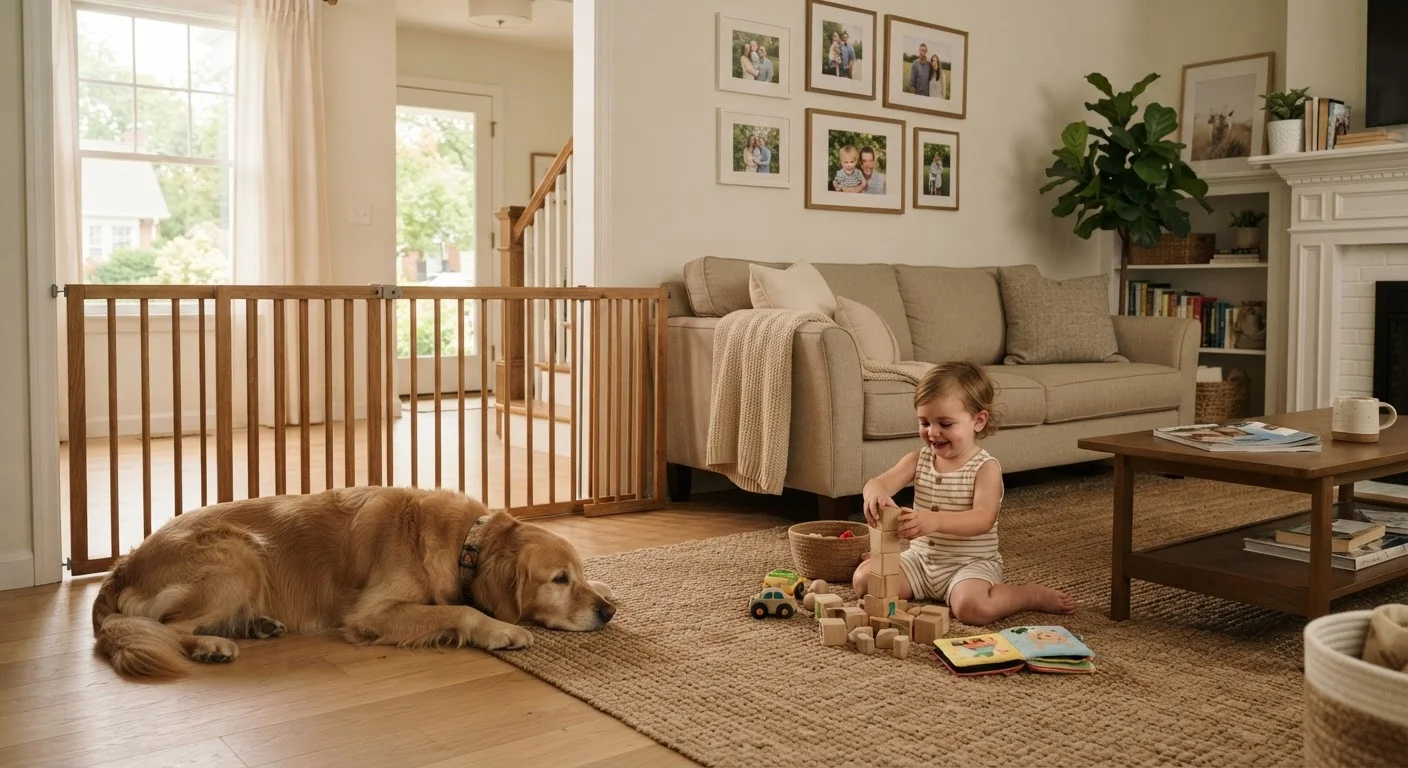
Living room and play areas
Kitchen and dining areas
Bathrooms
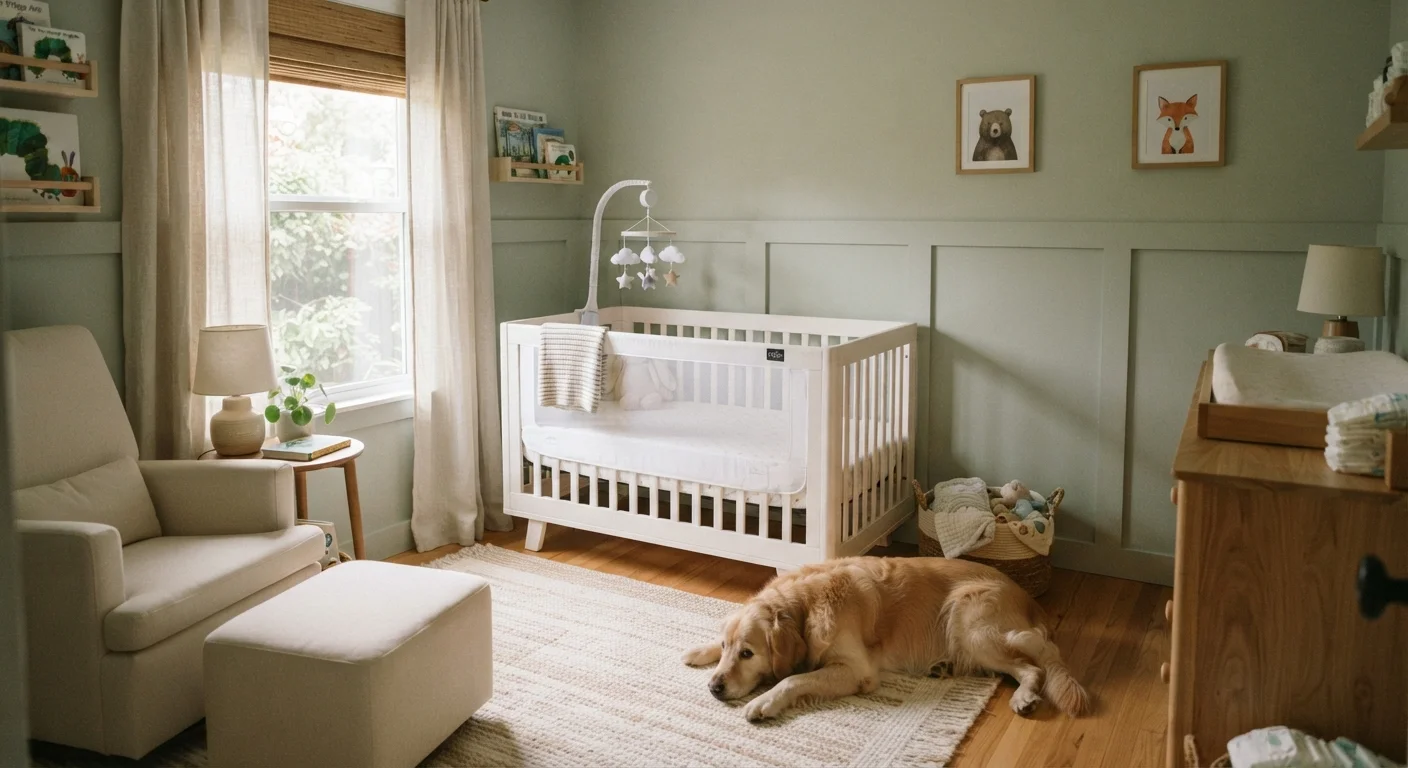
Bedrooms and nursery
Garage and laundry room
Tools and supplies to have on hand
Before you walk the rooms, gather what you are likely to need. Some of these items may already be in your home; others are worth picking up before you start making changes.
Pressure-mounted or hardware-mounted baby gates
Create reliable separation between pet zones and child zones in doorways and at stair entrances.
Cabinet safety latches
Prevent access to cleaning products, medications, and pet supplies stored in lower cabinets.
Cord covers or cable management channels
Protect floor-level electrical cords from pets that chew and children who pull.
Trash can with locking or weighted lid
Stop pets from accessing discarded food items that may be toxic.
Door handle childproof covers
Keep bathroom, nursery, and garage doors reliably closed against both curious pets and toddlers.
Furniture anchoring straps
Secure tall bookcases and TV units to wall studs to prevent tipping.
ASPCA Animal Poison Control Center number (888-426-4435)
Keep this posted in the kitchen or saved in your phone for immediate reference if a pet ingests something toxic.
Common hazards that cross every room
A few hazards appear regardless of which room you are in. Electrical cords at floor level are chewable for pets and a strangulation risk for toddlers; route them through cord covers or tuck them behind furniture. Small objects below waist height, including pet toys with squeakers, can be choking hazards for children under three. Conversely, small children's toys with button batteries are toxic if a pet chews and swallows them.
Cleaning products stored in low cabinets are a recurring danger. Move them to locked, high storage in every room where they appear. The same applies to any medication, including flea and tick treatments, which should never be left on counters or in bags within reach.
Flea and tick products near children
Many topical flea and tick treatments contain pyrethrins or permethrins, which are toxic to cats and can irritate children's skin on contact. After applying any spot-on treatment to a pet, keep children away from the animal until the application site is fully dry, which typically takes several hours. Store unused treatments in a locked cabinet, not in a bag or on a shelf within reach.
Common household plants toxic to pets
Lily varieties (including peace lily and Easter lily) are severely toxic to cats; even small ingestion can cause kidney failure. Sago palm is toxic to both dogs and cats. If you are unsure whether a plant in your home poses a risk, the ASPCA maintains a comprehensive, searchable toxic plant database at aspca.org that you can check before removing or keeping any houseplant.
For guidance on how pets and sleeping infants should be separated, the article on pets and infant sleep safety covers that topic in detail. And once the physical spaces are set up, teaching children how to behave around animals is equally important; see our guide to teaching kids safe pet interaction for age-appropriate strategies.
Finally, consider designating retreat spaces for both the pet and the child. A pet that cannot escape a loud or overstimulating room is more likely to snap or scratch. Creating safe zones for both is one of the most effective structural changes a family can make.