Why separate spaces matter
A family home with both a toddler and a dog can feel like a constant negotiation. The dog wants rest; the toddler wants to share it with them immediately. Without physical structure, that tension plays out dozens of times a day, wearing down everyone involved, including the pet.
Animals under repeated stress from unwanted handling are more likely to react defensively. The American Veterinary Medical Association notes that children are disproportionately affected by dog bites, and many incidents occur in familiar home settings. Giving a pet a reliable retreat reduces the likelihood it ever reaches that threshold.
Children also benefit from space that is theirs. Toddlers eating or sleeping need areas where a curious pet cannot access food, disturb rest, or cause accidental injury. Structural separation is not about keeping animals and children apart permanently. It is about giving each party a place to decompress, which makes their shared time calmer and safer.
For more on removing specific hazards throughout your home, see our room-by-room pet-proofing guide.
Best practices for setting up these zones
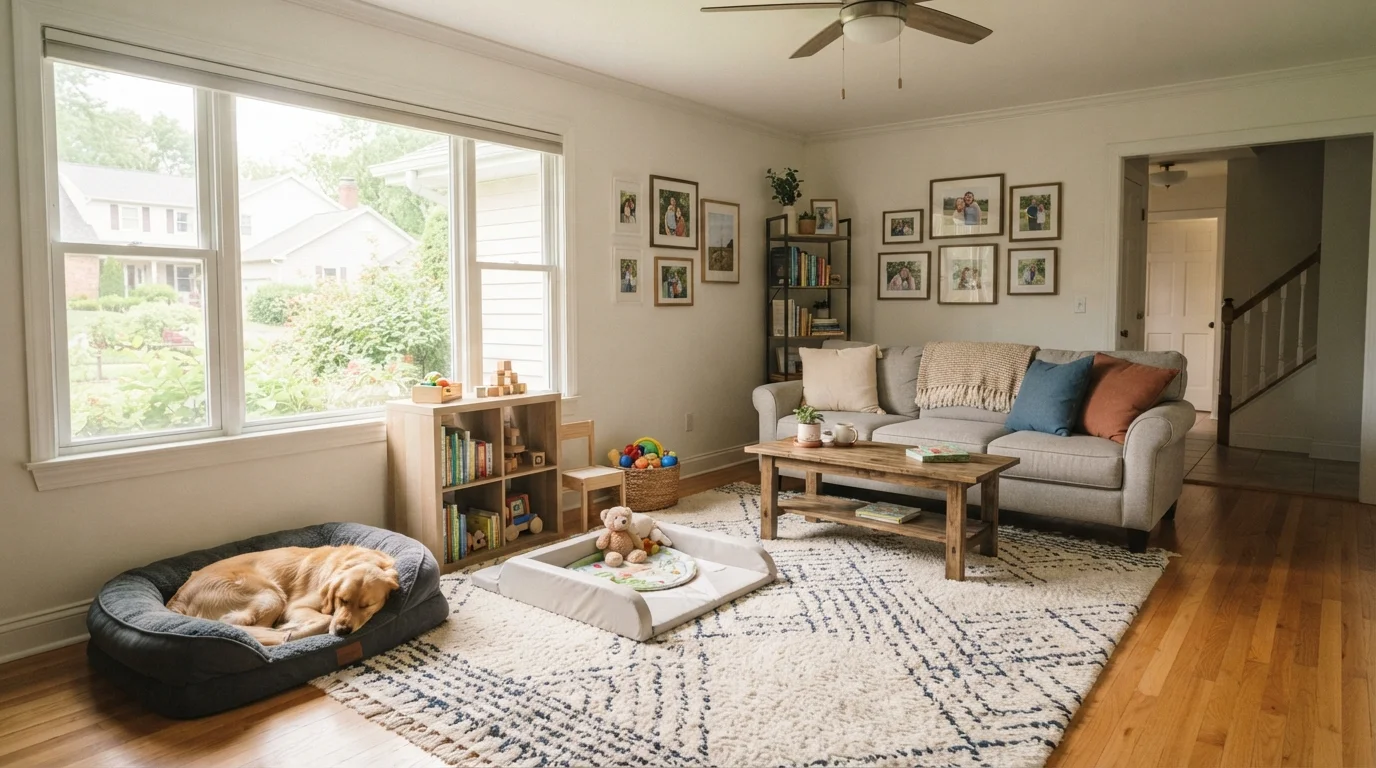
Give your pet a dedicated retreat that children are taught not to enter.
A pet that can escape stimulation voluntarily is far less likely to feel cornered. When a dog or cat can reliably withdraw, it has a pressure valve that prevents stress from accumulating to the point of a defensive reaction.
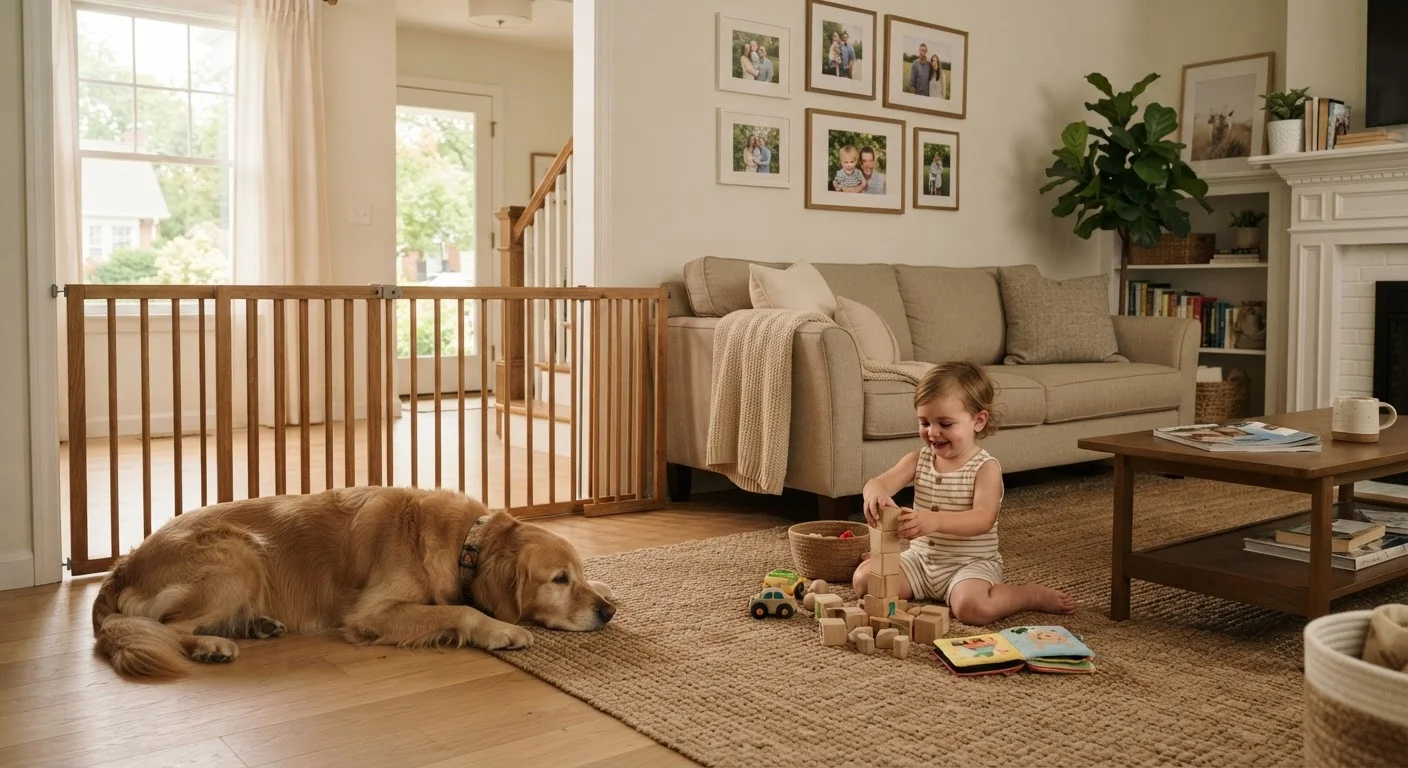
Use physical barriers rather than relying solely on supervision.
Supervision lapses. A baby gate or fitted door latch works around the clock without parental attention. Physical barriers also remove the need for repeated verbal correction, which reduces household friction.
Keep children's eating areas inaccessible to pets during mealtimes.
Pets drawn to food can knock over high chairs, startle small children, or consume dropped food that is harmful to animals. Separating mealtimes also prevents children from developing habits of feeding pets from their plate.
Locate the pet's food and water bowls away from the child's primary play zone.
Pet bowls are a magnet for toddlers: the water is splashable and the food is reachable. Beyond the mess, some pet foods and additives can be harmful to young children if ingested, and a pet may guard its bowl.
Establish the pet's zone before a new baby or newly mobile child arrives.
Animals adjust better to changes in routine when they are not introduced alongside other stressors. A pet that already treats a crate or bed as a safe, positive space will use it naturally when household noise and activity increase.
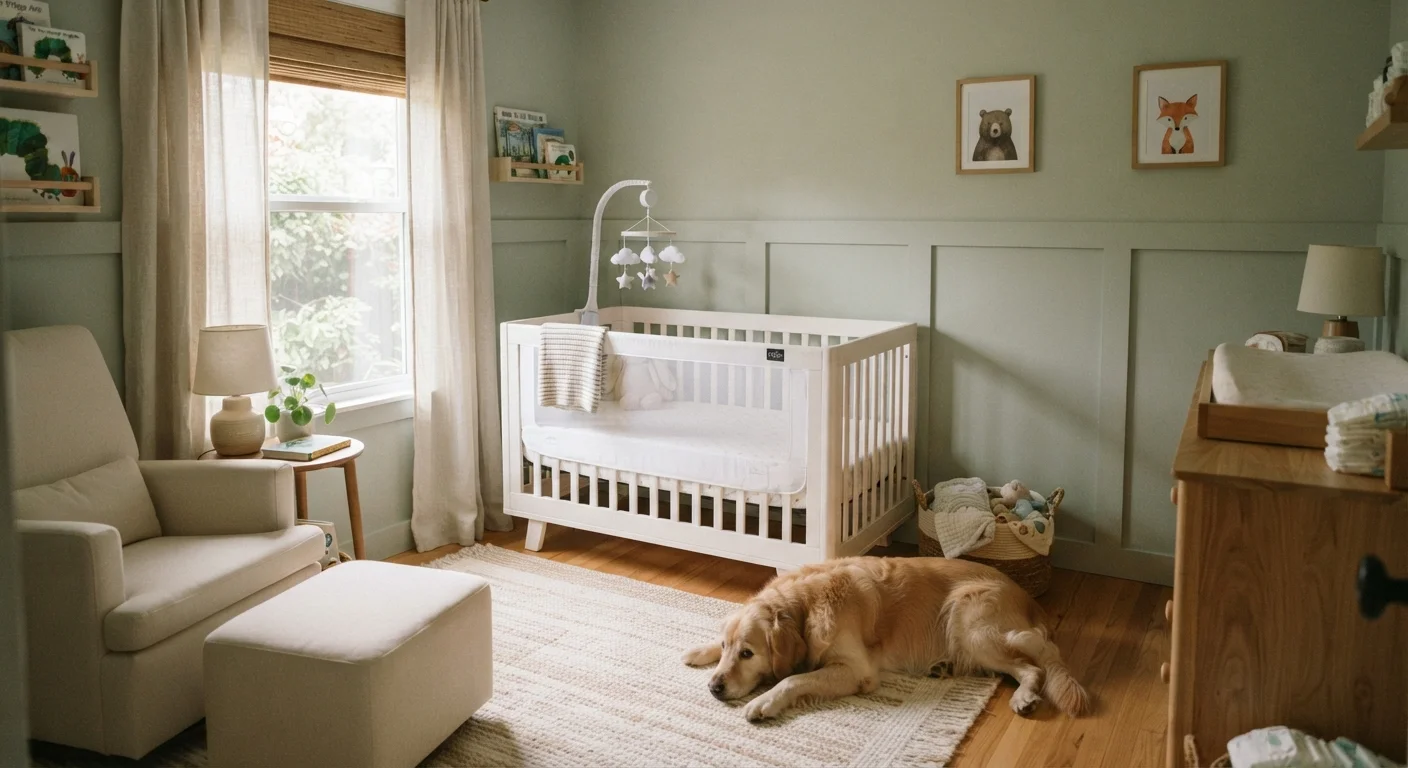
Make children's bedroom entrances off-limits to pets overnight.
Unsupervised nighttime access creates real safety risks for infants and very young children. Even a well-meaning, gentle pet can accidentally obstruct a sleeping infant or disturb a toddler in ways that become dangerous without an adult present.
Quick steps you can take today
If you are not sure where to begin, a few simple actions can make an immediate difference in how smoothly your household runs.
Once physical zones are in place, pairing them with consistent behavior guidance pays off quickly. Our article on teaching kids to interact safely with the family pet covers age-appropriate ways to explain boundaries to toddlers and older children alike.