Why traffic doesn't scale linearly
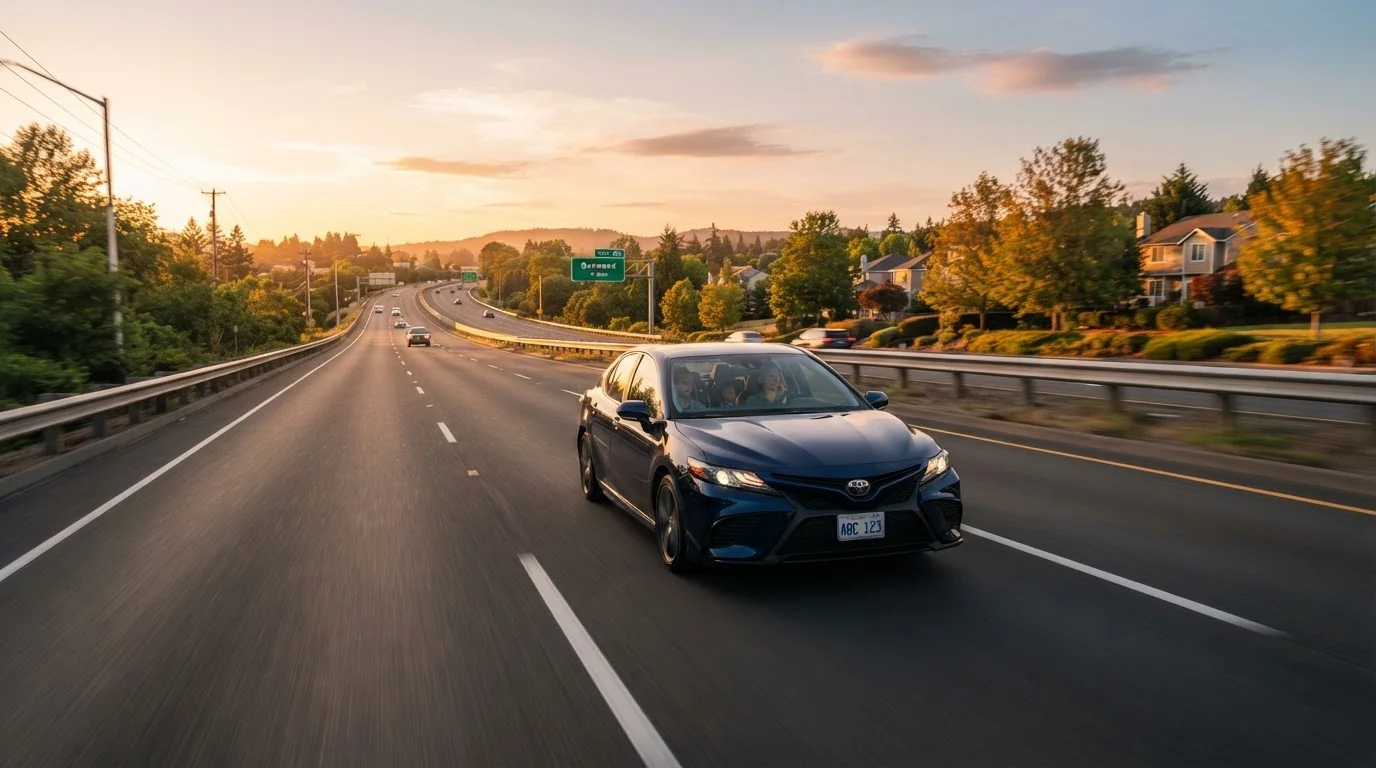
Most drivers think of traffic as a predictable tax: the more cars on the road, the slower everyone moves, proportionally. That is not how congestion actually behaves. Road networks experience compression waves, points at which a small increase in vehicle volume produces a disproportionately large increase in travel time. Transportation researchers have documented this effect on urban arterials and highway merge points repeatedly: once a road approaches roughly 85 to 90 percent of its capacity, travel times can double or triple with a relatively small addition of vehicles.
Leaving five minutes earlier often places you ahead of that threshold. You are not beating traffic by a large margin; you are avoiding the steep part of the congestion curve entirely. The same route that takes 22 minutes at 7:45 a.m. can take 38 minutes at 7:50 a.m. on the same day. That is not an anomaly. It is how high-volume road segments work.
2x to 3x
Travel time increase near road capacity thresholds
Transportation research on urban arterials shows travel times can double or triple once roads approach 85 to 90 percent of their vehicle capacity.
12 minutes
Average extra commute time during peak compression
U.S. Federal Highway Administration data indicates urban commuters lose an average of 12 minutes per trip during peak congestion windows compared to off-peak travel on the same routes.
10 to 15%
Fuel savings from smoother driving behavior
The U.S. Department of Energy estimates that aggressive driving, including rapid acceleration and hard braking, can lower fuel economy by 10 to 40 percent depending on driving conditions.
What stress does to your driving
When a driver believes they are running late, the body treats it as a mild threat. Cortisol and adrenaline rise, attention narrows, and the driver becomes more likely to accept smaller gaps in traffic, follow more closely, and accelerate harder out of stops. None of these behaviors actually save meaningful time on a congested road, but they do increase crash risk and wear on the vehicle.
A 2018 analysis published in the journal Accident Analysis and Prevention found that self-reported time pressure was associated with higher rates of aggressive driving behavior on commute routes. The mechanism is straightforward: perceived urgency changes how people evaluate acceptable risk. Leaving earlier removes the perceived urgency before it shapes behavior.
For families commuting with children in the car, the stakes are higher because passenger anxiety in the back seat can compound driver stress. Children pick up on parental tension, which often creates the very noise and distraction the driver is least equipped to handle under pressure.
The compounding effect on the whole morning
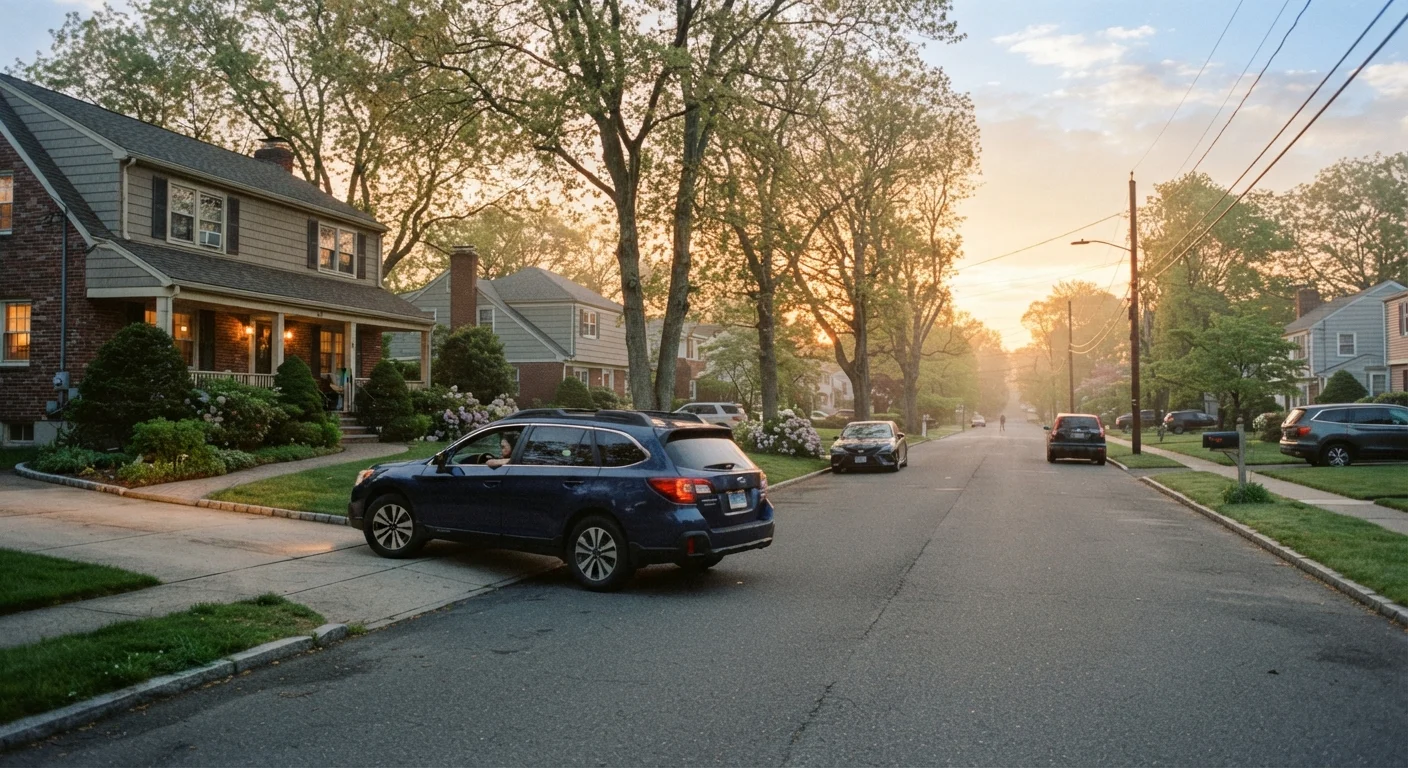
A five-minute earlier departure rarely works in isolation. For it to happen consistently, something upstream in the morning has to shift. Families who make this work reliably tend to move several small tasks to the evening before: bags packed and placed by the door, lunches made, and clothes selected. The morning itself then contains fewer decisions and fewer searches for missing items.
This is where the benefit compounds. When the morning runs without scrambling, children are calmer at drop-off, adults arrive at work in a lower-stress state, and the car journey itself is quieter. The five-minute shift is often the visible part of a broader restructuring of the morning routine that produces outsized returns.
Prepare the night before
Pack bags, set out clothes, and prepare any food items the evening before. Each task moved out of the morning removes a potential delay that would otherwise consume your five-minute buffer before you reach the car. This single habit is what separates families who consistently leave on time from those who intend to.
It also interacts with driving habits that reduce fuel consumption. A driver who is not rushing maintains more consistent speeds, uses engine braking more effectively, and avoids the fuel-expensive stop-and-go pattern that congestion forces on late departures.
Making the habit stick
The difficulty with earlier departures is that the benefit is invisible on good days. When nothing goes wrong and you arrive comfortably on time, it is easy to conclude that you could have left later. This is a cognitive blind spot: you cannot see the delay that the buffer absorbed.
One practical approach is to track your actual arrival times over two weeks, noting whether you left within your buffer window. Most drivers who do this see a clear pattern: buffer days land in a narrower arrival window, and non-buffer days produce occasional large outliers. The data makes the value concrete rather than theoretical.
For households where morning timing also touches pet care routines, the same logic applies. A shift in pet feeding schedules to the evening can remove one more morning variable. Fewer moving parts in the morning means the five-minute buffer is not consumed before you even reach the car.
This article provides general information about commuting habits and is not a substitute for professional advice on vehicle safety or road conditions. Always follow local traffic laws and drive safely.