Why small maintenance tasks add up at the pump
Fuel costs are one of the largest recurring expenses for suburban commuters. While driving habits matter, the condition of your vehicle quietly determines how efficiently it burns every gallon. A car running with under-inflated tires, a dirty air filter, and worn spark plugs can consume noticeably more fuel than the same model kept in good order.
The good news is that most of these checks cost little to perform and can be done in a driveway in under an hour. This checklist focuses on the checks with a real, documented connection to fuel consumption. For a broader look at what else drains your tank without obvious warning signs, see why your car burns more fuel than it should.
Work through this list once a month and again before any long trip. If a check reveals a problem beyond basic maintenance, have a qualified mechanic inspect the vehicle before the issue compounds.
What you will need
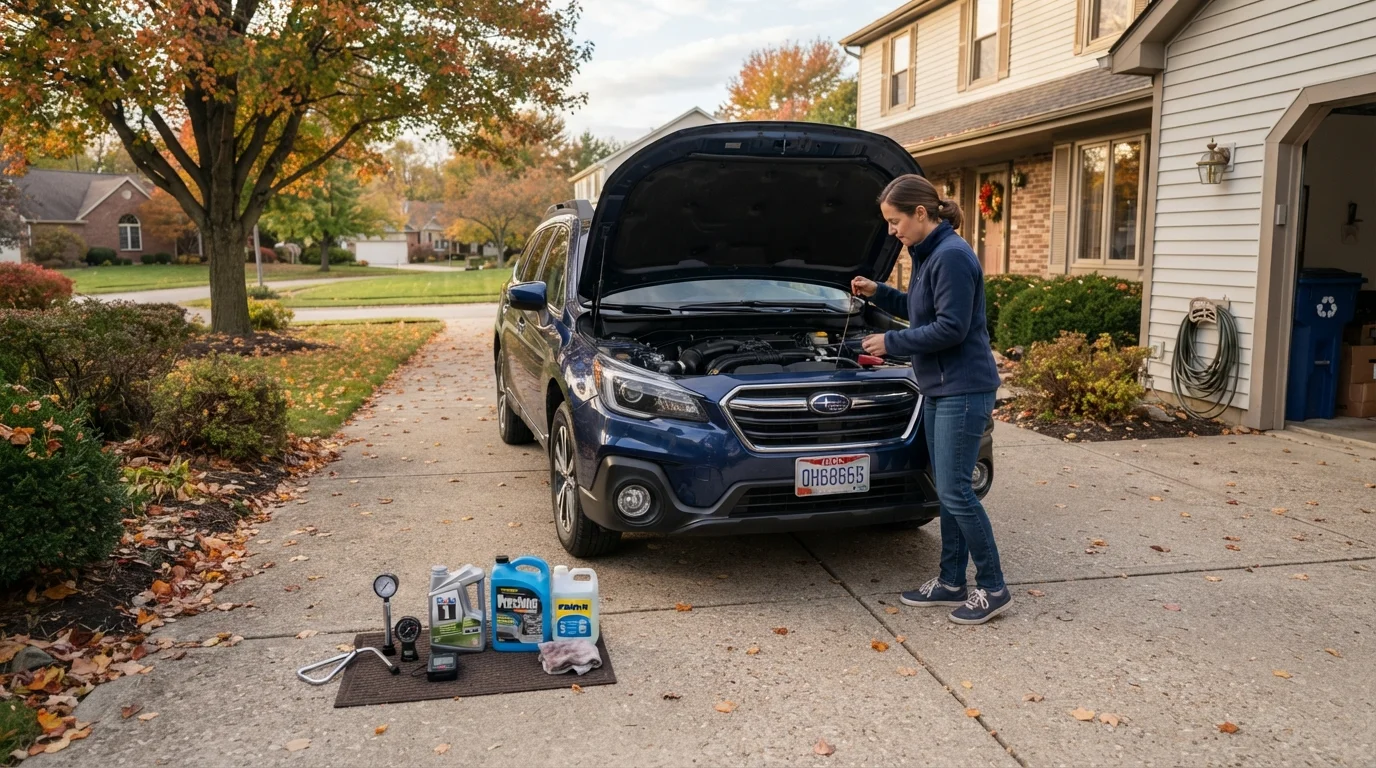
Most checks on this list require only a few basic items. Gather these before you start so you can move through the list without stopping.
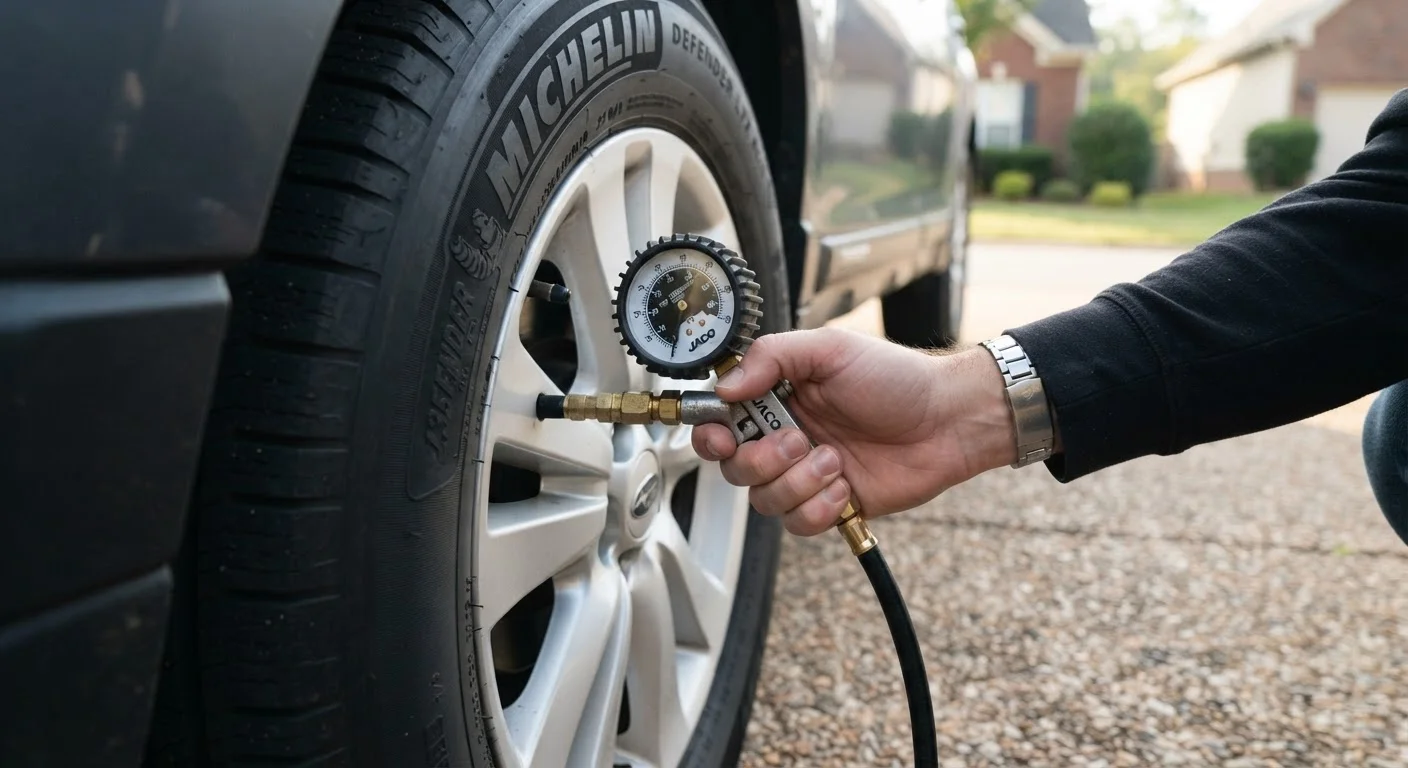
Tire pressure gauge
Reads the air pressure in each tire so you can inflate or deflate to the correct PSI.
Vehicle owner manual
Provides the correct tire pressure, oil viscosity, and filter replacement intervals for your specific vehicle.
Portable air compressor or pump
Allows you to inflate tires at home rather than driving to a gas station with low pressure.
OBD-II diagnostic reader
Reads stored fault codes from the vehicle's computer so you can identify engine issues including misfires.
Flashlight
Helps you inspect the engine air filter and tire sidewalls in low-light conditions.
Your vehicle's owner manual is worth keeping in the glovebox. It lists the correct tire pressure, oil viscosity, and service intervals specific to your make and model, none of which are universal.
The fuel economy checklist
Work through each group below. Items marked "must" have a direct, measurable effect on fuel consumption. "Should" items matter for overall efficiency and vehicle health. "Nice to have" items provide incremental gains worth doing if you have time.
Tires
Engine air filter
Motor oil
Spark plugs and ignition
Fuel system
Load and aerodynamics
Climate control
For a deeper look at tire-specific maintenance, including tread depth and rotation schedules, see tire care from the ground up. And if you want to pair these checks with a full seasonal review, seasonal car care before each change of season covers what else to inspect as conditions shift.
Do not rely on the dashboard tire light alone
The tire pressure monitoring system (TPMS) warning light typically activates only after pressure has dropped 25% or more below the recommended level. By that point, fuel economy loss is already significant. Check pressure manually with a gauge at least once a month, not just when the warning light appears.
Separating real savings from noise
Not every product sold as a fuel saver delivers results. Additives, special coatings, and aftermarket intake systems are often marketed with optimistic claims that independent testing does not consistently support. The checks in this list are grounded in the mechanics of how engines consume fuel, not in vendor claims.
If you want to understand which popular fuel-saving ideas hold up and which do not, fuel saving claims that do not hold up is worth reading alongside this checklist. Together they give you a clear picture of where your maintenance time and money will actually move the needle.
For commuters tracking the full cost of their daily drive, the real cost of driving to work every day puts fuel spend in context alongside depreciation, parking, and wear.
This article is for general informational purposes only. Always consult your vehicle owner manual and, where tasks involve mechanical systems, a qualified mechanic before performing repairs or adjustments.