Why the risk is different for pets
Child safety research has shaped how household products are formulated and labeled for decades. Many substances now considered low-risk for children, however, were never evaluated through the same lens for companion animals. A cat's liver lacks the enzymes needed to break down certain compounds that a child's body handles without trouble. A dog's smaller body weight means a dose that barely registers in a toddler can reach toxic levels quickly.
This is not a reason for alarm, but it is a reason to think about storage and use separately for each group in your home. If you are already working through a room-by-room safety audit, the room-by-room pet-proofing guide covers physical hazards alongside chemical ones.
Phenol
A chemical compound used as a disinfectant in some household cleaners. It is metabolized slowly by cats and can accumulate to toxic levels even from small exposures.
Quaternary ammonium compound (quat)
A class of antimicrobial agents found in many spray disinfectants and sanitizing wipes. Safe for humans at consumer concentrations, but can irritate pets' mucous membranes when ingested through grooming.
Permethrin
A synthetic insecticide used in lice treatments and yard sprays. It is approved for use on humans and dogs but is highly toxic to cats, affecting their nervous system.
Xylitol
A sugar alcohol used as a sweetener in many sugar-free products. It is safe for humans but triggers a dangerous insulin response in dogs.
Monoterpene
A class of organic compounds present in many essential oils. Cats lack the liver enzyme needed to process these efficiently, making repeated or concentrated exposure harmful.
Substances that are lower risk for kids but hazardous to pets
The list below covers categories commonly found in suburban homes. For any suspected poisoning, contact the ASPCA Animal Poison Control Center (888-426-4435) or your veterinarian immediately; do not wait for symptoms.
| Cat liver enzyme limitation | Cats lack glucuronyl transferase, an enzyme needed to process phenols and certain other compounds (Veterinary Pharmacology and Therapeutics, general reference) |
| Permethrin toxicity in cats | Extremely toxic; even small skin contact can cause tremors and seizures (ASPCA Animal Poison Control Center guidance) |
| Xylitol risk species | Dogs (not cats); can cause hypoglycemia and liver failure (ASPCA Animal Poison Control Center) |
| ASPCA poison control hotline | 888-426-4435 (24-hour, consultation fee may apply) (ASPCA Animal Poison Control Center) |
| Essential oils of greatest concern for cats | Tea tree, eucalyptus, citrus, pennyroyal (Veterinary toxicology literature, general reference) |
Essential oils and diffuser products
Many parents use lavender, eucalyptus, tea tree, and citrus oils for sleep routines or cleaning. At the concentrations typically used around children, these pose minimal human risk. Cats are highly sensitive to phenols and monoterpenes found in tea tree, eucalyptus, and citrus oils. Even passive diffuser exposure can cause drooling, wobbling, or lethargy in cats. Dogs are less sensitive but can still be affected by concentrated forms.
Certain surface disinfectants
Quaternary ammonium compounds (quats), found in many spray disinfectants and antibacterial wipes, are approved for use in homes with children. Cats that walk across freshly sprayed surfaces and then groom themselves can ingest enough to cause mouth ulcers and respiratory distress. Allow surfaces to dry completely before allowing pets back into the area, and check product labels for quat content.
Phenol-based cleaners
Products containing phenol or chloroxylenol (common in some multipurpose floor cleaners) can cause liver damage in cats with even small exposures. These cleaners often carry no specific pet warning on consumer packaging.
Permethrin-based products
Permethrin is used in some lice treatments approved for children and adults, and in yard pest sprays. It is extremely toxic to cats, causing tremors and seizures. Dogs tolerate it better, but cats in a home where a child has been treated with a permethrin shampoo can be exposed through direct contact before the product is fully rinsed.
Xylitol
This sweetener appears in sugar-free gum, some vitamins, and certain toothpastes marketed to children. It is harmless to humans but causes a rapid insulin release in dogs that can lead to hypoglycemia and liver failure. Xylitol does not affect cats in the same documented way, but any exposure warrants a call to a veterinarian.
Storage and use habits that protect pets
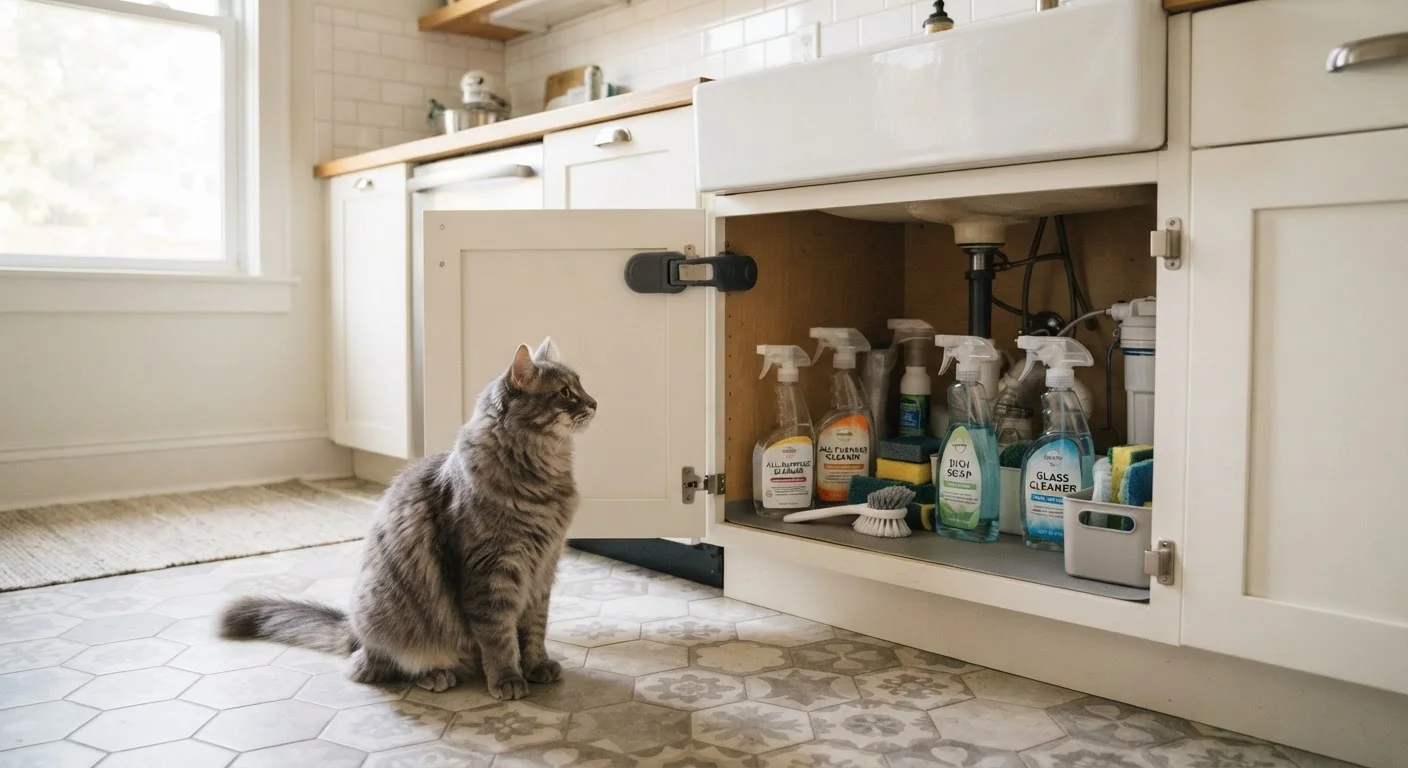
Child safety locks keep cabinets closed, but a dog can nose open an unlocked cabinet just as easily as a toddler. Elevated storage is more reliable for pets than for children, since cats can jump and investigate high shelves. The most protective approach is a cabinet that closes securely at any height.
- Store all cleaning products, medications, and personal care items in closed, latching cabinets rather than under an open sink.
- After using disinfectant sprays or floor cleaners, allow the treated surface to dry fully before permitting pets to enter the room.
- Dispose of used lice-treatment applicators, wipes, and cotton pads in a lidded trash can immediately, before pets can access them.
- Keep xylitol-containing products (gum, vitamins, toothpaste) in a drawer or cabinet, not on a low countertop within a dog's reach.
- Run diffusers in rooms pets cannot access, or choose diffuser-free alternatives for scent.
For a broader look at how shared family spaces can be arranged to reduce these risks, see the guide to creating safe zones for pets and children.
This article is for general informational purposes only and is not veterinary or medical advice. If you suspect your pet has been exposed to a toxic substance, contact your veterinarian or the ASPCA Animal Poison Control Center immediately.