What this comparison actually measures
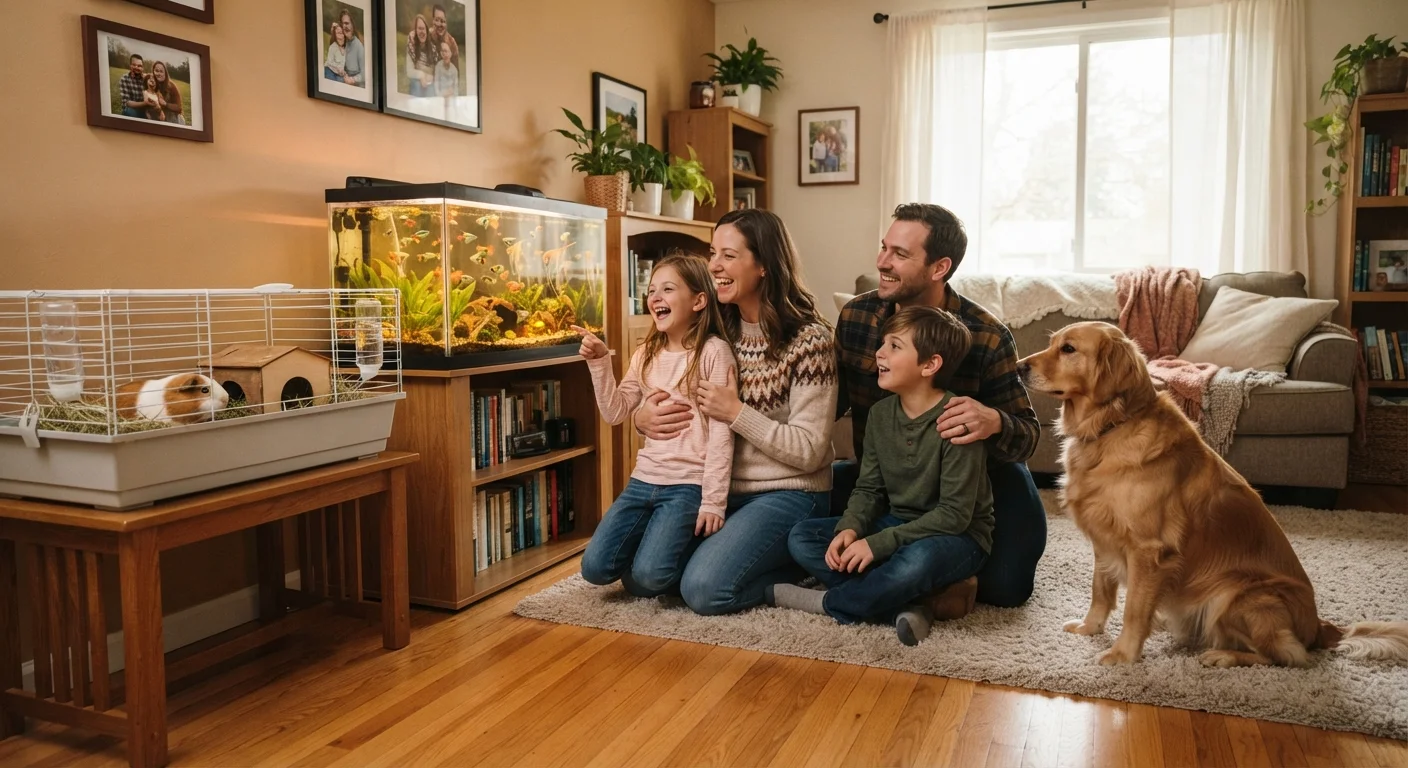
Choosing a pet for your family is not just about what your kids beg for at the pet store. The question worth asking is whether a given animal fits the hours your household genuinely has, the space you live in, and the ages of the children who will interact with it. This comparison covers three categories parents most often consider: dogs, small mammals (guinea pigs, rabbits, hamsters), and fish. For each, the focus is on daily time cost, physical space, interaction quality for children, and total care complexity.
Before going further, the family pet readiness checklist is worth reviewing alongside this article. It covers budget, allergy screening, and child maturity in a structured format that complements what follows here.
Dogs: high reward, high commitment
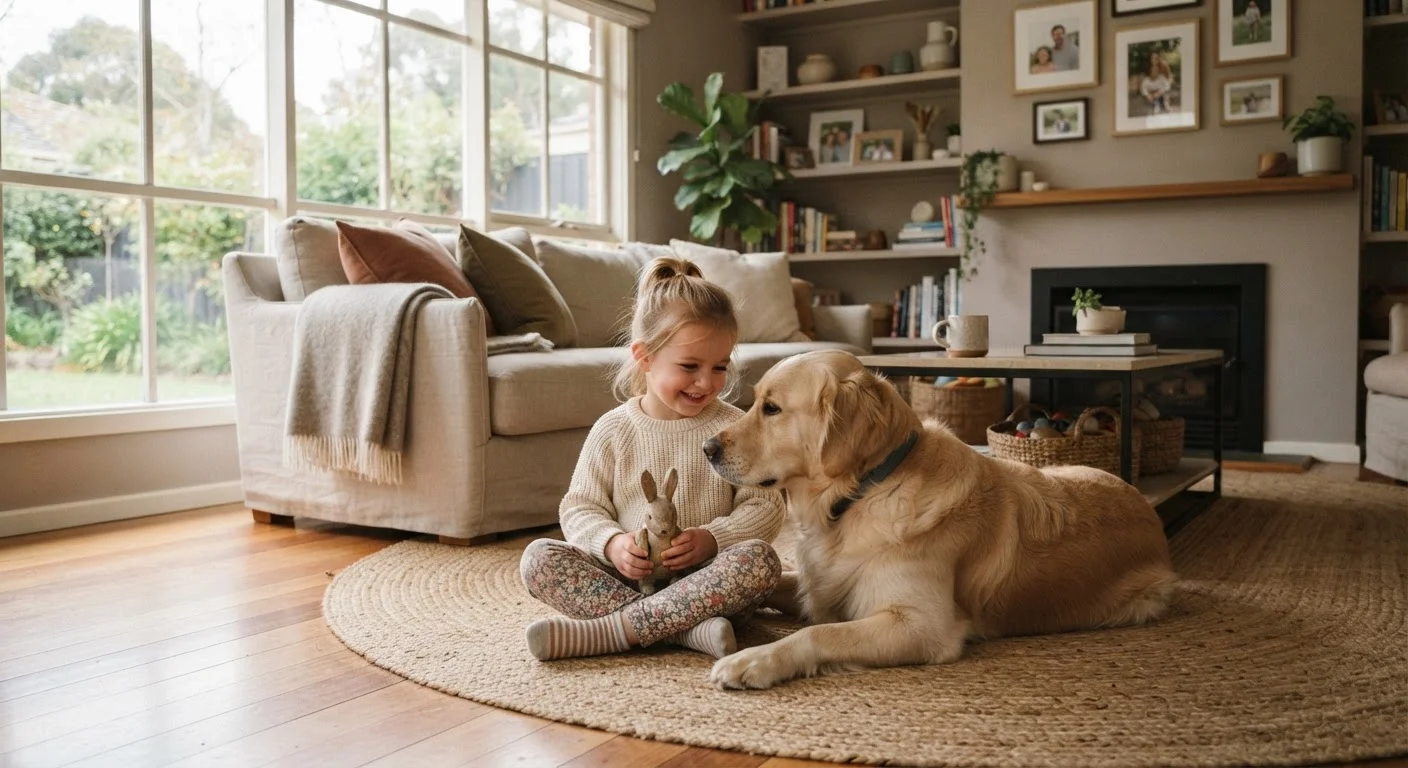
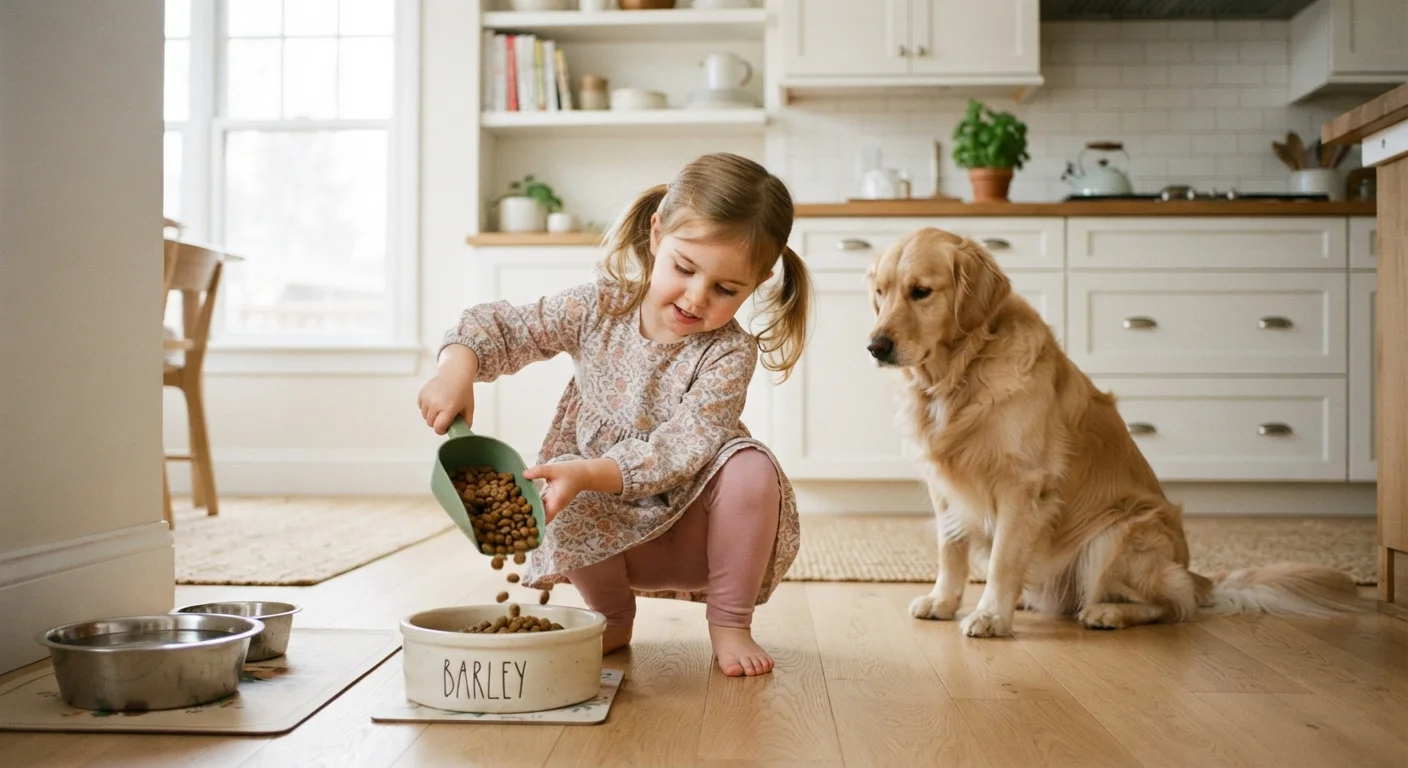
Dogs are social animals that need daily exercise, structured feeding, and consistent human interaction. A healthy adult dog typically needs at least 30 to 60 minutes of active exercise per day, depending on the breed. Add feeding, training reinforcement, and basic grooming, and a dog owner realistically spends one to two hours per day on direct care. That figure rises significantly in the first year with a puppy.
For suburban families, a fenced yard reduces some of the logistics, but it does not replace walks or play sessions. Dogs also cannot be left without care for more than eight hours without arrangements in place, which affects work schedules, vacations, and school-year routines.
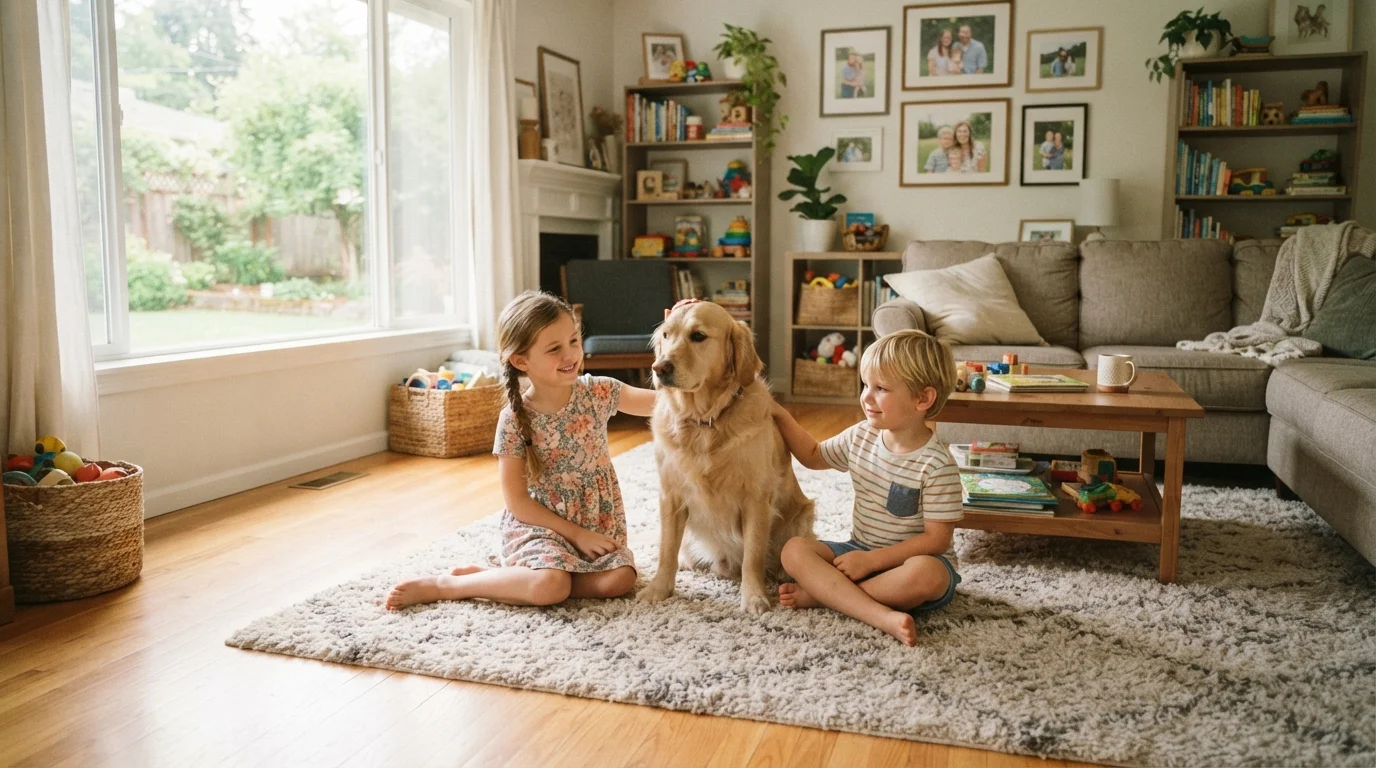
On the upside, dogs offer a level of emotional connection and interactive play that other pets rarely match. Children who grow up with a family dog and share in its care tend to develop strong habits around responsibility. The age-appropriate task guide for kids covers how to divide feeding, walking, and grooming duties across different age groups.
| Dogs | Small mammals | Fish | |
|---|---|---|---|
| Daily time commitment | 60-120 minutes | 15-30 minutes | 5-10 minutes |
| Weekly cleaning/maintenance | Moderate (grooming, yard) | High (cage cleaning) | Moderate (water change) |
| Space needed | Yard preferred, indoor space | Cage plus daily roam area | Counter or shelf space |
| Best child age | 6 and up | 5 and up (species-dependent) | All ages with supervision |
| Physical interaction | High | Moderate | None |
| Can be left alone (hours) | Up to 8 hours | Up to 12 hours | Days with auto-feeder |
| Typical lifespan | 10-15 years | 2-12 years (varies) | 2-5 years typical |
Small mammals: manageable care with genuine interaction
Guinea pigs, rabbits, and dwarf hamsters sit in a middle range: they require daily feeding and fresh water, weekly or bi-weekly cage cleaning, and regular handling to stay socialized. Guinea pigs and rabbits are generally better suited to younger children because they are active during the day and tolerate gentle handling well. Hamsters are nocturnal and can bite if startled, which makes them a less natural fit for children under eight.
Total daily care for a small mammal typically runs 15 to 30 minutes, with a longer cleaning session once or twice a week. Rabbits, in particular, need more space than most families anticipate: a hutch is a minimum, not a habitat, and rabbits kept in confined quarters without daily free-roam time can develop behavioral and health problems.
Small mammals are a practical middle ground for families who want children to have a pet they can hold and observe but cannot commit to dog-level daily demands. See what makes a pet truly kid-friendly for a deeper look at temperament and handling traits that predict a good match with children.
Fish: low contact, not zero effort
Fish are often framed as the easiest pet, and in terms of direct handling they are. However, aquarium care involves maintaining water temperature, pH balance, and filtration, and those parameters require regular testing and water changes. A freshwater community tank needs a partial water change (roughly 25 percent) about once a week and a filter check every month. Neglecting water quality is the most common reason fish die prematurely in family tanks.
Fish do not offer physical interaction, which limits their appeal for children who want to hold or play with a pet. They do, however, provide a calm visual presence that younger children find genuinely engaging, and feeding can be a meaningful daily chore for children as young as four or five with supervision.
For families running a tight daily routine, a small freshwater tank fits within ten minutes of daily attention once it is established. Setup and the initial learning curve take more time, but ongoing care is predictable.
Start with a single small tank
A 10-gallon freshwater tank with a small school of hardy fish (such as zebra danios or platies) is a practical first aquarium for families. The smaller water volume is easier to manage than a large tank, and the lower fish count reduces the biological load on the filter. Avoid bowls without filtration: they require more frequent water changes and are harder to keep stable.
Making the call for your household
The comparison table above summarizes the practical differences. Beyond those figures, two questions tend to clarify the decision quickly: how many hours per week can adults realistically dedicate to pet care without it becoming a source of stress, and what is the youngest child's age and temperament around animals?
Families who have not owned a pet before may find that starting with a fish tank or a pair of guinea pigs reveals a lot about how their household handles daily animal care before they take on a dog. The pattern of choosing the wrong first pet often follows the same path: enthusiasm at adoption, uneven follow-through on care, and eventually an overwhelmed family rehoming an animal that deserved better planning from the start.
Your family's lifestyle is the clearest guide here. Match the animal to the life you actually have, not the one you plan to build around it.