Why shared pet care works better than one person doing it all
When one parent carries every pet responsibility, tasks pile up invisibly. The dog's water bowl runs low. The litter box gets skipped. Walks get shortened. Pet care handled by a single adult often becomes the first thing dropped when the day goes sideways.
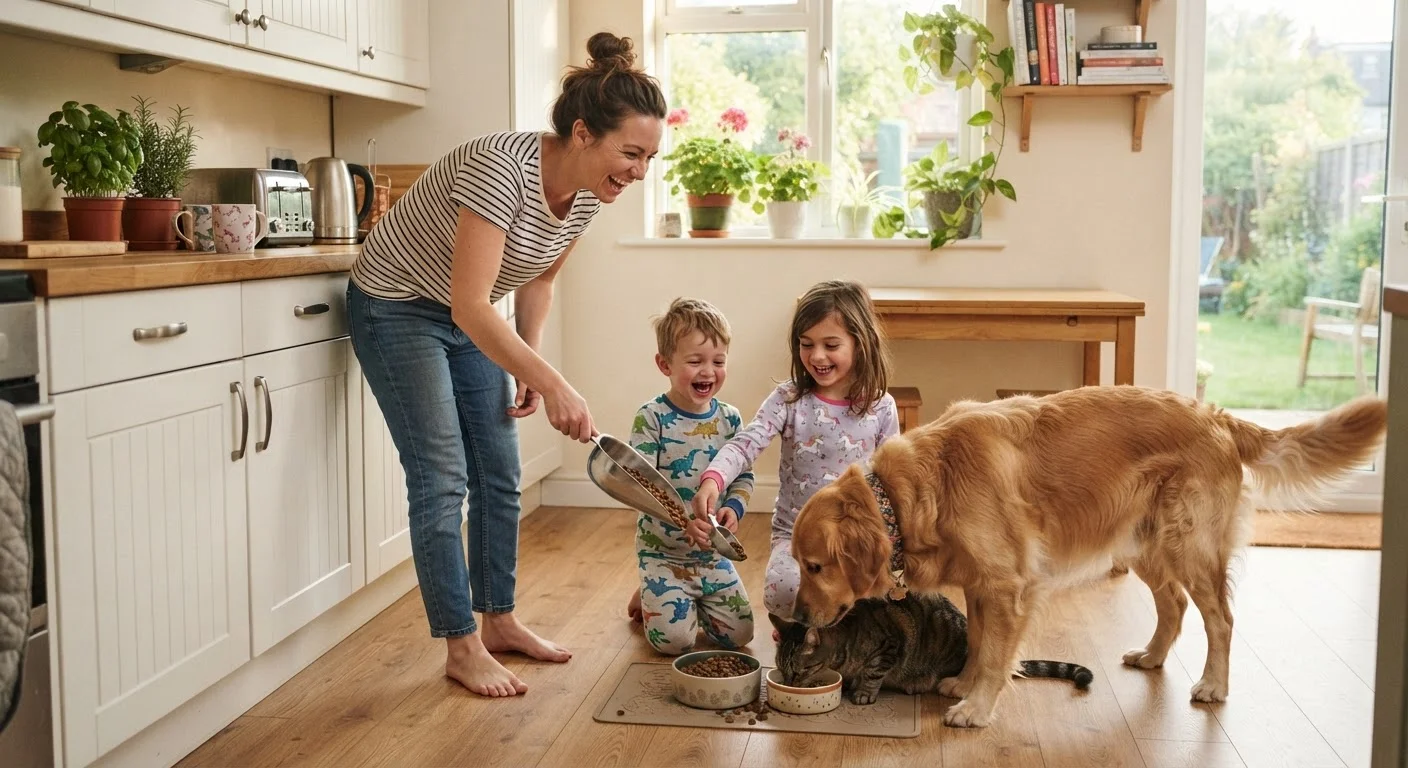
Distributing tasks across the household changes that dynamic in a concrete way. Children gain a genuine stake in the pet's wellbeing, and parents get reliable backup on the small daily jobs that add up. For families already trying to build a workable routine, the starting point is a clear structure rather than assigning tasks at random.
The goal is not to offload adult responsibility onto children. It is to give kids real, manageable work that matches what they are actually capable of doing well.
Matching tasks to age and ability
Age ranges are guides, not rules. A confident eight-year-old may handle a task listed here for older children, while a distracted twelve-year-old might need more structure on something listed for younger kids. Observe what your child does reliably before adding complexity.
Ages 3 to 5
- Refilling a water bowl from a pitcher an adult has already filled
- Carrying the pet's toy to a designated spot
- Helping to brush a calm, tolerant pet under direct adult supervision
Ages 6 to 8
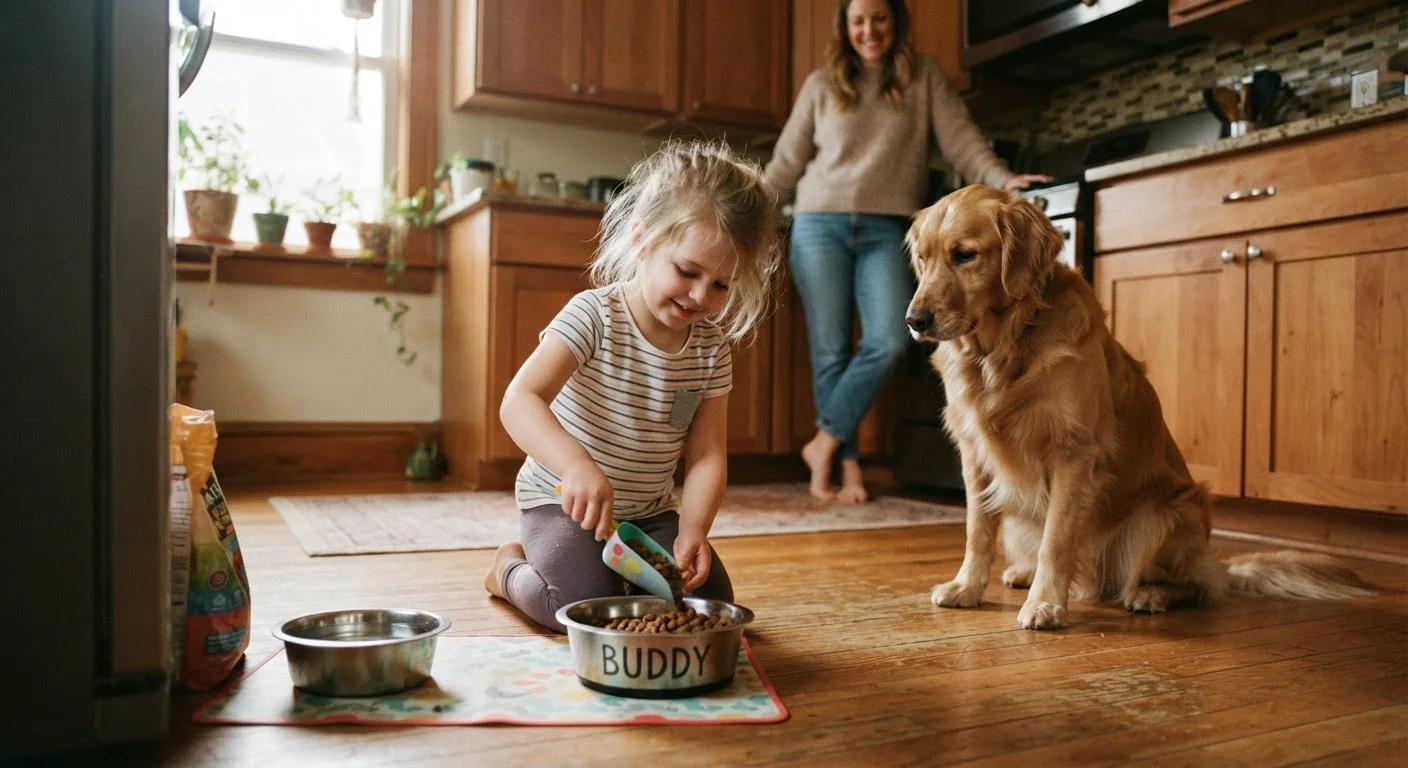
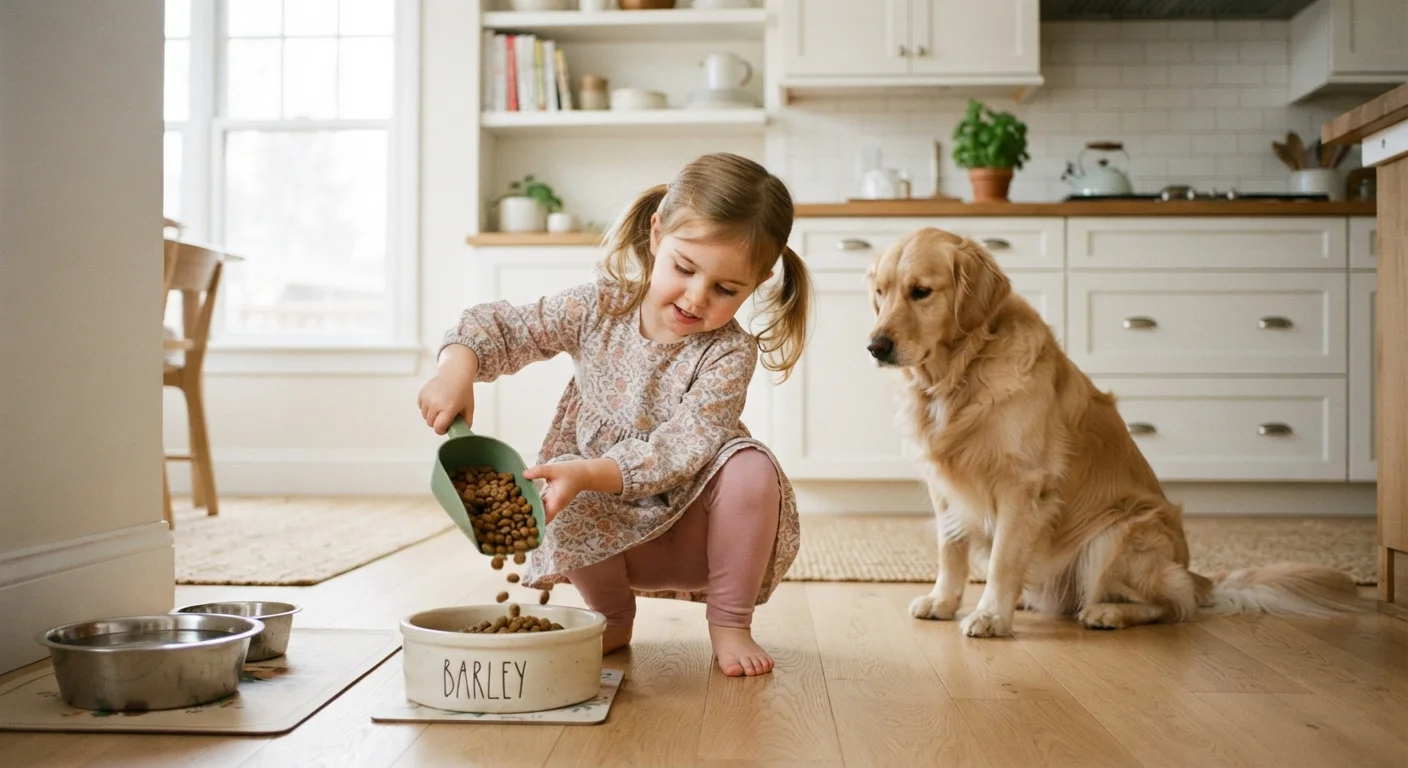
- Measuring and pouring dry food using a pre-set scoop
- Reminding a parent when the food container is running low
- Wiping down food and water bowls with a damp cloth
Ages 9 to 12
- Feeding the pet on a fixed schedule without prompting
- Cleaning the litter box or picking up waste in the yard
- Reporting any changes in the pet's eating, energy, or behavior to a parent
Ages 13 and up
- Taking the dog for a walk on a familiar, low-traffic route
- Scheduling and tracking monthly flea or parasite prevention
- Helping with basic grooming such as brushing coats or trimming nails with supervision
For a broader look at how children develop the skills to handle animals, the guidance on teaching kids to care for pets safely covers the handling and interaction side alongside the care tasks.
Assign ownership, not just tasks
When a child owns a specific duty, such as morning feeding, rather than helping whenever asked, they build a reliable internal cue to act. Vague help-when-reminded arrangements tend to drift back to the parent within days.
Start with one task and add gradually
Assigning multiple new responsibilities at once overwhelms children and increases the chance of failure. One mastered task gives a child confidence and a parent proof of readiness before the next is added.
Demonstrate before delegating
Children who watch a parent complete a task correctly two or three times before taking over make far fewer errors than those given verbal instructions alone. Demonstration also surfaces safety issues early.
Check in weekly rather than daily
Daily monitoring signals distrust and removes ownership from the child. A brief weekly conversation about how the pet is doing keeps parents informed without undermining the child's role.
Adjust tasks when life changes
School schedules, extracurricular seasons, and illness all affect a child's capacity. A rigid chart that ignores these realities leads to missed pet care rather than a child who steps up.
Making the system stick without daily reminders
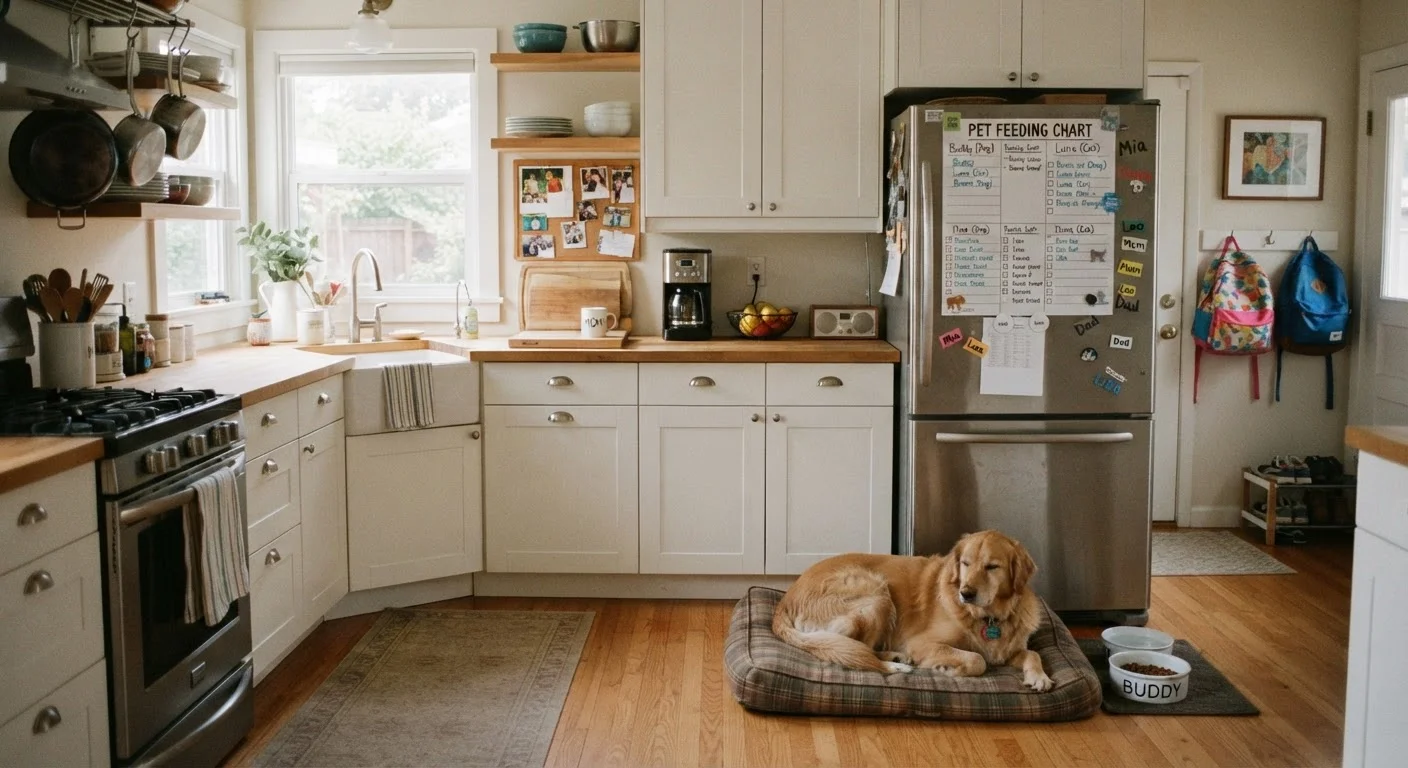
Verbal reminders wear thin fast, for parents and children both. A visible chore chart placed near the pet's supplies does more than nagging ever will. Simple columns with each family member's name, the task, and a checkbox create accountability children can manage themselves.
Pair tasks with existing anchors in the day. Feeding the cat happens right after breakfast. Refilling the water bowl happens when backpacks come off after school. Tying pet tasks to routines that already exist removes the need to remember a separate to-do.
The 10-minute daily pet care routine shows how to batch the most common tasks so nothing critical gets overlooked, even on hectic weekdays.
When a child forgets a task, address it calmly and matter-of-factly rather than with frustration. Consistency on the parent's side is what makes the child's consistency possible.
Keeping safety at the center
Task-sharing works only when the tasks are genuinely safe for the child assigned to them. A few boundaries matter regardless of how capable a child seems.
- Never leave a toddler alone with any pet, even a familiar, gentle one.
- Adults should verify food portions until a child has demonstrated accurate measuring repeatedly over several weeks.
- Health checks, such as inspecting for lumps, wounds, or changes in coat condition, stay with adults or older teens who know what normal looks like.
- Any task involving chemicals, medications, or sharp tools belongs to adults only.
For households still working out where pets and children share physical space, setting up safe zones for both animals and kids reduces friction and prevents accidental injury during care tasks.
It is also worth reviewing which shortcuts quietly backfire when time pressure leads families to cut corners on care. Some shortcuts affect pet health in ways that only show up weeks later.