Why 'gentle' is not enough
Parents researching pets for their families often search for 'gentle' breeds or species. Gentleness is worth considering, but it describes only one slice of what makes cohabitation work. A pet that is placid in a quiet shelter environment may respond very differently to a household where children shriek, run, and approach without warning.
What actually predicts safe, comfortable cohabitation is a combination of four traits: the animal's tolerance for unpredictability, its socialization history, its physical resilience to accidental rough handling, and how well its care demands match the family's real daily capacity. Miss any of these, and even a 'gentle' animal can become stressed or reactive over time.
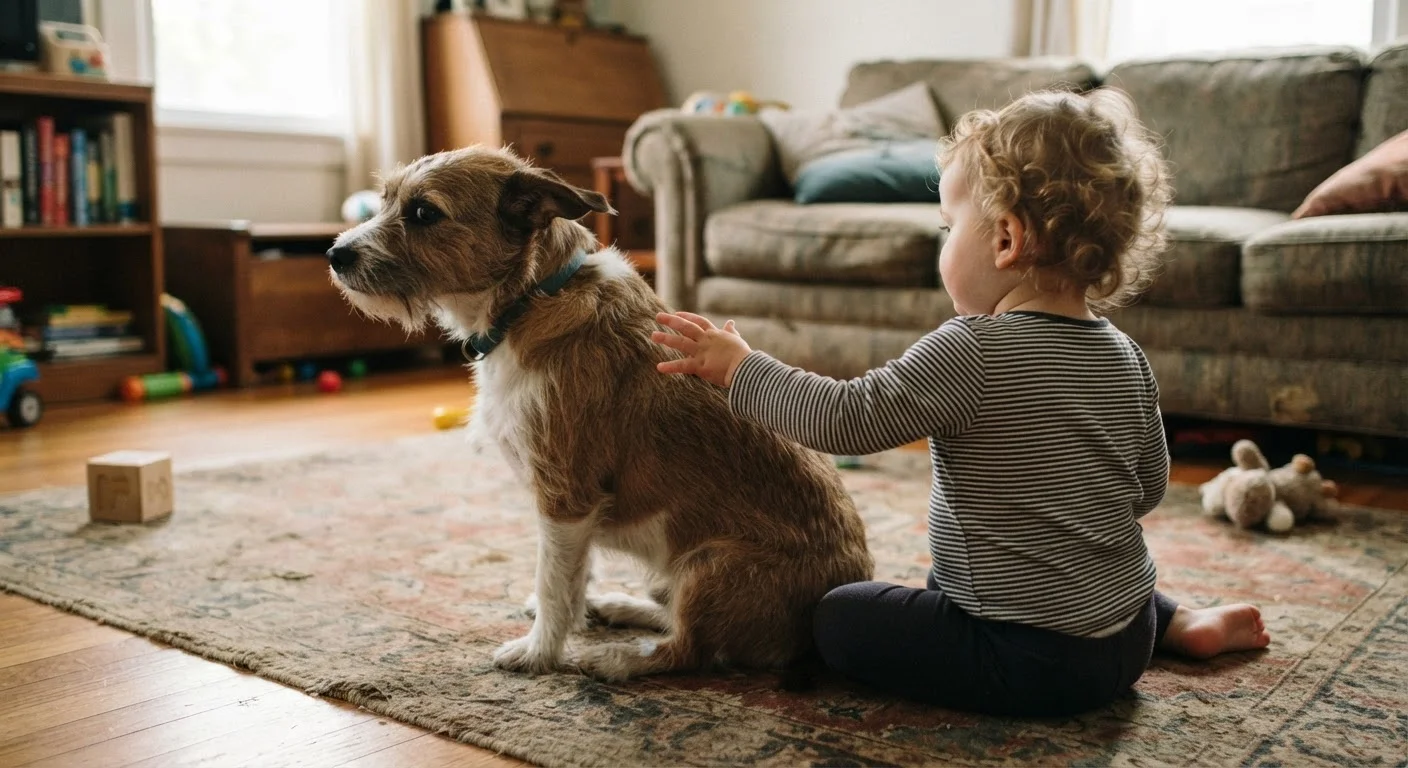
Children and dogs misread each other's signals in ways that adults rarely anticipate. Understanding this before choosing a pet is more useful than relying on a breed label.
Temperament traits that predict success
An animal's temperament is partly genetic and partly shaped by early socialization. Both are relevant when you are assessing a specific pet, not just a species or breed.
Look for:
- Low startle response: the animal recovers quickly from sudden sounds or movements rather than freezing or becoming defensive.
- Tolerance for physical contact: the pet accepts being touched on the head, ears, and body without consistently moving away or showing stress signals (flattened ears, hissing, growling, stiff posture).
- Recovery from mistakes: when a child accidentally handles the pet too firmly, the animal signals discomfort without escalating to biting or scratching immediately.
- Consistent behavior across contexts: the pet behaves similarly when calm and when stimulated, not only during quiet moments.
Socialization history is especially important for dogs. A dog exposed to children, varied environments, and different people during its early weeks is generally more adaptable than one raised in isolation. For rescue animals, ask specifically what the organization observed during interactions with children.
Ask for a behavioral history, not just a health record
When adopting from a shelter or rescue, request notes on how the animal responded to children during its stay, not only its vaccination status. Shelters that conduct temperament assessments can tell you whether the pet showed stress behaviors around loud voices or quick movements. This information is more predictive of home compatibility than breed or age alone.
How care demands shape the fit
A pet's daily needs should match what the family can sustain on an ordinary weekday, not on a well-rested weekend. Dogs need outdoor exercise, consistent feeding, veterinary care, and active supervision around young children. That is a significant time investment on top of school runs, homework, and household routines.
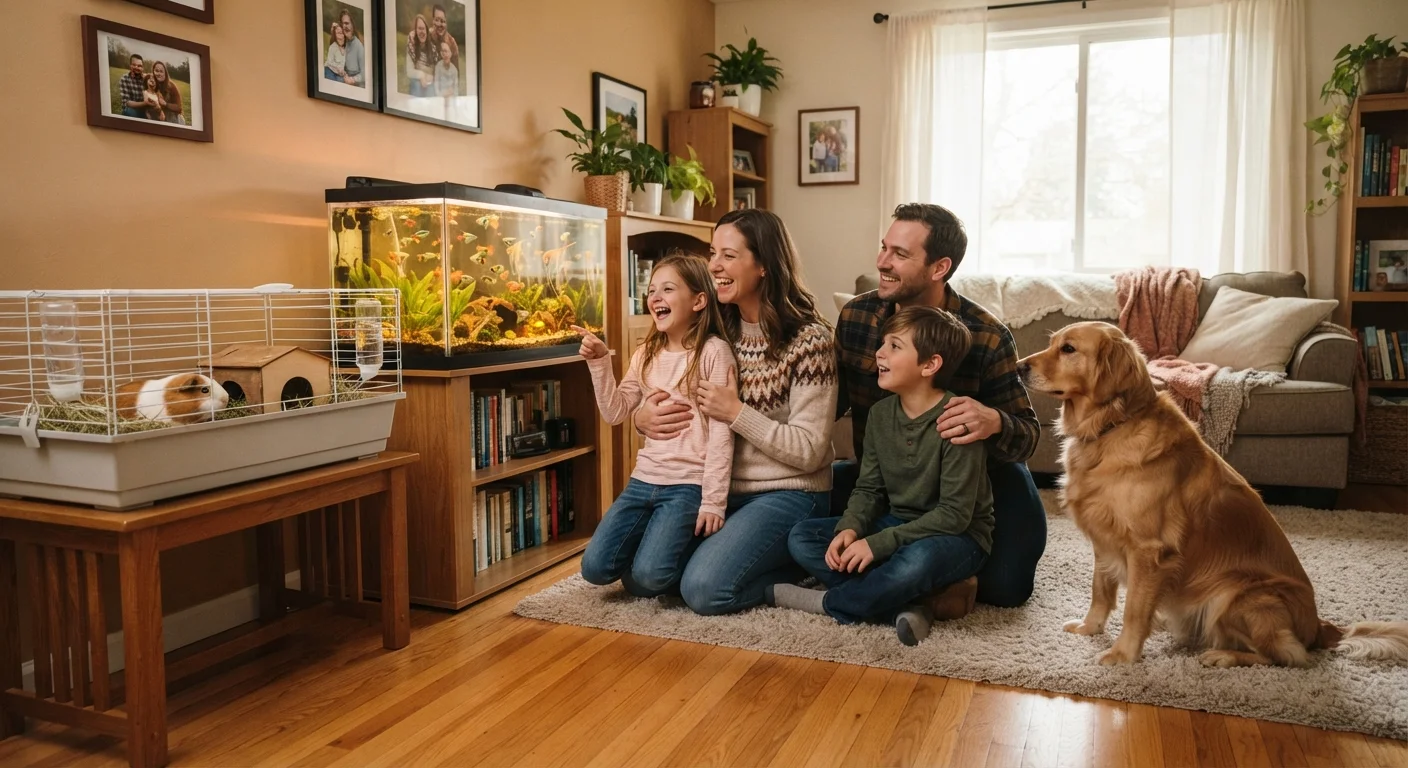
Smaller pets like guinea pigs, rabbits, or fish have lower interaction demands but still require consistent feeding, clean habitats, and handling guidelines that children need to learn. The real daily demands of popular family pets vary considerably, and comparing them honestly before committing prevents the disappointment of a poor match.
Care routines that children can participate in also shape the experience. Involving kids builds connection, but the tasks need to fit their developmental stage. Age-appropriate pet care responsibilities help children feel ownership without placing them in charge of tasks they cannot yet handle safely.
The role of the home environment
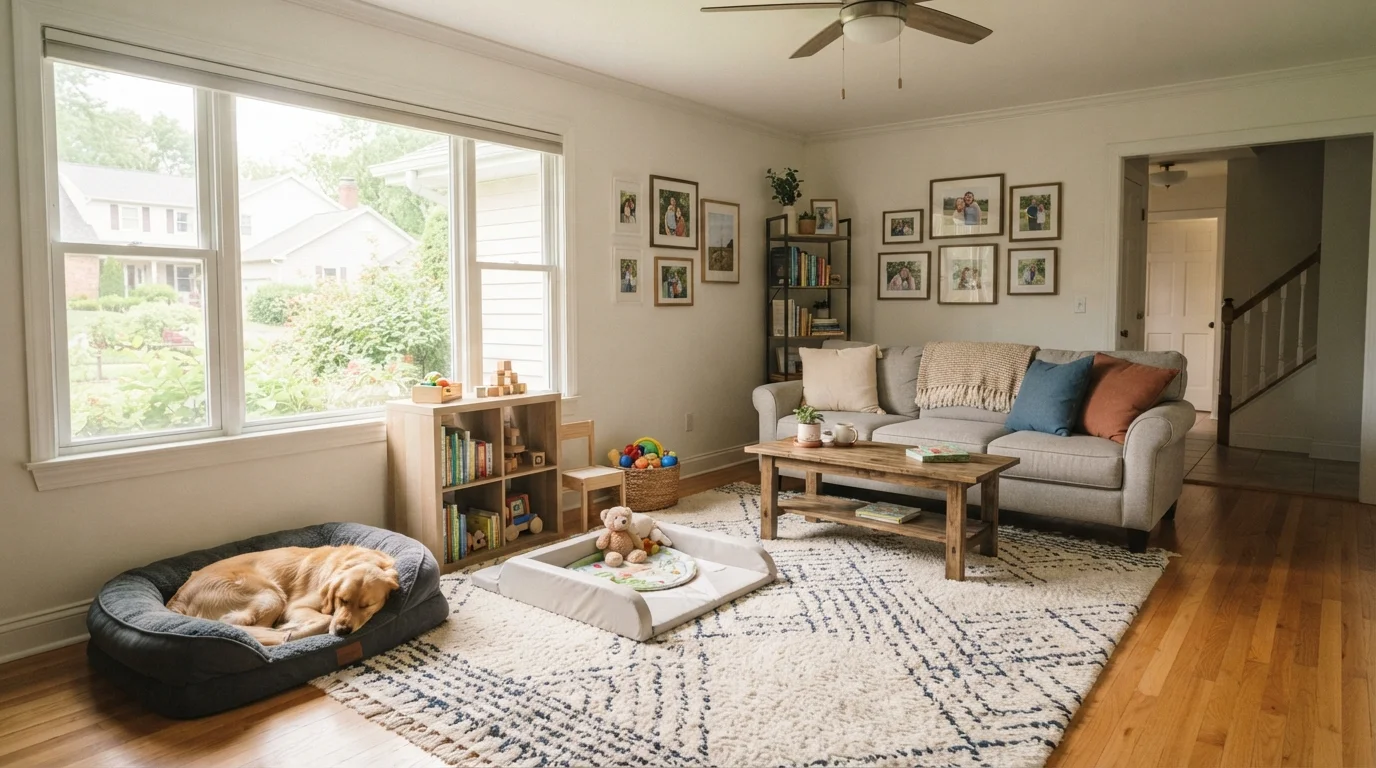
Physical space and household structure affect how well any pet copes with children. A pet that has no accessible retreat will accumulate stress. Cats need vertical space or a room where children do not enter unsupervised. Dogs benefit from a crate or gated area they associate with calm. Even small animals like rabbits need enclosure time away from household noise.
Setting up these spaces before a new pet arrives is practical, not optional. Our guide to creating safe zones for pets and kids covers how to do this in a typical suburban home without major renovation.
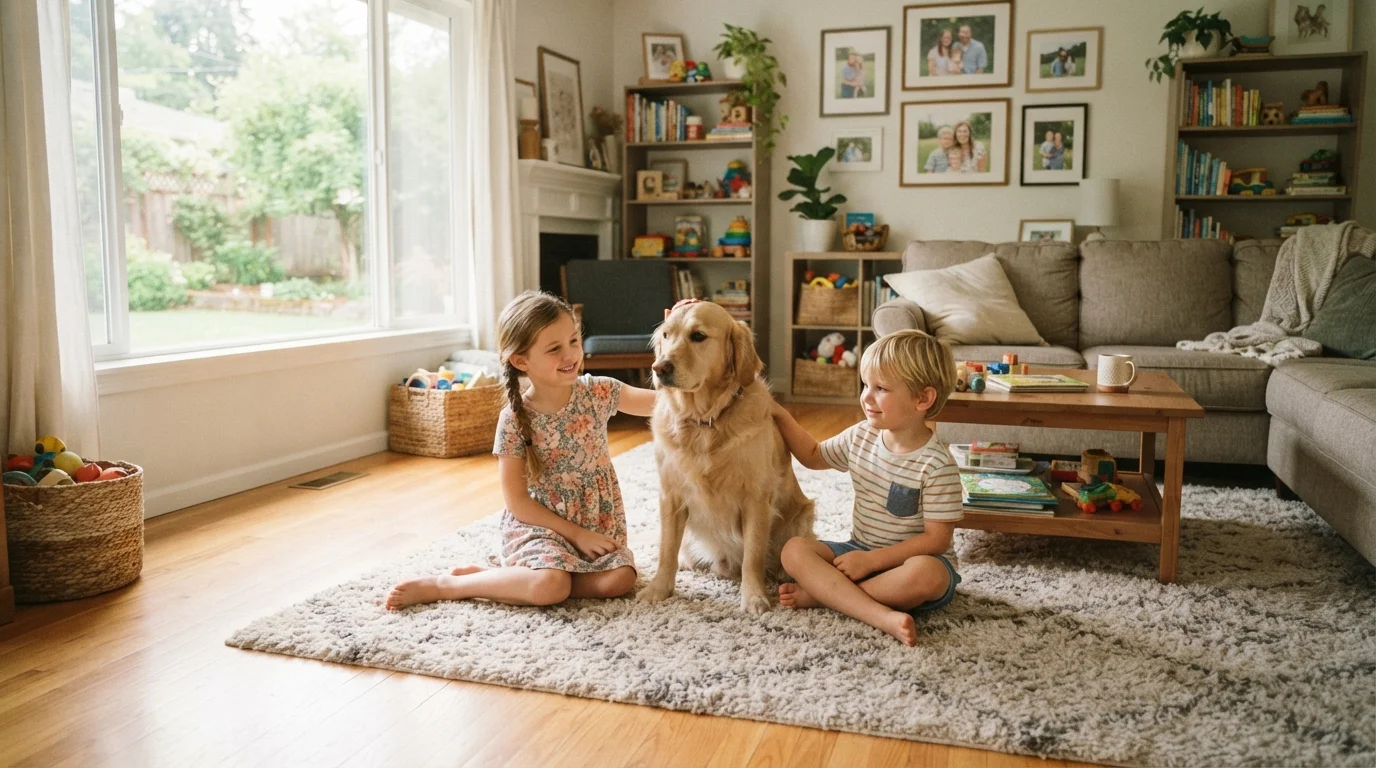
Children's behavior in the home also changes the equation. Teaching children how to approach, touch, and read a pet's signals is part of what makes the arrangement work. Age-appropriate strategies for safe pet interaction give parents a concrete starting point for those conversations.
Matching pet traits to children's ages
Children under five have limited impulse control and often do not understand that an animal can feel pain or fear. Pets that suit this stage are physically resilient (not easily injured by a firm squeeze), slow to startle, and housed in ways that limit unsupervised access. Fish and older, calm cats or dogs with a documented history around toddlers are generally more appropriate than small rodents or puppies at this stage.
School-age children (roughly six to twelve) can follow rules more reliably and begin to recognize animal body language with guidance. This age group can realistically interact with a wider range of pets and take on supervised care tasks. Adolescents can handle more independent responsibility, though adult oversight of the pet's overall welfare should remain consistent regardless of the child's age.
As your family's needs shift, so might the right pet for your home. Introducing a new pet when you have young children addresses the practical logistics of making that transition go smoothly from day one.
4.5 million
Dog bites reported annually in the U.S.
According to the American Veterinary Medical Association, children are the most common victims, with most bites occurring during everyday interactions with familiar dogs.
Under 5
Age group at highest bite risk
The American Academy of Pediatrics notes that children under five account for a disproportionate share of dog bite injuries, often because they cannot yet read animal warning signals.