Why 10 minutes is enough (most days)
Most family pets do not need elaborate daily rituals. A dog, cat, or small animal primarily needs food, water, brief physical engagement, and a quick health check. Ten minutes, split across morning and evening, covers those basics reliably. What pets actually suffer from is inconsistency, not brevity. As our article on why consistent routines matter more than perfect ones explains, predictable daily habits reduce animal anxiety and often reduce problem behaviours like attention-seeking or destructive chewing.
The goal here is a routine your household will repeat on a Wednesday in October when homework is due, dinner is late, and someone has a cold. That is the bar. Aim for that, and your pet will genuinely thrive.
Consistency beats perfection every time
A slightly rushed 8-minute routine done daily does more for your pet than a thorough 30-minute session done twice a week. Pets adapt to predictable timing and show measurably calmer behavior when care happens at consistent intervals. Build the habit before you refine it.
What you need before you start
Gathering the right items in one accessible spot cuts task time significantly. A small basket or caddy near the pet's primary space works well.
What you will need
The step-by-step daily routine
The steps below are designed for a dog or cat. Adjust water and feeding quantities to your veterinarian's guidance for your specific animal. If you have a small animal such as a rabbit or guinea pig, the structure still applies, though grooming and exercise steps will differ.
Refresh food and water (morning, 2 minutes)
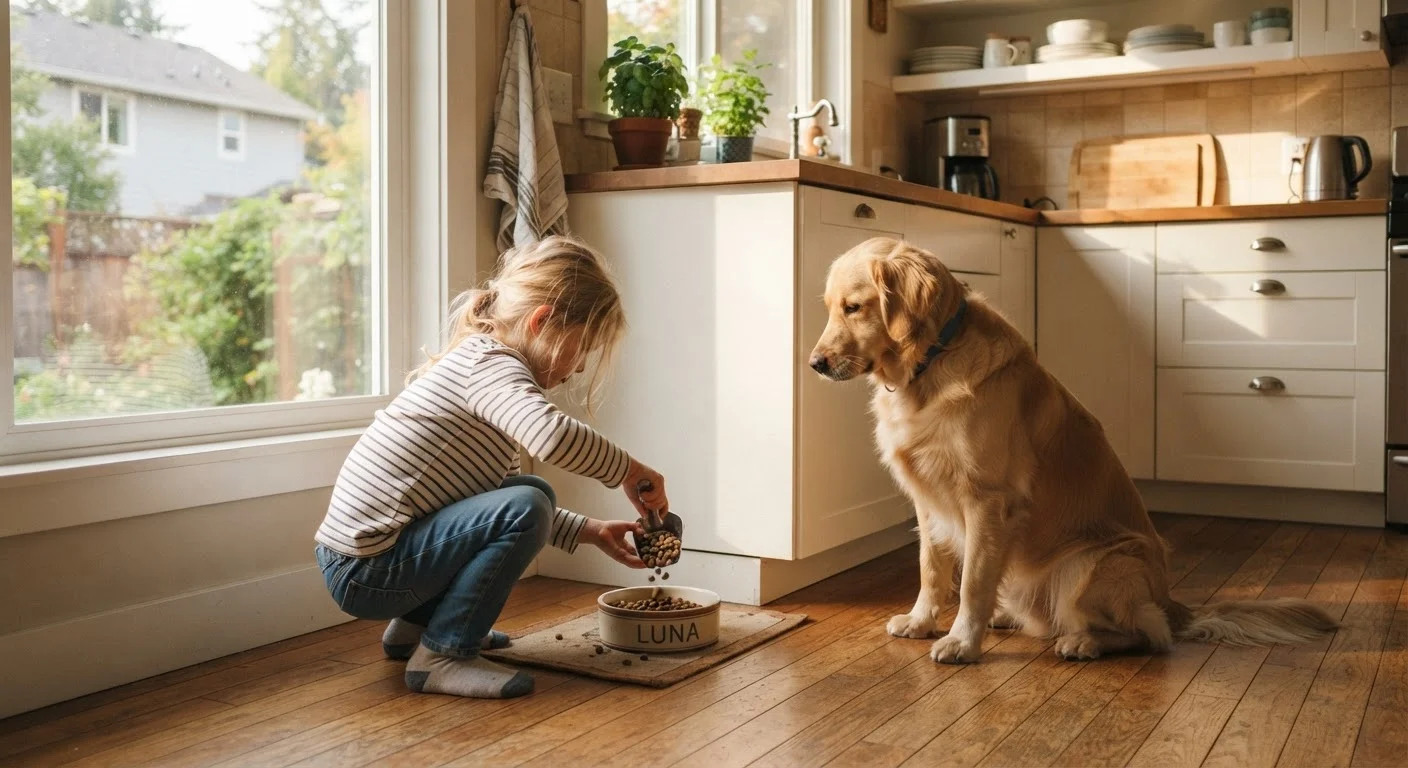
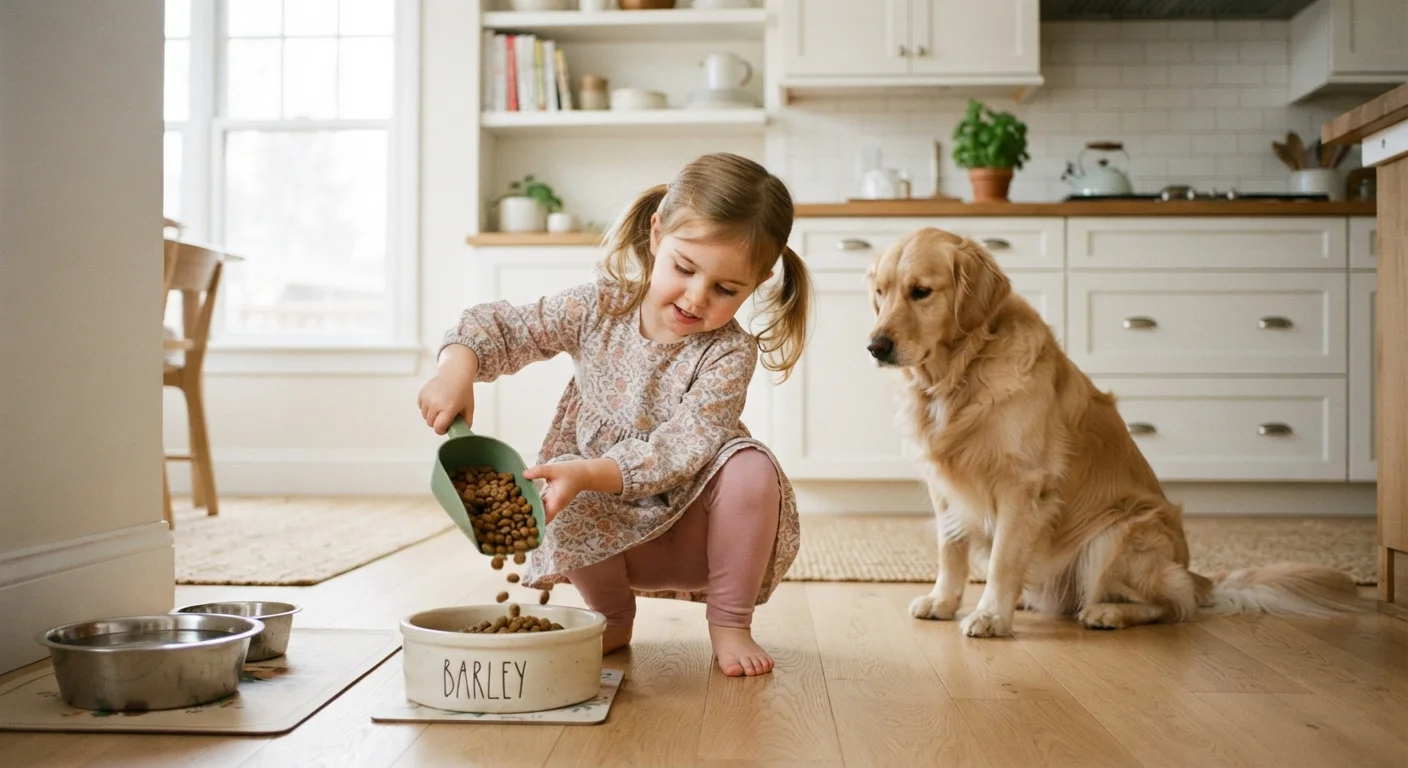
Empty and rinse the water bowl, then refill it with fresh water. Measure and serve your pet's morning portion according to your vet's recommended daily amount. Place the bowl in the same spot each day; location consistency matters to animals more than most owners expect.
Do a 60-second physical check
Run your hands briefly along your pet's body while they eat. Look for any new lumps, patches of hair loss, or signs of discomfort when touched. Check eyes and ears visually for discharge or redness. This takes about one minute and catches small health changes before they become large ones.
Clear waste (morning, 1 to 2 minutes)
Scoop the litter box or collect yard waste during the morning window. For dogs, this pairs naturally with a short outdoor trip. Clean waste removal daily limits odor and reduces the risk of bacteria buildup in spaces shared with children.
Give focused physical engagement (morning or evening, 3 minutes)
Three minutes of intentional activity is enough to satisfy most pets on busy days. For dogs, a brisk walk around the block or a short fetch session in the yard works well. For cats, a wand toy or a laser pointer session provides the movement and stimulation they need. Small animals benefit from supervised time outside their enclosure in a safe, enclosed space.
Quick brush or coat check (evening, 1 to 2 minutes)
A brief brush removes loose hair, reduces allergens in the home, and prevents matting before it becomes painful to address. Short-coated pets need this less frequently, but a weekly brush is still worthwhile. Use the evening routine for this step when children are winding down and the pace is slower.
Refresh evening food and water (evening, 1 minute)
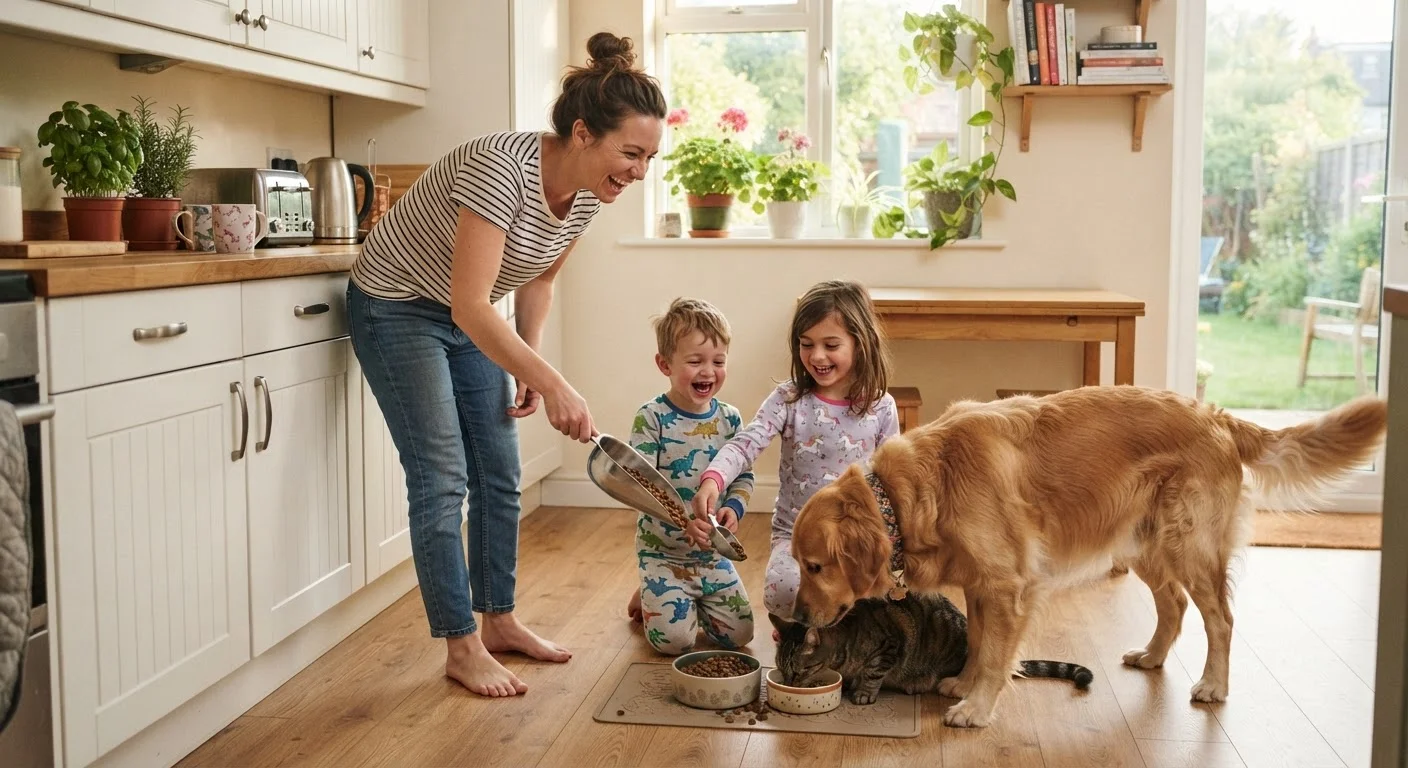
Serve the evening meal at roughly the same time each day. Refill or top up the water bowl. Consistent meal timing regulates digestion and helps pets settle at night, which means fewer disruptions during family sleep hours.
Getting kids into the routine
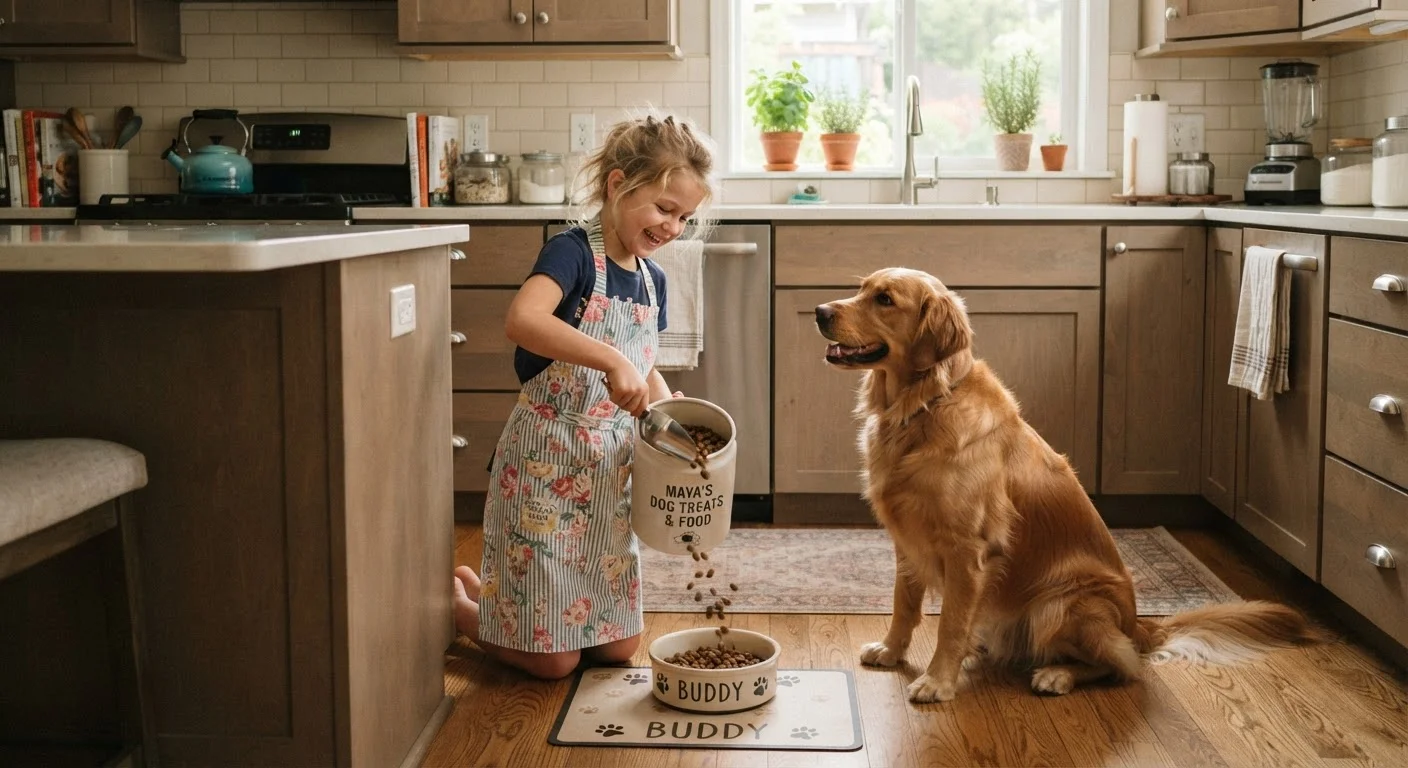
Children between four and six can refresh a water bowl or place kibble in a bowl you have measured. Children seven and older can take on feeding independently, wipe down food mats, and lead a leashed dog around the yard with adult supervision. Teenagers can manage the full routine solo on weekends, which genuinely lightens the parental load.
Our guide to splitting pet duties and getting kids involved covers age-appropriate task assignments in more detail. Involving children in daily care also builds the kind of responsibility that sticks, because the feedback loop (a happy, well-fed pet) is immediate and tangible.
For a broader view of weekly tasks beyond this daily window, the weekly pet care checklist for households with young children is a practical companion resource.
Common traps that eat time
Two habits reliably turn a 10-minute routine into a 30-minute scramble. The first is failing to restock supplies, so a morning feeding turns into a hunt for a replacement bag. The second is skipping the quick physical-check step, which allows minor issues (a tangle, a small skin irritation, early signs of a limp) to go unnoticed until they require a vet visit.
Several shortcuts that seem like time-savers actually create larger problems. Our article on pet care shortcuts that quietly backfire on busy families walks through the most common ones and what to do instead.