Why the first days at home matter most
A pet arriving in a house full of children faces an intense sensory experience: unfamiliar smells, unpredictable movement, and noise levels that differ sharply from wherever the animal came from. How those first 48 to 72 hours go often shapes how quickly the pet bonds with the family and whether early anxiety becomes a lasting behavioral pattern.
Before you start, make sure your choice of animal is genuinely suited to family life. Understanding what makes a pet truly kid-friendly walks through the temperament and care traits that predict a good match. Once you are confident in the choice, the steps below take you through a structured arrival process that protects both the animal and your children.
What you will need
Step-by-step introduction process
Follow these steps in order. Rushing any of them, particularly the first introductions, tends to set back the settling-in process rather than speed it up.
Set up the pet's space before arrival
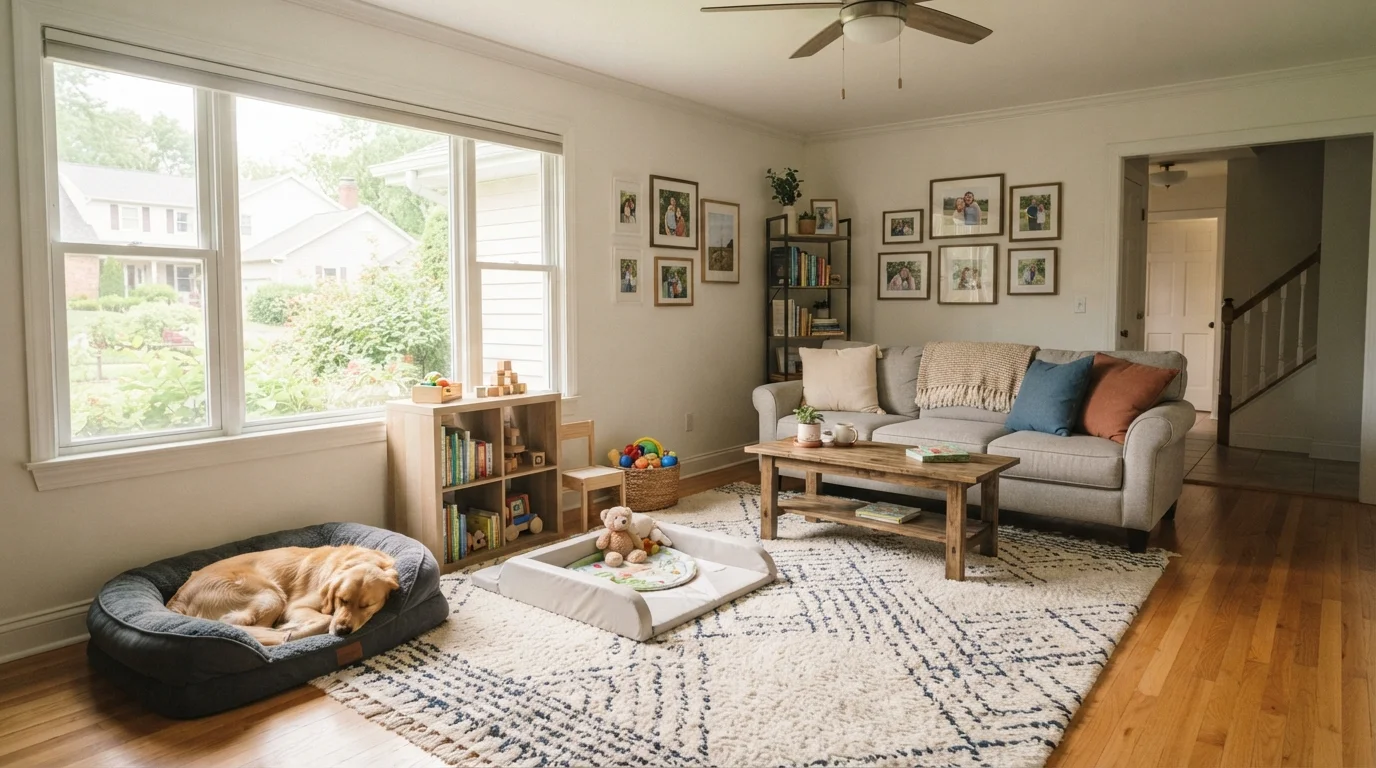
Choose one room or corner that will be the pet's home base for the first few days. Place bedding, water, food, and a hiding spot (for cats or small animals) in this area. Keep it away from high-traffic zones like the main play area or kitchen. A predictable, low-stimulation space gives the animal a chance to orient itself before meeting the whole family.
Brief children on the ground rules first
Before the pet comes through the door, hold a short family meeting. Keep it concrete: speak softly near the animal, no grabbing or chasing, and always ask a grown-up before picking it up. Toddlers will need these reminders repeated, so frame them as a routine rather than a one-time talk. Age-appropriate strategies for safe pet interaction can help you match the rules to each child's developmental stage.
Bring the pet in calmly, one person at a time
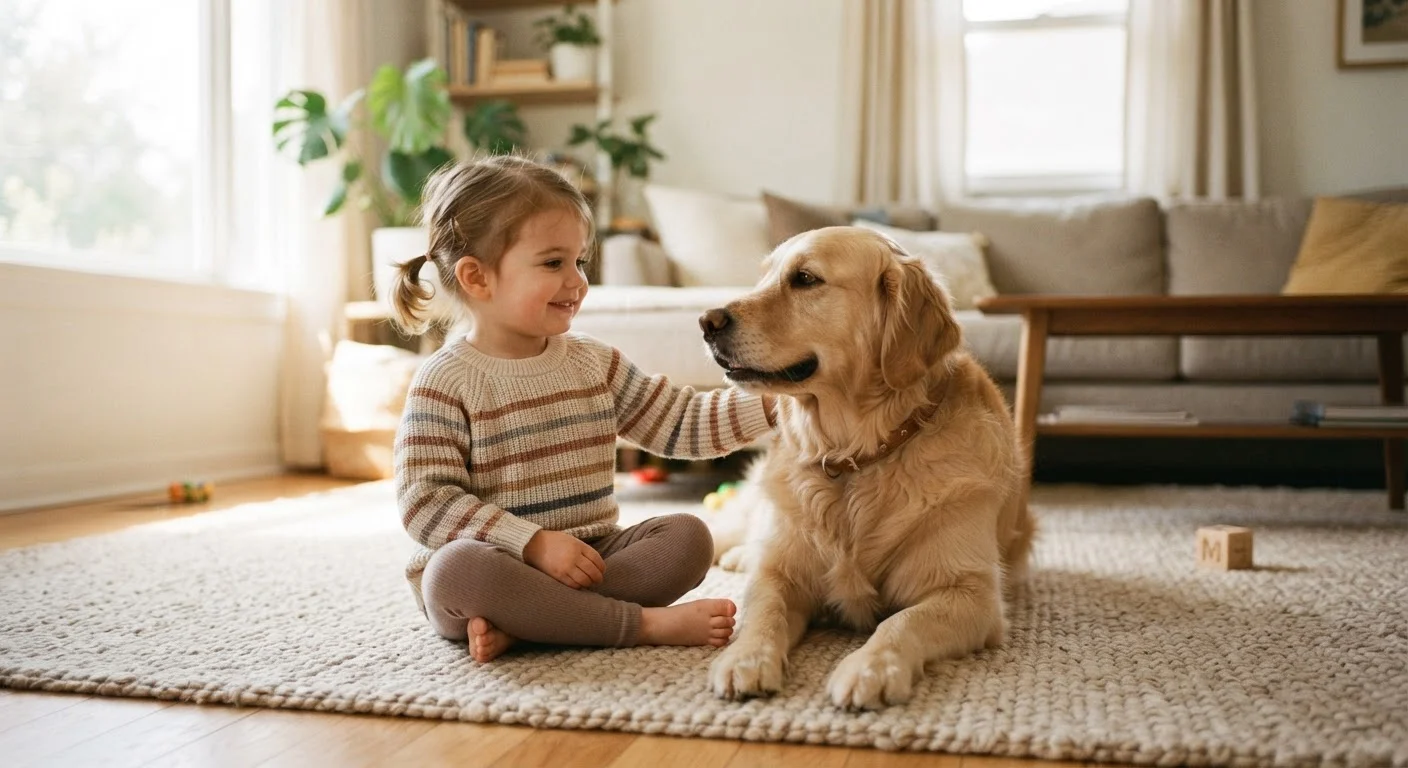
Carry or lead the pet directly to its prepared space. Let it explore that area for at least 30 minutes before any child approaches. Then introduce children one at a time, starting with the oldest or calmest. Sit on the floor at the animal's level, let it approach rather than reaching for it, and keep sessions to a few minutes at first. If the pet retreats or shows signs of stress (flattened ears, tucked tail, hissing), end the session without comment and try again later.
Create physical safe zones for both pet and children
Use baby gates or closed doors to give the pet areas it can reach without children following. A cat, for example, needs at least one elevated or enclosed retreat. Children also benefit from knowing there is a space (their bedroom, a play corner) where the pet does not go unsupervised. Setting up dedicated retreat areas for pets and kids covers how to structure these spaces practically in a typical suburban home.
Build a consistent daily routine from day one
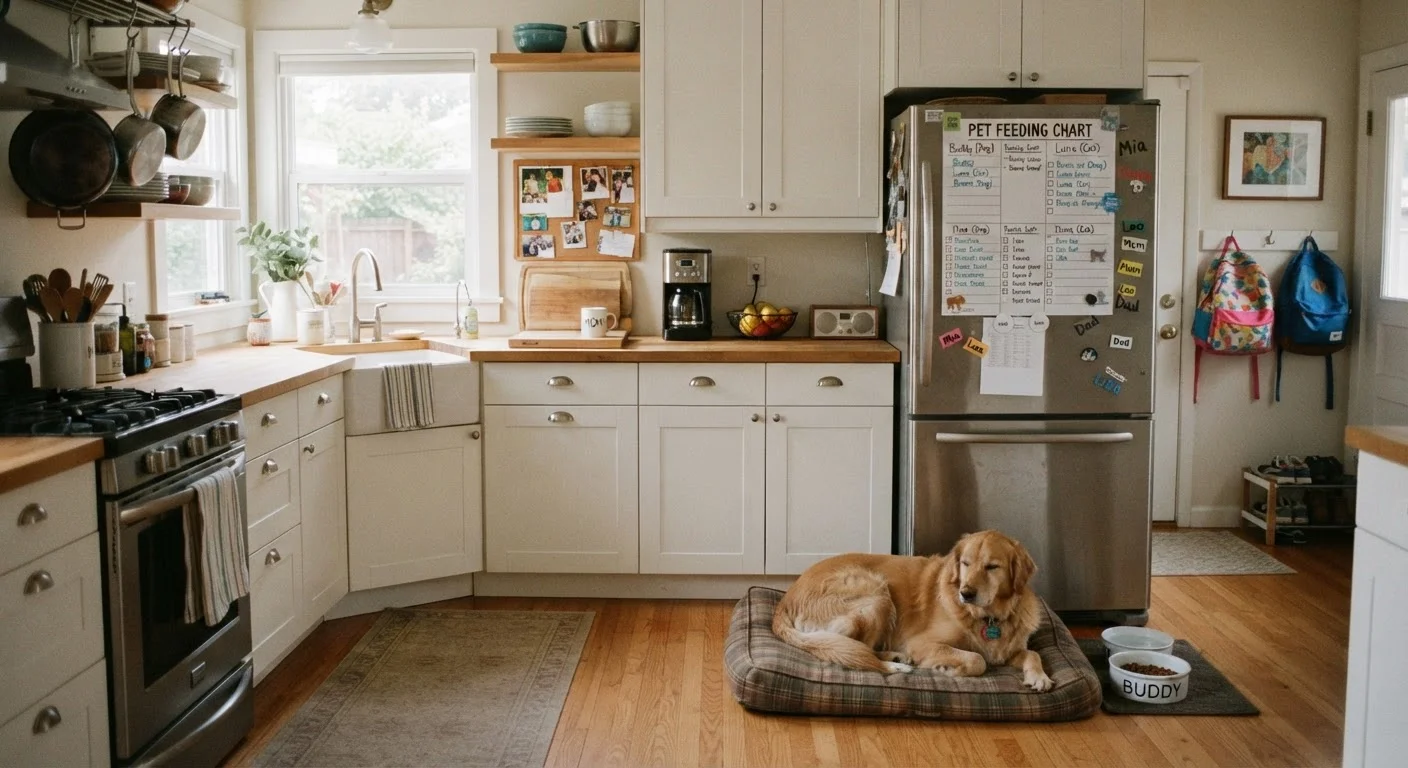
Pets settle faster when feeding, play, and rest happen at the same times each day. Anchor the schedule to moments already fixed in your family's day: morning school prep, after-school pickup, and bedtime. Assign age-appropriate care tasks to children so the routine becomes shared. Building a pet care routine for busy families gives a full template for families managing kids and chores simultaneously.
Monitor interactions closely for the first two weeks
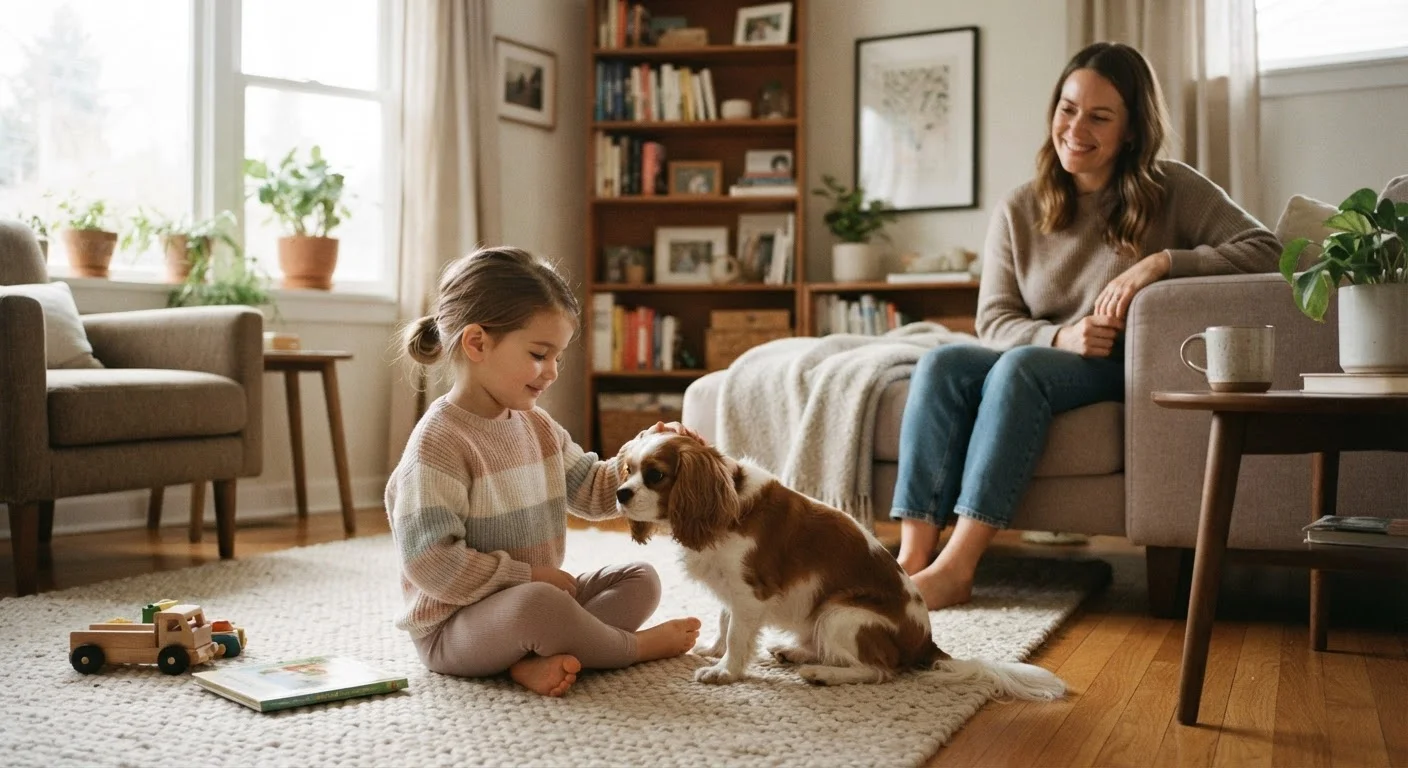
Supervision during this period is not optional. Watch for stress signals on the pet's side (excessive hiding, growling, loss of appetite) and on the children's side (rough handling that has gone unnoticed). Note any patterns: certain times of day, specific rooms, or particular children may trigger tension. Address patterns early rather than waiting for an incident. If behavior concerns persist beyond two weeks, consult your veterinarian or a certified animal behaviorist.
Building on the first weeks
Once the pet has settled and daily routines are running, children can take on more responsibility. Involving children in feeding, grooming, and handling gives age-by-age guidance so that responsibility grows at a pace that is realistic for your family.
Keeping the household organized also makes pet care easier to sustain. Home organization habits that work for families with kids covers the systems that reduce chaos when you are managing children, chores, and an animal under one roof.
Watch for stress signals before they escalate
Hiding for extended periods, refusing food, growling, or unprovoked swatting are all signs that a pet is not coping well with the transition. These behaviors are not discipline problems; they are communication. If you see them consistently, reduce the frequency of child-pet contact, reassess the safe zone setup, and contact a veterinarian or certified animal behaviorist sooner rather than later.
If your family situation involves a very young baby rather than older children, the dynamics are different. Preparing your pet for a newborn's arrival addresses that specific scenario in detail.