Why pets struggle when a baby arrives
For a pet who has been the center of a household's attention, a newborn's arrival changes almost everything at once: the smells, the sounds, the daily schedule, and the amount of time their people have available. Dogs and cats are creatures of routine, and abrupt disruption to that routine is a genuine stressor.
What owners often read as "jealousy" is usually anxiety. A dog that paws constantly at your leg or a cat that starts eliminating outside the litter box is communicating discomfort, not spite. Recognizing that distinction matters because anxiety is something you can address methodically, whereas labeling it as bad behavior can lead to punishment that makes the animal more stressed, not less.
For households thinking ahead about animal temperament and family fit, the guide to kid-friendly pets covers the underlying traits that help some animals adapt more easily to family changes.
Certified applied animal behaviorist (CAAB)
A specialist with advanced academic training and supervised experience in animal behavior, qualified to assess and address complex behavioral problems in household pets.
Veterinary behaviorist
A veterinarian with board certification in animal behavior, able to both diagnose medical contributors to behavioral problems and design treatment plans.
Resource guarding
A behavior where an animal growls, snaps, or stiffens to protect food, toys, or space from other people or animals approaching.
Desensitization
A training method that involves gradual, low-intensity exposure to a trigger, such as baby sounds, so that the pet learns the stimulus is not a threat.
Stress response
A set of physical or behavioral reactions an animal shows when it perceives a threat or significant change, including hiding, panting, excessive grooming, or changes in eating.
Preparing your pet before the birth
The months before a baby comes home are the most effective window for preparation. The goal is to make the changes feel incremental rather than sudden.
- Introduce baby sounds gradually. Play recordings of infant crying at low volume while pairing the experience with something your pet already associates with calm, such as a chew toy or a quiet petting session. Increase the volume slowly over several weeks.
- Establish new boundaries early. If the nursery will be off-limits, close that door now and let your pet get used to the change well before there is a baby inside. Gates and closed rooms feel less alarming when introduced without the additional stress of a new family member.
- Shift feeding and walk schedules toward what you expect post-birth. A dog accustomed to a 7 a.m. walk that will now happen at 6 a.m. adjusts more easily with a few weeks of gradual adjustment than an overnight switch.
- Ask your partner or another family member to handle some care tasks. If your dog has bonded primarily to one parent who will be recovering from birth, having a second familiar person step into the feeding and walking routine reduces the shock of unavailability.
Keeping up with pet care routines through this transition matters more than most parents anticipate. A well-exercised, mentally engaged pet handles change more smoothly than one who is already understimulated.
The first introduction at home
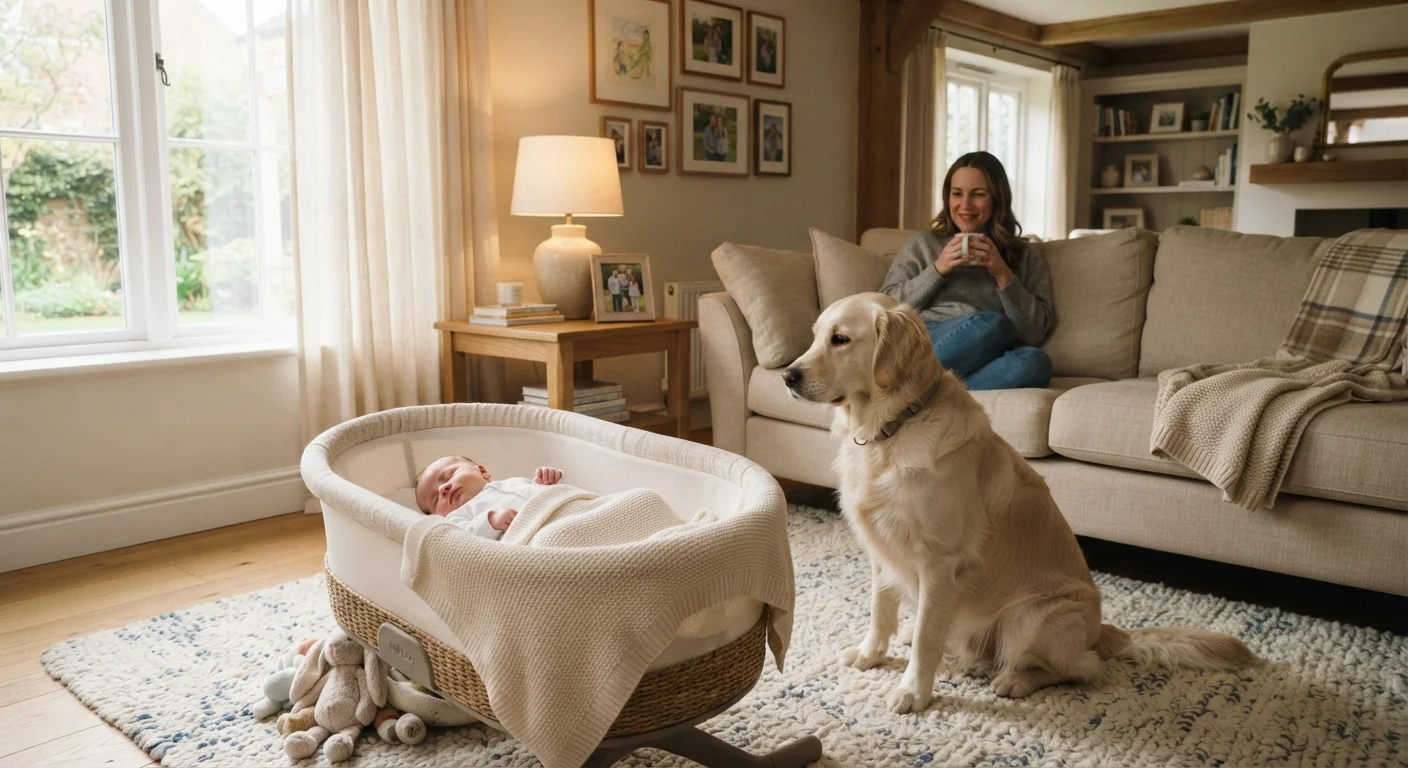
The moment a parent arrives home from the hospital is high-energy for any pet. One practical approach: have the non-carrying parent greet the pet first, letting the animal burn off initial excitement before meeting the baby. Bring home a blanket or item of clothing with the baby's scent beforehand so the smell is already familiar.
When the actual introduction happens, keep it calm and brief. For dogs, a loose leash at a respectful distance is appropriate for the first encounter. Let the dog sniff from a comfortable range rather than forcing proximity. Reward calm behavior with quiet praise. Do not crowd the animal or force it to interact.
Cats tend to investigate on their own timeline. Leaving a worn baby item in a common area allows a cat to approach and smell it without pressure, which is a more effective introduction than carrying the cat over to the bassinet.
All interactions between pets and newborns should be supervised by an adult who is fully attentive, not distracted by a phone or another task. This is not a matter of distrusting a well-behaved pet; even a gentle dog can startle from a sudden cry. If you are also bringing a pet into a home that already has young children, the dynamic is similar but reversed, and many of the same supervision principles apply.
Keep your pet's routine predictable
Even 10 minutes of one-on-one attention at a consistent time each day can reduce a pet's anxiety during the transition. Short, calm interactions are more effective than longer but unpredictable ones. If managing this feels difficult in the early newborn weeks, building a realistic pet care routine for a busy household can help you plan ahead.
Behavioral cues to watch for
Most pets adjust within a few weeks. During that window, watch for signals that stress is escalating rather than resolving.
In dogs: excessive panting at rest, pacing, resource guarding (growling over food or toys that was not present before), hiding, or a sudden increase in destructive chewing can all point to elevated anxiety. Growling or stiffening near the baby requires immediate management, including separating the pet and contacting a professional.
In cats: over-grooming to the point of hair loss, inappropriate elimination, prolonged hiding, or refusing food for more than a day are worth a veterinary call. Cats under chronic stress are also more susceptible to urinary issues, so catching behavioral changes early has direct health benefits.
Changes that resolve within two to three weeks and do not escalate are generally part of normal adjustment. Changes that worsen or include any behavior directed at the baby need prompt attention. Once your child is older and mobile, the guide on teaching children to interact safely with pets becomes the next layer of household safety to work through.
When to seek professional help
If standard preparation and calm introductions have not brought visible improvement after several weeks, or if any behavior puts the baby's safety at risk, the right next step is professional consultation.
A veterinarian should be the first call. Physical discomfort, pain, or an underlying medical condition can cause or worsen behavioral problems. Once medical causes are ruled out, a certified applied animal behaviorist (CAAB) or a veterinary behaviorist (a veterinarian with a board specialty in behavior) can assess the situation directly and create a management plan tailored to your household.
Avoid relying on generalized advice from well-meaning sources who have not observed your specific pet and environment. Behavioral problems that involve any aggression near a newborn are not situations to work through by trial and error. Prompt, professional guidance produces faster results and keeps everyone safer.
For families who want to get the full picture of their household's readiness for both a pet and a baby, the family pet readiness checklist is a useful reference point for identifying gaps before they become problems.