Why most organization attempts fail in family homes
Most organizing projects stall because they treat the home as a static space. A system designed for two adults often collapses the moment children can reach shelves, open drawers, or bring 40 items home from a school fair. The issue is not a lack of effort. It is that the system was not built for the people actually using it.
Children operate on habit, not instruction. They return things to wherever is easiest, not wherever is correct. Any organization system that relies on children remembering abstract rules will fail within days. Systems that make the right action the easiest action tend to hold.
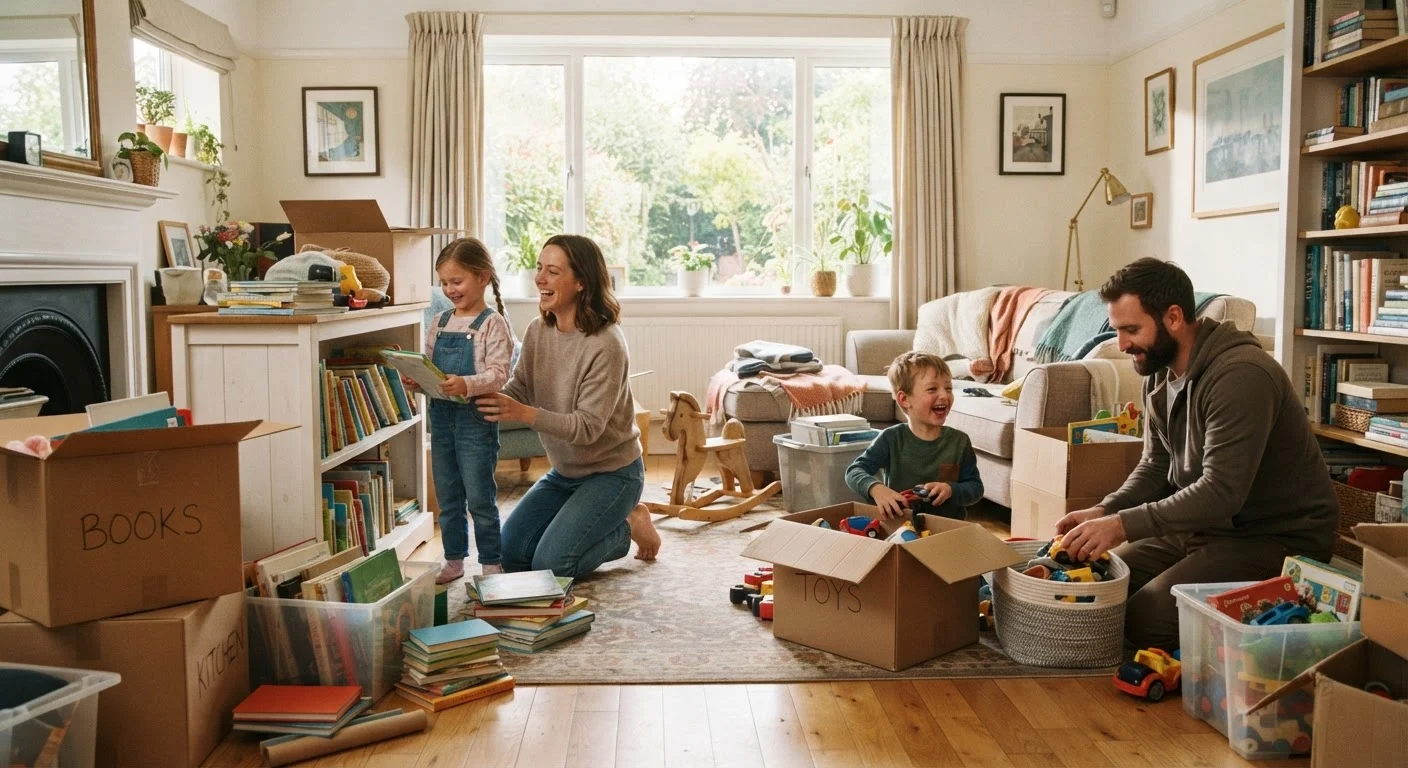
For families starting from scratch, a room-by-room approach can help break the process into steps that do not require an entire weekend to complete.
The practices that hold up over time
The following approaches are grounded in how family households actually function under daily pressure. Each one addresses a specific failure point common in homes with children.
Establish a 10-minute nightly reset as a non-negotiable household routine.
Small amounts of clutter compound quickly in a home with children. A brief, consistent reset each evening prevents the weekend from becoming a full recovery project. It also gives every family member a clear, low-effort role in maintaining the shared space.
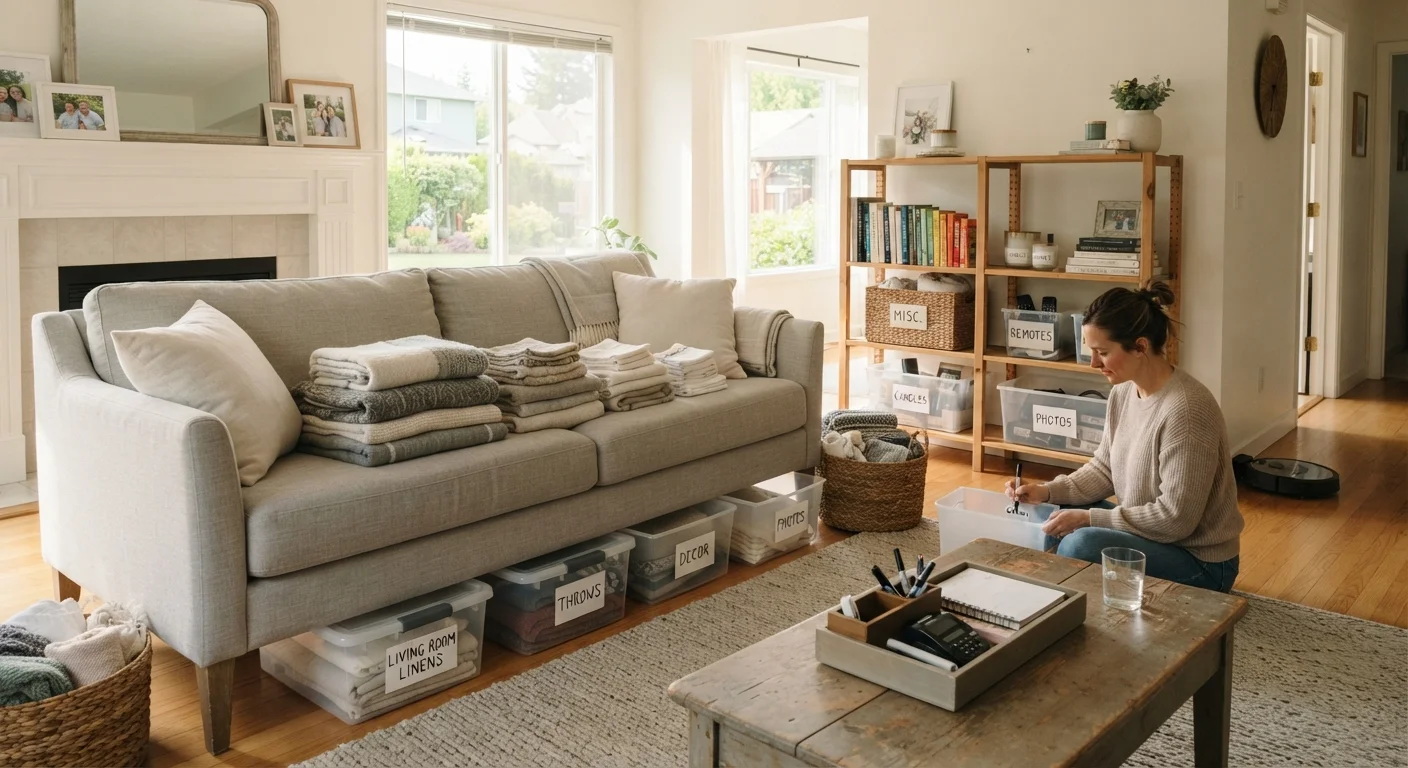
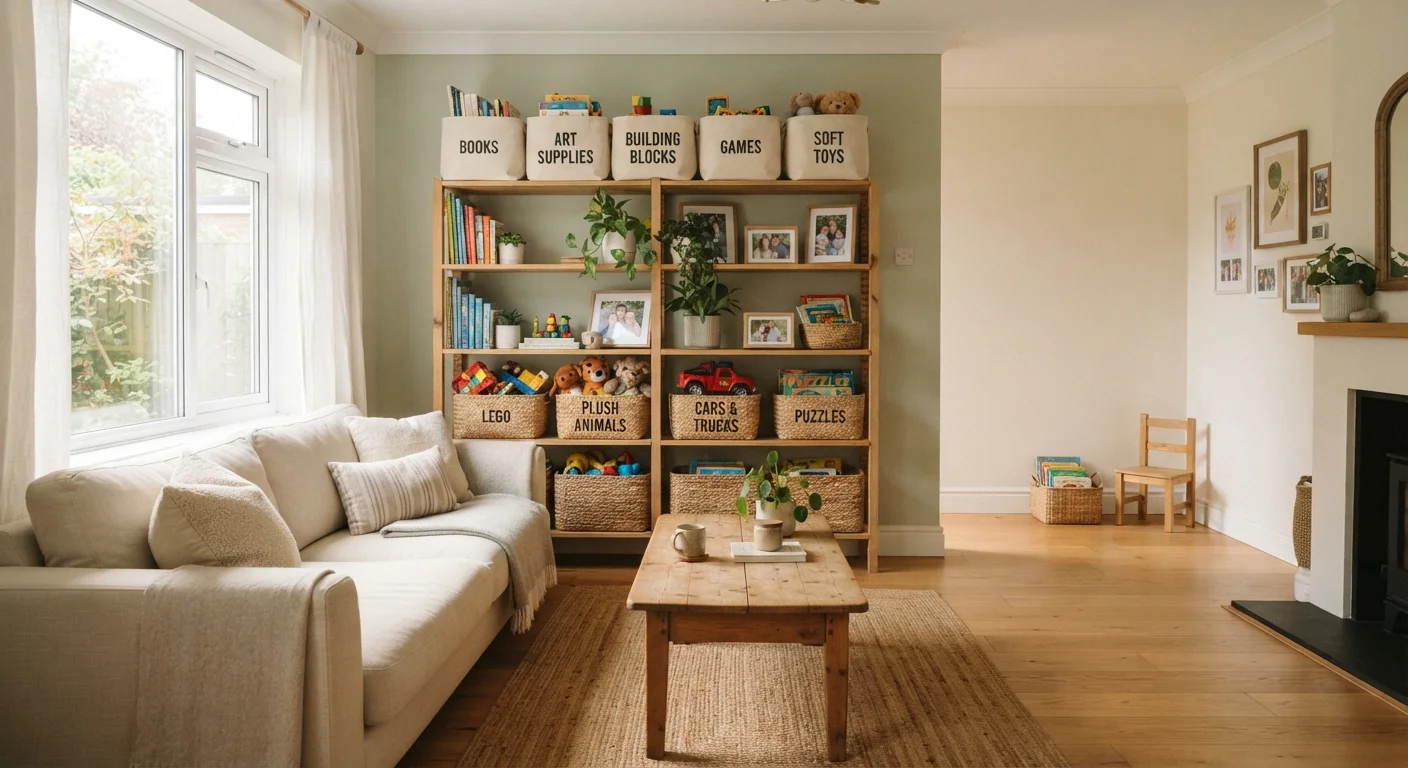
Give every category of item a fixed, labeled storage location.
When items do not have an assigned home, they accumulate on surfaces. Labels remove the guesswork for children and adults alike, so returning an item takes the same effort as dumping it anywhere. This single change reduces the time spent tidying after a busy day.
Size storage containers to match how items are actually used, not how they look.
Oversized bins become a dumping ground. Undersized bins overflow. When a container matches the realistic volume of its contents, children can empty and refill it without making a larger mess in the process.
Rotate toys and materials rather than storing everything at once.
When fewer items are accessible, children play with them more deliberately and tidying takes less time. Rotating items every few weeks also refreshes interest without buying anything new.
Declutter before organizing, not after.
Organizing an excess of items creates temporary order that collapses quickly. Reducing volume first means the systems you put in place have a realistic chance of holding. This is especially true in children's bedrooms and playrooms where accumulation is fast.
Make the easiest action the correct one for children.
If returning an item to its proper place requires more steps than leaving it on the floor, children will consistently choose the floor. Storage should be at child height, open-topped where possible, and within arm's reach of where items are used.
Organization looks different by age
A system that works for a ten-year-old will not work for a toddler. Younger children need fewer choices, larger containers, and picture labels instead of word labels. As children get older, they can take on more complex responsibilities and manage their own spaces with less adult oversight. Adjust storage height, bin size, and task complexity as your household grows.
Quick wins you can act on today
Before overhauling any room, these small changes produce immediate results with minimal effort. They also build the habit of acting on organization impulses rather than deferring them.
Once these habits are in place, a more thorough weekend pass through the home becomes manageable. The weekend declutter checklist is a practical tool for that next step, even with small children in the house during the process.
Keeping systems running week to week
Organization systems do not maintain themselves. The nightly reset is the most reliable maintenance tool, but it only works if it is short enough that everyone will actually do it. Ten minutes is a realistic ceiling for most families. Longer than that and it becomes avoidable.
Weekly, spend five minutes checking whether storage locations are still working. If the same items keep ending up in the wrong place, the solution is usually to move the storage closer to where those items are actually being used, not to repeat instructions.
If your household also includes pets, their supplies and gear benefit from the same fixed-location principle. A designated spot for leashes, food, and toys prevents that category of clutter from spreading across the home. The pet safety at home hub covers how to organize shared spaces where kids and animals both spend time.
Consistent organization also has financial benefits. Families who can quickly locate what they own are less likely to buy duplicates or replacements. If you are thinking about how household habits connect to broader spending patterns, family saving habits that hold up over time covers practical routines that reduce everyday costs.