Why routines matter more than motivation
Motivation is unreliable on a Tuesday morning when the kids are late for school and the dog is circling the kitchen. A written routine is not. When pet care is structured, it stops depending on anyone remembering to do it and starts happening because it is simply next on the sequence.
Pets, especially dogs, read household patterns closely. Consistent mealtimes, walks, and bedtimes reduce anxiety in animals the same way they reduce chaos for children. A pet that knows what to expect is generally calmer, and a calmer pet is easier to manage alongside everything else.
If you are choosing a pet and have not yet decided on species or breed, see our guide to kid-friendly pets first. The routines involved vary considerably by animal, and starting with a good match for your household makes everything below easier.
Use habit stacking to anchor pet tasks
Pick two or three moments already fixed in your day, such as waking up, school drop-off, and bedtime, and attach one pet task to each. When feeding happens at the same moment as making breakfast, it rarely gets forgotten. Habit stacking works because you are borrowing the memory cue from an event that already happens automatically.
The core routines every pet needs
Most pets need five categories of care built into a regular schedule.
Core routine
The fixed set of daily tasks a pet needs to stay healthy and calm, including feeding, fresh water, exercise, and a clean living space.
Enrichment
Activities that keep a pet mentally active, such as puzzle feeders, scent games, or short training sessions. Without enrichment, many pets become bored and develop unwanted behaviours.
Preventive veterinary care
Scheduled vet visits, vaccinations, and parasite prevention done before a health problem appears, rather than after.
Habit stacking
Attaching a new task to an existing habit so it is easier to remember. For example, filling the pet's water bowl immediately after starting the morning coffee.
Care sheet
A written summary of a pet's daily routine and needs that a sitter or family member can follow without extra explanation.
Feeding and water
Set fixed meal times rather than free-feeding where possible. Measured portions twice a day suit most adult dogs and cats, though your veterinarian can advise on what fits your specific pet's age, size, and health. Fresh water must be available at all times, not just topped up when someone notices the bowl is low.
Exercise and enrichment
Dogs need physical activity daily. The amount varies by breed and age, but a short walk in the morning and another in the evening covers the minimum for most adult dogs. Cats benefit from at least two short play sessions per day. Enrichment, such as puzzle feeders or hiding small food treats around the house, occupies a pet's mind during the hours when family activity is low.
Hygiene and grooming
Litter boxes need daily scooping. Dogs need baths on a schedule that suits their coat type, and most need nail trims every few weeks. Brushing frequency depends on coat length. Building these into a weekly rhythm, rather than doing them only when they become urgent, takes less time overall.
Preventive veterinary care
Annual checkups, vaccinations, and parasite prevention are not optional add-ons. Put them on your calendar the same day you schedule the kids' school physicals.
Veterinary schedules vary by species and age
Puppies and kittens typically need a series of vaccines in their first months, while adult pets usually need annual or biannual checkups. Your veterinarian will give you a personalised schedule. Do not rely on general timelines found online as a substitute for professional guidance specific to your pet.
Fitting pet care into a family schedule
The easiest routines attach pet tasks to events that already anchor your day. Morning feeding pairs with making coffee. An evening walk follows dinner cleanup. Litter box checks happen before the kids' bath time.
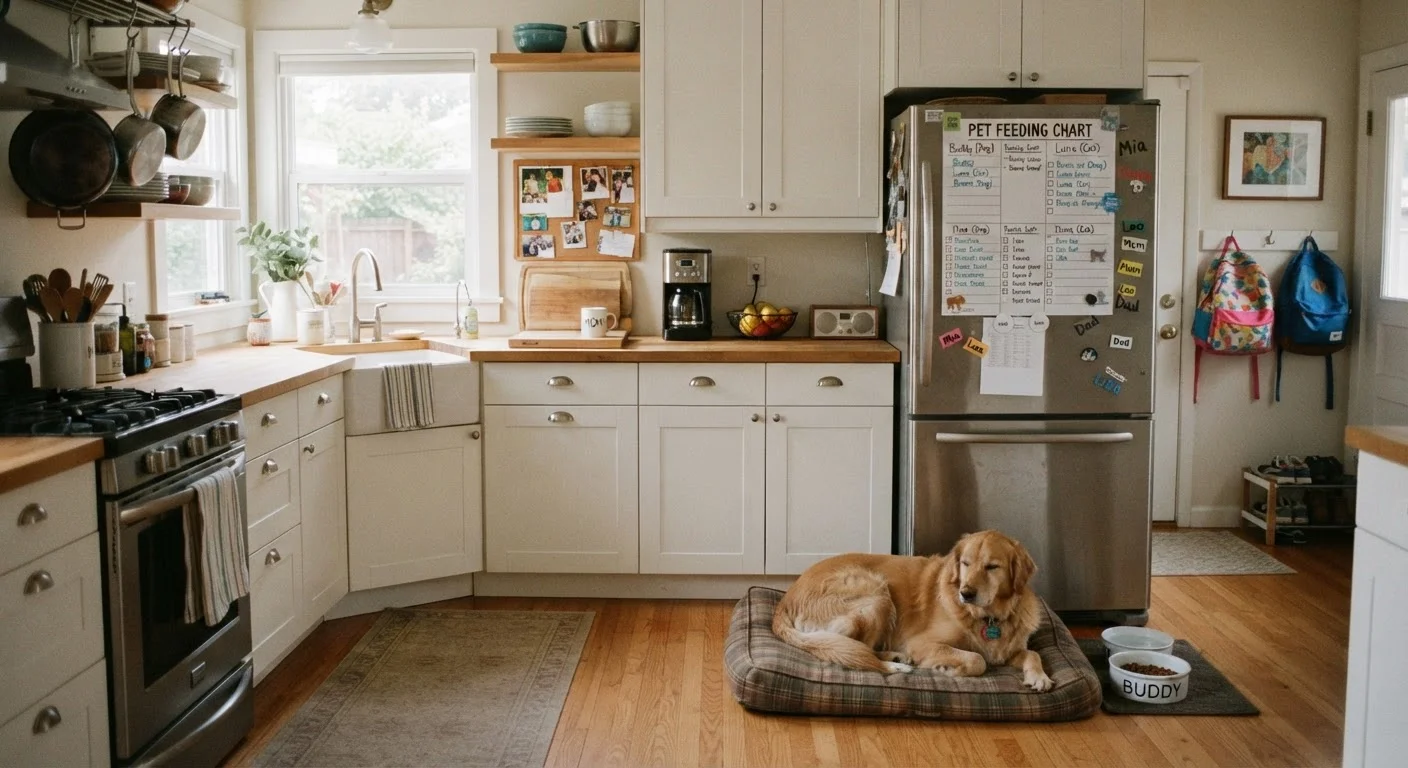
Write the full routine on paper or in a shared digital calendar with names attached to each task. Assigning ownership matters in a house where multiple adults assume someone else handled it. A simple grid with days across the top and tasks down the side is enough.
For household organisation in general, the room-by-room organisation guide has a useful framework for identifying where new habits can anchor onto existing ones without adding friction.
Do not skip parasite prevention
Fleas, ticks, and intestinal parasites are health risks to both pets and children who share the same living space. Talk to your veterinarian about an appropriate prevention plan and keep it on your calendar like any other appointment. Missing several months of prevention can allow infestations that are far harder and more disruptive to address.
Getting kids involved safely
Children who participate in pet care develop a stronger relationship with the animal and a clearer sense of responsibility. The tasks need to match the child's age and physical ability, and an adult should supervise until the habit is genuinely established.
Children aged four to six can refill water bowls and help place food in a dish while an adult measures and oversees. Children aged seven to ten can take on daily feeding with light supervision, help with brushing, and carry waste bags on a walk. Older children can take on walks in safe, familiar areas after demonstrating they can manage the animal's behaviour calmly.
Any task involving restraining a pet, administering medication, or handling an unfamiliar or distressed animal should stay with an adult. For broader guidance on keeping children and pets safe in shared spaces, see our pet safety at home hub.
When the routine breaks down
Every family has stretches where the schedule falls apart: illness, travel, a new baby, a particularly overwhelming week. Missing one day does not undo a routine. The recovery strategy matters more than the miss itself.
When a disruption is planned, such as a holiday, prepare a care sheet in advance. List feeding times, portion sizes, medications, emergency vet contact details, and any behavioural notes a sitter needs. Handing someone a written document is more reliable than a verbal summary.
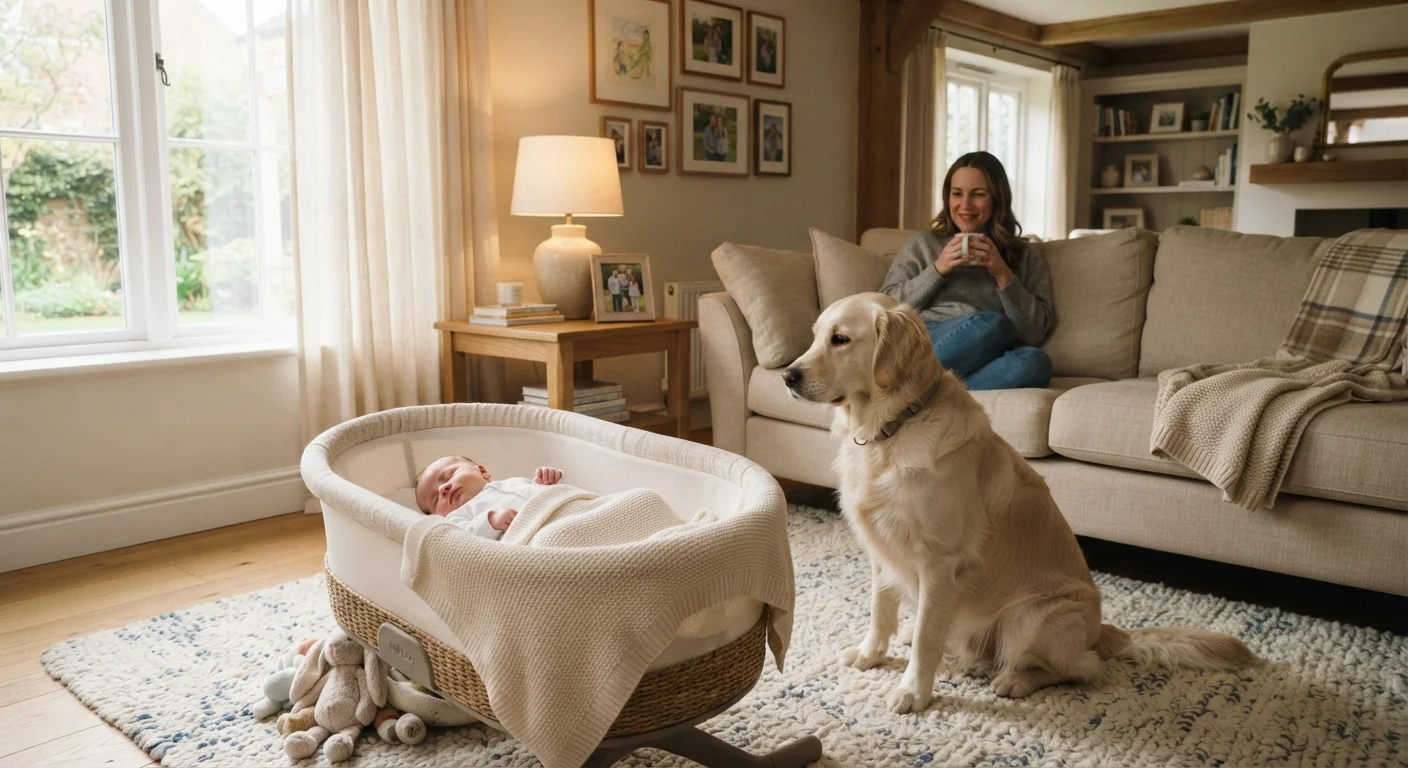
When a disruption is unplanned, restart the normal schedule the next day without adjusting quantities or timing to compensate. If your pet shows signs of stress or health changes after a disruption, contact your veterinarian rather than waiting to see whether things settle. If a new baby has recently arrived and your pet is struggling with the household change, the guide on preparing pets for a newborn covers that transition specifically.