Why age-appropriate involvement matters
Handing a five-year-old a full bag of dog food and saying "you're in charge" is a setup for frustration on both sides. When the task is too big or the animal too unpredictable, children lose confidence instead of gaining it. Matching the responsibility to the child's current stage of development is how involvement turns into genuine competence over time.
This isn't only about protecting the pet. Children who feel capable around animals are less likely to act impulsively or startle them, which reduces the risk of bites, scratches, and falls. Age-appropriate strategies for safe pet interaction offer a helpful foundation before you add care responsibilities to the mix.
The goal is a gradual handover. Parents remain present and involved, but the child's role grows as skills and judgment develop.
What children can realistically do at each stage
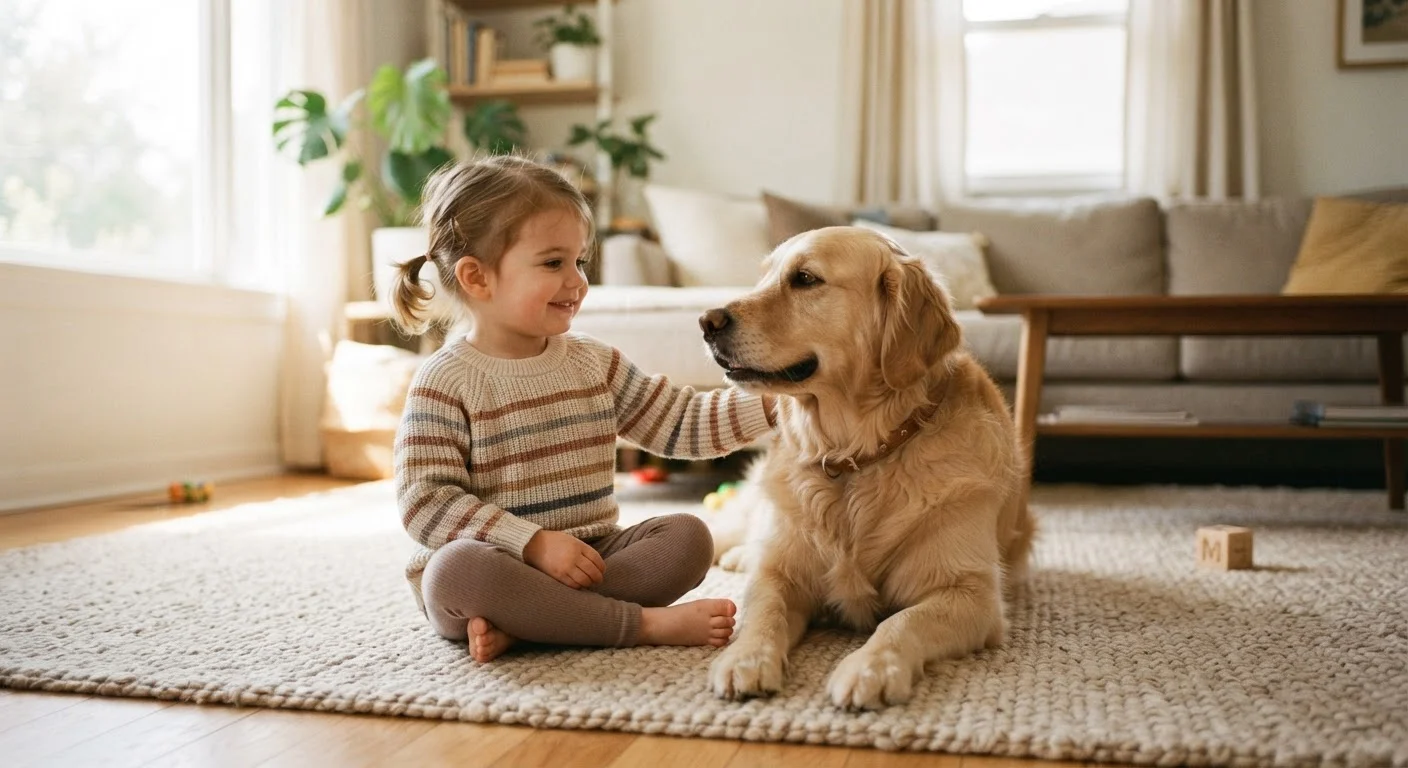
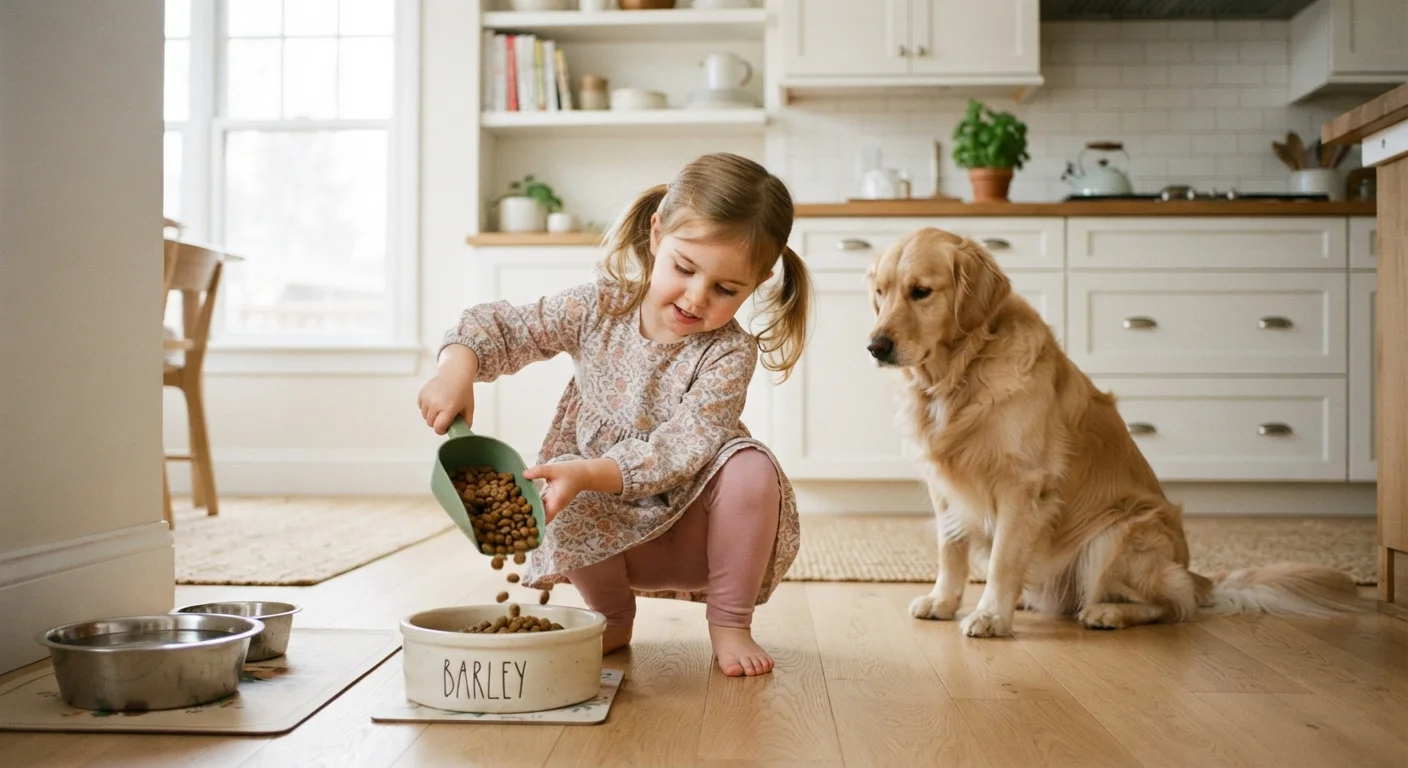
Ages 3 to 5: Toddlers and preschoolers do best with simple, low-stakes tasks done alongside an adult. Dropping measured kibble into a bowl, placing a water dish on a mat, or stroking a calm dog under a parent's guiding hand are all appropriate. The adult controls every variable; the child experiences the satisfaction of participation.
Ages 6 to 8: Early school-age children can take on slightly more independent steps, such as refilling a water bowl without prompting, helping to brush a dog's coat with a soft brush, or carrying a litter scoop (with gloves) to the bin. They still need regular check-ins, not because they can't be trusted, but because habits form through repetition with feedback.
Ages 9 to 12: Children in this range can manage most feeding and basic grooming tasks with minimal oversight. They can also begin learning to read an animal's body language, which is a skill that directly prevents incidents. Practical ways to assign care tasks by age can help parents structure this handover fairly.
Teens: Adolescents can take on full feeding schedules, coordinate vet appointment reminders, and handle most grooming independently. Some will thrive with this responsibility; others will need a parent to maintain the routine structure. Adjust based on your individual child, not on age alone.
Teaching the physical skills of pet care
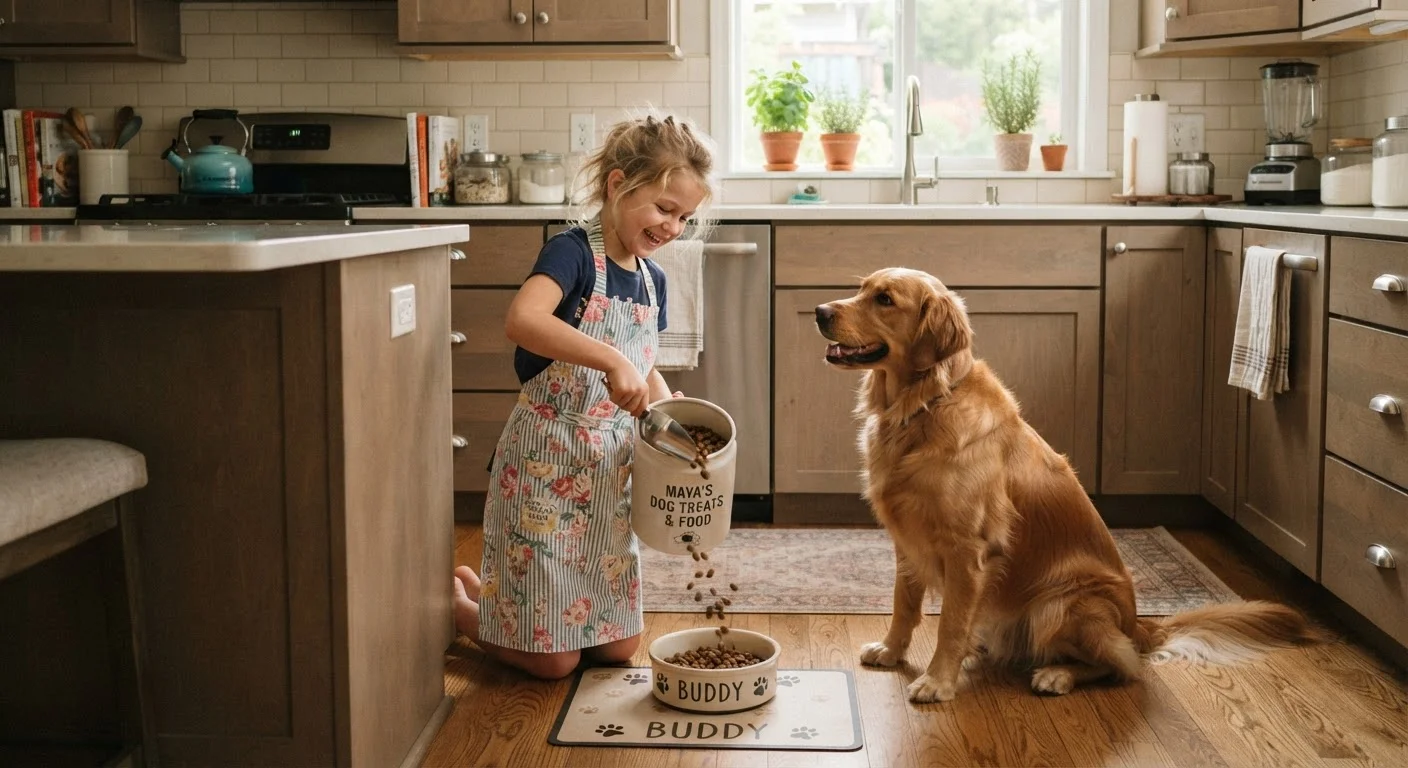
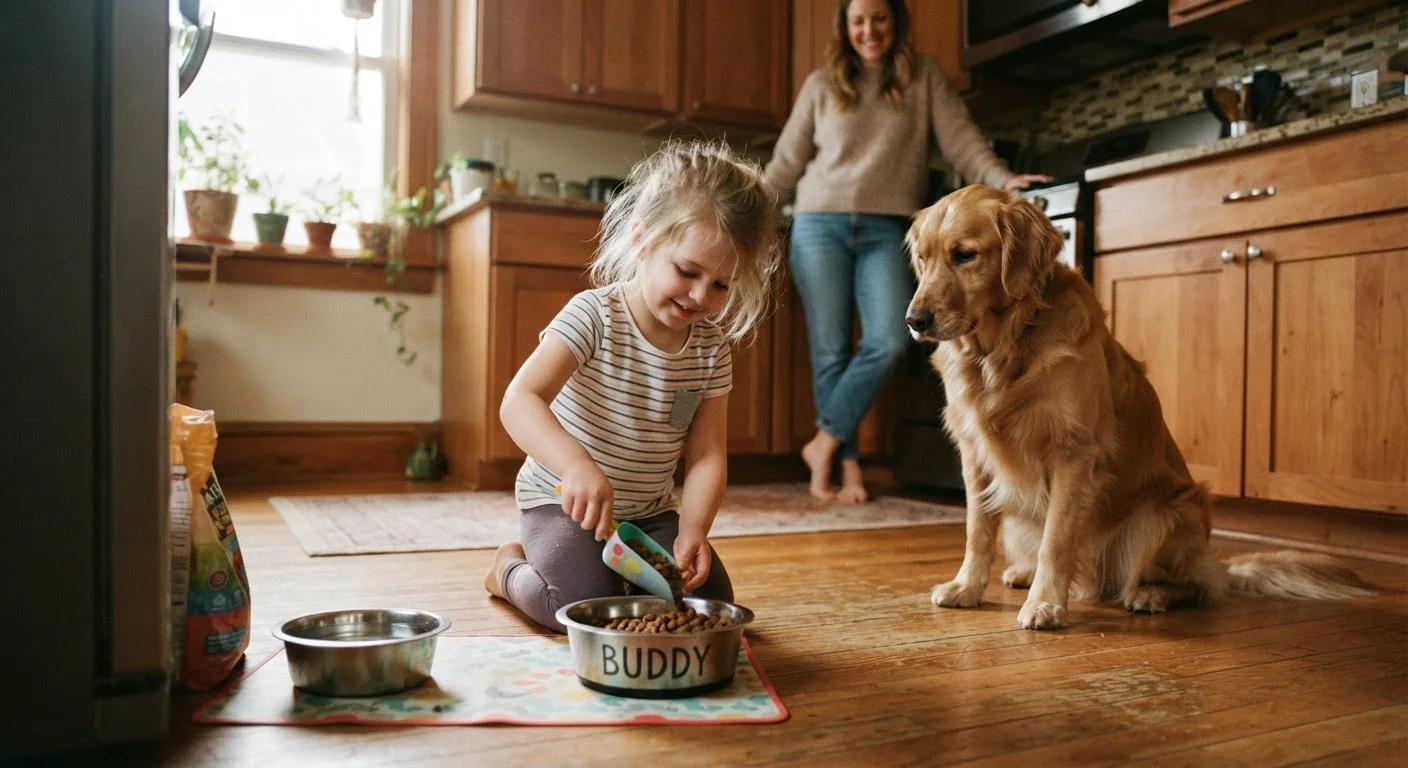
Feeding is usually the first care task, and it's worth doing slowly. Show your child how much food goes in the bowl, explain why the portion matters, and let them watch what happens after the animal eats. Over several sessions, step back incrementally so the child is doing more of the process independently.
Grooming requires even more patience. Animals that are not used to being brushed by a child may become tense, and a tense animal can nip. Practice with a calm, familiar pet, use gentle tools, and keep grooming sessions short at first. If your pet shows any sign of stress, stop, and revisit the pet safety resources for family spaces that cover animal body language.
For children handling small animals such as guinea pigs or rabbits, the sitting position matters: teach children to sit on the floor when holding these animals so a drop is not a long one. This single habit prevents the most common handling injuries.
Building habits that last
Pet care works best when it fits into the daily rhythm of a household rather than depending on a child remembering independently. Tying feeding to an existing anchor, such as after breakfast or just before dinner, removes the need for reminders. The weekly pet care checklist for family households is a practical tool for keeping all tasks visible without nagging.
When a child forgets or makes a mistake, the most effective response is a calm correction and a chance to try again immediately. Criticism that focuses on the error rather than the correction tends to make children avoidant of the task rather than more careful.
Building simple family-friendly pet care routines over time also helps children understand that animals depend on consistency, not effort made when convenient. That understanding, once formed, tends to carry forward.
This article is for general informational purposes only. For concerns about pet health or a child's wellbeing, consult a licensed veterinarian or qualified pediatric professional.