Two very different communication systems
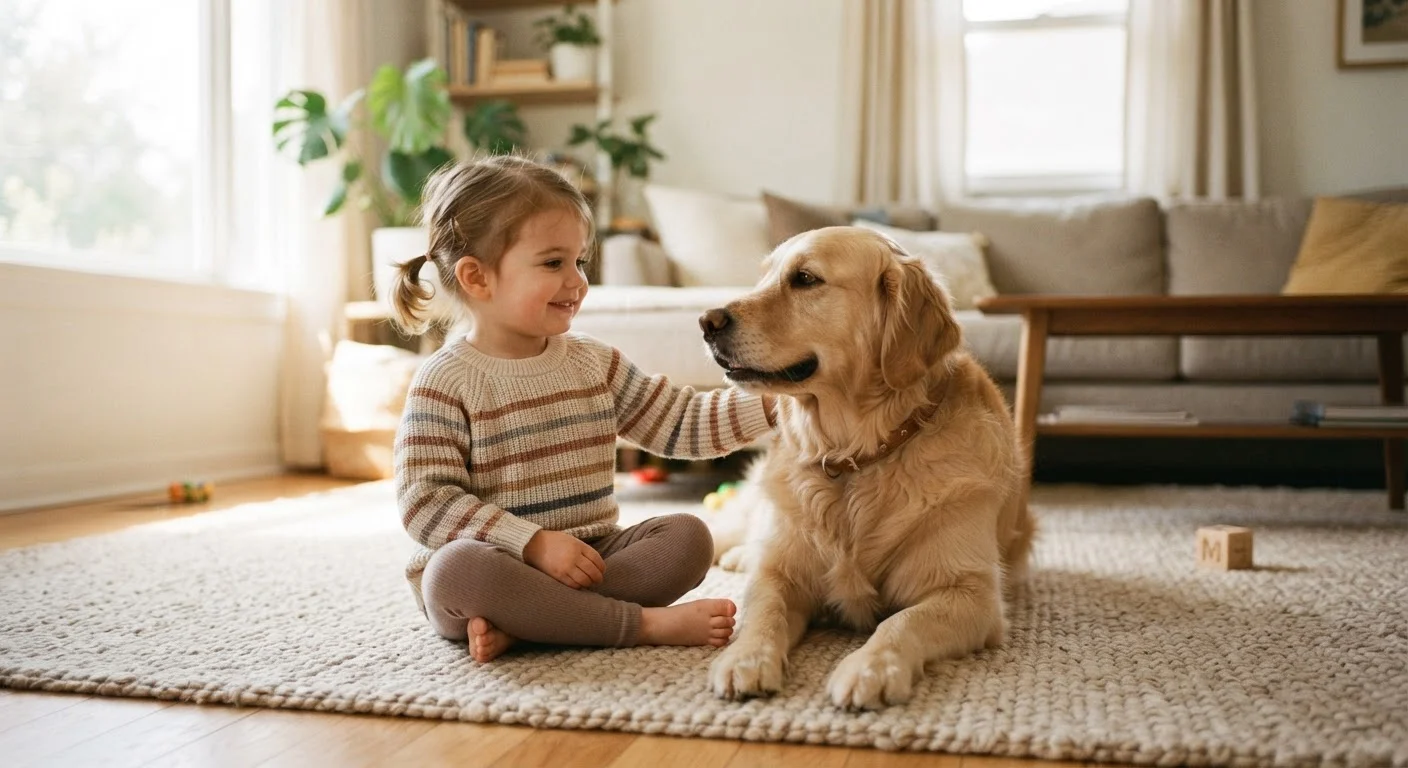
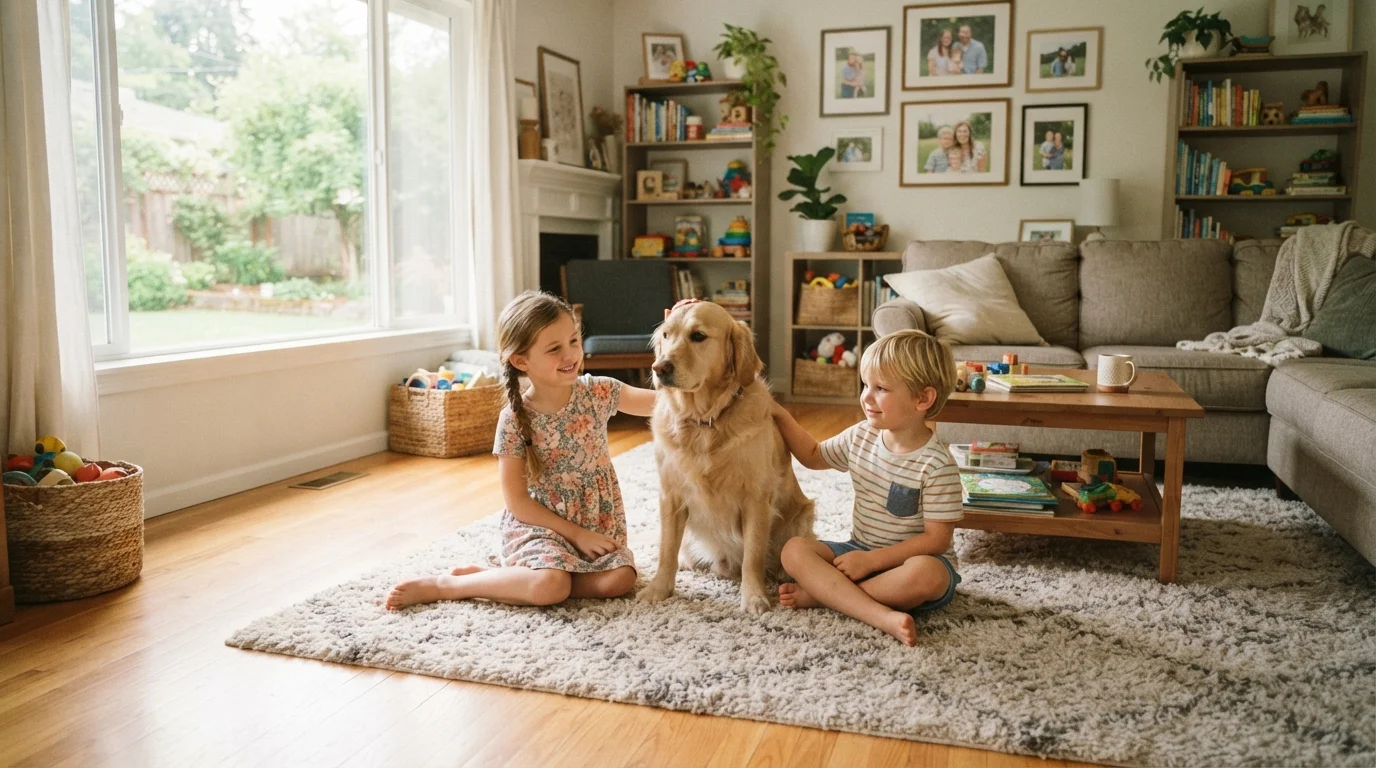
Dogs rely almost entirely on body language to express how they feel. A flick of the ear, a stiffened tail, a slow blink, or a sudden stillness all carry meaning to another dog. Children, especially those under six, rely on facial expression, words, and tone of voice. They have very little instinct for reading canine posture, and nothing in their social development prepares them to do so automatically.
This is not a failure on the child's part. Human children are wired to approach, make eye contact, and use direct physical contact to connect. Those behaviors are prosocial among humans. Among dogs, direct eye contact can be a challenge, frontal approaches can feel threatening, and being grabbed around the neck, which a child experiences as a hug, can feel like a predator's hold.
The result is a genuine mismatch. Neither the child nor the dog is behaving oddly for their species. The problem is that their signals land wrong on the other side.
Calming signals are easy to overlook
Many of the earliest stress signals dogs display, such as yawning, lip licking, or suddenly sniffing the ground, are so brief and ordinary-looking that even attentive adults miss them. If you are unsure what to watch for, a certified applied animal behaviorist or a veterinary behaviorist can walk your family through the key signals in the context of your own dog. This is especially worth considering when a new baby or toddler joins a household that already has a dog.
What dogs actually say before a bite
Dogs rarely bite without signaling first. Veterinary behaviorists describe a predictable ladder of signals that dogs use when uncomfortable. The earliest signals are easy to miss: yawning outside of tiredness, lip licking, turning the head away, sniffing the ground suddenly, or blinking slowly. These are sometimes called calming signals, and they are a dog's first attempt to reduce tension.
If those go unnoticed, a dog may escalate: body freezes, muscles stiffen, the whites of the eyes become visible (sometimes called 'whale eye'), and the tail either tucks or goes rigid. A growl, if it comes, is late in that sequence, not early. By the time a child hears a growl, the dog has already been communicating discomfort for some time.
A dog that has been punished for growling in the past presents a particular risk. Without that audible warning, the escalation from discomfort to a bite can appear nearly instantaneous to an observer, especially a young child who was never reading the earlier signals anyway.
For practical ways to act on this knowledge, see our guide to teaching kids safe pet interactions.
The child behaviors that most often trigger stress
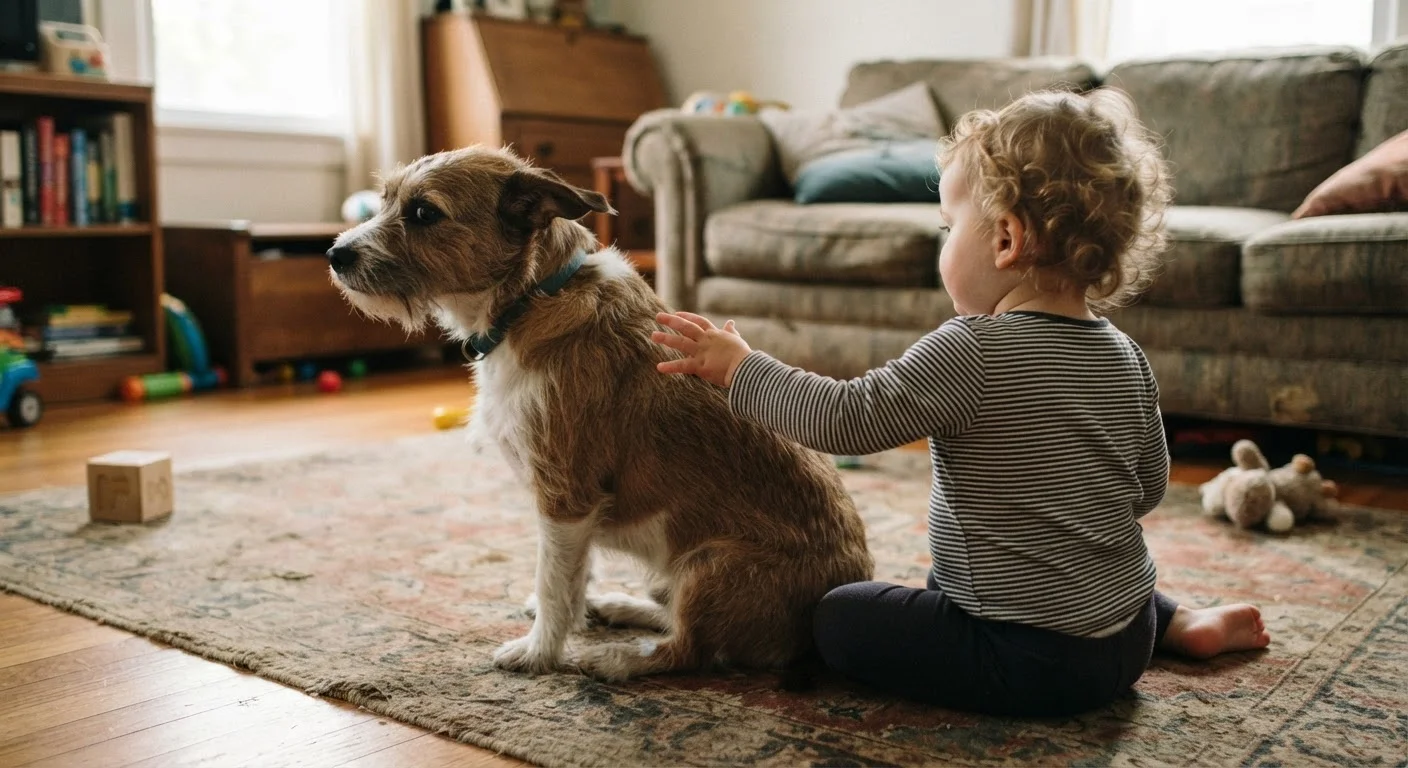
Several common child behaviors consistently appear in bite incident reports. Hugging is the most frequently cited. Eye contact held too long reads as a social threat in dog communication. Running toward a dog triggers chase instincts in some dogs and fear responses in others. Reaching toward a dog's face, particularly from above, mimics a dominant gesture. Disturbing a dog that is eating, sleeping, or near a valued resource, such as a chew or toy, is another high-risk moment.
Toddlers are not capable of modifying these behaviors through willpower alone. Their impulse control is still developing neurologically. Expecting a two-year-old to consistently respect a dog's body language is unrealistic, which places the management responsibility squarely on the adults in the home.
Understanding which temperament traits make a dog more or less likely to tolerate these moments is also worth knowing before a pet joins the family. Our article on what makes a pet truly kid-friendly covers those traits in detail.
How adults bridge the gap
Adult supervision is not simply being in the same room. It means being close enough to physically intervene, watching both the child and the dog simultaneously, and knowing what to watch for. That last point matters most. A parent who knows what a stress signal looks like can redirect a child before either animal or child reaches a breaking point.
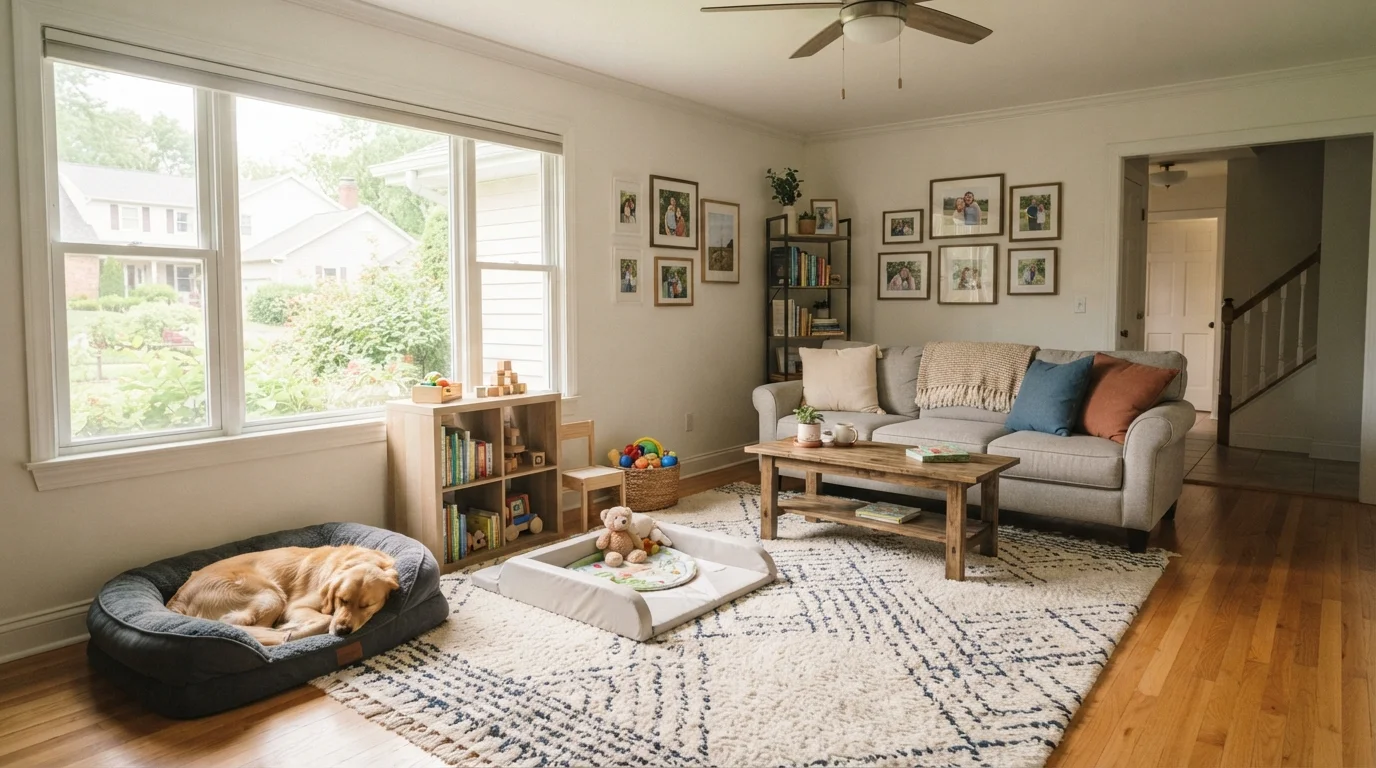
Teaching children concrete, specific rules works better than general instructions like 'be gentle.' Rules such as 'we do not hug the dog' or 'we let the dog come to us first' are actionable and repeatable. Building in a retreat space where the dog can go and not be followed removes the trapped-corner scenario that often precedes bites. Our piece on setting up safe zones at home walks through how to do that practically.
The communication mismatch between children and dogs is real, but it is also predictable. Families who understand it can structure their home environment to make accidental incidents far less likely.