How seasonal watering needs differ for your lawn
Grass does not need the same amount of water in July that it needs in October. Watering on a fixed schedule year-round wastes water in cool months and may leave turf short in peak heat. The right approach adjusts for grass type, soil, and the season you are actually in.
Two broad grass categories drive most of the seasonal math. Cool-season grasses (tall fescue, Kentucky bluegrass, perennial ryegrass) grow actively in spring and fall and go semi-dormant in summer heat. Warm-season grasses (Bermuda, zoysia, St. Augustine, centipede) peak in summer and go dormant once temperatures drop below roughly 50 degrees Fahrenheit. Water each type according to when it is actively growing, not according to the calendar month alone.
A year-round yard care calendar can help you tie watering adjustments to the other seasonal tasks you are already doing.
Spring: rehydrating without overdoing it
Most lawns come out of winter with compacted, dry soil that is not yet fully active. Cool-season grasses resume growth as soil temperatures reach 50 degrees Fahrenheit, while warm-season grasses stay dormant until soil hits around 65 degrees. Watering too heavily before that threshold encourages shallow roots and can promote fungal disease.
A general spring target is about 1 inch of water per week, including rainfall. Use a simple rain gauge or a tuna can placed in the lawn to measure what your sprinklers actually deliver. If rainfall covers most of that inch, skip supplemental irrigation entirely. Overwatering in spring is a common mistake; the garden myths that waste your weekend article covers why daily light watering does more harm than infrequent deep watering.
Summer: the highest-demand period
Warm-season grasses thrive in summer and may need 1 to 1.5 inches of water per week in hot, dry conditions. Cool-season grasses under heat stress may need the same amount or, in extreme heat, may go naturally semi-dormant. A semi-dormant cool-season lawn does not need heavy irrigation to survive; it needs roughly 0.5 inches every two to three weeks just to keep the crown (the growing point at soil level) alive.
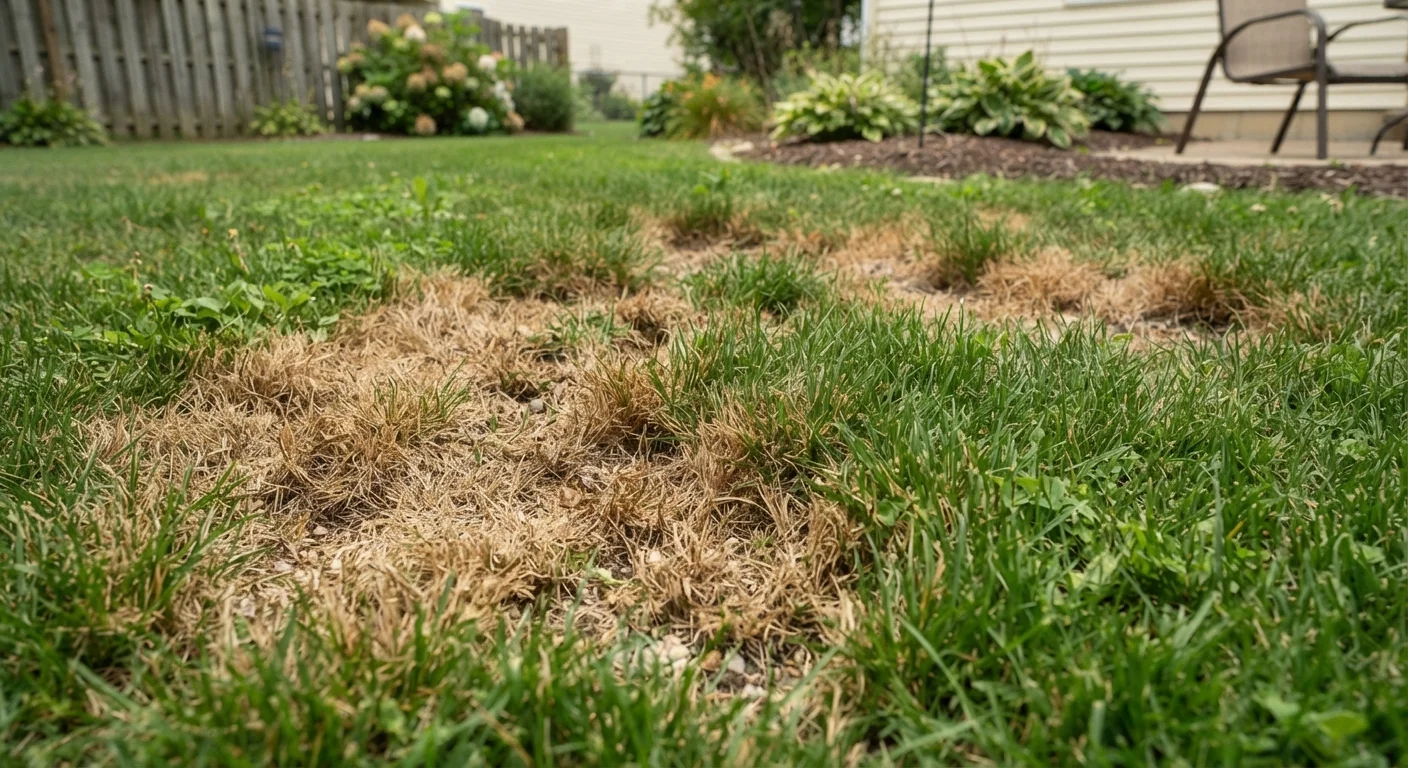
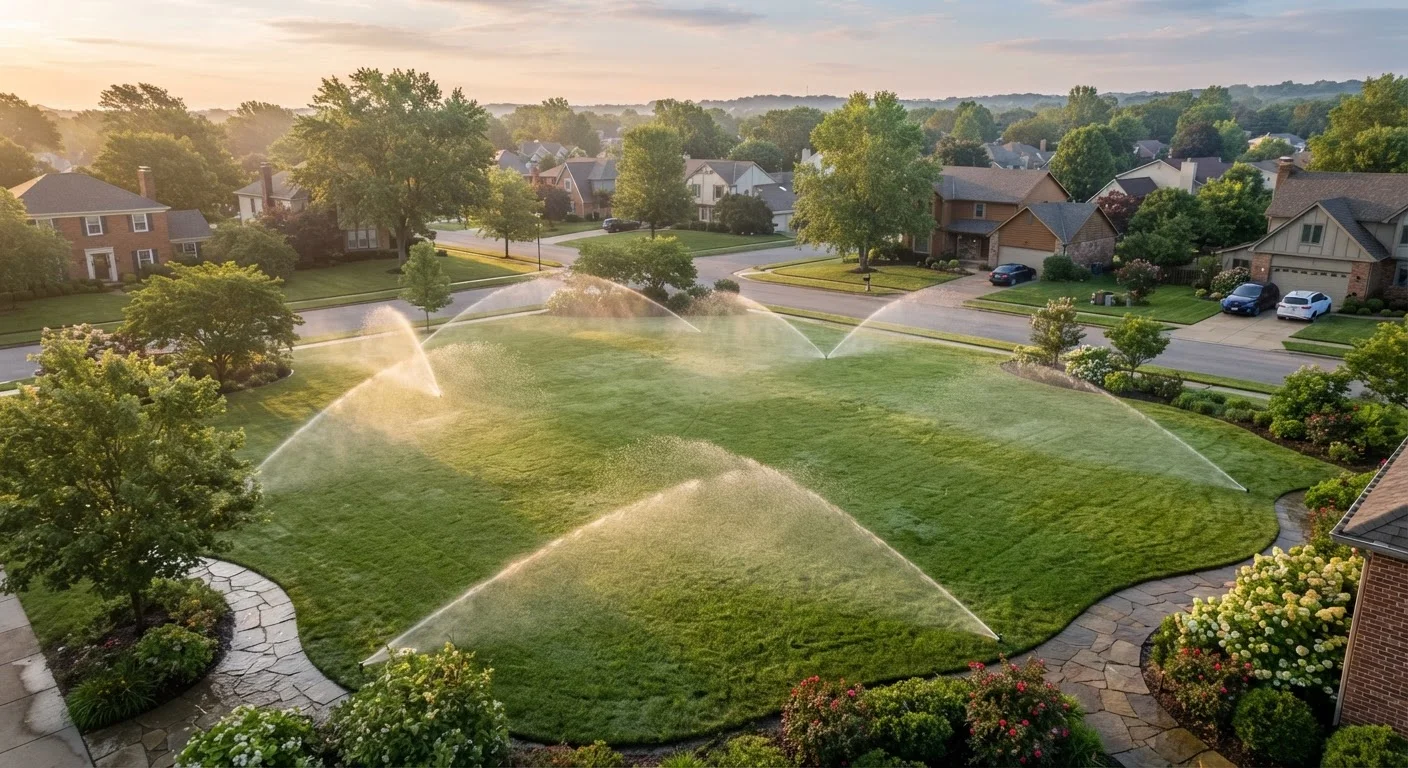
Time watering for early morning, between about 4 a.m. and 9 a.m. Watering at midday loses significant moisture to evaporation. Evening watering leaves blades wet overnight, which raises disease risk. Water deeply and infrequently rather than lightly every day. Shallow daily watering trains roots to stay near the surface, where they are most vulnerable to heat. If your lawn develops bare or discolored spots, the guide to brown patches can help you identify whether the cause is watering, disease, or something else.
Soil type matters here. Sandy soil drains fast and may require watering two or three times a week in smaller doses. Clay soil holds water longer but compacts easily; splitting one weekly inch into two applications prevents runoff. See soil health basics for how to read your own yard's drainage behavior.
Fall: tapering off as growth slows
Fall is the recovery season for cool-season grasses. They resume active growth as temperatures cool and are best positioned to fill in thin spots and build root depth before winter. Aim for 1 inch per week through early fall, then reduce gradually as temperatures drop and rainfall typically increases.
Warm-season grasses slow down significantly in fall and should receive less water as dormancy approaches. Continuing to irrigate heavily after growth stops promotes disease and can delay the hardening process that prepares turf for winter. Check that your irrigation controller is adjusted for fall, because many systems left on summer settings over-irrigate in September and October.
Monthly home maintenance reminders include shutting down and winterizing irrigation systems before the first hard freeze, which is worth scheduling well before it is urgent.
Winter: minimal to none
Cool-season grasses are dormant or near-dormant in most of the US during winter. Warm-season grasses are fully dormant once soil cools. Neither needs regular irrigation from a homeowner. If you have a region with mild winters and no consistent rainfall (parts of the Southwest, for example), one deep watering per month may help prevent complete desiccation, but this is the exception.
The more important winter task is winterizing your irrigation system before a hard freeze. Water left in lines and heads can freeze, expand, and crack components. A licensed irrigation technician can blow out lines with compressed air; this is not a task to skip in freeze-prone climates. Mowing height adjustments in late fall also reduce stress on dormant turf and complement a sound end-of-season watering wind-down.