Why soil is the starting point for every yard project
Most lawn and garden problems that look like pest or watering issues trace back to the soil underneath. Yellowing grass, stunted tomatoes, and flower beds that never quite fill in often share one cause: the soil cannot deliver what the plant needs, even when water and fertilizer are present. Understanding a few basic properties removes most of the trial and error from backyard gardening.
Soil is not just ground-up rock. It is a mix of mineral particles, decomposed organic material, water, air, and billions of microorganisms. Each component affects how well plants grow. Get the balance wrong and you spend a lot of time and money compensating for a problem you have not fixed. Get it right and most plants do the heavy lifting themselves.
For suburban families trying to maintain an attractive yard without spending every weekend on it, building good soil is one of the highest-return investments available. Results do not appear overnight, but they compound. See our guide on small lawn habits for how consistent, low-effort practices add up across a season.
pH: the number that controls everything else
Soil pH is a measure of acidity or alkalinity on a scale of 0 to 14, with 7.0 being neutral. Most backyard plants, including common lawn grasses, prefer a range between 6.0 and 7.0. Outside that window, nutrients that are physically present in the soil become chemically locked and unavailable to roots. You can add fertilizer all season and still see deficiency symptoms if pH is off.
Clay-heavy soils in humid regions tend to be acidic. Sandy soils in arid areas often run alkaline. Your local cooperative extension service (a publicly funded network connected to land-grant universities in each state) offers inexpensive soil tests that report pH alongside key nutrient levels. The test result comes with region-specific guidance on how much lime to raise pH or elemental sulfur to lower it.
6.0-7.0
Ideal pH range for most lawn and vegetable plants
This range is cited by cooperative extension services across the US as the window where major nutrients are most available to plant roots.
Less than 3%
Typical organic matter in suburban topsoil
Many suburban lots lost topsoil during construction grading, leaving subsoil with low organic content that requires sustained amendment.
1 to 2 inches
Recommended annual compost addition per garden bed
Cooperative extension guidelines generally suggest this amount worked into the top few inches of soil each spring for most ornamental and vegetable beds.
Adjusting pH is slow work. Lime and sulfur take weeks to months to change readings, so test in fall, amend if needed, and retest the following spring before planting.
Organic matter and what it actually does
Organic matter is decomposed plant and animal material, and it does several things at once. In clay soil, it separates tightly packed particles and creates pore spaces for air and water to move through. In sandy soil, it acts as a sponge, holding moisture and nutrients that would otherwise drain away. Both effects come from the same material applied the same way.
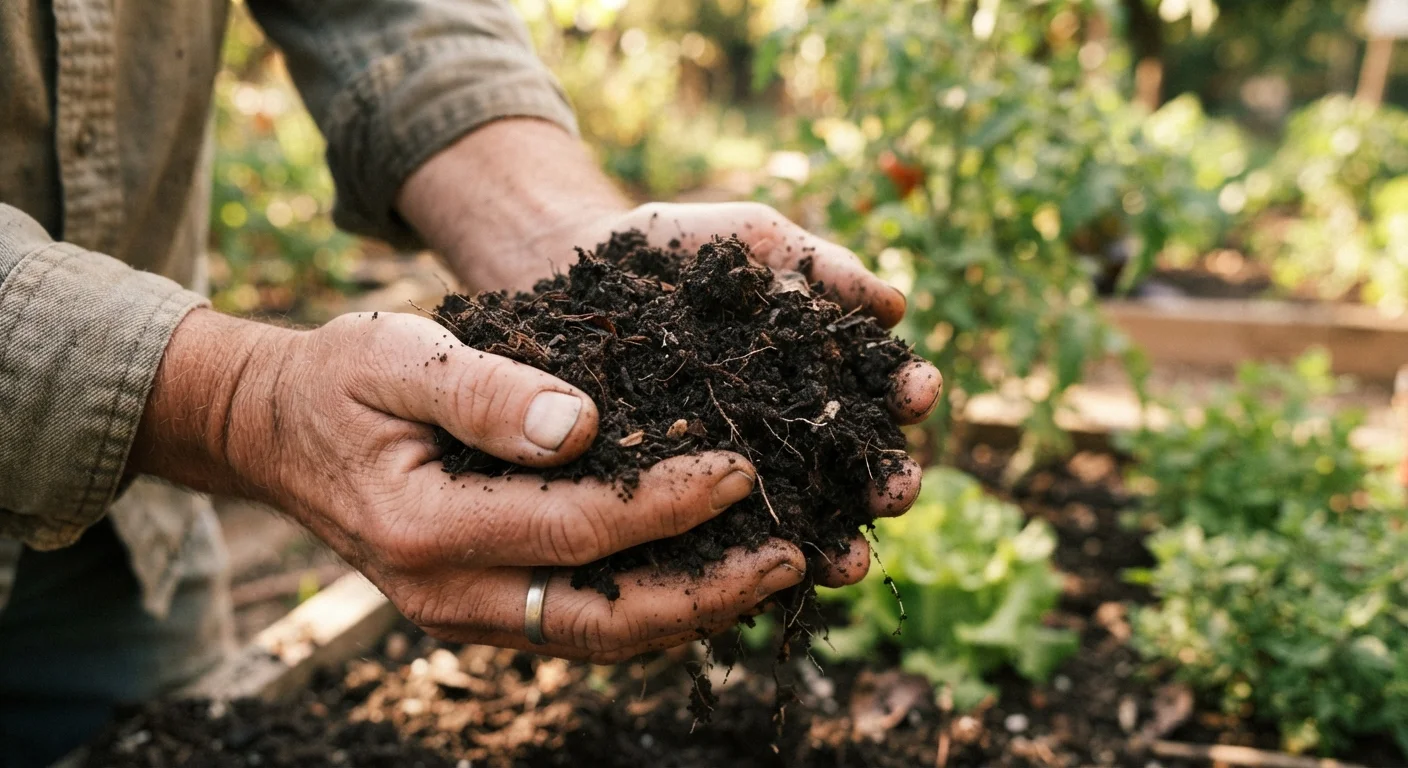
Compost is the most practical source for home gardeners. Finished compost added to garden beds in spring improves soil structure season over season. It also feeds soil microorganisms, which break down nutrients into forms plant roots can absorb. Mulching on top of beds, rather than tilling it in, is a second option: surface mulch gradually breaks down and adds organic matter while also reducing moisture loss and suppressing weeds.
Organic matter percentages in typical suburban topsoil often fall below 3 percent. Aim to increase that gradually with compost additions rather than trying to overhaul everything at once. For related context on which popular soil improvement tips hold up, see common garden myths explained.
Drainage, compaction, and the soil your lawn is living in
Water that pools for more than an hour after normal rainfall signals a drainage problem. The cause is usually compaction, a high clay content, or both. Compacted soil has had its air pockets crushed together, often by foot traffic, heavy equipment, or repeated tilling when wet. Roots cannot push through it easily, and standing water creates conditions where root rot and lawn fungus become likely.
Core aeration, the process of pulling small plugs of soil out of the lawn, is the standard remedy for compacted turf. It opens channels for air, water, and fertilizer to reach the root zone. Most lawns benefit from aeration once a year, ideally in fall for cool-season grasses or late spring for warm-season varieties.
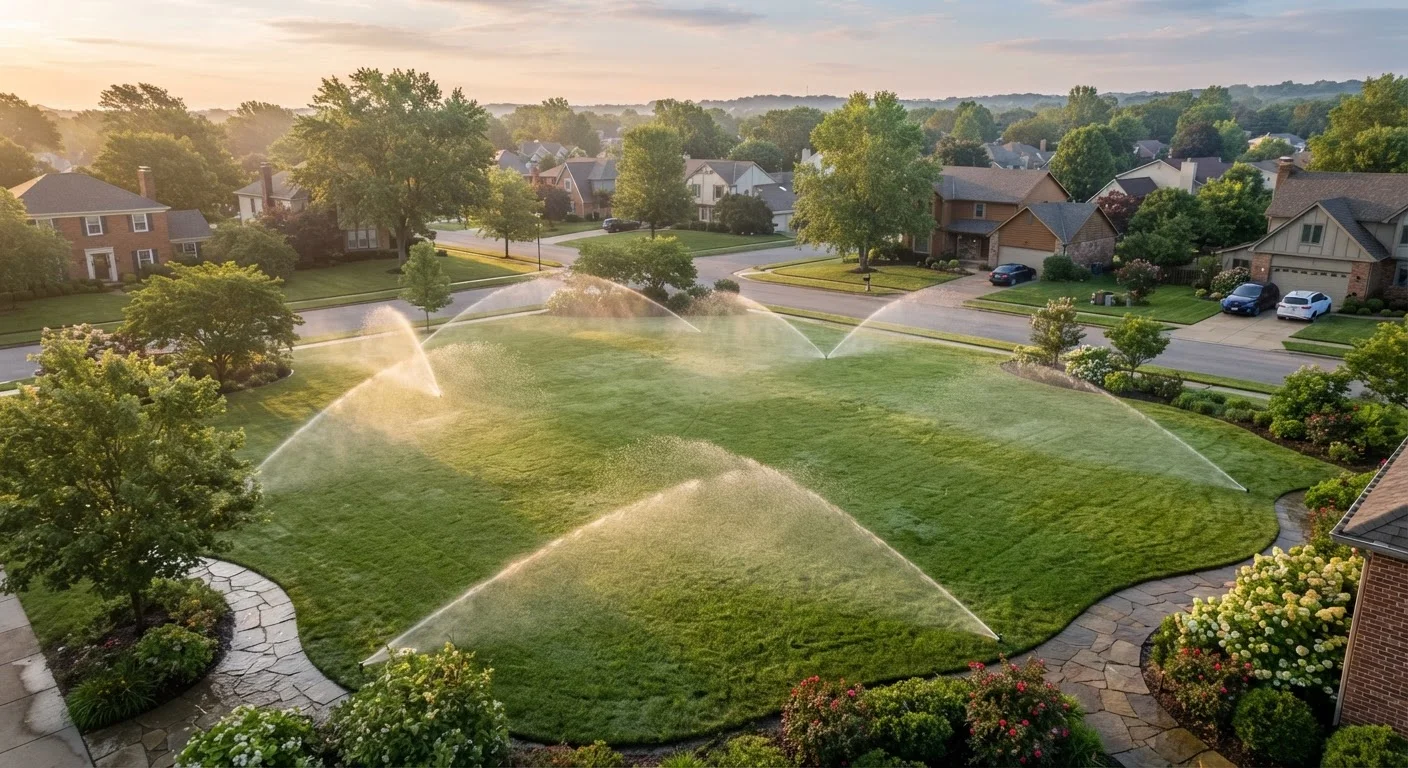
Watering habits directly affect how your soil structure holds up over time. Frequent shallow watering encourages surface roots and compaction from repeated foot traffic on soft ground. Seasonal lawn watering schedules explain how to water deeply and less often to build stronger root systems.
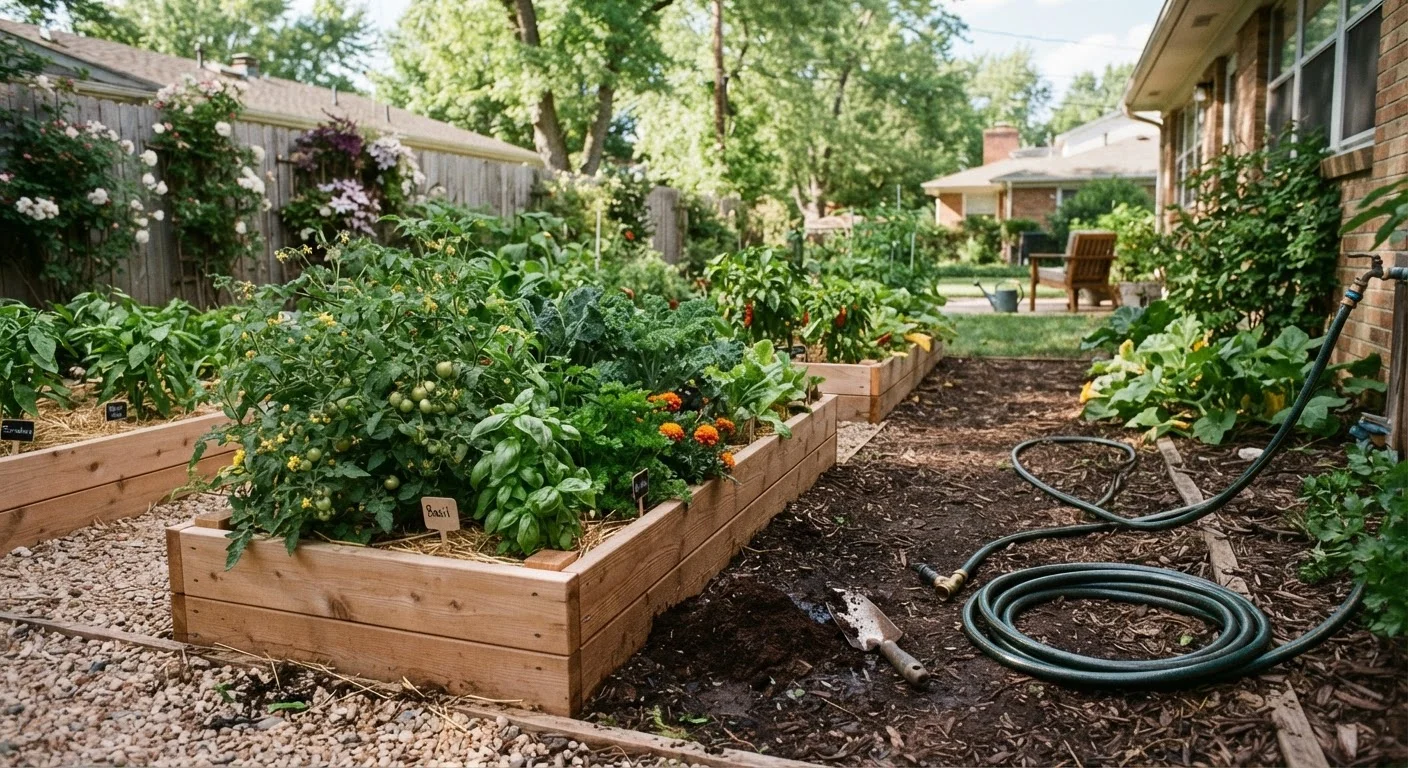
For garden beds with persistent drainage problems, raised beds filled with a compost-amended mix let you sidestep the existing soil entirely. They are a reasonable option when in-ground improvement would take years to achieve adequate drainage.
This article is for general informational purposes. Soil conditions vary widely by region. For major landscape changes or work near utility lines or foundations, consult a licensed professional and verify local permit requirements.