How to read what your lawn is telling you
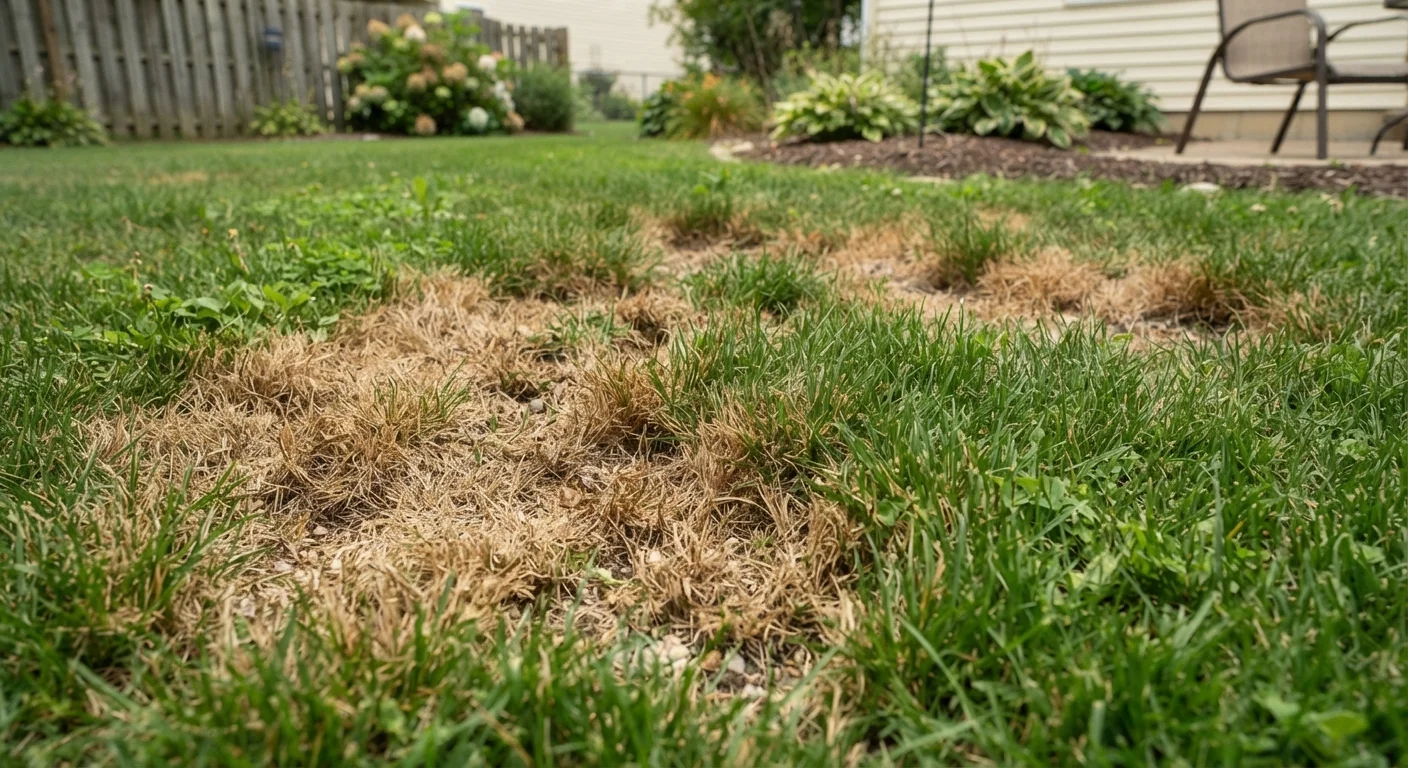
Brown patches are not random. Their size, shape, and location carry information about what went wrong. Circular patches that expand outward suggest fungal disease. Irregular strips that follow your mowing path point to equipment or technique issues. Patches near pavement or south-facing slopes often dry out from heat and soil compaction. Scattered, uneven browning across the whole lawn usually signals watering problems.
Before reaching for grass seed or fertilizer, spend a few minutes walking the yard and noting the pattern. That observation shapes every decision that follows.
Watering at the wrong time of day, particularly in the evening.
Why it happens: Evening watering feels convenient after work and seems to protect grass from daytime heat. Many homeowners are unaware that prolonged leaf wetness overnight promotes fungal disease.
Cutting grass too short during heat stress.
Why it happens: Shorter grass means less frequent mowing, so homeowners often set the mower deck lower than recommended. The connection between cutting height and root depth is not obvious until the lawn starts browning.
Applying fertilizer during drought or heat stress.
Why it happens: The impulse to feed a struggling lawn is understandable, but fertilizer applied to drought-stressed grass draws water out of root tissues and accelerates browning.
Ignoring early signs of lawn disease and treating as drought instead.
Why it happens: Brown patch fungus and dollar spot both cause discoloration that resembles dry stress, so homeowners water more heavily, which can worsen fungal conditions.
Reseeding brown patches without fixing the underlying cause first.
Why it happens: New grass seed is visible proof of action, so homeowners often overseed bare spots as the first step. If compaction, disease, or chronic mowing errors remain unaddressed, the new seed fails in the same location.
Watering and mowing habits that cause more damage than drought
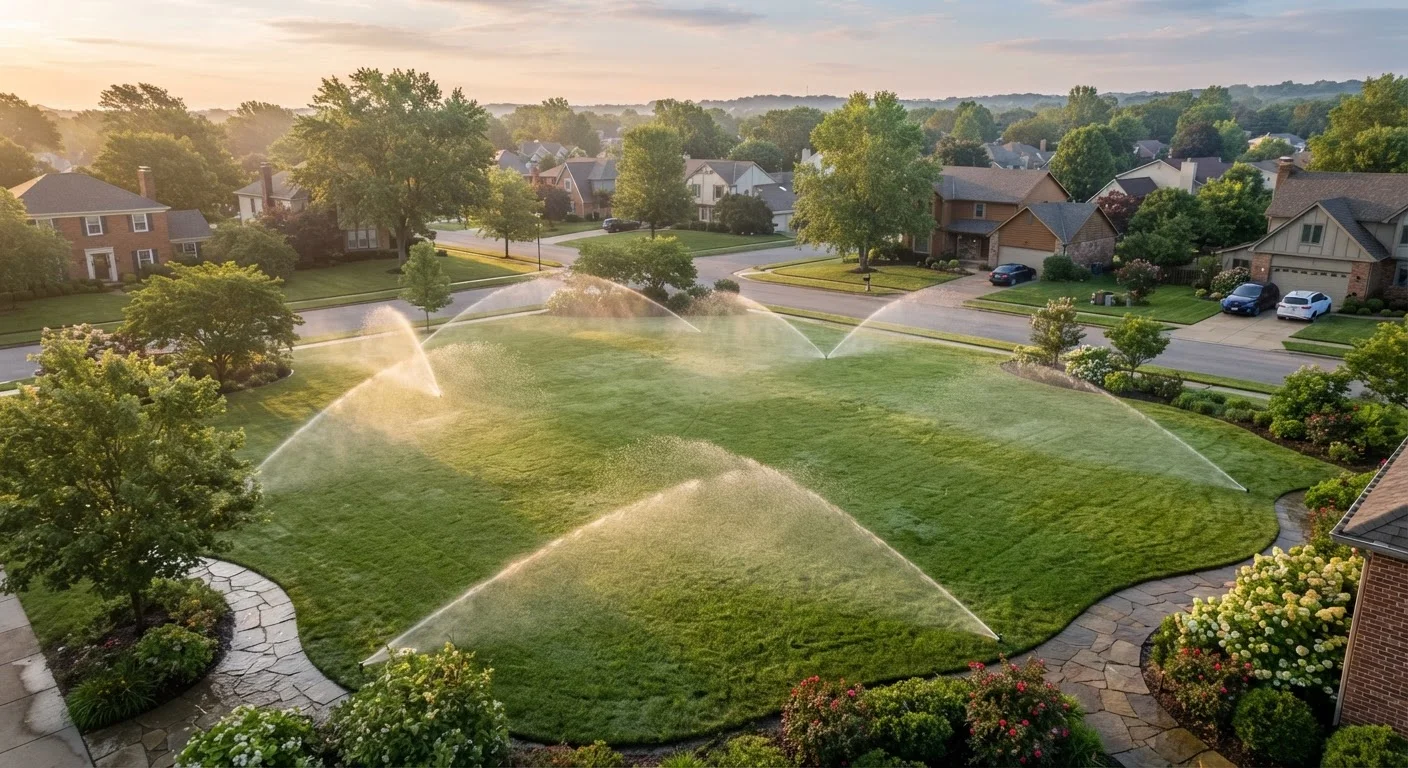
Many brown patches that homeowners attribute to summer heat are actually self-inflicted. Watering in the evening leaves grass blades wet overnight, which creates ideal conditions for fungal disease. Watering too lightly too often encourages shallow roots, making grass vulnerable the moment temperatures spike. For seasonal guidance on how much water your lawn actually needs, see lawn watering schedules by season.
Mowing with a dull blade tears grass rather than cutting it cleanly. Torn tips turn tan within a day or two and the lawn looks scorched even when watered correctly. Cutting too short, especially during hot weather, removes the leaf area the plant needs to shade its own roots. Mowing height and timing have a larger effect on lawn resilience than most homeowners expect.
Fertilizer on stressed grass makes damage worse
Nitrogen fertilizer applied during drought or heat stress pulls moisture away from already-weakened root tissues. This can turn a manageable brown patch into a much larger dead zone. Restore adequate soil moisture and wait for the lawn to resume active growth before fertilizing.
Soil and thatch problems that block recovery
Compacted soil prevents water and air from reaching roots. You can confirm compaction by pushing a screwdriver into the ground: if it resists before reaching 6 inches, the soil is too dense. Core aeration in fall or early spring opens channels and lets roots grow deeper. This is especially common in new construction where topsoil is thin and subsoil has been compressed by equipment.
A thatch layer thicker than half an inch acts as a sponge that intercepts water before it reaches the soil. Grass growing in heavy thatch can appear drought-stressed even immediately after watering. Dethatching in early fall, followed by overseeding, lets new grass establish while soil temperatures are still warm.
Soil pH also affects nutrient availability. Grass needs a pH between 6.0 and 7.0 to absorb nutrients effectively. A soil test from a local cooperative extension office costs very little and tells you whether lime or sulfur applications are warranted before you invest in fertilizer.