Why small mowing habits matter more than you think
Most lawn problems that suburban families deal with, thin patches, weeds, brown edges, trace back to mowing habits rather than soil or weather. The mower gets pushed around once a week without much thought, yet the decisions made during that 20-minute task shape how the grass grows, recovers, and handles stress for the next seven days.
Grass is a plant with real biology. Cut it too aggressively and the root system shrinks to match the reduced leaf area, leaving the turf shallow-rooted and vulnerable. Time the cut badly and you invite fungal problems. Edge carelessly and you spend extra hours each season chasing creeping grass out of garden beds. The good news is that fixing these habits costs nothing and takes almost no additional time. See the year-round yard care calendar for how mowing fits into the broader seasonal picture.
Set your mower deck to the upper end of your grass type's recommended range
Taller grass develops deeper roots, shades out weed seeds, and retains soil moisture more effectively. Cutting short repeatedly weakens the plant and creates openings for weeds and disease.
Follow the one-third rule on every mow, without exception
Removing more than one-third of the blade at once diverts the plant's energy from roots to leaf recovery. Done repeatedly, it produces a shallow root system that struggles in dry or hot conditions.
Mow in mid-morning after dew has dried
Wet grass cuts unevenly and leaves a surface prone to fungal disease. Cutting during peak heat stresses freshly exposed blades. Mid-morning avoids both problems.
Alternate your mowing direction each session
Running the mower in the same direction every time compacts soil along those lines and trains grass blades to lean, which affects cut evenness over time. Changing direction every mow distributes wear evenly.
Leave grass clippings on the lawn instead of bagging them
Clippings decompose quickly and return nitrogen and organic matter to the soil. This can reduce fertilizer needs noticeably over a season. Clippings only cause thatch problems when the lawn is cut infrequently and clumps are large.
Edge every two to three mowings on a consistent schedule
Infrequent edging allows grass to extend rhizomes into beds and paths, which eventually requires digging rather than just cutting. Regular edging takes minutes and prevents that escalation.
Getting mowing height right
The single most impactful adjustment most homeowners can make is raising the mower deck. A common target for cool-season grasses such as tall fescue or Kentucky bluegrass is 3 to 4 inches. Warm-season grasses like Bermuda or Zoysia are kept shorter, typically 1 to 2 inches, but even those benefit from staying at the upper end of their recommended range during summer heat.
The one-third rule is widely accepted among turfgrass specialists: never remove more than one-third of the blade in a single cut. If your grass is at 4 inches and you cut it to 2 inches, you have removed half the leaf surface at once. The plant responds by redirecting energy away from roots. Cutting off only one-third keeps photosynthesis and root development running without interruption.
Taller grass also shades the soil surface, which slows weed seed germination and reduces moisture loss between waterings. Pairing correct mowing height with a sensible watering schedule compounds both effects. The lawn watering guide by season covers how much water each growth period actually needs.
Timing your mow for healthier grass
Mid-morning, roughly 8 a.m. to 10 a.m., is the practical window most lawn care advisors recommend. Morning dew has evaporated, so you are not dragging a mower through wet grass that clumps, tears unevenly, and leaves behind conditions where fungal disease spreads. At the same time, peak midday heat has not arrived, so freshly cut blades are not immediately stressed by high temperatures.
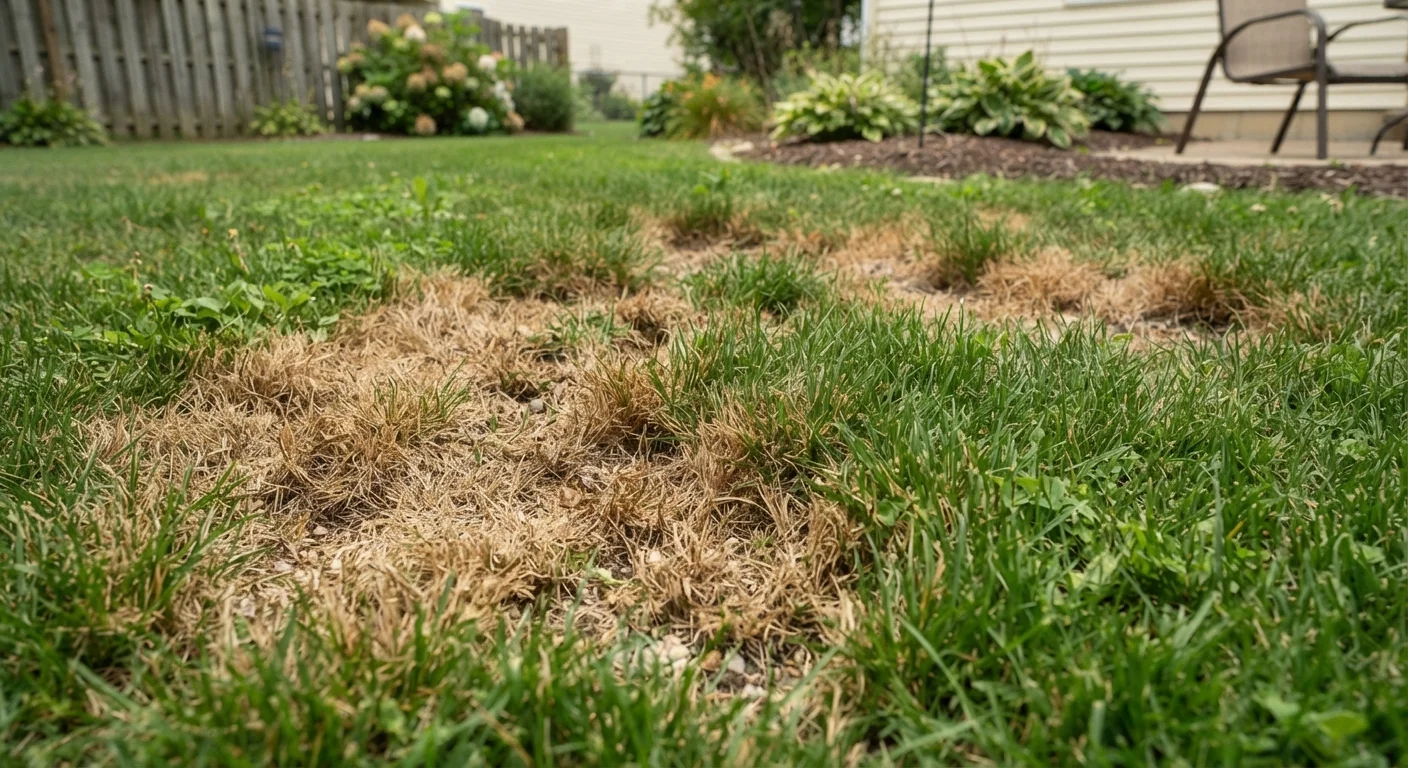
Evening mowing is the habit most likely to cause problems. Cut grass in the evening and the exposed blade tips stay moist overnight, which is exactly the environment that lawn diseases need to take hold. If brown patches appear after a stretch of evening mowing, disease is a likely cause. The guide to diagnosing brown patches walks through how to tell disease apart from other common culprits.
Edging technique and why consistency matters
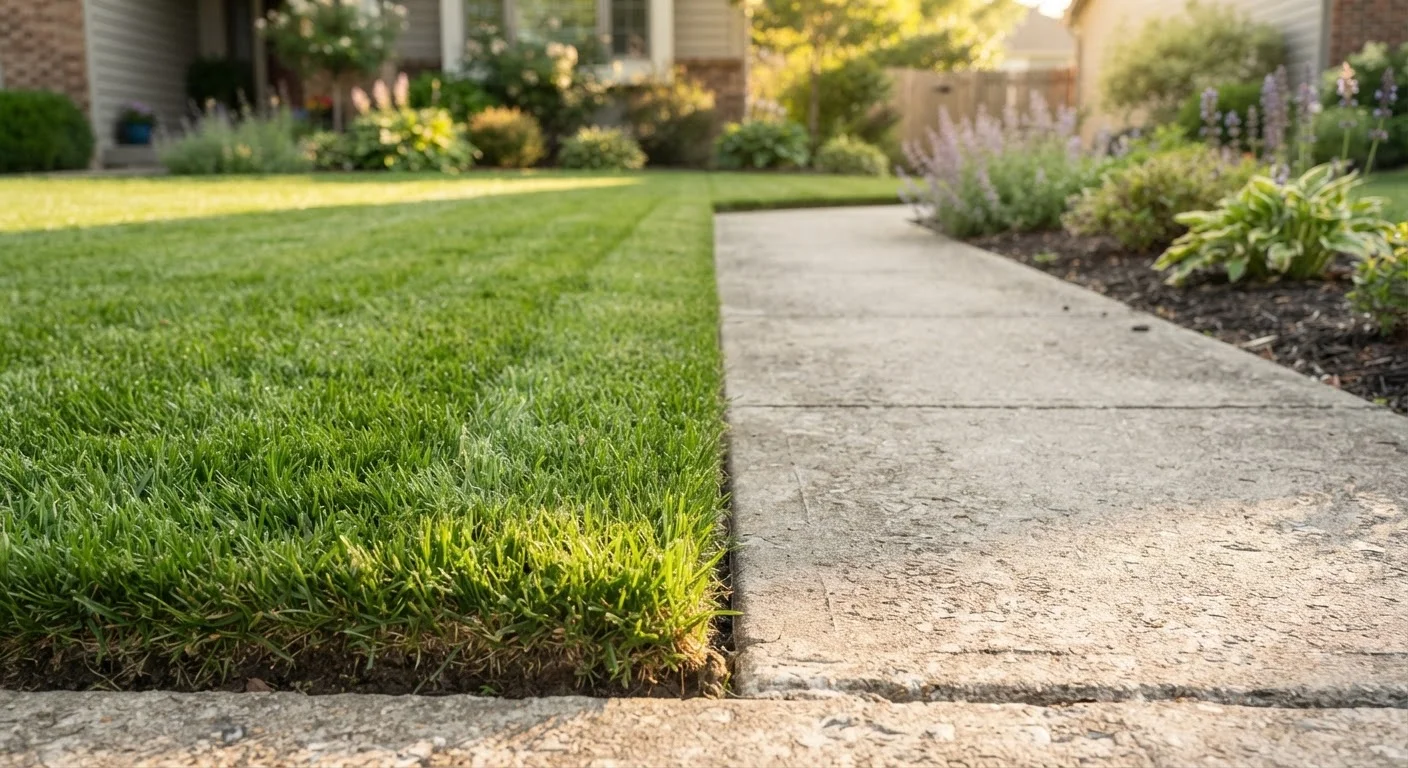
Edging is often treated as optional, something done before a party or when the beds look particularly ragged. Treated that way, it becomes a significant cleanup job each time. Done consistently, every second or third mowing, it takes only a few minutes and prevents grass from rhizoming into mulched beds, cracking into path joints, or overtaking garden borders.
A sharp edge also changes how a lawn reads visually. Clean lines at the boundary between turf and hardscape create a sense of order that affects the whole yard. Homeowners frequently attribute a well-kept look to reseeding or fertilizing when the actual difference is just consistent edging.
For the beds themselves, keeping a defined border also simplifies mulching and weeding. A clearly maintained edge holds mulch in place and makes it obvious where lawn ends and bed begins. That clarity saves time on both sides of the line. For ground cover decisions in those beds, mulch versus gravel compared is worth reading before you commit to a material.
Small, consistent maintenance across the whole yard follows the same principle. The 15-minute home maintenance approach extends this thinking to the rest of the property.