Why room-by-room works better than whole-home overhauls
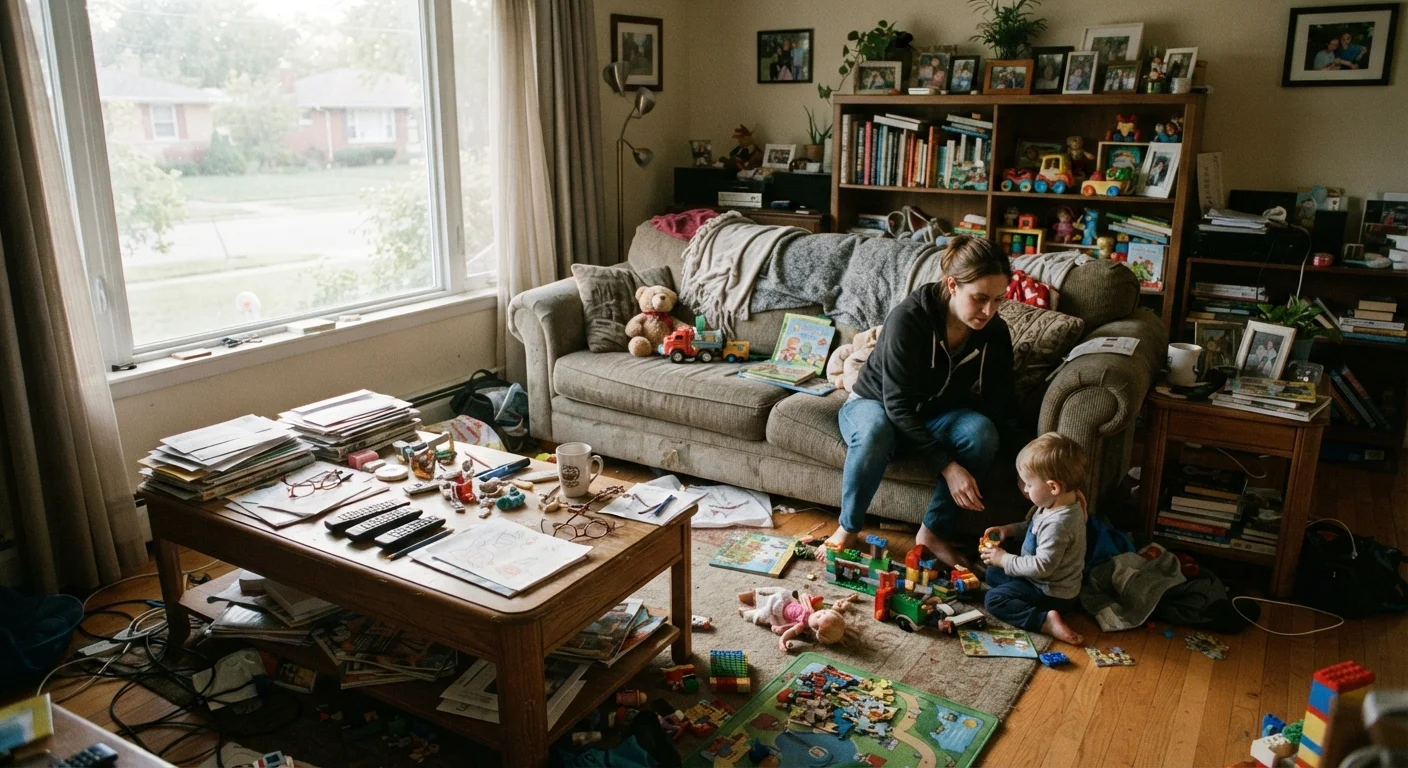
Attempting to organize an entire home in one push is one of the fastest ways to end up with piles on every surface and nothing finished. The scope becomes unmanageable, decisions pile up, and most households abandon the effort before any room is actually done.
A room-by-room approach contains the work. You finish something, see the result, and carry that momentum into the next space. It also lets you adapt your system as you learn what works in your household rather than committing to a whole-home plan before you have tested anything.
Research into how clutter affects family life supports this incremental approach: even modest, visible improvements to shared spaces reduce household stress noticeably. You do not need to finish everything to start feeling the difference.
Before you start: the two decisions that matter most
Two decisions shape whether a room stays organized after you finish it. The first is choosing which items to keep before you think about where to put anything. The second is assigning every kept item a fixed home before you buy a single container.
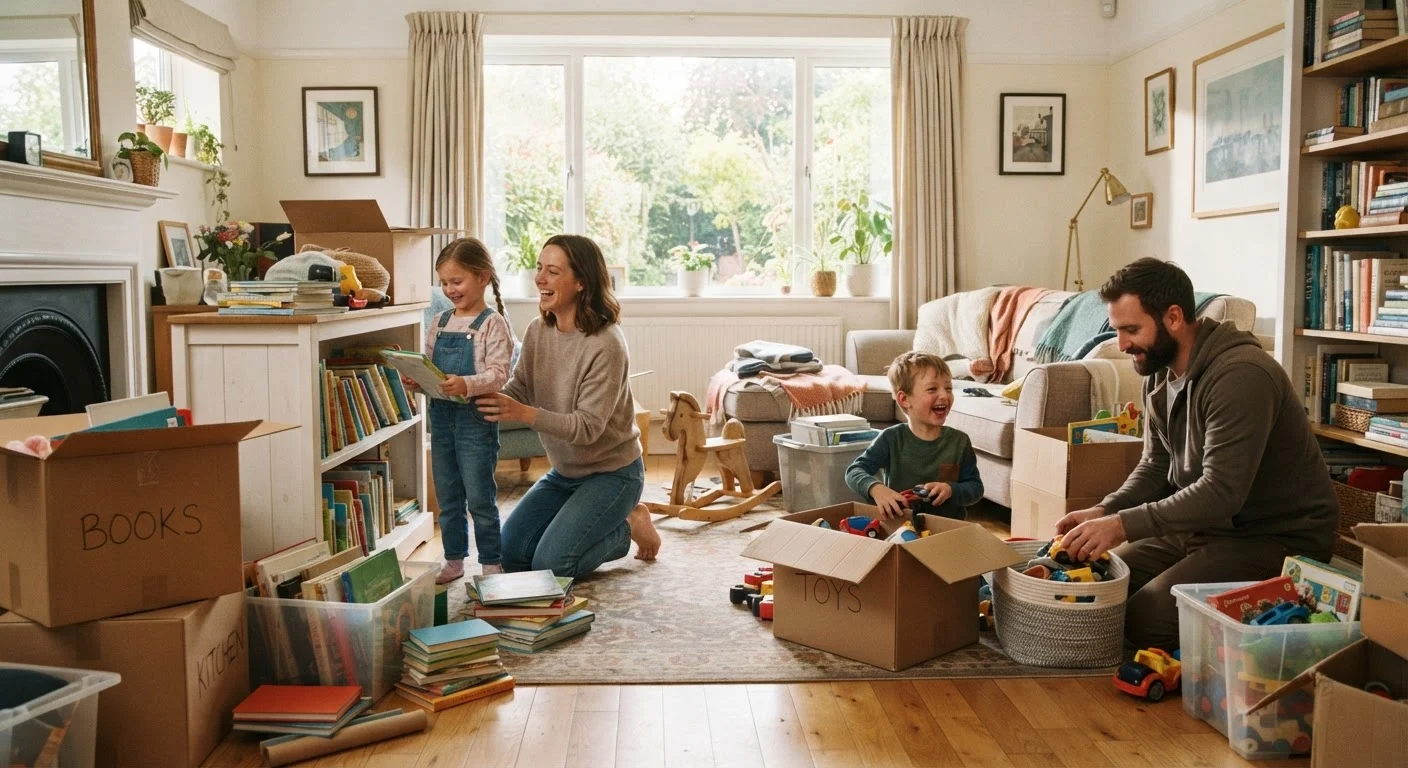
Work through each room in four categories: keep, donate, discard, and relocate (items that belong in a different room). Be honest about what the household actually uses. Items kept out of obligation or vague future use are the ones that refill organized spaces fastest.
Photograph each room before you start
Take a photo of each room before touching anything. Reviewing the before image after you finish gives the household a concrete sense of progress. It also helps you identify which storage gaps were causing the most friction.
Avoid buying storage before decluttering
Purchasing bins, baskets, and organizers before you know what you are keeping is a common and costly mistake. You will often buy the wrong sizes or more than you need, and the containers themselves become clutter. Finish the sort-and-discard step in each room first, then measure and buy what the remaining items actually require.
Once you know what you are keeping and roughly how much of it there is, you can measure for storage rather than guessing. The right storage format varies by room, and buying before you measure almost always produces waste.
Kitchen and dining area
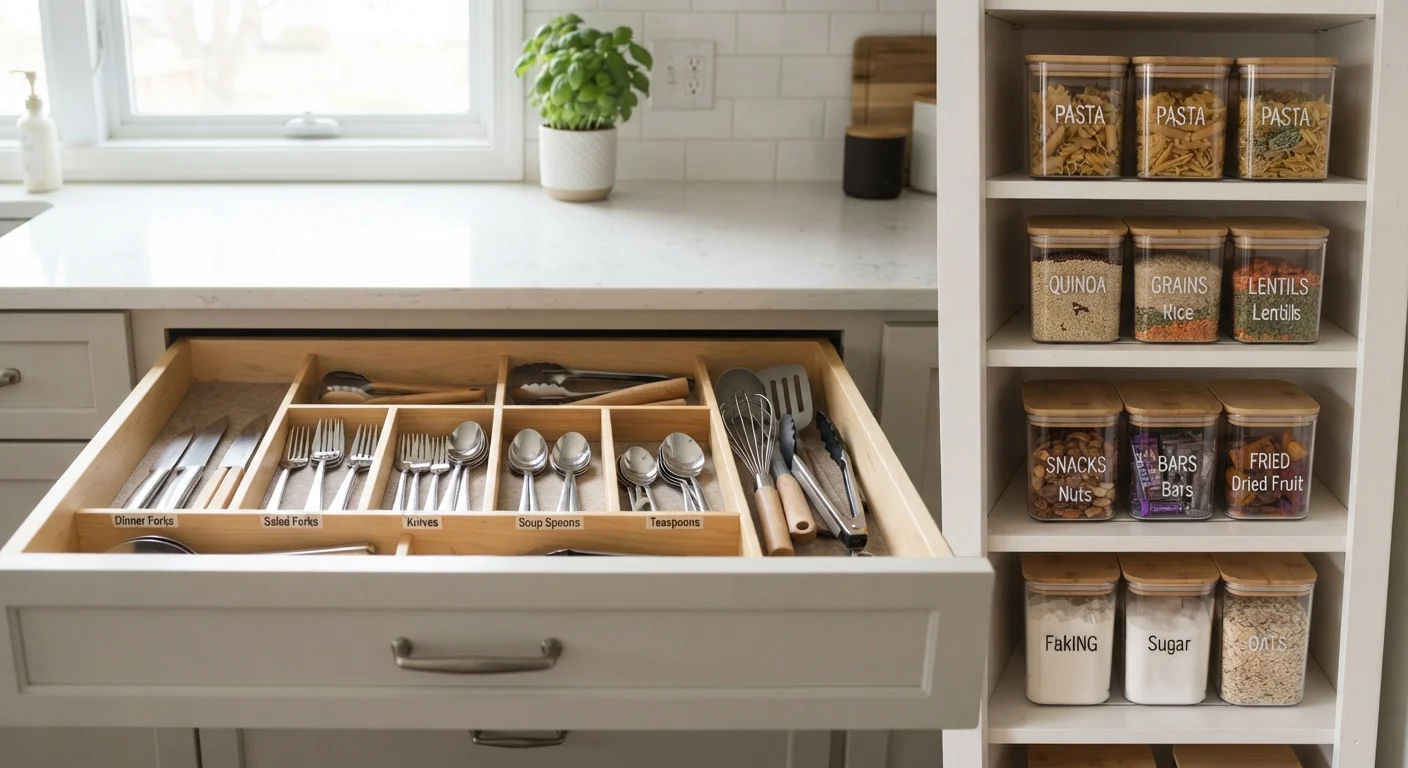
The kitchen is the most productive starting room for most families because improvements here are felt immediately, multiple times a day. Start by clearing every surface and every cabinet shelf. Group items by how often they are used: daily items at arm height, rarely used items up high or in back corners.
Expired pantry items, duplicate tools, and appliances used less than once a month are common culprits for kitchen overcrowding. Remove them before reorganizing the remaining items. Open countertops are the fastest way to make a kitchen feel functional again.
For the dining area, the main problem is usually flat-surface accumulation: mail, school papers, and items passing through. A small tray or wall pocket near the entry to the kitchen captures incoming paper before it spreads, and a weekend declutter checklist can help you build a habit around clearing it.
Drop zone
A designated spot near an entry point where regularly used items like keys, bags, and shoes are always placed. It stops those items from scattering throughout the home.
Decluttering
The process of deciding which items to keep, donate, or discard before organizing what remains. Skipping this step means organizing clutter rather than removing it.
Category grouping
Storing similar items together so everything in a category has one home. This makes finding and returning items faster and more consistent.
Vertical storage
Using wall space, doors, and upper shelving rather than only floor-level surfaces to store items. It increases usable storage without expanding the room's footprint.
Daily reset
A short, routine habit of returning items to their assigned places at the end of each day. It prevents small messes from accumulating into larger disorder.
Living room and entryway
The entryway sets the tone for how organized the rest of the home feels. A drop zone with hooks, a tray for keys, and a bin or cubby for shoes removes the three most common sources of daily scatter. If the entryway is small, a door-mounted organizer or a narrow shelf above coat hooks gives you the same function without floor space.
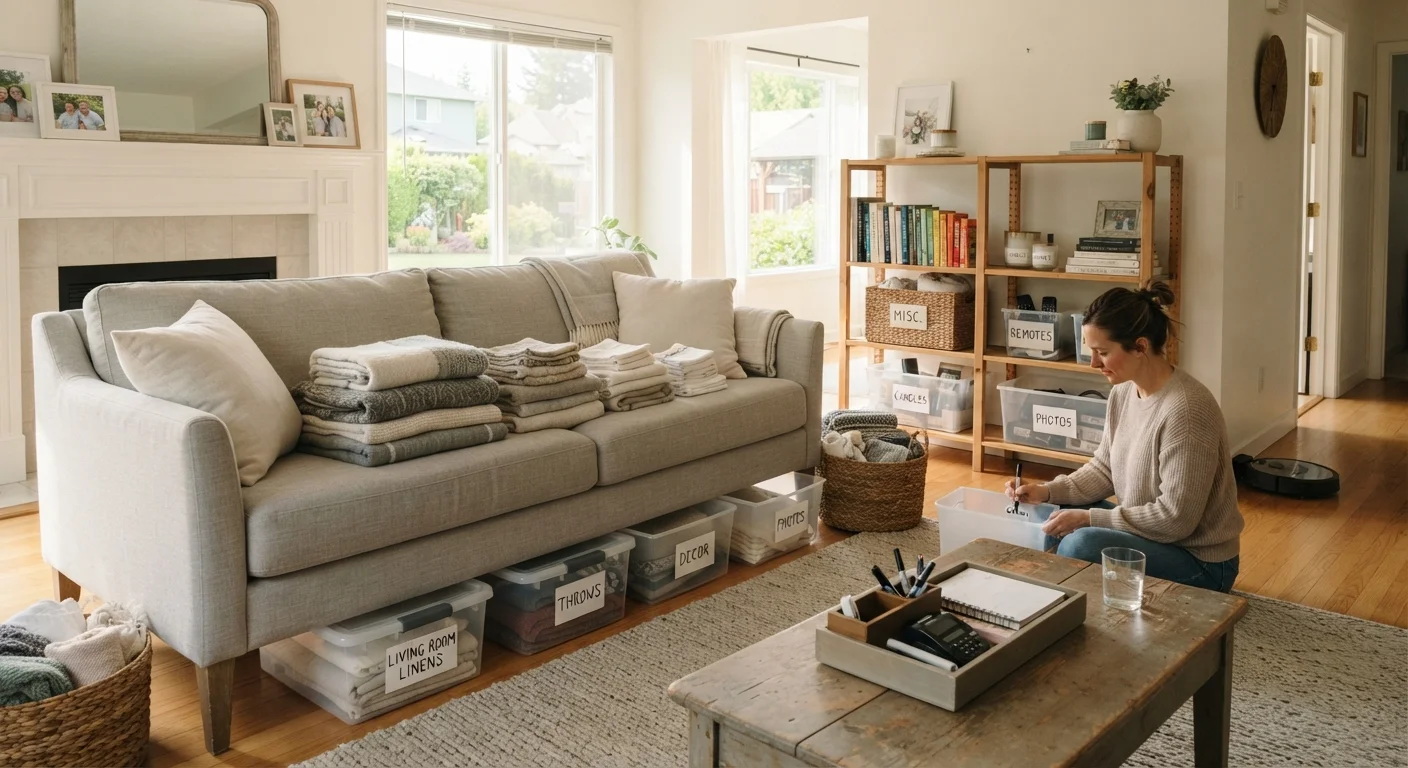
The living room accumulates toys, remotes, chargers, reading material, and general drift. Assign each category a container or shelf location that is easy to reach and easy to return to. Wall-mounted shelving above seating height handles books and display items without consuming floor space.
For households with pets, organizing shared spaces also involves thinking through what is accessible at floor level. The room-by-room pet-proofing guide covers this alongside general organization.
Bedrooms and closets
Bedroom organization usually breaks down at the closet. Pull everything out, sort it into the same four categories, and return only what belongs in that room. Seasonal items and rarely worn clothing take up disproportionate space relative to how often they are used. Vacuum storage bags or labeled bins on high shelves handle seasonal items without crowding the everyday section.
Children's bedrooms benefit from lower, open storage that children can use independently. High shelves and lidded boxes work for adults, but they are not practical for kids managing their own spaces. Maintaining organization with children depends more on accessible systems than on any particular product.
Flat surfaces in bedrooms, like dressers and nightstands, collect items faster than almost any other surface in a home. Limiting each surface to a single intentional category prevents this drift from restarting.
Bathroom and laundry areas
Bathrooms are small but frequently chaotic because they hold many small categories: medicines, toiletries, cleaning supplies, and linens. Work through one category at a time. Expired medications should be disposed of through a pharmacy take-back program rather than flushed or binned. Clear out duplicates and products that nobody uses.
Cabinet doors and the wall above the toilet are useful storage spots that most bathrooms leave empty. Door-mounted pocket organizers work well for smaller items. Drawer dividers prevent the common problem of every drawer becoming a catch-all.
The laundry area is often the final stop for homeless items from other rooms. Once other rooms are organized, this accumulation typically stops on its own. Keep the laundry area functional by limiting it to laundry-specific supplies and a simple sorting system. Practical storage for suburban families can help you find systems that hold up day to day rather than looking organized only on the day you set them up.
This article provides general home organization guidance and is not a substitute for professional advice tailored to your specific home or circumstances.