What each system actually does
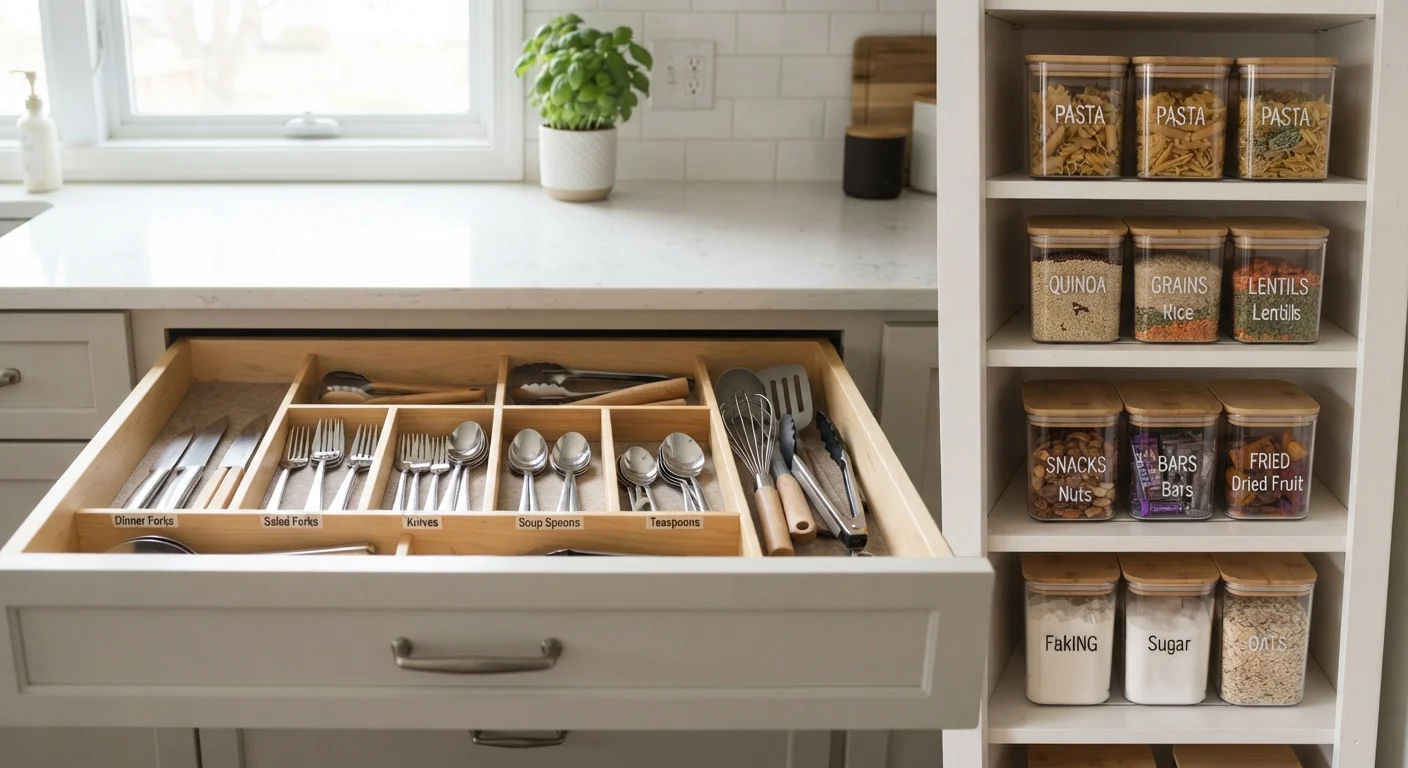
Drawer dividers are inserts that split the interior of a drawer into separate compartments. They can be rigid panels cut to fit, expandable spring-loaded bars, or modular trays that snap together. Their job is straightforward: stop items from sliding into each other so you can find what you need in one glance.
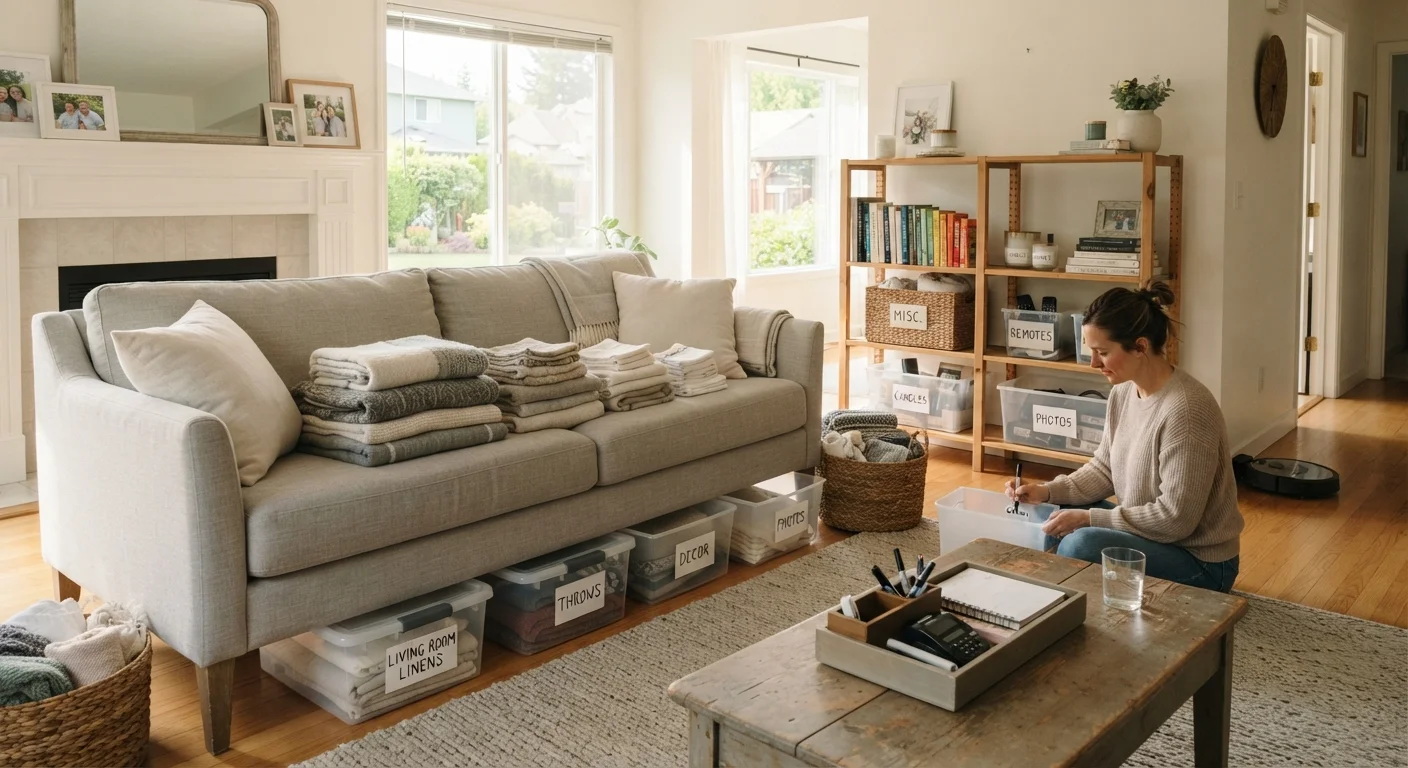
Stackable bins are freestanding containers designed to interlock or sit flush when placed on top of one another. They range from small open-top cubes to lidded boxes with label windows. Because they do not depend on a drawer to contain them, they can go on shelves, on floors, inside closets, or along a wall.
The difference is mostly about containment structure. Dividers borrow the drawer itself as the outer wall. Bins are self-contained, so they work in any room regardless of the furniture already there. For a broader look at how these tools fit into a full home plan, see the room-by-room organization walkthrough that covers tackling clutter room by room.
Where drawer dividers perform well
Dividers work in any space where items are flat, small, and used daily. Kitchen utensil drawers are the classic example: spatulas, peelers, and measuring spoons stay in their own lanes instead of jamming against each other every time the drawer opens.
Bedroom dressers are another strong fit. Folding socks and underwear into a divided drawer takes about the same time as tossing them into a pile, but the divided version stays tidy for weeks. Office desk drawers benefit similarly: pens, paper clips, and sticky notes each occupy their own section, so there is no hunting before a work call.
The main constraint is dimension. Dividers are limited by the drawer's depth and height. They cannot store bulky or tall items, and they cannot hold categories that grow unpredictably. A craft supply drawer that starts with colored pencils can become overwhelming once sticker sheets, washi tape, and foam stamps are added, because there is nowhere to expand.
| Criterion | Drawer dividers | Stackable bins |
|---|---|---|
| Best location | Inside drawers | Shelves, floors, closets |
| Item size suited | Small and flat | Small to large and bulky |
| Visibility | Full view in one layer | Requires labels for clarity |
| Scalability | Limited by drawer dimensions | Scales vertically by stacking |
| Setup complexity | Measure, cut or adjust to fit | Place and stack immediately |
| Flexibility over time | Low: tied to drawer size | High: reconfigurable anytime |
| Works without furniture | No | Yes |
Where stackable bins perform well
Bins work where volume, variety, and vertical space matter more than separation at a glance. Playrooms are the most common example in a family home. A child's toy collection grows fast, and bins can be reconfigured by swapping labels and rearranging stacks as categories change. A bin for LEGOs today can become a bin for science kits next year.
Pantry shelves, linen closets, and garage utility areas also suit bins well. Grouping canned goods, snacks, or cleaning supplies into labeled bins means anyone in the household can find and return items without being the one who organized them. That shared legibility is useful in busy households where multiple people access the same space.
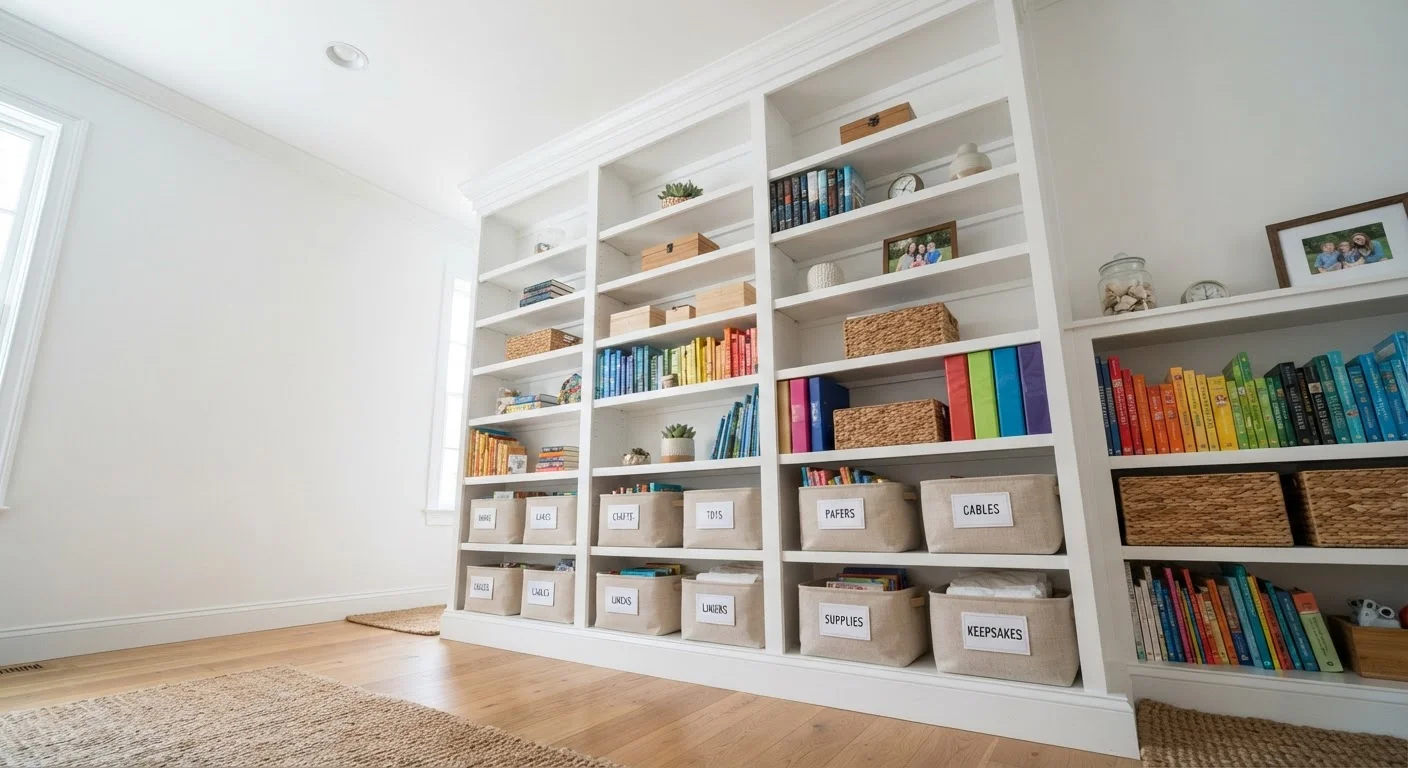
Bins with lids work in storage areas subject to dust or moisture, such as attic shelves or basement utility rooms. Open-top bins suit areas with frequent access, such as a mudroom cubby or under-sink cabinet. For households that want to use vertical wall space more aggressively, stacking bins on shelving built upward can double effective storage without adding floor footprint.
35%
Time spent searching for household items daily
The National Association of Professional Organizers has cited estimates suggesting households lose significant daily time to searching for misplaced items, with disorganized spaces a primary factor.
2x
Storage capacity gain from vertical stacking
Using the full vertical height of a standard closet or utility shelf with stackable bins can roughly double usable storage volume compared to a single shelf layer.
Mixing both systems in one room
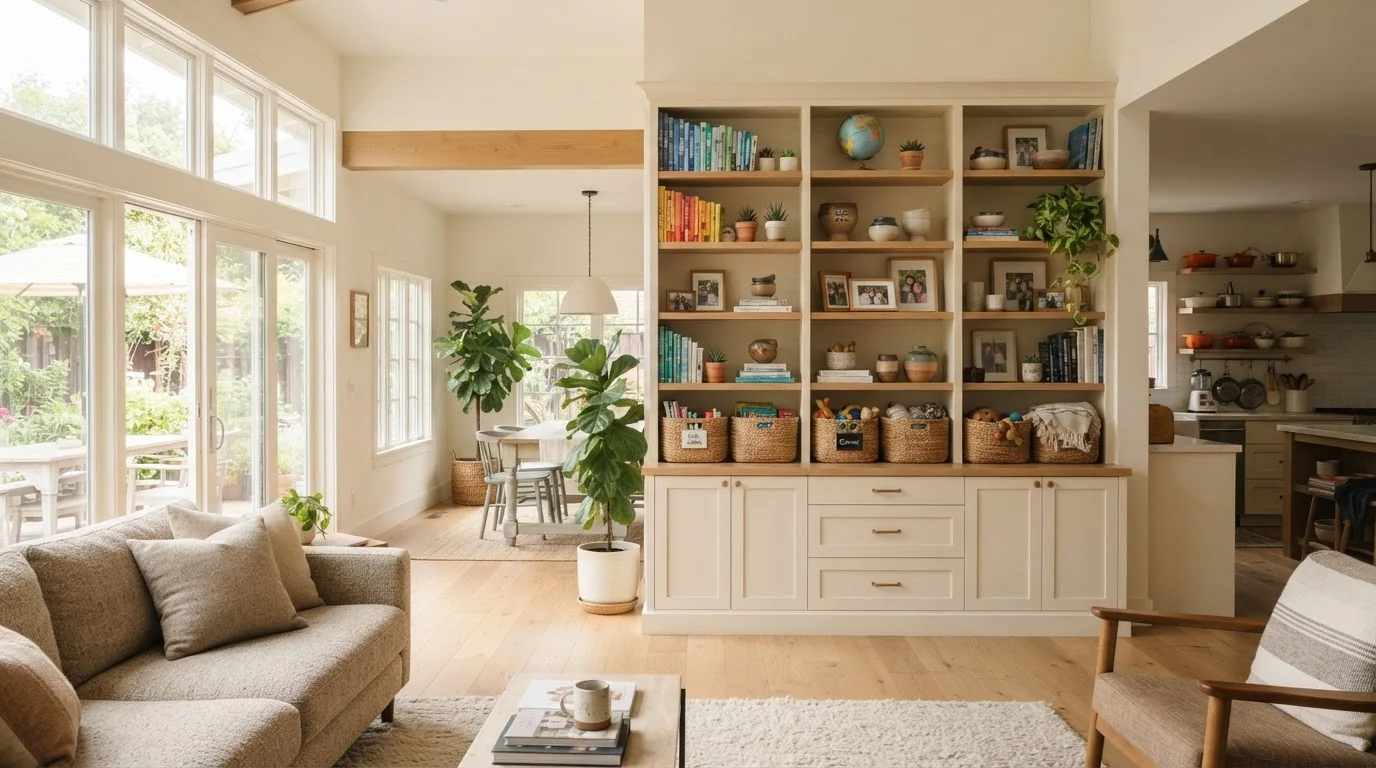
Most rooms in a family home benefit from both systems working together rather than one replacing the other. A kitchen might use dividers in the utensil drawer while bins on the pantry shelf hold snack pouches and bulk dry goods. A home office might use dividers in the desk drawer and a column of labeled bins on the bookshelf for cables, manuals, and project files.
The practical rule is to match the tool to the container already in the space. If there is a drawer, dividers almost always improve it. If there is open shelving or a closet floor, bins are more flexible. For a fuller picture of how storage choices fit different household types, the storage solutions guide for suburban families covers what works room by room across different home layouts.
Start with the rooms that generate the most daily friction. If mornings slow down because the kids cannot find socks, that dresser drawer needs dividers. If the playroom resets to chaos every evening, the missing piece is probably labeled bins with a clear spot for each category.