How clutter builds without anyone noticing
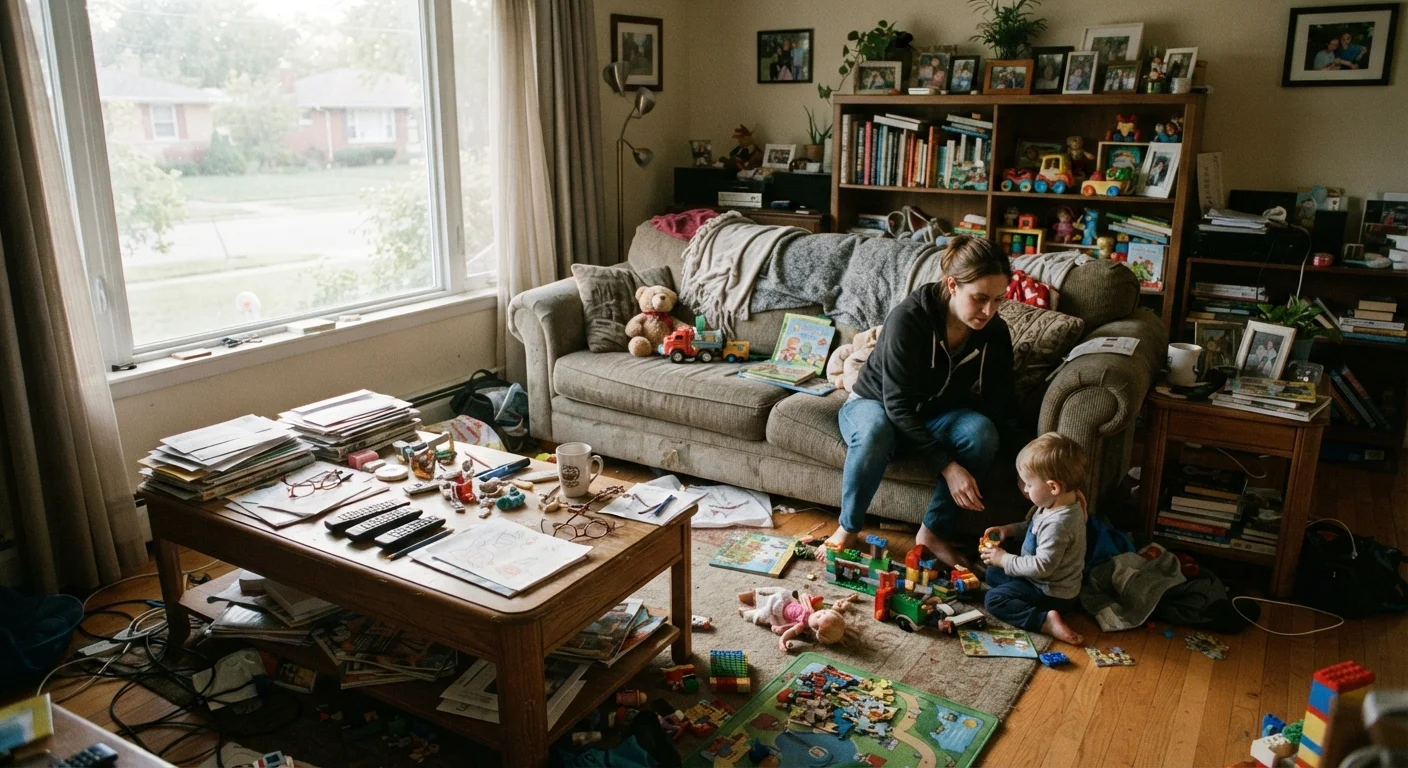
Clutter rarely arrives all at once. It accumulates through dozens of small decisions deferred: a package left on the counter, a jacket draped over a chair, a stack of school papers that has nowhere obvious to go. Each item on its own seems harmless. The problem is the pattern.
In a busy household, the pace of things coming in almost always outstrips the pace of things being dealt with. Shopping adds items. Kids bring home artwork, sports gear, and party favors. Gifts arrive. Old items stay because no one has had time to remove them. The result is a home where every surface holds something, and nobody quite knows where anything actually lives.
This gradual buildup matters because it changes how a home functions. Counters that were meant for food prep become storage. Entryways that should allow a smooth morning exit turn into obstacle courses. What started as a few misplaced items becomes a system that works against the family rather than for it.
The measurable costs: time, money, and focus
Disorganization has concrete costs that show up in daily life, even if families rarely connect them back to clutter directly.
Time: Searching for misplaced items is one of the most consistent time drains in a household. Keys, permission slips, phone chargers, and sports equipment disappear into cluttered surfaces and trigger frantic searches, often on mornings that are already tight. These minutes add up across a week.
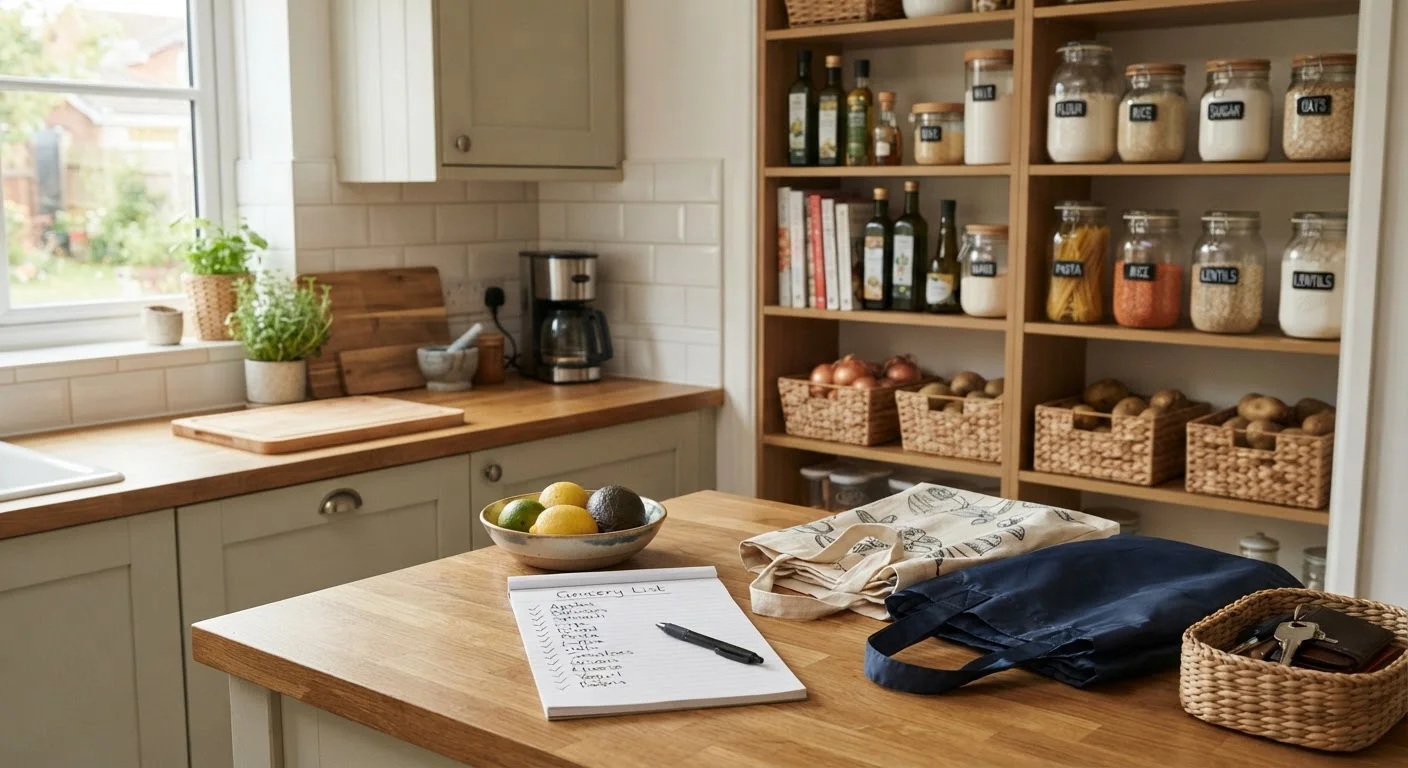
Money: A cluttered home can quietly drive unplanned spending. When a pantry is difficult to see through or a supply closet is packed, families often buy duplicates of things they already own. A more structured shopping routine can reduce this pattern, but it only works when the home is organized enough to make an accurate inventory possible. This overlap between disorganization and household overspending is explored further in our piece on why families quietly overspend each month.
Focus: Visual clutter competes for attention. For adults trying to work from home, and for children doing homework at a kitchen table surrounded by unrelated objects, the background noise of stuff can reduce the quality of concentration. Research published by UCLA's Center on Everyday Lives of Families found that the amount of possessions in a home correlated with elevated cortisol in mothers across the day.
Start with the surfaces you see first
The entryway and kitchen counter are the spaces most families interact with during every transition of the day. Getting those two areas consistently clear creates an immediate sense of order that can make the rest of the home feel more manageable. Tackle those before attempting larger, less-used spaces.
How clutter affects the household's emotional climate
Beyond the practical costs, clutter can change how family members feel inside their own home. A space that feels unmanageable tends to create a low-level background tension. Adults may feel guilt about the state of the home, or avoid inviting people over. Partners may disagree about whose responsibility the clutter is, and those disagreements rarely stay small.
Children pick up on household stress even when adults try to shield them from it. A home environment that feels chaotic can affect a child's sense of calm and security. This is not about creating a spotless show home; it is about having enough order that the home feels like a place to rest rather than a place to manage.
Sleep is another area affected. Cluttered bedrooms have been associated with poorer sleep quality in adults, likely because visual disorder can make it harder to mentally disengage at the end of the day. A bedroom that functions as a storage room sends signals that the space is for working or dealing with things, not resting.
What actually helps: systems over perfection
The most sustainable response to clutter is not a single big purge. It is the introduction of consistent, simple systems that reduce the decisions required each day.
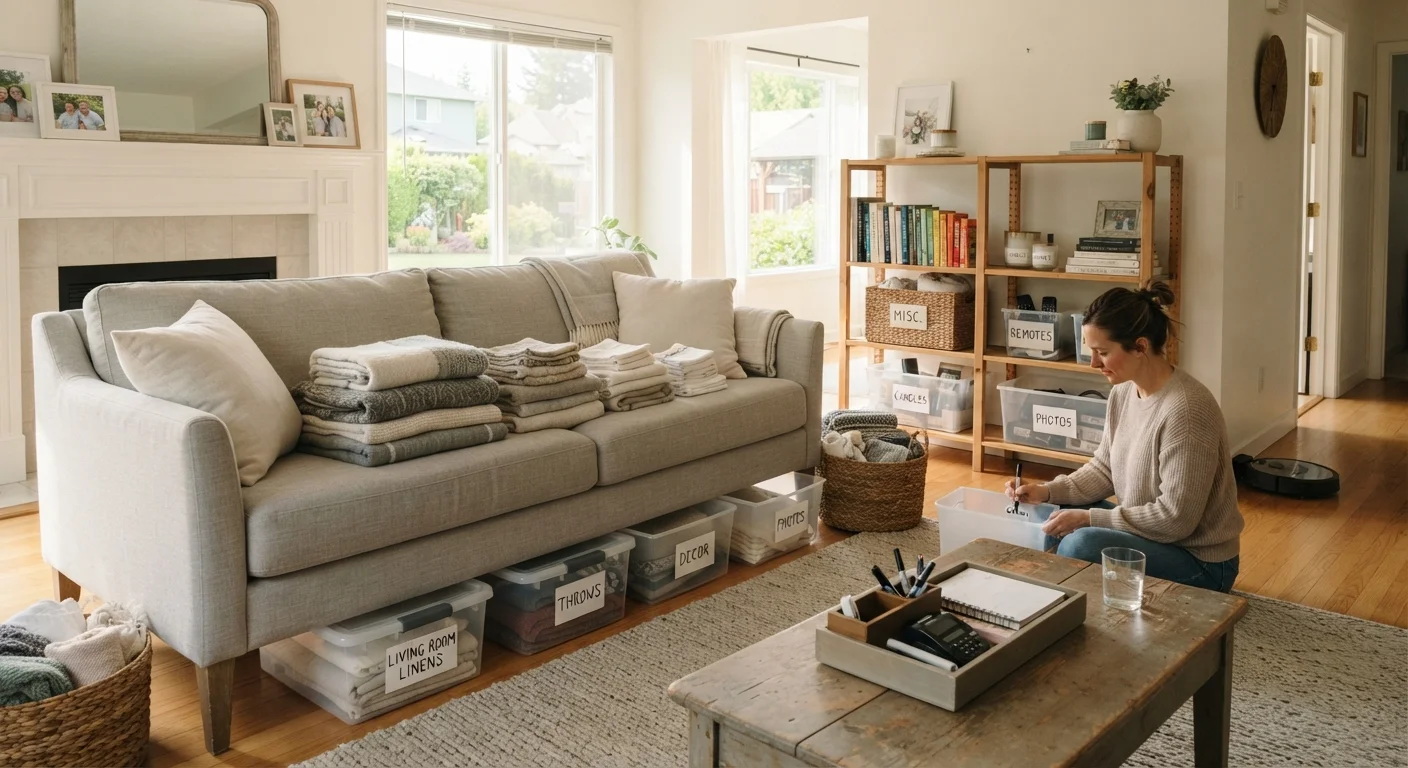
Every item that regularly causes a problem, because it has no consistent location, is a candidate for a dedicated spot. A hook by the door for keys. A folder system for school papers. A bin for items that need to go upstairs. None of these are complicated, but each one removes a recurring decision from the household's daily load.
For families who feel overwhelmed by where to begin, a room-by-room approach can make the process manageable. If time is the limiting factor, a weekend declutter checklist offers a structured way to make real progress without requiring weeks of effort. Families with children face additional complexity, but there are evidence-backed habits that help households stay organized with kids around.
The goal is not a perfect home. It is a home where the systems do enough of the work that the family is not constantly fighting the space around them.