Why vertical storage gets ignored
Most people organize at eye level and below. That habit makes sense in the moment: what's easy to reach gets used, and what gets used gets stored nearby. But this logic slowly fills every horizontal surface and low shelf, leaving the most abundant storage resource in the home untouched.
In a typical room with 8-foot ceilings, the zone above 5 feet is almost completely unused. Across a whole house, that adds up to meaningful square footage worth of storage capacity sitting idle. Vertical storage doesn't require a renovation or a large budget; it usually requires a plan, some hardware, and one afternoon per room.
The room-by-room organization guide is a practical companion if you're figuring out where to start. For deciding between container types once shelves are in place, see the comparison of drawer dividers and stackable bins.
A note for renters
Many rental agreements restrict wall drilling or permanent installations. Command strips, tension-mounted pole shelving, and over-door organizers can all work without making holes. Before installing anything, re-read your lease and, if in doubt, ask your landlord in writing. Some landlords permit shelving if you agree to patch on departure.
Seven practical ways to use vertical space
Use the wall above the entryway bench
The entryway collects more daily chaos than almost any other spot in a family home. Shoes, bags, coats, and sports gear pile up because most storage stops at bench height. The wall above it, often blank up to the ceiling, can hold hooks at multiple levels: a lower row for children, a higher row for adults, and a shelf above both for helmets, hats, and seasonal items.
Stagger hook heights rather than lining them all at the same level. This lets bulkier items hang without crowding. A narrow shelf installed 12 to 14 inches below the ceiling is enough for bins that hold gloves or sunscreen, freeing the bench surface for things people are actually using that week.
The wall above the entryway bench can hold hooks at multiple levels for every family member.
Run shelves to ceiling height in the kitchen
Most kitchen cabinets stop 12 to 18 inches below the ceiling. That gap holds a real amount of storage, but most households fill it with decorative items that could go elsewhere, or leave it empty. Open shelves installed to fill that gap work well for items used less than once a week: extra baking pans, large serving platters, seasonal appliances, or bulk pantry overflow.
The contents don't need to look magazine-ready. Consistent containers (same size, same color) reduce visual noise enough that upper shelves feel intentional rather than cluttered. A small step stool stored in a nearby cabinet makes access practical rather than a chore.
The gap between cabinet tops and the ceiling holds real storage volume most kitchens waste entirely.
Mount a pegboard or rail system in the garage
Garage floors disappear fast under bikes, bins, and lawn equipment. Moving storage off the floor and onto wall-mounted pegboards, slat walls, or rail systems with interchangeable hooks frees that floor space and makes the garage actually navigable. These systems are modular, so the layout can change as the household's needs shift across seasons.
Group items by activity rather than by category: a gardening zone with trowels, gloves, and seed packets; a sports zone with balls, pump, and gear bags. When each zone is self-contained on the wall, family members know exactly where to look and where to return things.
Activity-based wall zones in the garage make it easier for everyone to find and return items.
Add over-door organizers to underused doors
Interior doors are almost always overlooked. A pantry door, a bedroom closet door, or a bathroom door can hold narrow pockets or racks without any drilling in most cases. Over-door organizers work for cleaning supplies, shoes, toiletries, craft materials, or snack overflow, depending on the room.
Check the door clearance before buying anything. Some organizers assume standard door and frame widths, and a mismatch means the door won't close properly. For hollow-core doors, stick to lighter loads and use the full hook length so weight distributes across the top of the door rather than stressing one narrow point.
Interior doors are almost always overlooked despite holding narrow racks or pockets with no drilling required.
Stack storage in kids' rooms from floor to ceiling
Children's rooms face a specific storage problem: the volume of stuff grows faster than the room does. Low, accessible shelves make sense for toys in active use, but middle and upper shelving can hold outgrown items waiting for a younger sibling, craft supplies for supervised activities, and seasonal clothing in labeled bins. This creates a clear system: what's low is for the child to manage, and what's high is for the adult to rotate in or out.
Anchoring tall shelving units to studs is non-negotiable in a child's room. Freestanding units tall enough to reach useful ceiling height carry enough weight that a tip-over is a serious risk. Most manufacturers include anti-tip hardware; use it.
Anchoring tall shelving units to studs is non-negotiable in any child's room.
Use the space above the toilet and vanity in bathrooms
Bathrooms rarely have much floor space to spare, but the vertical wall above the toilet is consistently unused in most homes. A simple three-tier shelf unit above the tank can hold extra towels, toiletries, first aid supplies, and cleaning products in a way that keeps the floor and vanity surface clear.
Humidity matters here. Open wire shelving lets air circulate better than solid shelves in a room that gets steam from showers. Anything stored in this zone should be in waterproof or water-resistant containers, or should tolerate moderate humidity without degrading.
Wire shelving above the toilet improves airflow and keeps bathroom floors clear of clutter.
Install a loft shelf in the home office or craft room
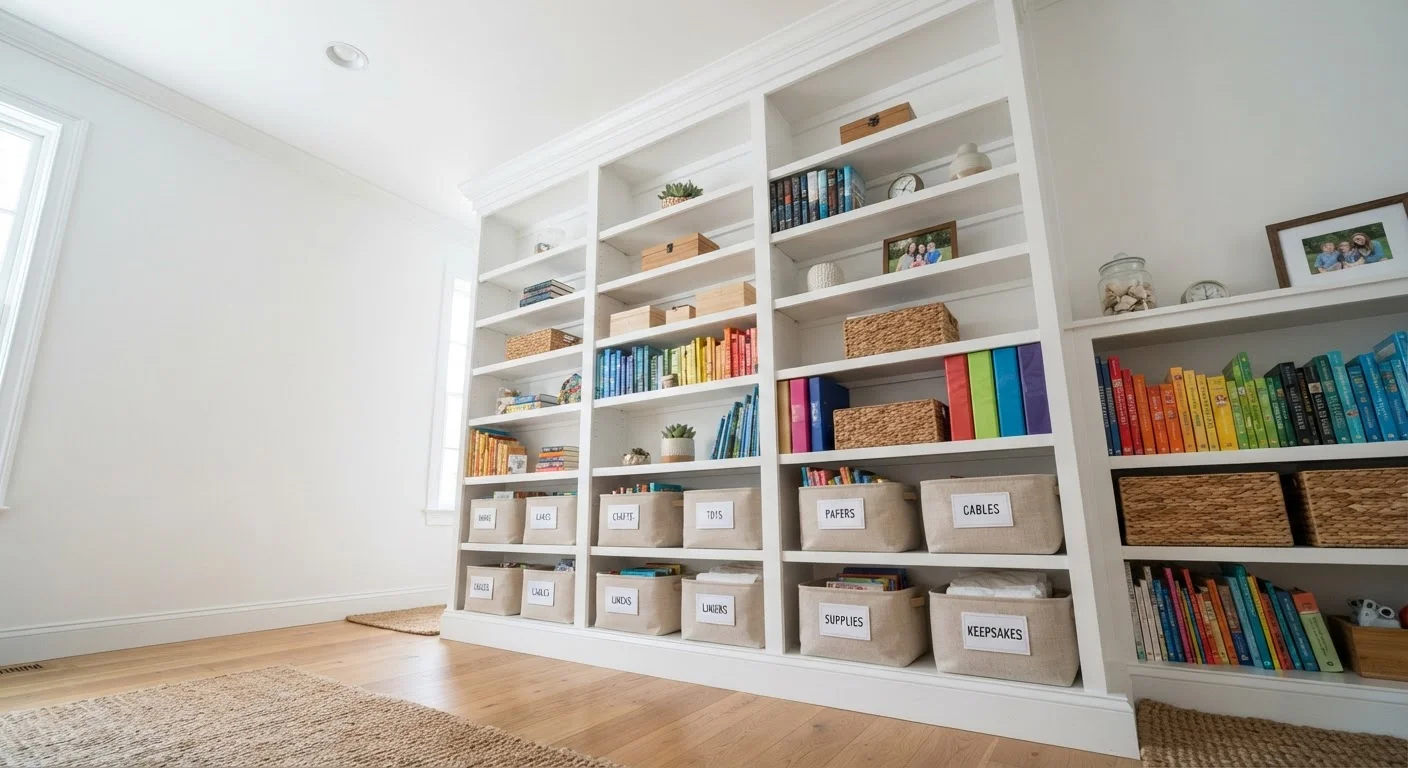
Home offices and craft rooms tend to accumulate supplies faster than storage gets added to handle them. A single wide shelf installed at or just above door-frame height, running along one or two walls, creates a significant amount of storage for archive boxes, reference materials, or supplies that are needed occasionally. This keeps the desk and lower shelves clear for active work.
Label everything stored at loft height. The practical test for whether something belongs up there is whether a general label is enough to find it without pulling multiple boxes down. If it requires rummaging, it probably belongs lower where it can be seen and accessed quickly.
A loft shelf at door-frame height keeps desks and active surfaces clear for daily work.
Getting started without overwhelming yourself
Pick one room or one zone rather than trying to tackle the whole house at once. Measure the wall height, note any outlets or vents that constrain placement, and identify what currently has no home or keeps migrating around the room. That list is the starting inventory for what the new vertical storage needs to hold.
Hardware matters as much as the shelving itself. Studs, drywall anchors rated for the load, and the right bracket depth for the shelf width are what determine whether vertical storage holds up over time. When in doubt about load capacity or wall construction, a hardware store associate can help you choose anchors appropriate to your wall type.
Vertical storage is also a good lens for a seasonal home refresh. Rotating what lives on upper shelves with the seasons keeps the whole system from going stale and gives you a regular reason to edit what you're keeping. For a broader look at how vertical storage fits into a whole-home approach, the storage solutions overview covers how different strategies combine across rooms.