How the EPA generates MPG figures
The EPA does not test vehicles on public roads. Technicians mount each vehicle on a dynamometer (a stationary set of rollers that simulate road resistance) and run it through scripted speed-and-deceleration sequences that represent distinct driving scenarios. The five test cycles cover city stop-and-go, steady highway cruising, aggressive high-speed driving, cold-weather starts, and air conditioning load.
Each cycle produces a raw fuel-consumption number. The EPA then applies correction factors to account for the gap between lab conditions and real roads. Those adjustments bring the published figure closer to what drivers actually experience, but they cannot capture every variable a commuter faces. The resulting city, highway, and combined MPG values appear on the Monroney label, the window sticker required on every new car sold in the U.S.
Automakers run most tests themselves under EPA supervision, and the agency spot-checks results. When discrepancies surface, manufacturers must issue corrected labels and, in some cases, compensate owners.
Reading city, highway, and combined ratings correctly
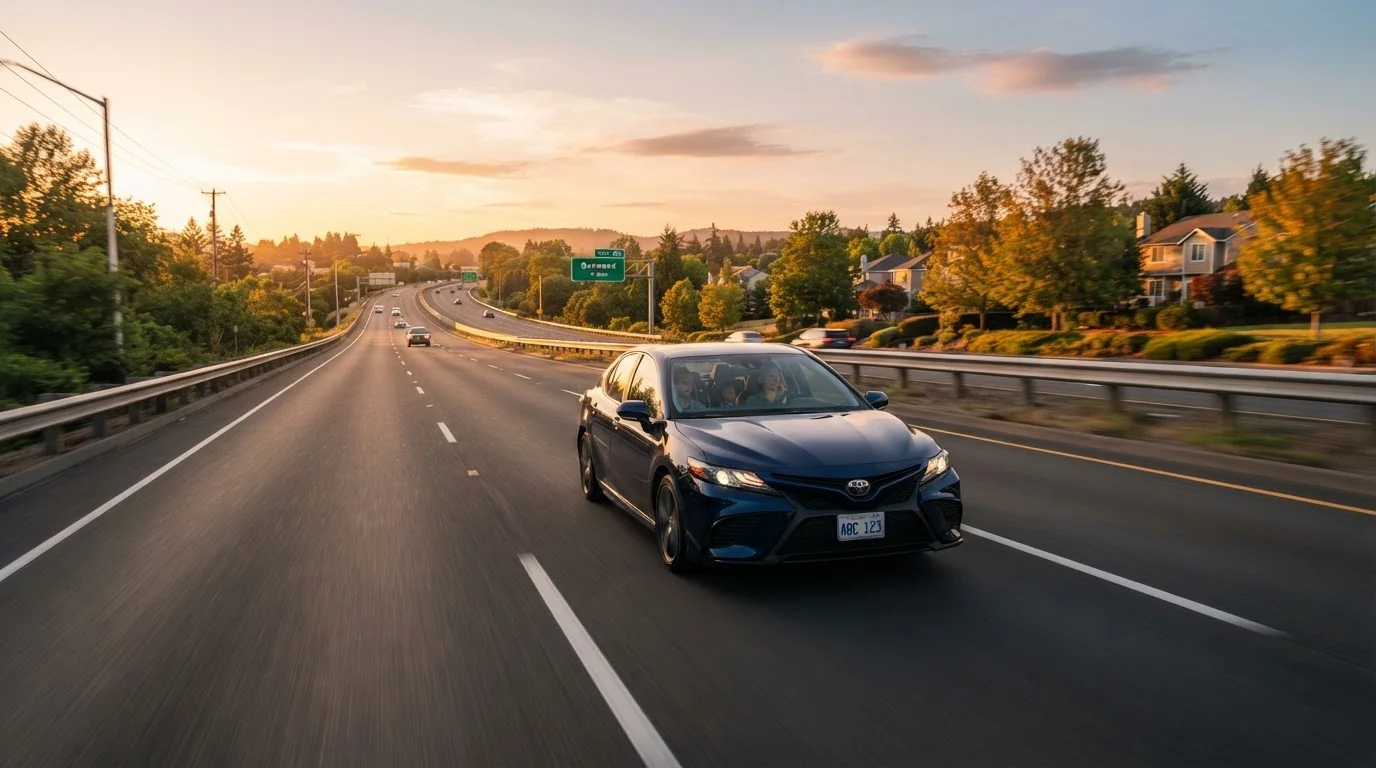
The city rating models driving with frequent stops, idling, and short bursts of acceleration. The highway rating models sustained speeds between roughly 48 and 60 mph with minimal stopping. Most suburban commuters mix both patterns, which is why the combined figure (55 percent city, 45 percent highway) is the most practical number for comparison shopping.
If your commute runs mostly on congested surface streets, your real-world result will track closer to the city figure. Long interstate stretches push results toward the highway number. Neither figure accounts for unusual conditions: towing, roof cargo, mountain grades, or temperatures well below freezing.
Match the rating to your actual route type
When comparing vehicles, weight the city or highway figure toward whichever pattern your commute most resembles. The combined figure assumes a 55/45 city-to-highway split, which may not reflect your daily drive. A vehicle with a strong city rating often delivers better real-world efficiency for suburban grid commuters than one with a high highway number.
When comparing two vehicles, look at the difference between their city ratings specifically if your route involves heavy stop-and-go traffic. A vehicle with a strong city number can outperform one with a higher highway rating on a suburban grid. See habits that move the needle on a long commute for driving techniques that help close the gap between rated and actual MPG.
Why your numbers will differ from the sticker
A realistic expectation is that actual MPG will fall somewhere between 10 and 20 percent below the EPA estimate for most drivers under typical conditions. Several factors account for the difference.
- Cold starts: engines burn more fuel before reaching operating temperature, and short trips mean the engine never fully warms up.
- Traffic and idling: stop-and-go conditions increase fuel consumption beyond what the city cycle models.
- Vehicle load: passengers, cargo, and roof-mounted items add weight and aerodynamic drag.
- Tire pressure: underinflated tires increase rolling resistance, which costs fuel.
- Driving behavior: hard acceleration and late braking consume more fuel than smooth inputs.
For a closer look at the specific conditions that quietly drain your tank, see why your car burns more fuel than it should.
10-20%
Typical gap below EPA combined MPG
The U.S. Department of Energy's fueleconomy.gov notes that real-world results often fall 10 to 20 percent below EPA estimates depending on driving conditions.
33.7 kWh
Energy equivalent of one gallon of gasoline
The EPA uses this figure as the basis for converting electric energy consumption into MPGe for battery and plug-in hybrid vehicles.
5
Number of test cycles in EPA procedure
The EPA's five-cycle test covers city, highway, high speed, air conditioning, and cold temperature scenarios to produce adjusted fuel economy estimates.
MPGe and plug-in vehicle ratings
Battery-electric and plug-in hybrid vehicles require a different measure because they consume electricity, not just gasoline. The EPA uses MPGe (miles per gallon equivalent), which converts electrical energy into a gasoline-equivalent figure using the heat content of one gallon of gas: approximately 33.7 kilowatt-hours.
A vehicle rated at 100 MPGe uses the same amount of energy per mile as a gas car getting 100 MPG, expressed on a common scale. This makes cross-technology comparison possible, though it does not translate directly into a dollar cost without knowing local electricity rates. Plug-in hybrids display separate ratings for electric-only operation and gas-engine operation, since real-world fuel costs depend heavily on how often the battery is charged between trips.
For context on fuel type choices that affect the numbers you see, understanding octane ratings can help you decide whether the grade of fuel itself plays any role in your vehicle's efficiency.
Using ratings as a tool, not a guarantee
MPG figures are comparative tools. They let you rank vehicles against each other on a consistent scale. They do not predict your personal fuel bill, because that depends on your specific route, load, climate, and driving style.
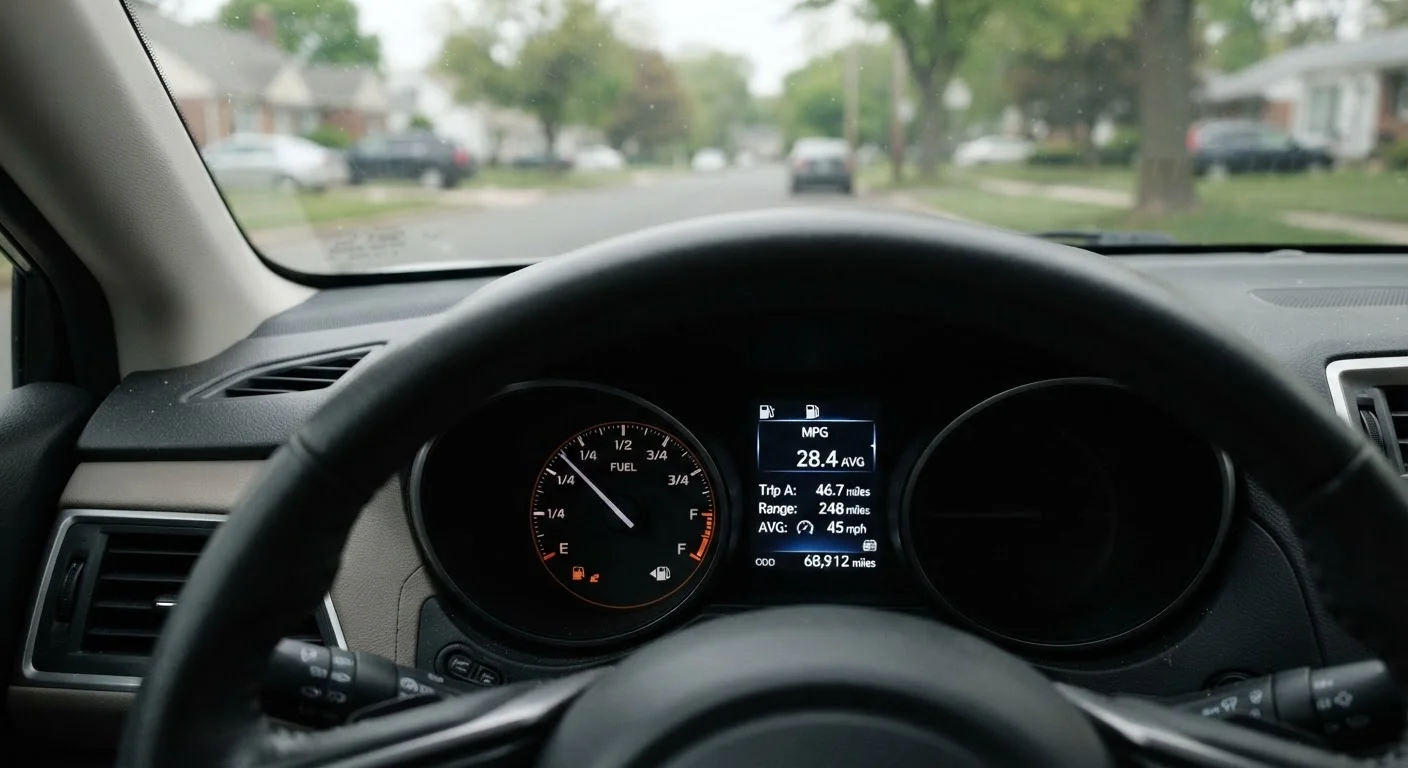
The most reliable way to track your own efficiency is to calculate it manually over several consecutive fill-ups. Divide miles driven by gallons added at each fill-up. Averaging three or four results removes the distortion from any single unusual trip.
If your calculated average consistently runs 20 percent or more below the EPA combined figure, that gap may point to a maintenance issue rather than just driving style. Low tire pressure, a clogged air filter, or a malfunctioning oxygen sensor can all suppress fuel economy measurably. Smooth acceleration and efficient driving inputs address the behavioral side, while vehicle condition covers the mechanical side.
This article is for general informational purposes only. Fuel economy results vary by driver, vehicle condition, and environment. Consult your vehicle owner's manual and a qualified mechanic for guidance specific to your car.