Why the school run changes everything
A solo commute has one schedule to manage. Add a child, and the commute inherits a second schedule with its own hard deadline, a building to park near, and a small person who may or may not have located their left shoe. The two timelines rarely align cleanly.
Drop-off windows at most elementary schools run 15 to 20 minutes. Miss that window by a few minutes and you are signing in late at the office or circling a congested car line a second time. That pressure compounds on days with traffic incidents, bad weather, or a child who woke up sick.
Leaving five minutes earlier sounds trivial until you actually build it into your morning. Families who shift departure back by even a small margin report lower stress and fewer late arrivals, because the buffer absorbs the unpredictable.
The honest disadvantages
Hard departure deadlines reduce flexibility
School drop-off windows are fixed, and missing them creates a cascade of late arrivals at work. Any morning disruption, a spill, a lost item, a slow child, has immediate professional consequences.
Children generate measurable driver distraction
Passengers under ten create distraction levels comparable to or exceeding hands-free phone calls in some conditions, according to research published in Ergonomics in 2018.
Route detours increase fuel and time costs
School locations rarely fall on the most direct commute corridor, so the added mileage and idling in car lines accumulate into meaningful annual fuel expense.
Illness disrupts the entire commute chain
A sick child cannot be dropped at school, which can force a parent to rearrange work plans with little notice, particularly in households without a backup caregiver nearby.
Vehicle wears faster under stop-start school traffic
Repeated low-speed braking in congested school zones is harder on brake pads and transmission than highway miles, and the effect compounds over a full school year.
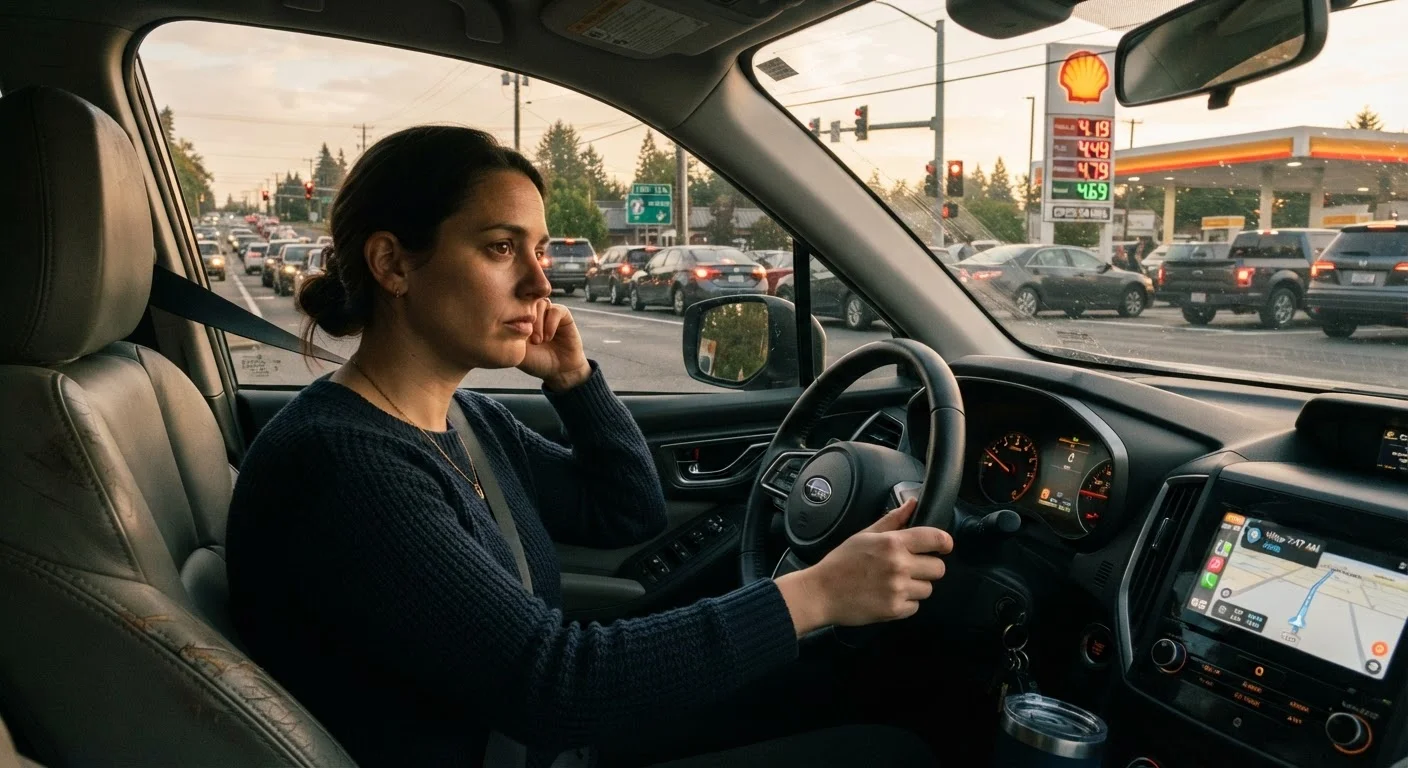
Beyond the schedule crunch, the financial picture shifts too. A kid-included commute typically means a longer route, more idling in school traffic, and higher fuel consumption than a direct drive to work. Over a full school year, that adds up. For a fuller accounting of how daily driving costs accumulate, see the real cost of driving to work every day.
Distraction is a genuine safety concern. Rear-seat children generate noise, requests, and sometimes physical movement that competes for a driver's attention. A 2018 study published in the journal Ergonomics found that child passengers created more distraction for drivers than phone calls in some scenarios, particularly for children under ten.
What actually works in the car
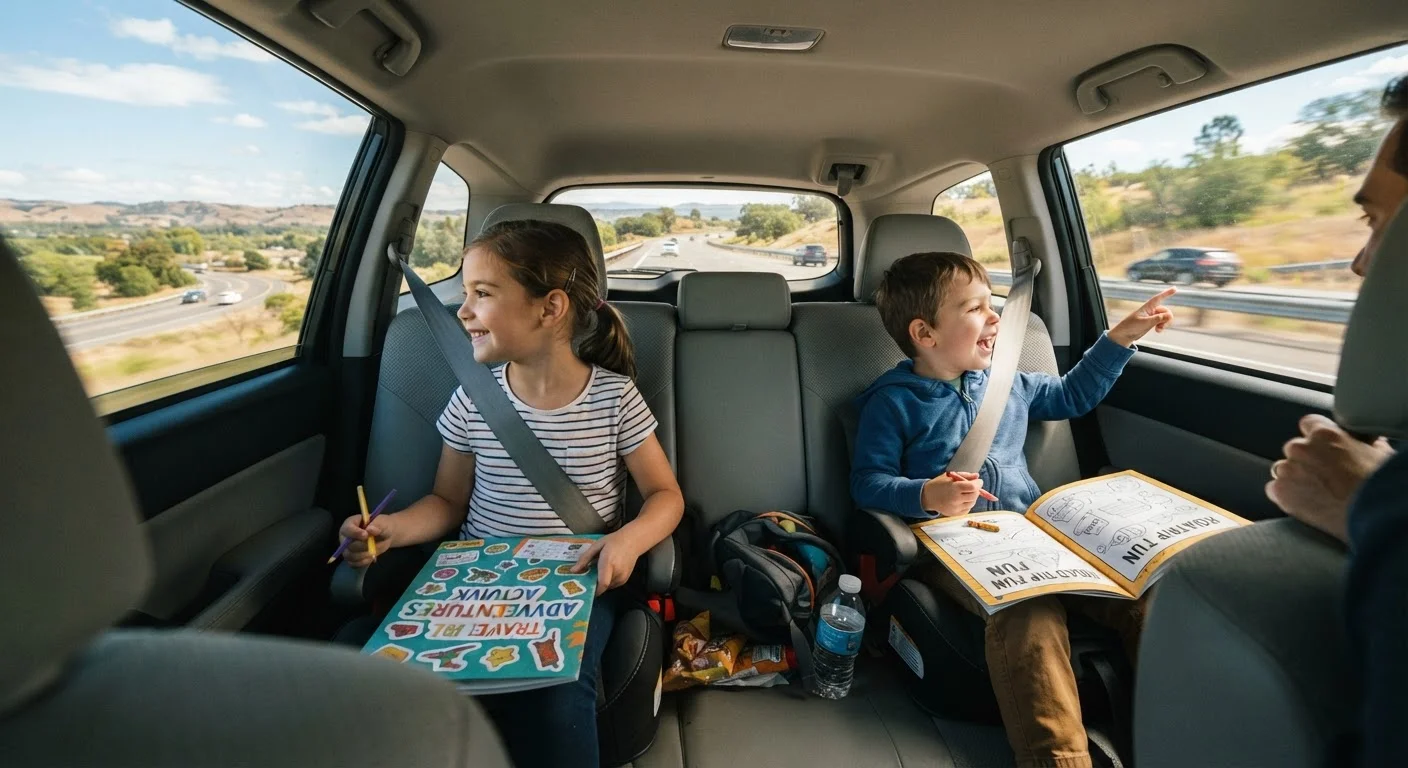
Audio is the most reliable in-car tool for kids old enough to follow a story. Audiobooks and children's podcasts require nothing from the driver, no screen management, no volume disputes routed through the front seat. Most public libraries offer free streaming access to children's audio content through apps like Libby or Hoopla. For longer trips, keeping kids entertained without screens covers structured ideas that carry over to daily commutes too.
A consistent car bag, packed the night before, removes the scramble for snacks, water bottles, and forgotten permission slips. The bag lives in the car or by the door, not distributed across the house. This single habit reduces departure delays more than most people expect.
Predictable departure times matter more than precise ones. When children know the car leaves at 7:40 regardless, they self-organize faster. When departure time is negotiable, it drifts. A weekly commute prep checklist can help build that structure without reinventing it each Sunday night.
The case for sharing the drop-off burden
School-run sharing: what to sort out first
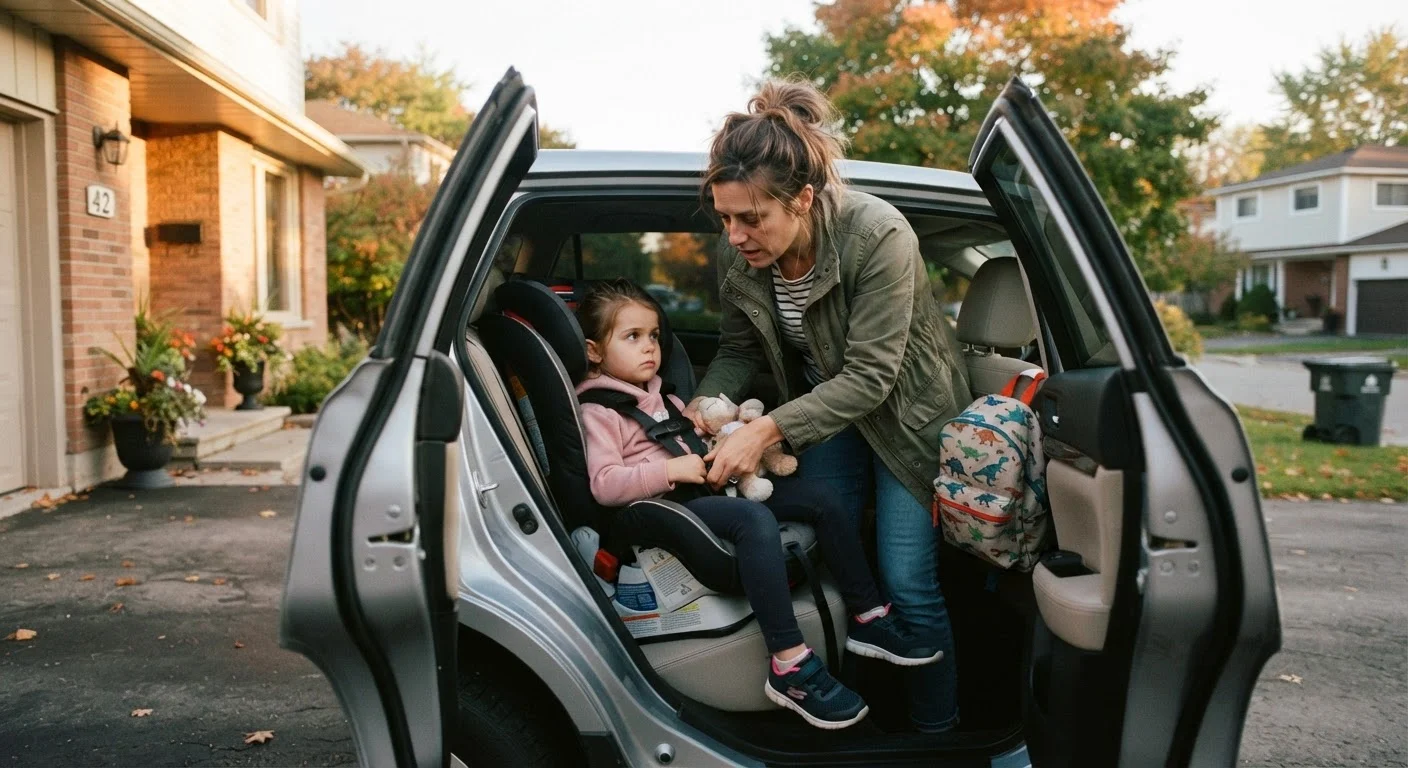
Before starting any drop-off rotation with another family, agree on the sick-day protocol in writing or text thread. Establish who covers if a driver is unavailable, and confirm that all car seats meet current federal safety standards for each child's age and weight. An informal arrangement that skips these details tends to break down at the worst possible moment.
Informal school-run sharing with neighbors or other parents is one of the most time-efficient arrangements suburban families can make. Two families alternating drop-off duty frees each parent up to three mornings per week for a cleaner solo commute. The arrangement costs nothing and requires only a consistent schedule and reliable communication about sick days or schedule changes.
Organized carpooling has its own trade-offs in flexibility and coordination, which carpooling vs. driving solo covers in detail. For school runs specifically, an informal rotation between two or three trusted households tends to be easier to manage than a formal carpool structure.
The real advantages worth acknowledging
Built-in daily time with children
The drive provides 10 to 20 minutes of uninterrupted conversation each way, without the competition from screens or household tasks that characterize most home time.
Eliminates a separate childcare handoff
In households where early-morning care would otherwise be needed, folding drop-off into the commute removes a logistical step and can reduce childcare costs.
Consolidates two necessary trips into one
For parents whose workplace lies along or near the school route, the combined trip uses less total fuel and time than two separate journeys would.
Predictable routine benefits children
A consistent morning departure sequence gives children structure, which research in developmental psychology consistently links to easier transitions and lower morning anxiety.
The school run does have genuine value for families willing to see it. The 10 to 20 minutes each way is reliable time with children before a full day apart. Many parents treat it as the one conversation slot that happens without phones or other distractions competing for attention.
Combining drop-off with the commute also eliminates a separate childcare handoff in households where the alternative would be early-morning care or a second adult making a separate trip. That consolidation saves both time and, in some cases, childcare costs. Turning dead commute time into something useful explores how to use the solo leg of the commute, after drop-off, productively.