What commute time actually costs you
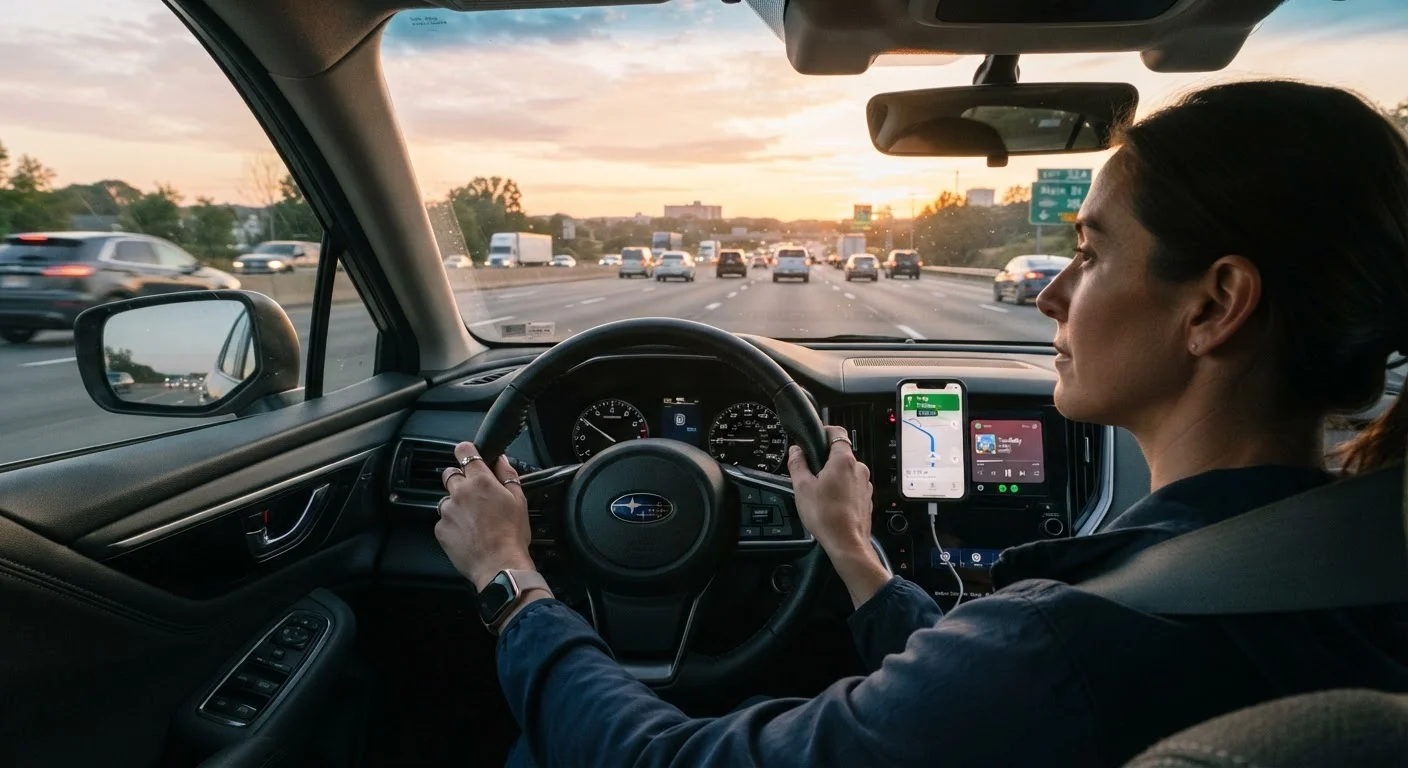
The US Census Bureau has reported that the average one-way commute in the United States runs around 27 minutes. Multiply that by two trips a day and five days a week, and you are looking at roughly 200 hours a year spent behind the wheel on routine drives. That is more than eight full days.
Most of that time passes without producing anything beyond mild frustration. The goal here is not to turn driving into multitasking in a dangerous sense, but to swap passive, unfocused mental idling for something that actually moves your life forward. Every suggestion below keeps your eyes on the road and your hands on the wheel.
If you also want to reduce what you spend on those hours of driving, see our fuel economy habits for long commutes for practical ways to cut fuel costs on the same route.
Podcasts for passive learning
Podcasts work well in a commute context because they require no visual attention and tolerate interruptions. You can pause for a phone call, restart, and lose almost nothing. Choose a show that matches a specific goal: professional development in your field, personal finance basics, or a history series you have meant to explore for years.
The format also rewards consistency. A 30-minute podcast each morning means you finish a full episode every weekday without carving out separate time for it. Over a year that adds up to around 250 hours of focused content on a subject of your choosing.
A daily 30-minute podcast adds up to around 250 hours of focused content over a year.
Language practice through audio courses
Audio-based language programs are built for exactly this scenario. Programs structured around listening and repeating short phrases work naturally when your eyes are occupied. You hear a phrase, repeat it aloud, and move on. No screen required.
The key is repetition over time rather than marathon sessions. A 25-minute commute is close to the ideal session length many language educators recommend for retention without fatigue. Within a few months of consistent daily practice, measurable progress is realistic.
A 25-minute commute is close to the session length many language educators recommend for retention.
Audiobooks for reading goals you never reach
Most people cite lack of time as the main reason they do not read as much as they intend to. An audiobook subscription converts commute miles into pages. At an average narration pace of roughly 150 words per minute and a commute of 25 minutes each way, you cover around 7,500 words per day. That is a standard non-fiction book roughly every two weeks.
Narration speed matters: most audiobook apps let you increase playback speed incrementally. Bumping to 1.25x or 1.5x, once you adjust to it, can meaningfully increase how much ground you cover without losing comprehension.
At average narration pace, a 25-minute commute covers enough words to finish a book roughly every two weeks.
Hands-free calls for relationship and work maintenance
Routine catch-up calls with family, friends, or colleagues are easy to defer indefinitely when life is busy. A commute is a natural window for them. Bluetooth-connected calls through your car's audio system or a compatible headset let you have a full conversation without touching your phone.
Many states restrict or ban handheld phone use while driving, so the hands-free setup is both a legal and a practical requirement. Check your state's current rules before relying on any specific setup, as regulations vary and change.
Work calls that require note-taking or screen sharing are not suitable for this time. Keep commute calls to conversations that work entirely by voice.
Keep commute calls to conversations that work entirely by voice, with no note-taking or screen needed.
Mental planning and verbal brainstorming
Voice memos and dictation tools let you capture ideas, draft emails, or talk through problems without writing anything down. Most smartphones support hands-free voice memo recording activated by a voice command. You can dictate a rough outline for a work presentation, record a grocery list, or work through a decision by speaking it aloud.
This is less glamorous than a podcast or a language app, but for people whose jobs involve writing or complex planning, commute time spent thinking out loud can reduce the mental load that otherwise carries into evenings and weekends.
Talking through a problem or dictating notes during a commute can reduce mental load in the evenings.
Educational series and lectures
Universities and public broadcasters have made large catalogs of recorded lectures available at no cost. These cover topics from economics and psychology to engineering and philosophy. The format is similar to a podcast but with more sustained argument across multiple episodes.
This works best if you commute the same route regularly, so the predictable drive time gives you a consistent slot. Shorter, fragmented drives work less well for this format because a lecture's value often depends on following a thread across 30 to 45 minutes. For shorter trips, a podcast or language session is usually a better fit.
Recorded university lectures suit long, predictable commutes where you can follow a sustained argument.
Making the habit stick
Set up your audio before you leave
Queue content while the car is still parked. Adjusting apps, searching for episodes, or setting up Bluetooth after you are moving creates the kind of distraction that undermines any benefit. Most streaming and language apps support offline downloads, so you can prepare even if your route has patchy connectivity.
The hardest part is not choosing what to listen to or practice. It is building a consistent routine so the commute reliably delivers the benefit you are after. A few small setup steps make a real difference.
Queue your content the night before, or at minimum while you are still parked. Searching for a podcast or adjusting settings after you pull into traffic is the kind of distraction that erodes any benefit you hoped to gain. Most podcast apps, audiobook platforms, and language tools support offline downloads, so cellular dead zones are not an excuse.
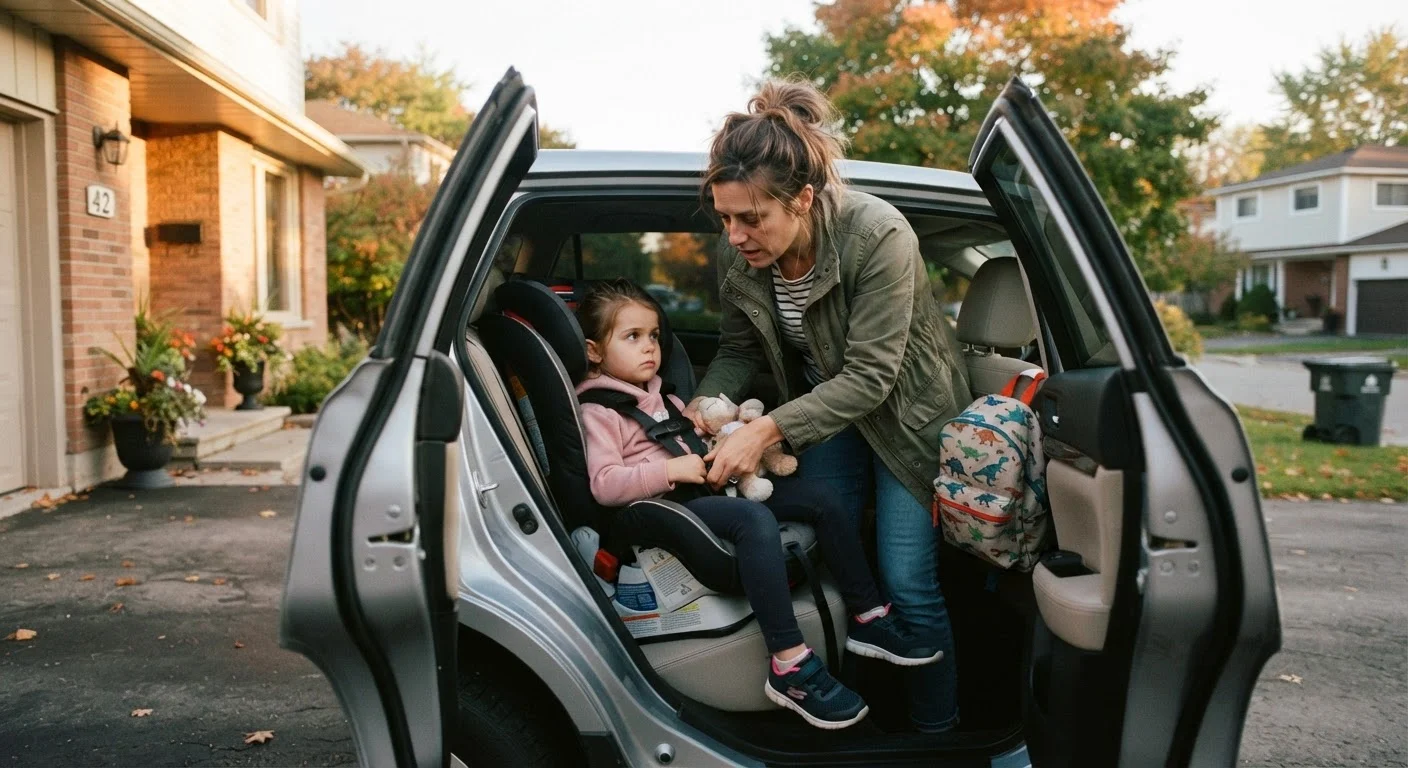
Parents combining school drop-offs with a work commute face a different challenge. Content that works for adult learning rarely holds for children in the back seat. Our piece on commuting with kids in the car addresses that split situation directly.