Why a weekly prep routine pays off
Most commute disruptions are not random. A flat tire that could have been spotted at home, a forgotten badge that forces a U-turn, a dead phone with no backup charger: each one costs 20 to 40 minutes and adds measurable stress to the workday that follows. For suburban families juggling school drop-offs with work start times, the margin for error is thin.
This checklist covers four areas: your vehicle, your route, your schedule, and your bag. Run through it once each week, preferably on Sunday evening, and you remove most of the variables that create Monday chaos. It is designed to take 15 to 30 minutes total, not an afternoon.
If you share driving duties with a partner, assign sections so neither person repeats work. The car and bag sections can be split; the schedule section needs both of you to confirm the week's overlap points.
For families who also handle school runs, see commuting with kids in the car for habit-level adjustments that make the combined trip less chaotic.
Vehicle check
Route and traffic
Schedule and logistics
In-car kit and bag
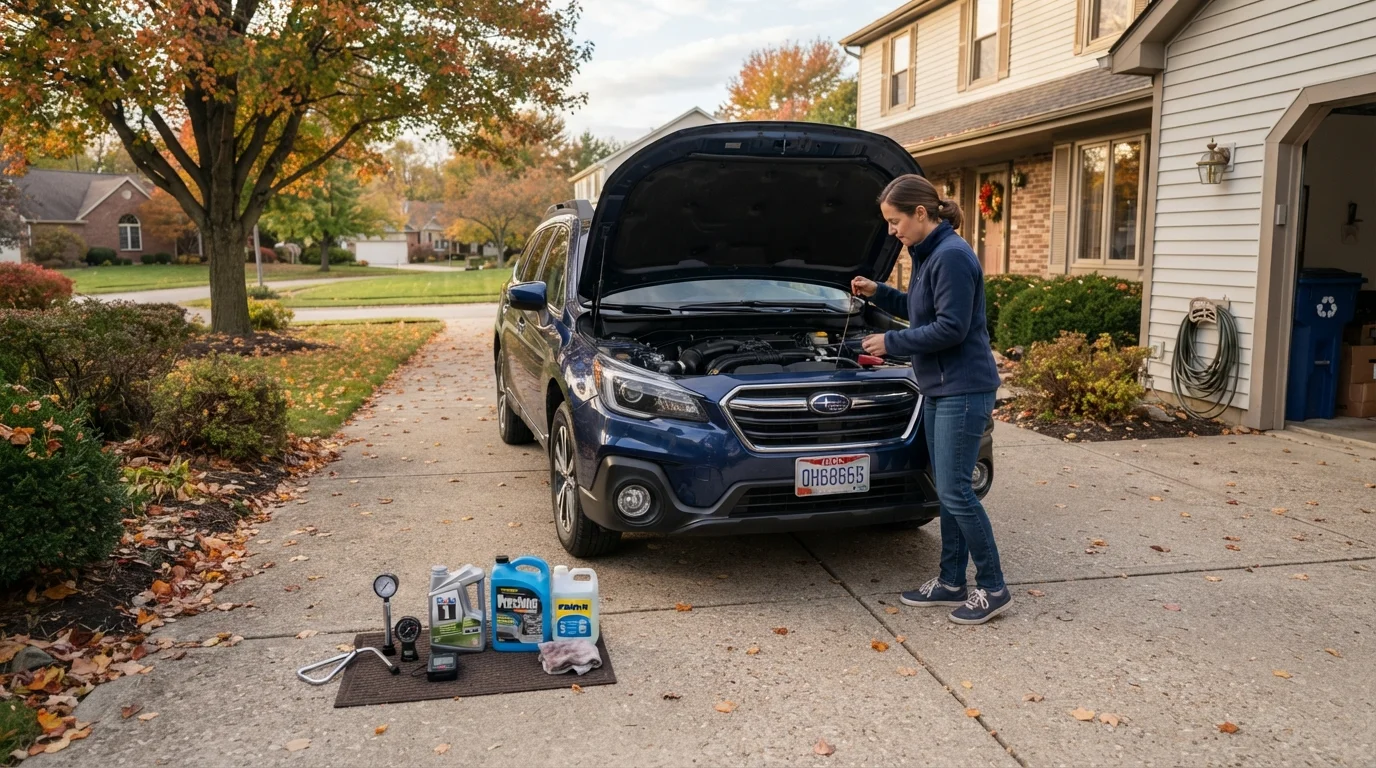
Tools you will need
None of the items below require special skills or expensive equipment. A tire pressure gauge costs a few dollars and is among the highest-utility tools you can keep in a glove box.
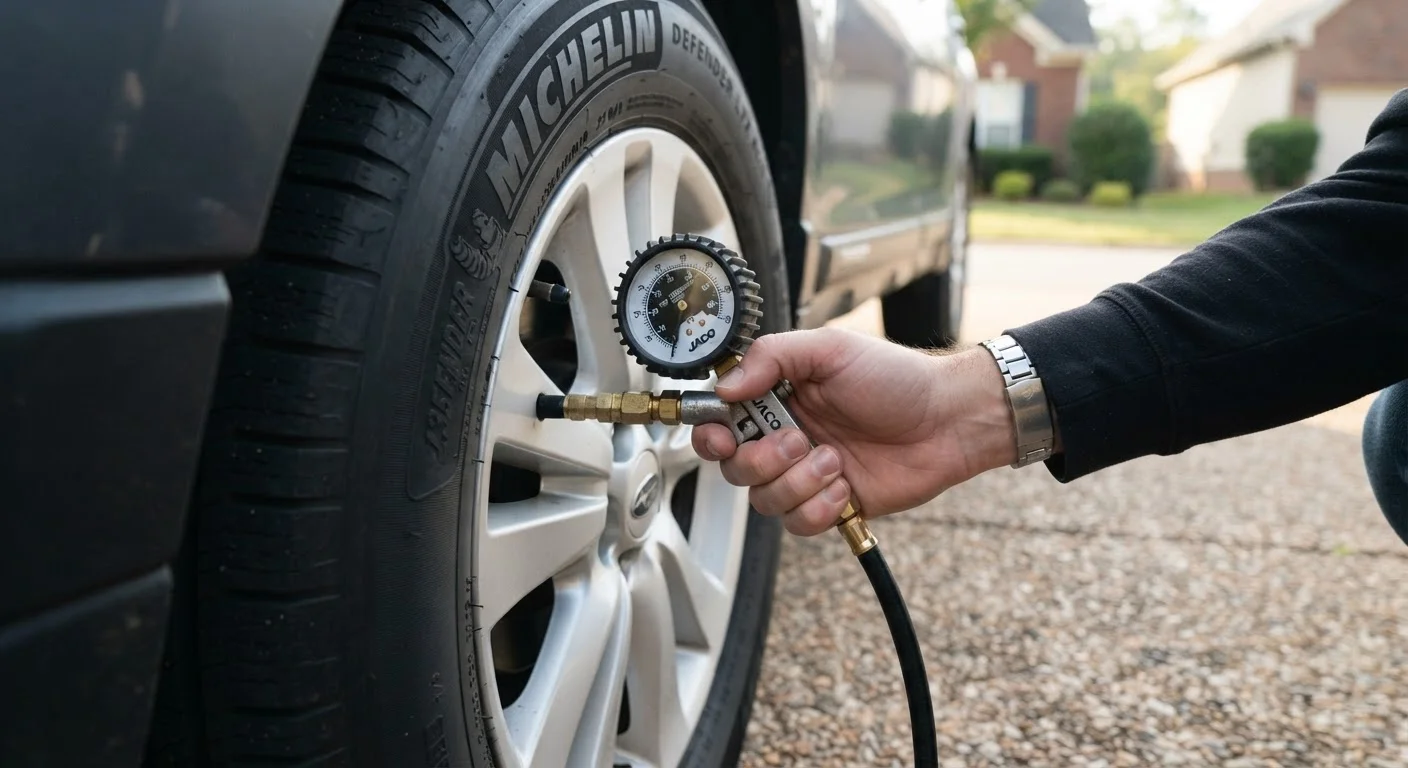
Tire pressure gauge
Accurately measures tire pressure so you can inflate to the correct spec and avoid fuel waste or handling problems.
Traffic and navigation app
Checks your route for closures, incidents, and construction before the week starts so you can plan around them.
Portable USB car charger
Keeps your phone charged during commutes so navigation and emergency calls are available throughout the trip.
Small in-car emergency kit
Handles common roadside situations such as a flat, a minor cut, or a dead battery without needing professional assistance.
Windshield washer fluid
Replenishes the reservoir weekly so visibility stays clear in wet, muddy, or bug-heavy conditions.
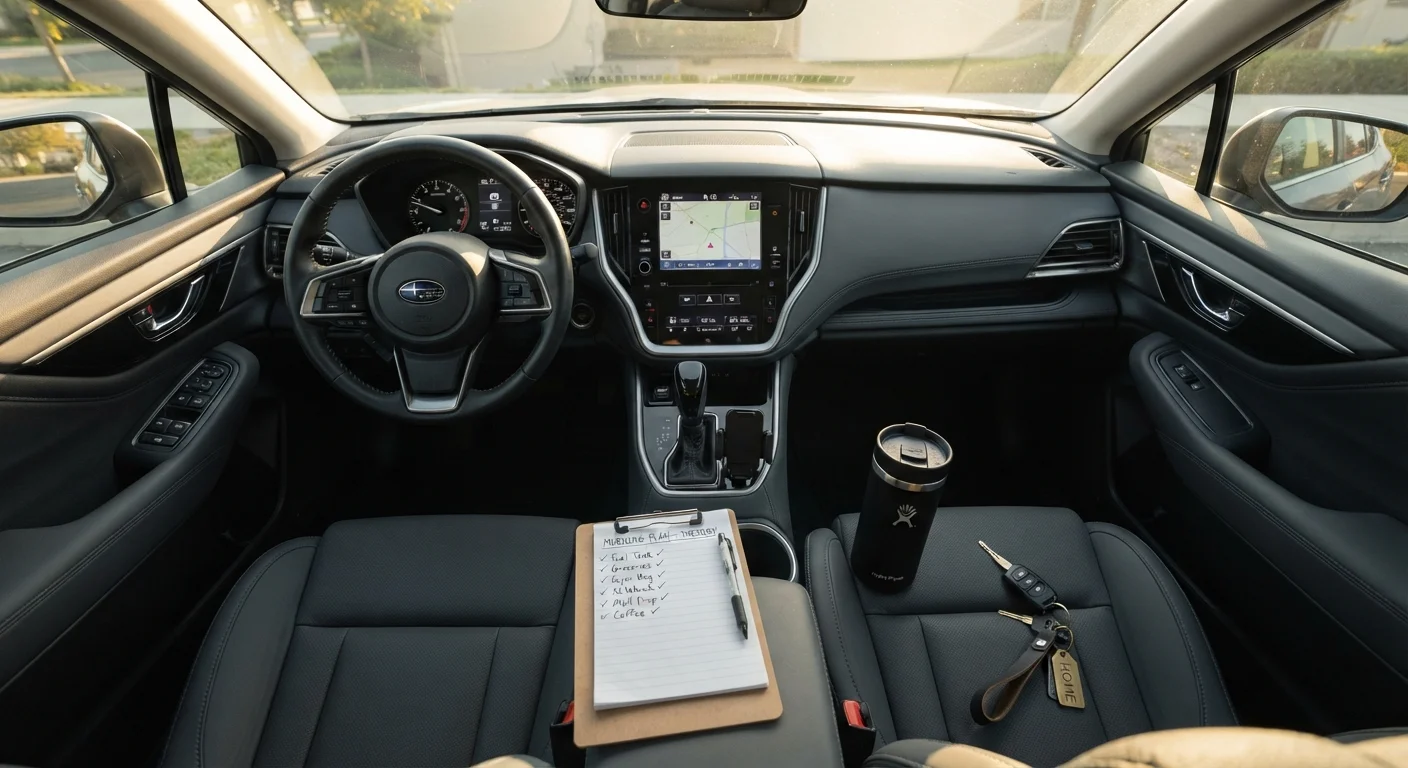
Digital or paper checklist
Tracks completed items across the four prep categories so nothing is skipped during a quick Sunday session.
For a broader look at which small vehicle checks have the biggest impact on fuel costs, see tire pressure, air filter, and fuel-saving checks. Seasonal conditions change which of these tools matter most: seasonal car care checks covers what shifts at each weather transition.
Do not defer persistent warning lights
A warning light that returns each week or stays on continuously is not a maintenance reminder to defer until a convenient time. Engine, oil pressure, and brake system warnings in particular can indicate conditions that worsen quickly. Take the vehicle to a qualified mechanic before driving it under load if any of these lights appear.
After you finish the checklist
Store the completed checklist (paper or digital) where you prep your bag. Over several weeks, patterns emerge: if the same item keeps failing, for example low washer fluid every Sunday, it points to a resupply gap worth fixing at the source rather than patching weekly.
The car maintenance hub has deeper guidance on the vehicle items flagged here, particularly anything that involves fluid levels, belts, or warning lights. Those are worth reading before you encounter a problem rather than after.
This checklist focuses on the regular commute. If your week includes a longer family trip, what to pack before leaving the driveway covers the additional gear road trips require beyond the everyday kit.