
Why the myths around pets and kids persist
Parents hear a lot of confident claims about pets and children: that dogs automatically teach responsibility, that cats are hazards for babies, that hypoallergenic breeds solve allergy problems. These ideas circulate because they carry a grain of truth, or because they match a story someone lived. The problem is that a partial truth, applied broadly, can lead families toward poor decisions in either direction, getting a pet a child is not ready for, or avoiding one that would have been fine.
The myth-versus-fact pairs below draw on peer-reviewed developmental research and veterinary guidance. Where evidence is mixed or limited, that is noted directly rather than smoothed over.
For a broader look at what makes a pet genuinely compatible with a busy household, see what makes a pet truly kid-friendly.
Common myths, examined
The six misconceptions below are among the ones parents ask about most. Each one shapes real decisions: which pet to adopt, how much independence to give a child, and how much worry to carry.
Myth
Having a pet automatically teaches children responsibility.
Fact
Pets can be a vehicle for learning responsibility, but only when adults actively structure and coach that involvement.
The learning does not happen by proximity. When a child forgets to fill the water bowl and a parent silently steps in, the child learns that gaps get covered, not that the animal depends on them. Developmental psychologists note that responsibility is a skill built through consistent, supported practice with real, age-appropriate stakes. A pet creates an opportunity for that practice; it does not deliver the outcome automatically. Parents who narrate why a task matters, give feedback without shame, and allow minor natural consequences (a mildly hungry pet waiting an extra twenty minutes) produce better outcomes than those who simply assign and walk away.
Myth
Certain dog breeds are inherently safe around children, while others are inherently dangerous.
Fact
Individual temperament, training history, and supervision context predict bite risk far more reliably than breed.
Breed-based predictions have poor accuracy at the individual level. The American Veterinary Medical Association's position is that breed alone should not determine how a dog is managed around children. A well-socialized dog of a typically wary breed can be gentle and predictable. A poorly socialized dog of a typically mellow breed can bite. Relevant factors include the dog's early socialization, its history with children, its stress signals being respected, and whether adults intervene before a situation escalates. See the pet safety at home hub for guidance on reading a dog's body language and setting up safer interactions.
Myth
Cats pose a health danger to newborns and should be kept away from babies entirely.
Fact
Cats do not smother infants, and the main hygiene concerns are manageable with straightforward precautions.
The idea that cats will lie on a baby's face and suffocate them is not supported by medical evidence. The genuine concern is that a cat sharing a sleep space with an infant creates a suffocation risk in the same way any loose object in a crib does, not through intent but through weight and position. Safe sleep guidelines already address this: infants should sleep in their own space, free of animals and soft objects. Beyond that, standard hygiene (litter box handling by adults, handwashing) manages the main zoonotic risks. For a fuller look at evidence-based guidance on this topic, see the truth about pets and infant sleep safety.
Myth
Hypoallergenic pets eliminate the risk of allergic reactions in children.
Fact
No pet is truly hypoallergenic; some breeds produce lower amounts of certain allergens, but reactions still occur.
Pet allergies are typically triggered by proteins found in an animal's saliva, urine, and skin cells (dander), not hair volume. Breeds marketed as hypoallergenic generally shed less, which means less dander distribution, but they still produce the underlying proteins. A child with a true pet allergy may react to any dog or cat regardless of coat type. The American Academy of Allergy, Asthma, and Immunology recommends allergy testing before introducing a pet into a home where allergic reactions are a concern, rather than relying on breed selection as a workaround.
Myth
Growing up with pets always reduces a child's risk of developing allergies.
Fact
Early pet exposure appears to reduce allergy risk for some children, but the effect is not universal and depends on timing and individual factors.
Several studies suggest that exposure to pets and the microbes they carry during infancy may support immune system development in ways that lower the likelihood of certain allergies. However, the research is not straightforward. Some children with a strong genetic predisposition to atopy (allergic disease) may actually see symptoms worsen with early exposure. The effect also appears more pronounced when exposure begins in the first year of life. Families with a history of severe allergies should discuss timing with a pediatrician before introducing a pet, rather than assuming exposure will be protective.
Myth
Small or caged pets like hamsters and guinea pigs are low-maintenance and ideal as a child's first solo pet.
Fact
Small animals have specific environmental, social, and handling needs that most children under ten cannot meet without substantial adult involvement.
Small mammals are often chosen because they seem manageable, but many are nocturnal, stress easily when handled roughly, and require consistent temperature control and clean housing. Guinea pigs, for example, are social animals that need companionship and daily fresh vegetables alongside commercial food. A child who loses interest after the novelty wears off, which is common, leaves an adult managing a living animal's full care. These pets work well in family homes when adults are genuinely prepared to take ownership of the care baseline, with children contributing in age-appropriate ways. Our guide on teaching kids to care for a pet safely and confidently covers how to build involvement gradually.
Understanding how children and pets actually read each other is equally important. Our article on why young children and dogs misread each other's signals explains the communication gap that underlies many household incidents.
What actually helps
The research picture that emerges is less about which pet to choose and more about how adults structure the relationship. Consistent supervision during interactions, age-appropriate involvement in care tasks, and calm, positive coaching when a child makes a mistake are the factors that show up repeatedly in studies on child-pet outcomes.
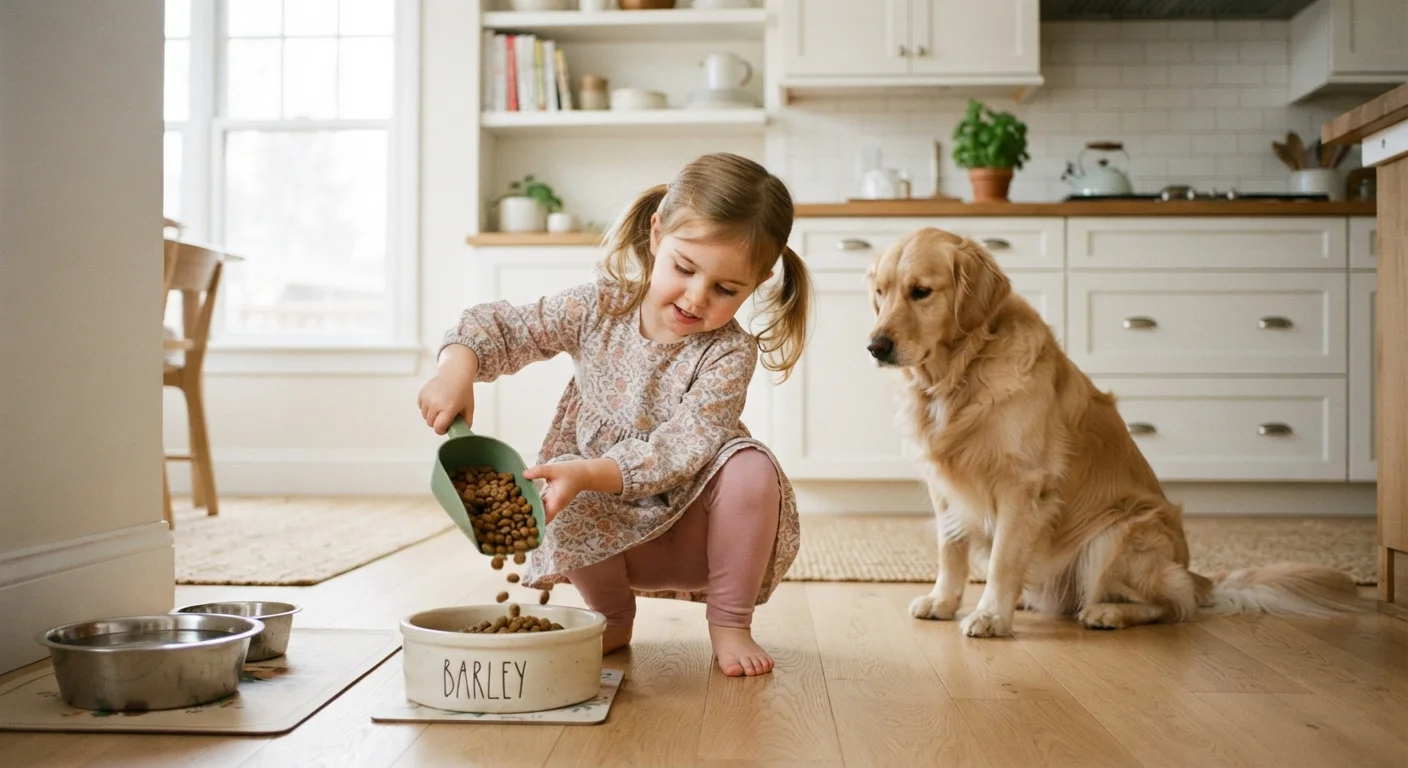
Children can be meaningfully involved in pet care well before they can manage it alone. A five-year-old can pour kibble with a parent nearby. An eight-year-old can walk a calm dog on a quiet street with supervision. Framing tasks as shared rather than delegated keeps the experience positive without overloading a child who is not ready. Our guide on splitting pet duties offers age-sorted task ideas that work in a typical suburban schedule.
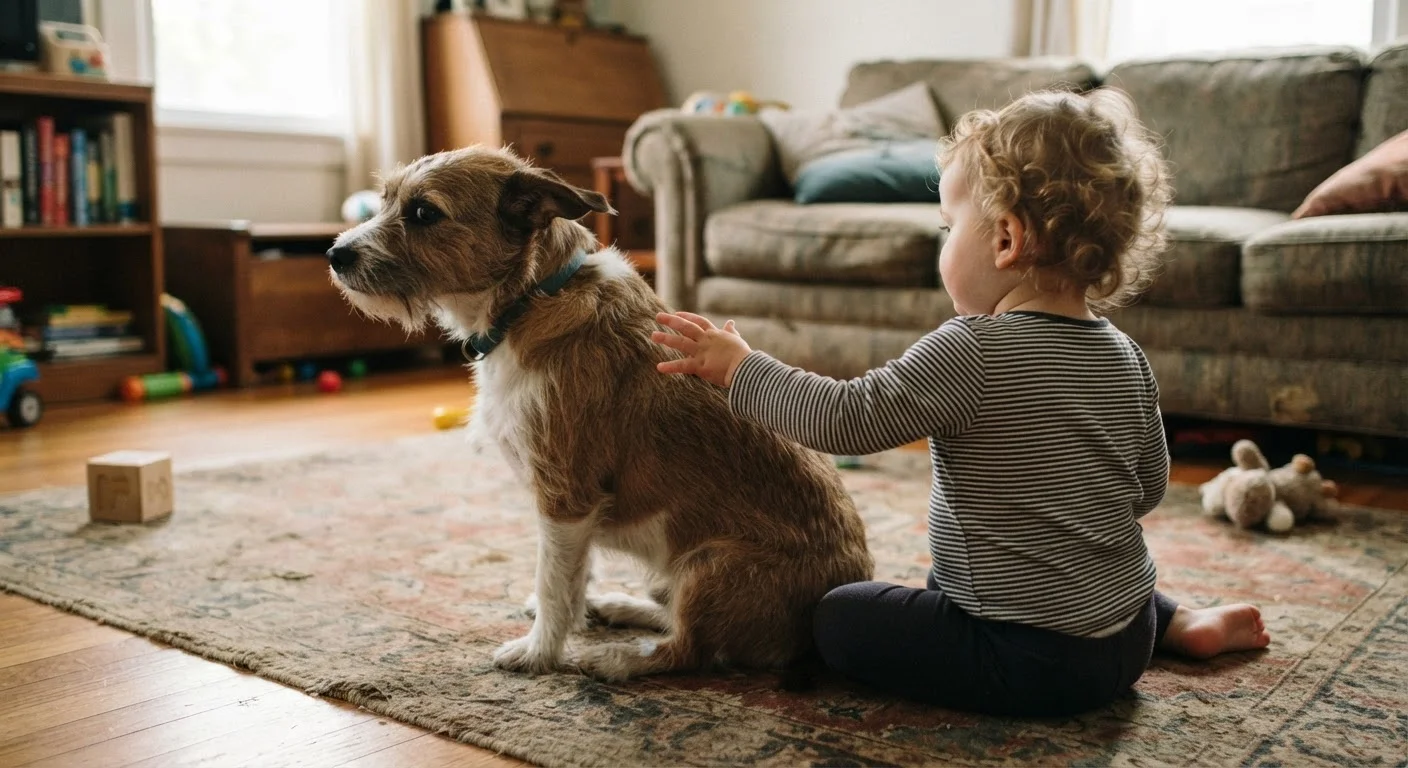
Safety guidance works the same way. Teaching a toddler how to approach a dog is not a one-time conversation; it is a repeated, low-pressure practice. The strategies for teaching kids to interact safely with the family pet article goes deeper on that process for different age groups.