A practical pre-departure checklist covering safety gear, entertainment, snacks, documents, and comfort items for family road trips.
Key Takeaways
Safety gear, documents, and medications belong in an accessible spot, not buried in the trunk.
Packing snacks and comfort items before departure reduces stops and keeps kids calmer on long stretches.
A printed or downloaded copy of your route matters when cell service is unreliable.
Entertainment prep done at home saves scrambling once everyone is buckled in.
Car seat installation and tire pressure checks should happen before the first bag goes in.
Why a pre-departure car checklist saves the trip
The 20 minutes you spend loading the car methodically pay back hours of stress on the road. Forgotten documents mean U-turns. Missing medications mean detours to unfamiliar pharmacies. A dead phone with no charger means navigating by memory. None of these are dramatic emergencies, but they compound quickly when children are hungry and tired in the back seat.
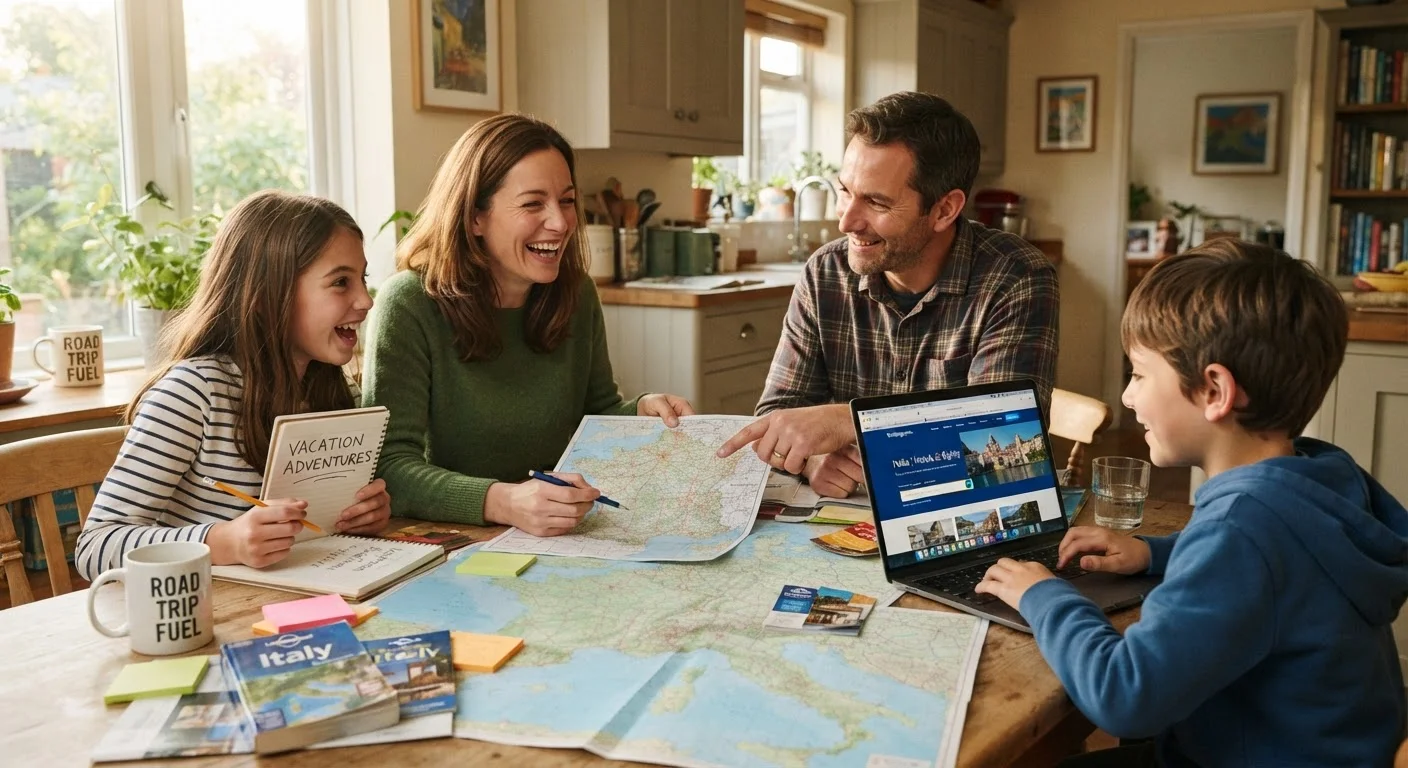
This checklist works alongside broader trip planning. If you have not yet confirmed reservations, passports, or travel insurance, run through the pre-booking checklist first. If you want a full household readiness sweep that covers medications and documentation, the family travel readiness checklist covers those layers in detail. What follows here focuses specifically on what physically goes into the car and where it should go.
Do not pack medications in the trunk
Trunk temperatures in a parked car can exceed safe storage ranges for many medications, including common antihistamines and epinephrine auto-injectors. Keep all medications in the cabin where temperatures are more stable, and in a spot reachable without pulling over. If a family member carries an epinephrine auto-injector, confirm it is accessible to an adult at all times during the drive.
What you need before the first bag goes in
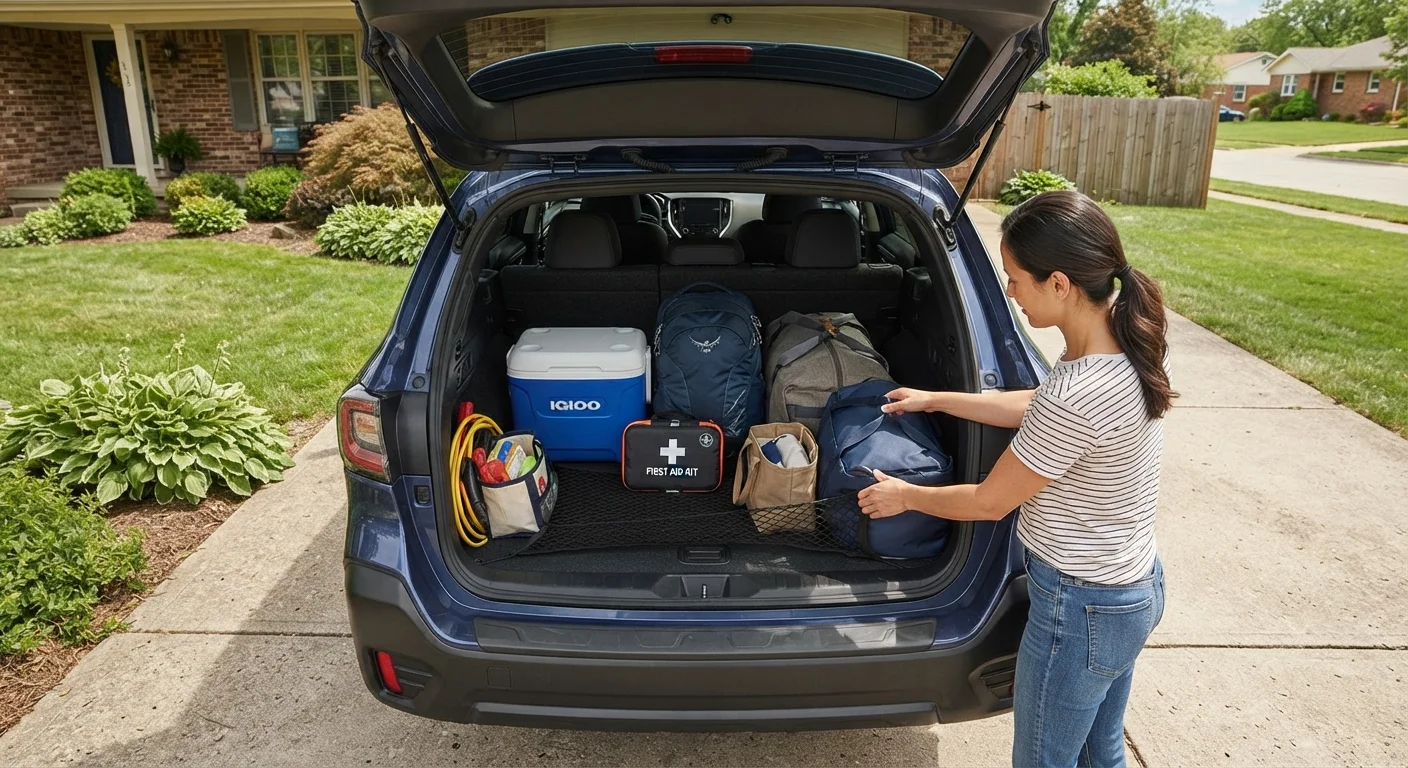
Load the car in a deliberate order. Heavy items go in the trunk first, flat and stable. Anything you might need mid-drive, a first aid kit, snack bag, or charging cable, should be reachable from the front seat or a door pocket without opening the trunk. Car seats and booster seats should be checked for correct installation before bags take up the surrounding space. Check tire pressure while the driveway is still clear. These physical steps cannot be done once the car is fully loaded.
For vehicle maintenance questions that go beyond a pre-trip check, the car maintenance hub covers oil intervals, tire rotation, and other upkeep that affects reliability on longer drives.
Safety and emergency
Place a first aid kit in an accessible spot, ideally under the front passenger seat or in a door pocket.Must
Confirm a reflective warning triangle or road flares are in the trunk.Must
Check that jumper cables or a jump starter pack are loaded.Must
Verify the spare tire is inflated and the tire-changing tools are present.Must
Pack any prescription medications in the cabin, not the trunk, where temperature swings can affect them.Must
Load a basic tool kit with a flashlight and extra batteries.Should
Documents and navigation
Put driver's license, vehicle registration, and insurance card in the glove box or a reachable pouch.Must
Download offline maps for your route before leaving home Wi-Fi.Must
Print or screenshot hotel confirmation numbers and any reservation details.Should
Write down an emergency contact list on paper as a backup when phones fail.Should
Food and hydration
Pack a cooler with water bottles and perishable snacks secured so it will not shift during braking.Must
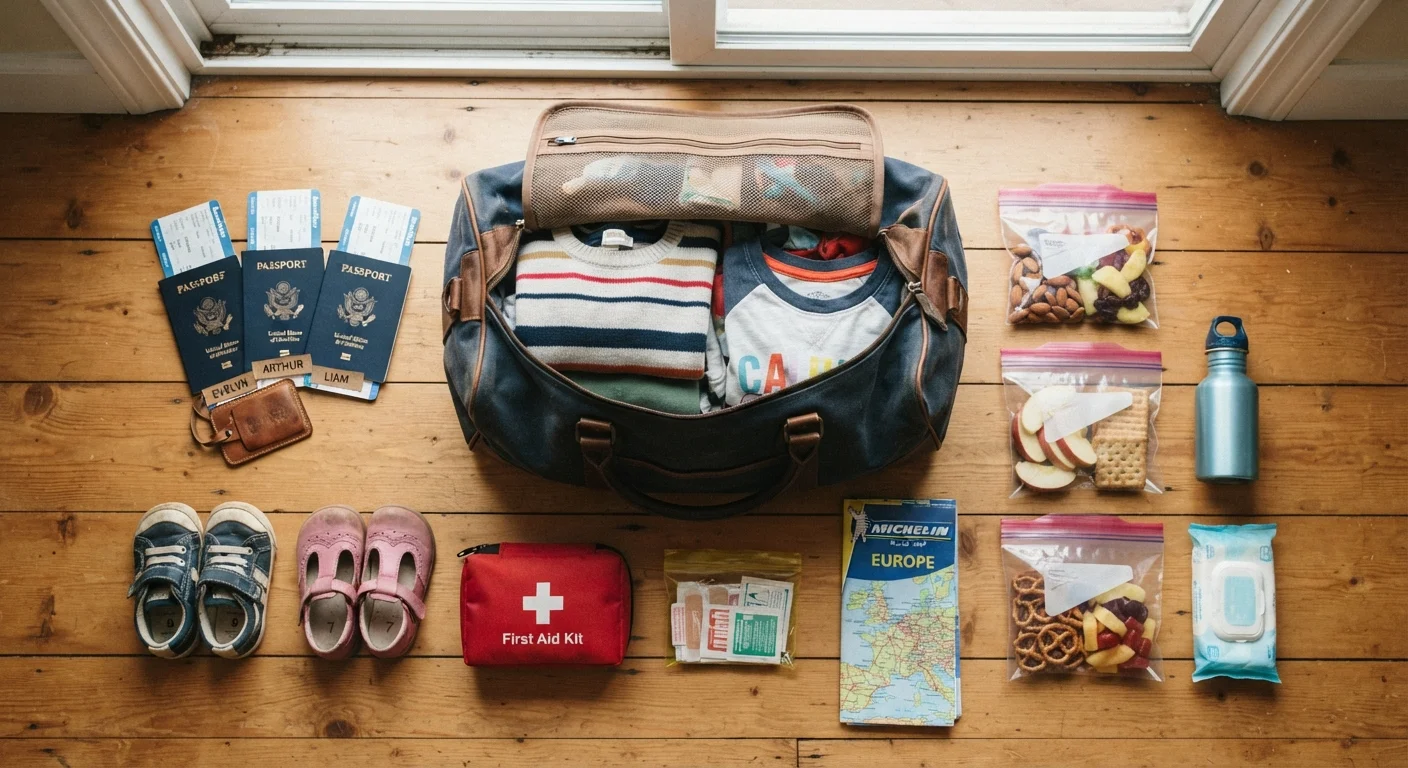
Load dry snacks like crackers, nuts, or granola bars in a bag accessible from the back seat.Must
Bring a small roll of paper towels and a pack of wipes for spills.Should
Include a reusable trash bag clipped to the back of a front headrest.Nice to have
Comfort and kid essentials
Confirm car seats and booster seats are correctly installed and harnesses are adjusted for current child sizes.Must
Pack a change of clothes for each child in an accessible bag, not buried in checked luggage.Must
Include a small blanket and travel pillow for each passenger who uses one.Should
Load sunscreen and sunglasses within reach for rest stops and outdoor breaks.Should
Bring motion sickness remedies if any family member is prone, stored where they can be accessed without stopping.Should
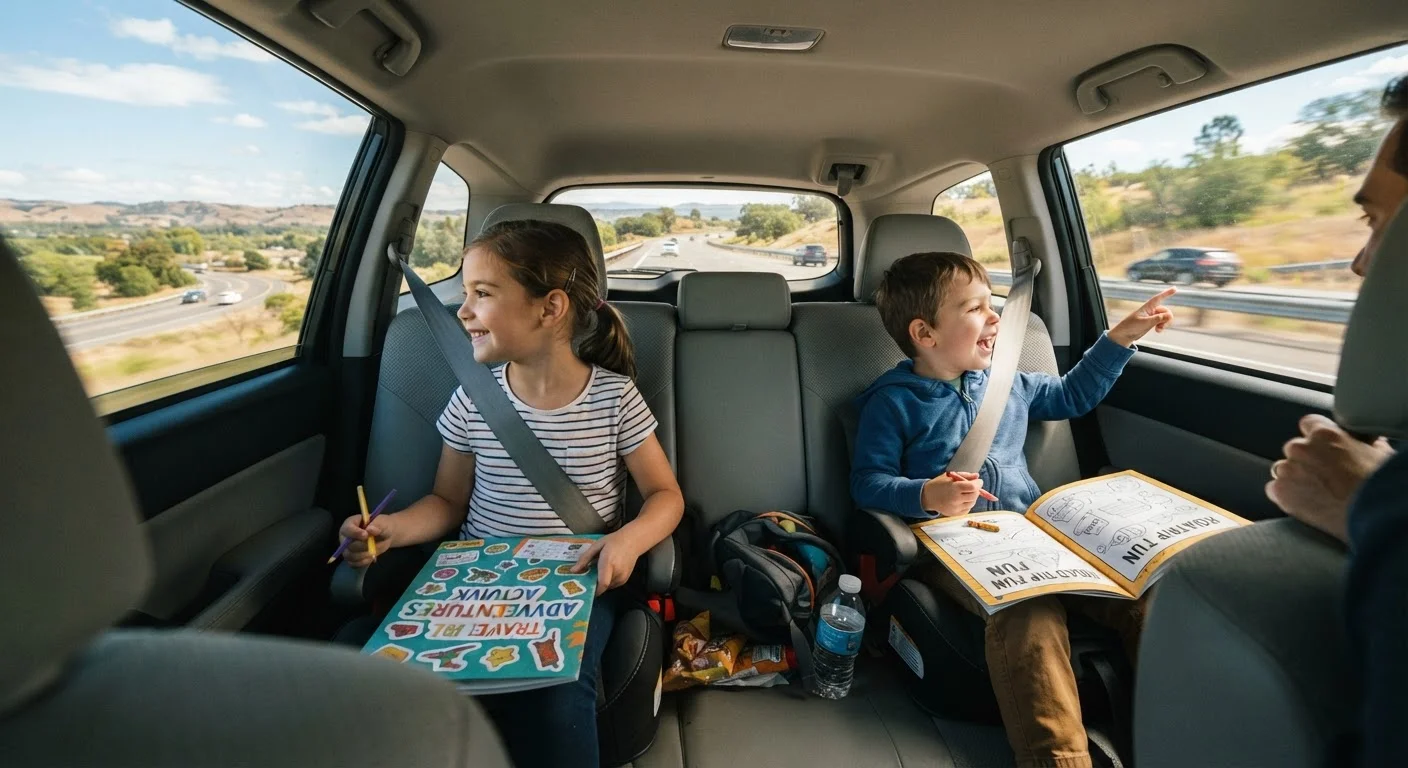
Pack a small activity bag per child with a book, game, or quiet toy for the first hour.Nice to have
Power and connectivity
Plug in a multi-port car charger or confirm the vehicle's USB ports are working before departure.Must
Charge a portable battery pack fully the night before.Should
Download offline playlists, podcasts, or audiobooks while still on home Wi-Fi.Should
Pack charging cables for every device your family uses, including tablets and earbuds.Must
Entertainment and comfort for the drive
Entertainment is easiest to assemble the night before, not in the driveway. Download audiobooks, playlists, or offline maps while on home Wi-Fi. Print or screenshot confirmation numbers. Charge every device fully. A charged portable battery pack is worth carrying even on short trips because phone navigation drains batteries faster than most car chargers can replace.
For ideas that do not rely on screens at all, see the guide to screen-free entertainment for long drives. Travel games, activity books, and simple storytelling prompts take almost no space in a door pocket and can carry a two-hour stretch without any battery required.
Family Travel Editorial Team is the collective byline for our editorial team and contributor network. Articles published under this byline or an editorial pen name are researched, written, and reviewed according to our editorial standards for clarity, consistency, and independence before publication.
The content provided on our blog site traverses numerous categories, offering readers valuable and practical information. Readers can use the editorial team’s research and data to gain more insights into their topics of interest. However, they are requested not to treat the articles as conclusive. The website team cannot be held responsible for differences in data or inaccuracies found across other platforms. Please also note that the site might also miss out on various schemes and offers available that the readers may find more beneficial than the ones we cover.