What the cost comparison actually looks like
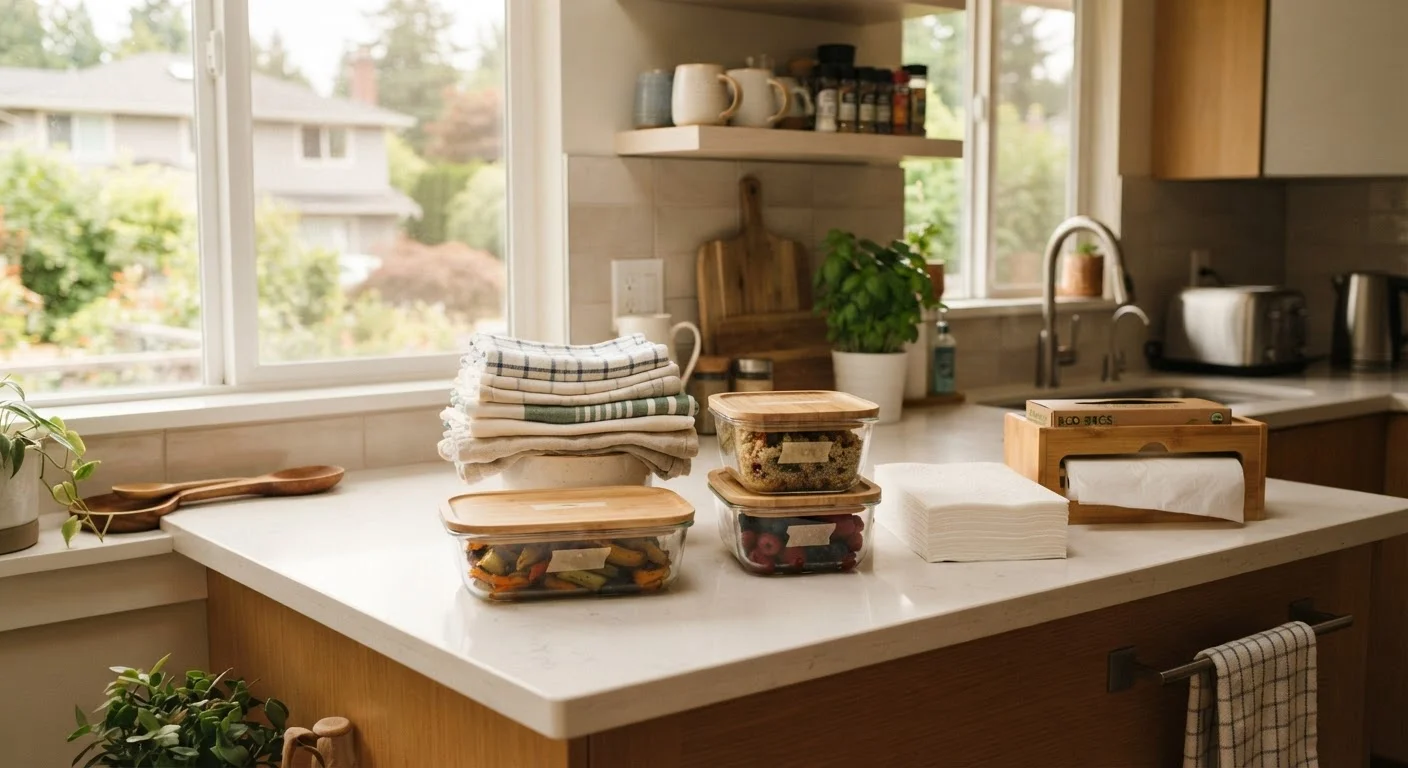
The math on reusables tends to favor them over a 12-month horizon, but the gap is narrower than many comparisons suggest. A set of cloth napkins purchased once can replace hundreds of paper napkins per year, but that calculation only holds if the napkins get used consistently and washed on a regular cycle rather than piling up. The same logic applies to reusable food storage bags, beeswax wraps, and cotton unpaper towels.
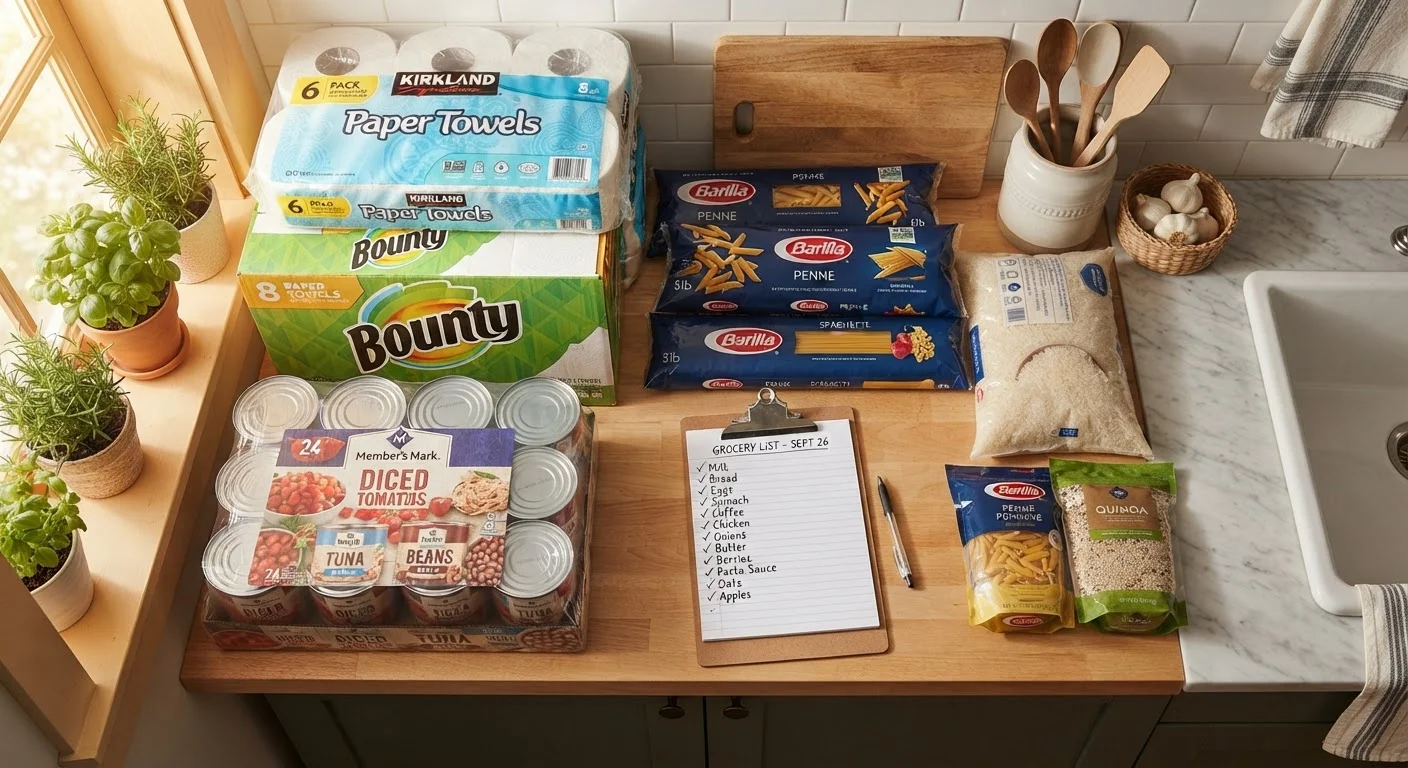
Disposables carry a different cost structure: lower per-unit price, but continuous spend. For families already buying disposable items in bulk, the per-unit cost drops, though storage space and upfront outlay increase. The trade-offs in bulk buying are worth reviewing separately, since they affect how disposables are actually priced in practice.
Water and energy use from laundering reusables adds a real, if modest, cost that many household comparisons omit. Running a washing machine primarily to clean cloth napkins is inefficient; adding them to an existing laundry load is not. The actual savings depend heavily on whether reusables fit into laundry routines that are already happening.
| Criterion | Reusable items | Disposable items |
|---|---|---|
| Upfront cost | Higher (one-time purchase) | Low per unit |
| Long-term cost | Lower with consistent use | Ongoing recurring spend |
| Daily convenience | Requires washing and drying | Use and discard, no prep |
| Storage demand | More cabinet or drawer space | Compact until stocked in bulk |
| Environmental footprint | Lower per use over time | Higher cumulative waste |
| Hygiene reliability | Depends on washing frequency | Consistent when sealed |
| Best fit for busy weeks | Only if laundry stays current | Always ready regardless of schedule |
Convenience and the daily household reality
For households with children, convenience is not a minor consideration. Disposable wipes, napkins, and bags require no prep, no cleaning, and no drying time. During high-pressure moments, including school mornings, weekend sports, and sick days, that frictionlessness has genuine value.
Reusables introduce a maintenance loop: wash, dry, store, reuse. That loop is manageable for families with predictable routines, but it creates a dependency on laundry timing. A reusable cloth left damp in a lunch bag for two days is not a hygiene win. The structure of your shopping and household routine often determines whether reusables actually get used or quietly get replaced by disposables anyway.
Storage is another practical factor. Reusable containers, bags, and wraps take up drawer and cabinet space. Families in smaller homes or apartments may find that accumulating reusable alternatives creates clutter problems the disposable version never caused.
Environmental factors worth understanding accurately
Reusables carry a lower environmental footprint per use, but manufacturing them requires more raw materials and energy upfront than manufacturing a single disposable item. A reusable cotton tote, for example, needs to replace dozens to hundreds of plastic bags before its production footprint is offset, depending on the material and production method. The same calculation applies to other categories.
This does not negate the case for reusables. It means the environmental benefit scales with actual usage. A reusable item used once a week for two years has a very different footprint profile than one used twice and forgotten in a cabinet. Washing reusables in cold water and full loads improves the environmental calculation further.
Disposable items vary considerably in their end-of-life impact. Some paper-based products are compostable or recyclable; many plastic-based ones are not. Where families sort waste carefully and have access to composting, the gap between disposables and reusables narrows somewhat, though it does not close entirely for plastic-based products.
A practical framework for choosing item by item
Rather than treating this as an all-or-nothing decision, most families find value in evaluating each product category separately. Cloth napkins work well as a reusable swap for households that already run a regular laundry cycle. Reusable food storage containers make sense for families who pack lunches consistently. Disposable wipes and paper towels may remain practical for bathroom cleanups, pet messes, and situations where the laundry overhead outweighs the savings.
Tracking one month of disposable consumption, noting quantity and cost, gives a concrete baseline for deciding where a swap would generate real savings. The habits that sustain family savings tend to be specific and repeatable, not sweeping overhauls.
For families thinking about overall household spending patterns, the reusable-versus-disposable question connects to broader choices about how to allocate a household budget. The family budgeting resources here can provide context for how this category fits into a fuller financial picture. General information applies; individual circumstances vary, and consulting a financial professional is appropriate for decisions tied to larger budget planning.