Why bulk buying feels like a no-brainer
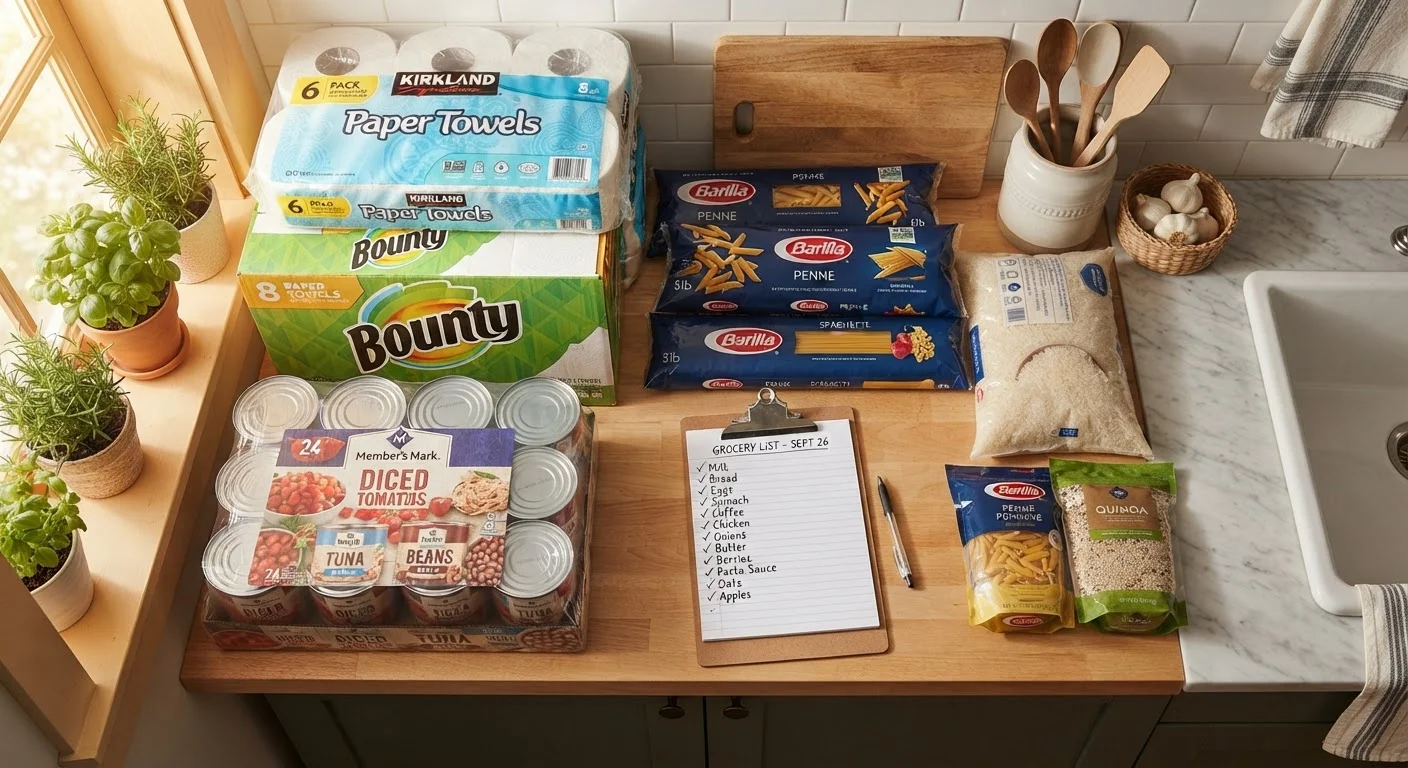
The logic is straightforward: buy more units, pay less per unit. Warehouse stores build their entire model on this premise, and for certain product categories it holds up. A family of four that reliably goes through a case of canned tomatoes every month will almost always pay less per can buying in bulk than buying individual cans at a grocery store.
The appeal goes beyond price. Fewer shopping trips mean less time spent in stores, which matters to households already stretched across school schedules, work, and weekend activities. Running out of dish soap or toilet paper mid-week is a minor but genuine disruption, and a well-stocked pantry reduces those moments. For families trying to manage monthly expenses predictably, bulk buying also makes it easier to forecast spending on staple categories.
Bulk buying can also provide a buffer against short-term price spikes. Stocking up on coffee or laundry detergent at a stable price insulates a household from paying premium prices during a temporary supply squeeze.
The real advantages
Lower per-unit cost on non-perishable staples
Buying paper towels, canned goods, or laundry detergent in larger quantities consistently reduces the cost per unit. For high-turnover staples, this saving compounds across a full year of household spending.
Fewer shopping trips save time and fuel
A well-stocked pantry means fewer mid-week store runs. For a suburban family managing school pickups and work schedules, this is a practical time saving worth counting.
Short-term insulation against price increases
Stocking up on staples at a known price protects against temporary price spikes in specific categories, giving the household budget more stability in those months.
Reduces the frequency of running out of essentials
A deep pantry of toilet paper, soap, or canned goods means a household is less likely to face an inconvenient gap between shopping trips.
The cost benefit is most reliable for non-perishable goods with long shelf lives: paper products, canned foods, cleaning supplies, and personal care basics. These categories have consistent pricing, do not degrade quickly, and most families consume them at a predictable rate. For these items, the per-unit math usually favors the bulk option.
Where the trade-offs bite
Higher upfront cash requirement strains monthly budget
A bulk purchase saves per unit but costs more today. Households with limited monthly cash flow may find this disrupts other spending priorities or leads to carrying a credit card balance.
Perishables often spoil before use
Fresh produce, dairy, and meat bought in large quantities frequently go to waste before the family consumes them. The financial loss from spoilage can exceed the per-unit discount.
Storage space is a hard physical constraint
Bulk quantities require adequate shelving, pantry space, or garage storage. Without it, overstocked goods create clutter, get lost, or expire unnoticed.
Bulk pricing is not always the lowest price available
A promotional sale on a standard-size item can beat the warehouse per-unit price. Assuming bulk is always cheaper leads to paying more than necessary on certain items.
Increased availability can raise consumption rates
When a product feels abundant, household members tend to use it more freely. This behavioral pattern can reduce or eliminate the expected savings from buying in bulk.
Ties up money in slow-moving inventory
Buying six months of a product that only sells at a moderate pace means capital is sitting on a shelf rather than available for other household needs or savings goals.
The upfront cash requirement is the most immediate friction. A bulk purchase that saves 20 percent per unit still costs more today than buying a smaller quantity. For households running tight monthly budgets, that cash outlay can crowd out other spending or push a credit card balance higher, which cancels the savings through interest. This is worth weighing carefully alongside broader goals like those covered in balancing competing savings priorities.
Perishables are where bulk buying most visibly fails. Buying a large tray of chicken breasts or a bulk bag of leafy greens only saves money if your household consumes them before they spoil. Families frequently overestimate how quickly they eat fresh produce or proteins, and the food waste that results can exceed the per-unit savings.
There is also a subtler risk: buying something in bulk can increase consumption. A household that normally uses two paper towels per task may unconsciously use four when the roll feels inexhaustible. This effect is documented in behavioral economics literature and can quietly erode the budget benefit.
Bulk price versus sale price: check the math
Warehouse club membership fees add to the effective cost of every bulk purchase. A family spending $65 per year on a membership needs to recover that amount in savings before the membership pays for itself. On categories where a local grocery sale price is competitive, the warehouse option may not come out ahead after accounting for the membership fee. Calculating per-unit cost at the shelf, not just at checkout, gives a clearer picture.
It is also worth noting that bulk pricing is not always the lowest available price. Common deal-hunting assumptions often treat bulk as automatically cheapest, but a sale price on a standard-size item can sometimes beat the warehouse unit price. Checking the per-unit cost before assuming bulk wins is a straightforward habit worth building.
How to decide what to buy in bulk
The most practical filter is consumption rate. If your family reliably uses a product at a known pace and it will not expire or degrade before you finish it, bulk buying is likely to pay off. If you are uncertain how fast you go through something, start with a standard-size purchase and track it for a month or two before committing to a larger quantity.
Storage capacity sets a hard limit. Bulk purchases require physical space, and garages, basements, and pantries are finite. Stacking cases of canned goods in a bedroom or blocking a hallway creates daily friction that erodes any financial benefit. Running a household essentials audit before a bulk shopping trip helps identify genuine gaps versus items you already have in adequate supply.
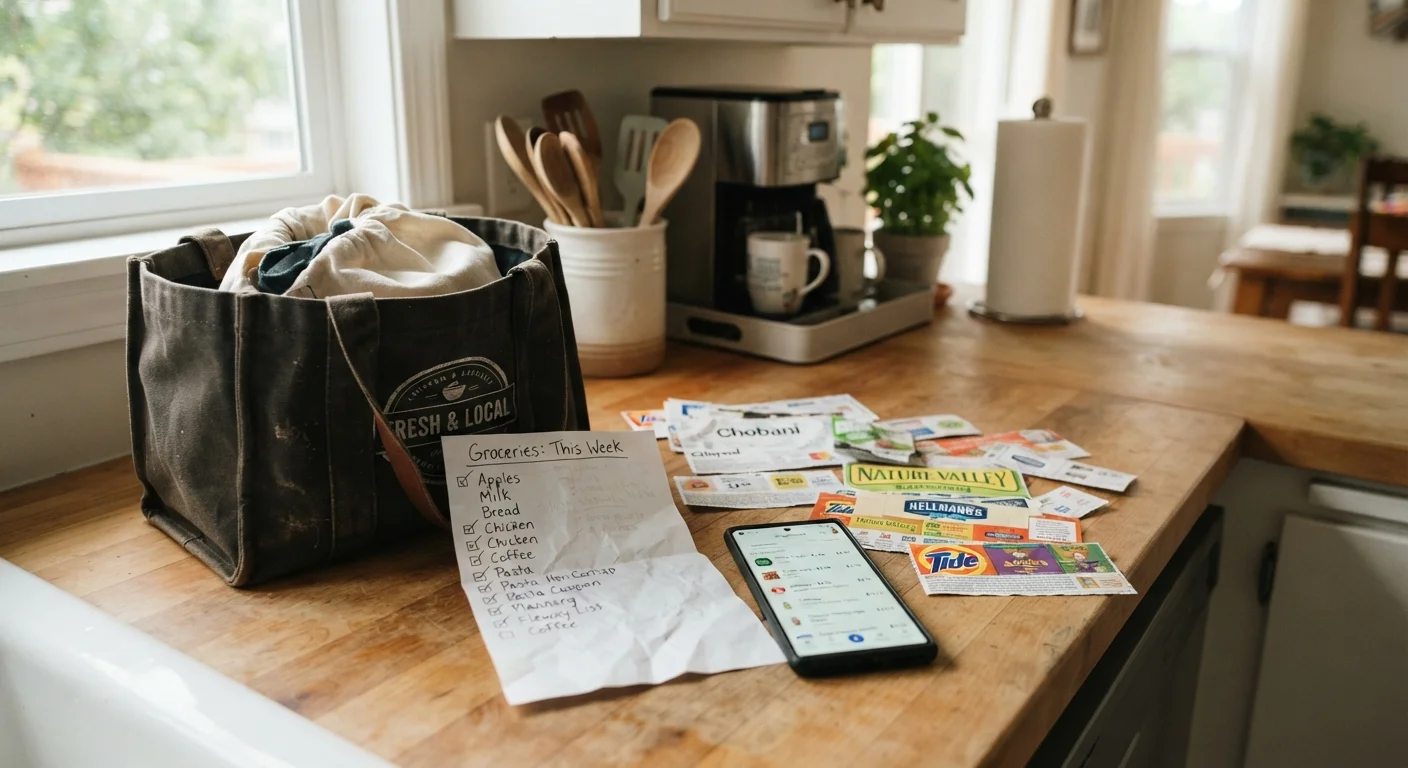
Pairing bulk buying with a structured shopping routine reduces impulse stocking. Building a smarter shopping routine around a list of pre-audited staples prevents the common pattern of buying in bulk on instinct and later discarding unused inventory.
30%
Average US household food waste share
The USDA has estimated that US households waste roughly 30 to 40 percent of the food supply, a figure that bulk perishable purchases can worsen if consumption does not match purchase volume.
~$1,500
Estimated annual family food waste cost
The Natural Resources Defense Council has estimated that the average American family discards several hundred to over a thousand dollars in food per year, though exact figures vary by household size and habits.