What each material actually does in a garden bed
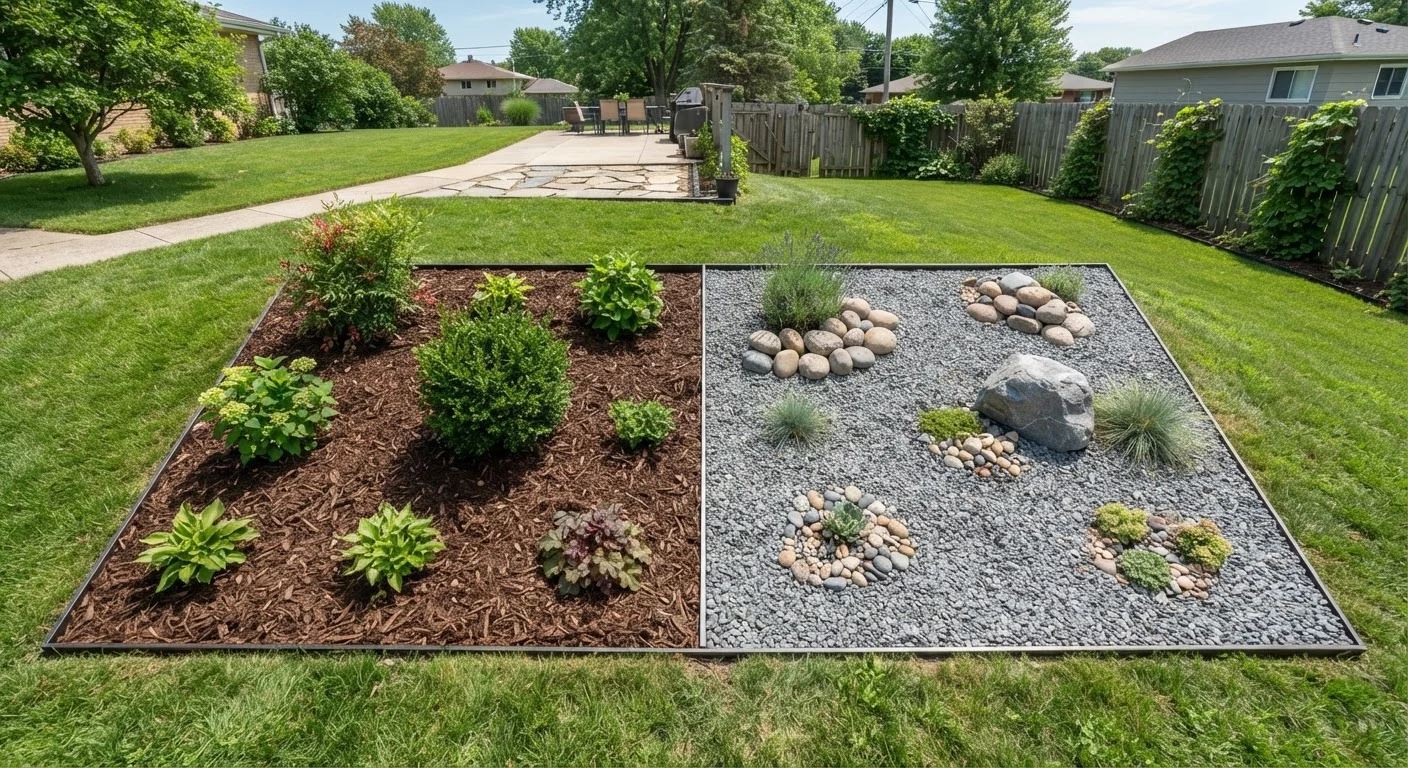
Mulch is any layer of organic material spread over soil to protect it. Wood chips, shredded bark, and pine straw are the most common types used in suburban yards. As organic mulch decomposes, it feeds soil microbes, slowly improves soil structure, and releases a small amount of nutrients. It also holds moisture, which means less frequent watering during dry stretches.
Gravel is an inorganic stone covering, ranging from pea-sized pebbles to larger decorative rock. It does not decompose, does not feed soil life, and does not retain moisture the way organic material does. What it does do is create a stable, permanent surface that reflects heat in summer and drains water instantly.
The difference in how each material interacts with the soil beneath it is the most important factor in choosing between them. If the plants in your beds depend on consistent moisture and a living soil ecosystem, mulch supports those conditions. If you want a clean, stable surface that requires almost nothing from you seasonally, gravel fits that goal better.
Cost and installation compared
| Criterion | Mulch | Gravel |
|---|---|---|
| Upfront cost | Lower per square foot | Higher per square foot |
| Long-term cost | Ongoing, needs replenishing | One-time investment |
| Soil health impact | Improves over time | No benefit to soil |
| Moisture retention | High | Low |
| Weed suppression | Good with proper depth | Very good with fabric barrier |
| Maintenance frequency | Annual top-off required | Minimal once installed |
| Flexibility to change | Easy to remove or adjust | Difficult to remove |
| Drainage | Moderate | Excellent |
Mulch is generally sold by the cubic yard in bulk or by the bag at garden centers. A cubic yard covers roughly 100 square feet at a 3-inch depth, which is the minimum recommended for effective weed suppression. Gravel is heavier and typically sold by the ton or cubic yard as well, but delivery costs are higher because of the weight.
The upfront price of mulch is lower in almost every market, but that calculation changes over time. Organic mulch breaks down and typically needs replenishing every one to three years depending on the material and your climate. Gravel, once placed, can last a decade or more with only minor redistribution after heavy rain or foot traffic. Families who calculate cost per year rather than cost per installation often find gravel competitive or cheaper over a long horizon.
Installation for both involves clearing the bed, laying a weed barrier if desired, and spreading material to the right depth. Mulch should sit about 3 inches deep; gravel typically needs 2 to 3 inches over a permeable landscape fabric to stay effective. Neither project normally requires a permit or professional installer for standard beds, though moving very heavy gravel around an awkward layout may be physically demanding work.
Weed control and ongoing maintenance
Both materials suppress weeds by blocking sunlight at the soil surface, but neither eliminates weeds entirely. Weed seeds that land on top of either surface can still germinate. Mulch can also introduce weed seeds if the source material was not properly processed.
Gravel with a quality landscape fabric underneath performs better over time against persistent weeds than mulch alone, because the fabric provides a physical barrier that organic material does not. However, fine silt and organic debris gradually collect between gravel stones, eventually creating a thin layer where weeds can root. Periodic raking or blowing keeps this under control.
Mulch beds typically need weeding every few weeks during the growing season, plus an annual or biannual refresh to maintain depth and appearance. For busy families, that time commitment adds up. See our guide to small lawn habits for practical ways to reduce overall yard maintenance time across your outdoor space.
Which situations favor each option
Mulch works well around trees, shrubs, and perennial plantings where soil improvement matters. It is also the practical choice for large bed areas where covering a lot of ground affordably is the priority. In colder climates, a thick mulch layer protects roots from freeze-thaw cycles during winter.
Gravel suits dry or arid climates well, because it does not trap excess moisture around drought-tolerant plants. It also works on slopes where erosion or wash-out is a concern, and in high-visibility areas where a consistently neat appearance matters year-round without seasonal maintenance. Gravel around air conditioning units, along foundations, or in decorative accent beds tends to hold up better than mulch in those specific spots.
One practical caution: gravel is very difficult to remove once installed. If you think you may want to change the planting layout within a few years, mulch gives you far more flexibility. Committing to gravel works best when the bed design is settled and the plants in it are permanent or slow-changing.