The logistics gap most families don't account for
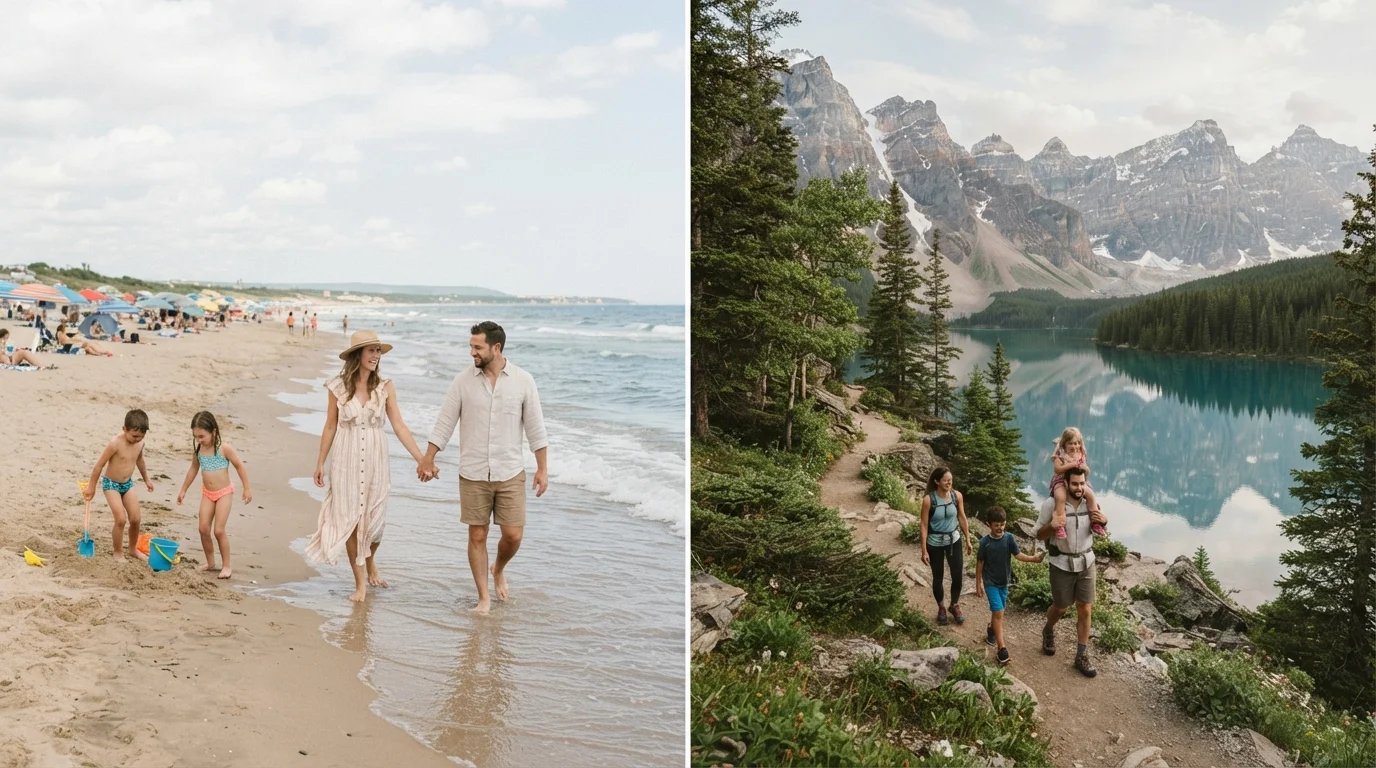
The single biggest difference between coastal and inland family travel is not the scenery or the price. It is the daily logistics load. Beach trips require managing sunscreen applications every two hours, wet gear at the end of each day, sand in every bag, constant water supervision, and a gear list that adds meaningful weight to any packing situation.
Inland destinations compress that logistics burden considerably. A lake cabin or mountain-town rental gives you central shelter, varied activities within a short radius, and far less gear-dependent planning. Kids can transition from a morning hike to an afternoon swim without a full base-camp teardown in between.
If your family travels with children under five, the beach's open-play value is real. Toddlers who would resist a structured hike will spend three hours at a tide pool without complaint. But the same age group requires near-constant supervision near water and burns fast in direct sun, which makes beach days exhausting for parents in a way that a shaded inland trail often is not.
For a broader look at what makes any destination manageable with children, see what makes a US destination genuinely kid-friendly.
Cost differences by season and region
Coastal pricing in the US follows a steep seasonal curve. Along the Atlantic seaboard and Gulf Coast, weekly rental rates can double or triple between May and July. Ocean-facing accommodations in popular beach towns regularly price families out during school-break windows, pushing many toward inland alternatives by default.
Inland destinations are not uniformly affordable, but their pricing peaks are often narrower. A mountain town near a ski resort may spike in February, then hold moderate rates through summer when families actually want to visit. A lake region that draws fewer tourists than the nearest coastal strip can offer comparable amenities at a lower per-night cost across a longer booking window.
| Criterion | Coastal destinations | Inland destinations |
|---|---|---|
| Peak-season pricing | High, concentrated in summer | Moderate, varies by activity type |
| Daily gear load | Heavy (sun, sand, water equipment) | Lighter, activity-dependent |
| Activity variety | Narrower, ocean-focused | Broader across age groups |
| Supervision demands | High near open water | Variable by location and terrain |
| Weather predictability | Highly regional, often unpredictable | More stable in many US regions |
| Toddler-friendliness | High for unstructured play | Moderate, depends on terrain |
| Teen engagement | Moderate without watersports access | Higher with trail and town options |
Travel costs extend beyond accommodation. Coastal trips often involve parking fees at beach access points, rental equipment for watersports, and food prices inflated by the tourist economy around popular shores. Inland areas with a mix of public parks and small-town infrastructure can absorb more of a family's daily spending without the same markup.
For families comparing overall vacation structures, all-inclusive resorts vs. DIY itineraries covers how trip structure affects total cost.
Activity range and age spread
One practical measure of a destination's family-friendliness is whether it can satisfy children at different developmental stages simultaneously. Beach towns perform well for families with children in similar age brackets who all want ocean time. They perform poorly when a 14-year-old and a 6-year-old need fundamentally different stimulation.
Inland destinations, particularly those near national or state park infrastructure, tend to offer more tiered activity options. A single base in the Smoky Mountains, Colorado Rockies, or Adirondacks typically puts hiking at multiple difficulty levels, freshwater swimming, ranger-led programs, and small-town dining within a 30-minute drive. That breadth reduces the likelihood of one family member sitting out every activity.
Weather flexibility also matters more for families with school-age children who can only travel during fixed windows. Many coastal regions have microclimates that produce fog, wind, or rain during peak summer weeks, particularly along the Pacific Coast. Inland destinations in the Mountain West or Upper Midwest often have more consistent summer weather, which reduces the risk of a week-long trip being disrupted by conditions outside anyone's control.
For families still deciding how to structure the drive itself, interstates vs. scenic routes covers how route choice affects arrival condition and overall trip pacing.
What the comparison misses
Framing this as a binary choice underestimates how much regional variation matters. A Gulf Coast beach in October behaves very differently from a Maine coast in August. An inland lake town in Michigan differs sharply from a high-altitude destination in New Mexico at the same time of year. Before comparing destination types, narrow the region first.
Safety considerations also fall outside the coastal-versus-inland frame but affect both. Beach towns require families to understand rip current basics and flag systems. Inland destinations near rivers or cliff faces carry their own hazards, particularly for children who do not read trail signs carefully. Neither environment is inherently safer: the relevant question is whether the specific location matches your family's supervision capacity and your children's judgment level.
Families who have struggled with overpacked itineraries and poor pacing will recognize that destination type matters less than trip structure. A coastal trip with two planned activities per day and built-in rest time will outperform a logistically complex inland itinerary every time.
This article provides general travel information for educational purposes. Conditions, prices, and safety factors vary by specific location and time of year. Always verify current entry requirements, safety advisories, and local conditions through official government and operator sources before traveling.