
Why the label 'kid-friendly' rarely tells you enough
Hotels attach it to a pool. Tourism boards apply it to any destination with a park. The phrase has lost specificity, which means families who rely on it can land somewhere that technically qualifies but practically fails. A genuinely kid-friendly destination satisfies several distinct conditions at once, and they are worth knowing before you commit to a booking.
The family vacation planning checklist covers logistics. This article covers how to read a destination itself, separate from the booking details.
Check the map before the photos
Before reading any destination's promotional content, pull up a street map and measure the walking distance between your potential lodging, the main attractions, and the nearest food options. If those distances require driving every time, factor that into your assessment of how manageable the days will actually be with children.
Physical safety and infrastructure
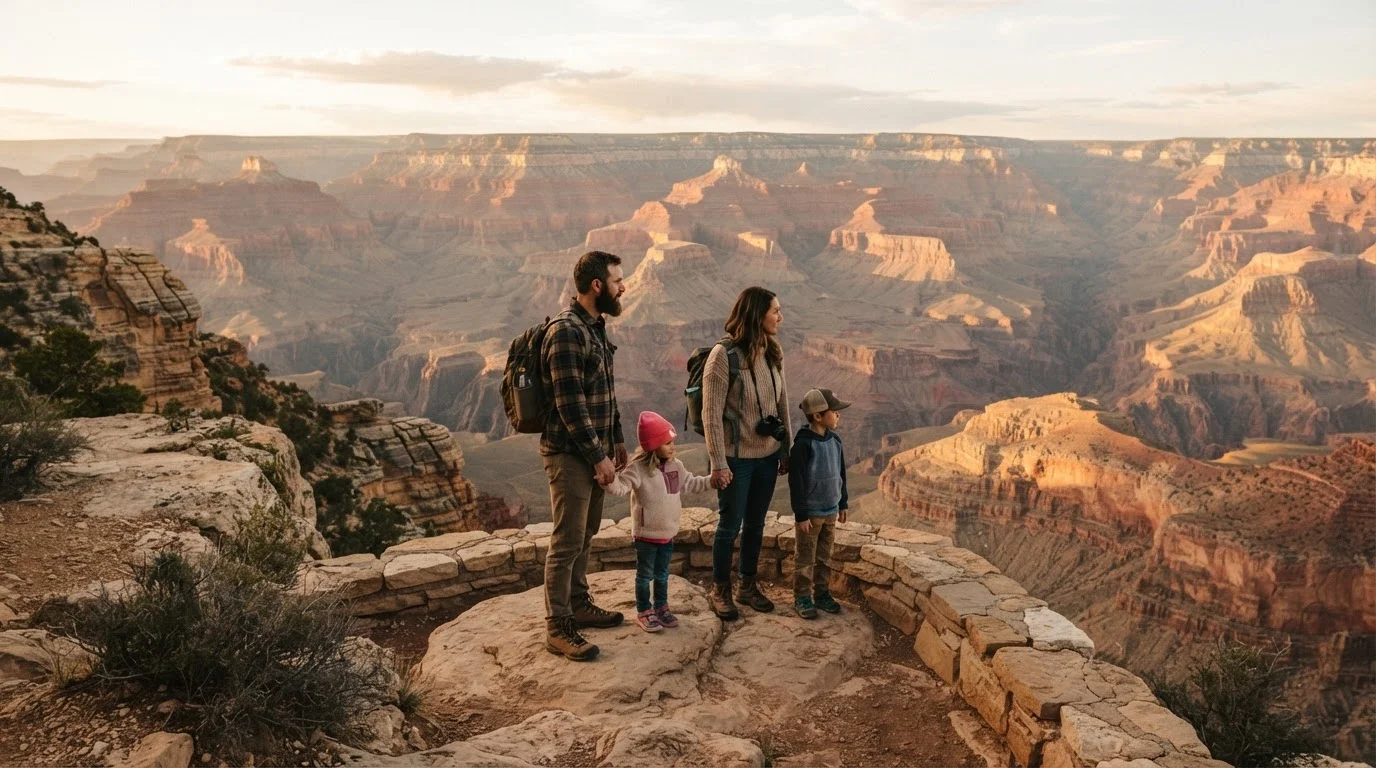
The first question is whether the environment is physically safe for children at the ages you are traveling with. That means traffic separation from pedestrian zones, fenced or supervised water access at beaches and rivers, non-technical terrain for younger kids, and reasonable proximity to medical facilities. A scenic small town with a beautiful waterfront but no guardrails, no emergency clinic within 40 minutes, and a main street that doubles as a state highway is not well suited to a family with a four-year-old regardless of how appealing it looks in photos.
Stroller and wheelchair accessibility also matters for families with toddlers or children with mobility needs. Cobblestone historic districts and steep unpaved trails can be genuinely difficult to navigate, and that friction accumulates across a full day. Check the destination's official tourism pages or national park visitor guides for trail surface descriptions and accessibility ratings before you go.
62%
Families citing crowds as a top trip dissatisfier
According to a 2023 family travel survey by the U.S. Travel Association, overcrowding ranked among the most frequently cited factors that reduced trip satisfaction for families traveling with children under 12.
Under 30 min
Recommended max distance to medical care for family trips
The American Academy of Pediatrics advises families traveling with young children to identify urgent care or emergency facilities within 30 minutes of their lodging before travel begins.
Age-range fit: the variable most families underestimate
A destination works differently depending on who is in the car. A white-water rafting town is excellent for a 12-year-old and irrelevant for a 2-year-old. A destination built around living history museums may engage a curious 9-year-old and bore a teenager. Before evaluating any destination, write down the actual ages of your children and ask what each one needs from a full travel day.
Younger children, roughly under 6, need enclosed or contained play spaces, frequent bathroom access, early dining options, and short activity windows with downtime built in. Children between 7 and 12 can sustain longer activity blocks and benefit from some structured learning or physical challenge. Teenagers often need the option of some autonomy within a destination, whether that means a trail they can hike without parents or a separate area to explore.
Destinations that genuinely serve mixed-age groups have parallel activity tracks, not one activity that everyone tolerates at varying degrees of boredom. Coastal and inland destinations each have different strengths depending on the age makeup of your family.
Pacing, rest, and the hidden cost of over-scheduled days
Destination quality for families is partly a function of how the place is laid out physically. A compact destination where lodging, food, and attractions are within easy walking distance allows families to return to base mid-afternoon for a rest, which is how you prevent the meltdowns that derail late-afternoon plans. A spread-out destination that requires driving between every stop adds time, decisions, and car transitions that exhaust everyone.
Look for shaded rest areas, benches near main attractions, and short loops that allow families to cut a walk short without backtracking miles. On road trip legs, the same logic applies: build in stops that are genuinely usable, not just gas station exits.
Shoulder-season timing improves pacing significantly. Summer crowds at popular destinations mean longer waits at every point in the day, which compounds across a trip with children who have limited patience for queues. Spring and early fall typically offer the same infrastructure with fewer people.
Practical signals to look for when researching
When evaluating a destination, look for these specific signals rather than marketing language. First, check whether the destination has a dedicated family or visitor information page that lists accessible trails, family restroom locations, and age or height restrictions on activities. The presence or absence of this information tells you how much the destination has actually thought about families versus simply claiming to welcome them.
Second, read recent visitor reviews from families with children in the same age range as yours. Filter specifically for mentions of stroller access, food wait times, shade, and bathroom availability. Third, look at the lodging options and confirm that the distance from where you will sleep to where you will spend your days is genuinely walkable or involves minimal driving.
For road trips, the quality of the route itself matters as much as the destination. The complete US family road trip guide covers how to evaluate the full journey, not just the endpoint. And once you find a destination worth visiting, the package evaluation guide can help you read any bundled offer carefully before committing.