
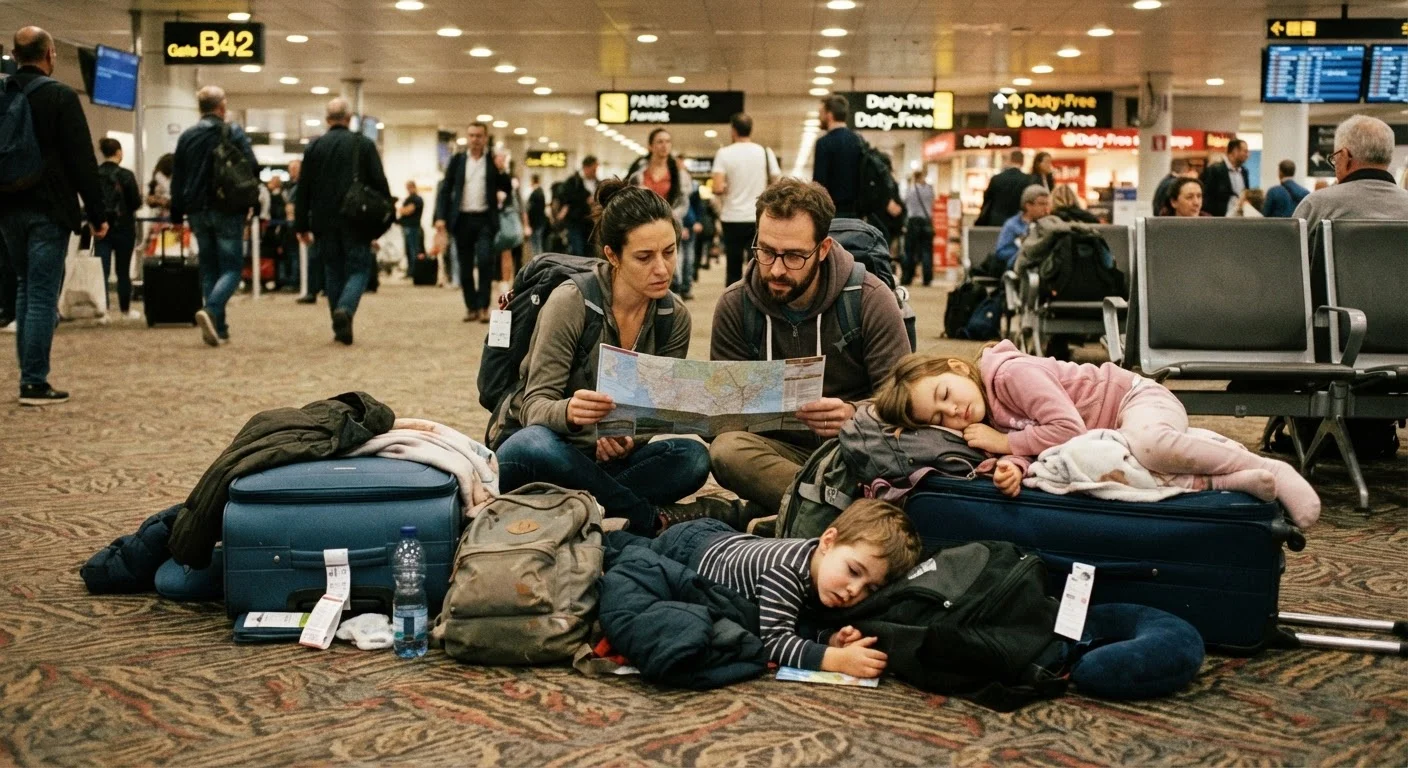
What actually goes wrong
Most family trips do not fall apart because of bad luck. They fall apart because the planning process borrows assumptions from adult travel: full days, packed schedules, and flexibility around meals and sleep. Those assumptions fail the moment a toddler skips a nap or a ten-year-old hits hour three of a museum.
The mistakes below appear repeatedly across family travel forums, pediatric sleep research on travel disruption, and the collective experience of parents who have done this more than once. None of them are exotic. Each one is fixable before you leave the house.
Scheduling too many activities per day, treating every hour as bookable time.
Why it happens: Parents want to justify the cost of the trip and fear missing something memorable. Online itineraries from travel blogs make a ten-activity day look achievable.
Ignoring the daily rhythms of the youngest child when building the schedule.
Why it happens: Parents focus on the destination's offerings and assume kids will adapt. Nap schedules and meal windows get treated as flexible when they rarely are.
Choosing a destination based on adult appeal without checking its practical logistics for families.
Why it happens: Destinations look different on social media than they do at ground level. Distance from the accommodation to main attractions, stroller accessibility, and shade coverage are rarely in the photos.
Skipping a careful read of what a vacation package actually includes.
Why it happens: Families book under time pressure and scan for the headline price. Per-child fees, meal exclusions, and resort charges appear only in the fine print.
Underestimating travel day fatigue and booking a full itinerary for the arrival day.
Why it happens: Families count the arrival day as a full vacation day and try to use it. Airlines and road delays mean arrival is often later and more draining than planned.
Failing to prepare children for what the trip will look like before it starts.
Why it happens: Parents handle all the logistics themselves and present the trip as a surprise or simply as 'we're going on vacation.' Kids with no frame of reference have unpredictable reactions to unfamiliar environments.
How to build a trip the whole family can actually handle
The common thread across every mistake above is a planning process that optimizes for coverage rather than experience. Families that consistently report good trips tend to do fewer things per day, protect sleep aggressively, and verify logistics before they arrive rather than improvising on the ground.
Before any booking goes through, run through the pre-booking checklist that covers passports, age restrictions, and travel insurance. Catching a problem at the planning stage costs nothing. Catching it at the airport costs everything.
2
Maximum planned activities per day for young children
Family travel researchers and pediatric sleep specialists consistently note that children under ten have limited capacity for sequential novel experiences without behavioral deterioration.
68%
Families who say trip stress came from overpacking the schedule
A survey by the U.S. Travel Association found that schedule overload, not cost or weather, was the most frequently cited source of family vacation frustration.
If you are weighing a packaged trip against building your own itinerary, the cost comparison is less obvious than it looks. The all-inclusive versus DIY cost breakdown is worth reading before you commit either way. Similarly, families planning drives should look at what quietly drains energy and patience on long drives before the first gas stop.
A trip that leaves every family member with something they genuinely remember is almost always a shorter, slower, better-prepared trip than the one the original itinerary described.