
How flash sales manufacture urgency
Flash sales work because time pressure short-circuits comparison shopping. When a countdown clock shows 47 minutes remaining, the brain shifts from "is this a good price?" to "will I miss out?" Retailers know this. The urgency is the product.
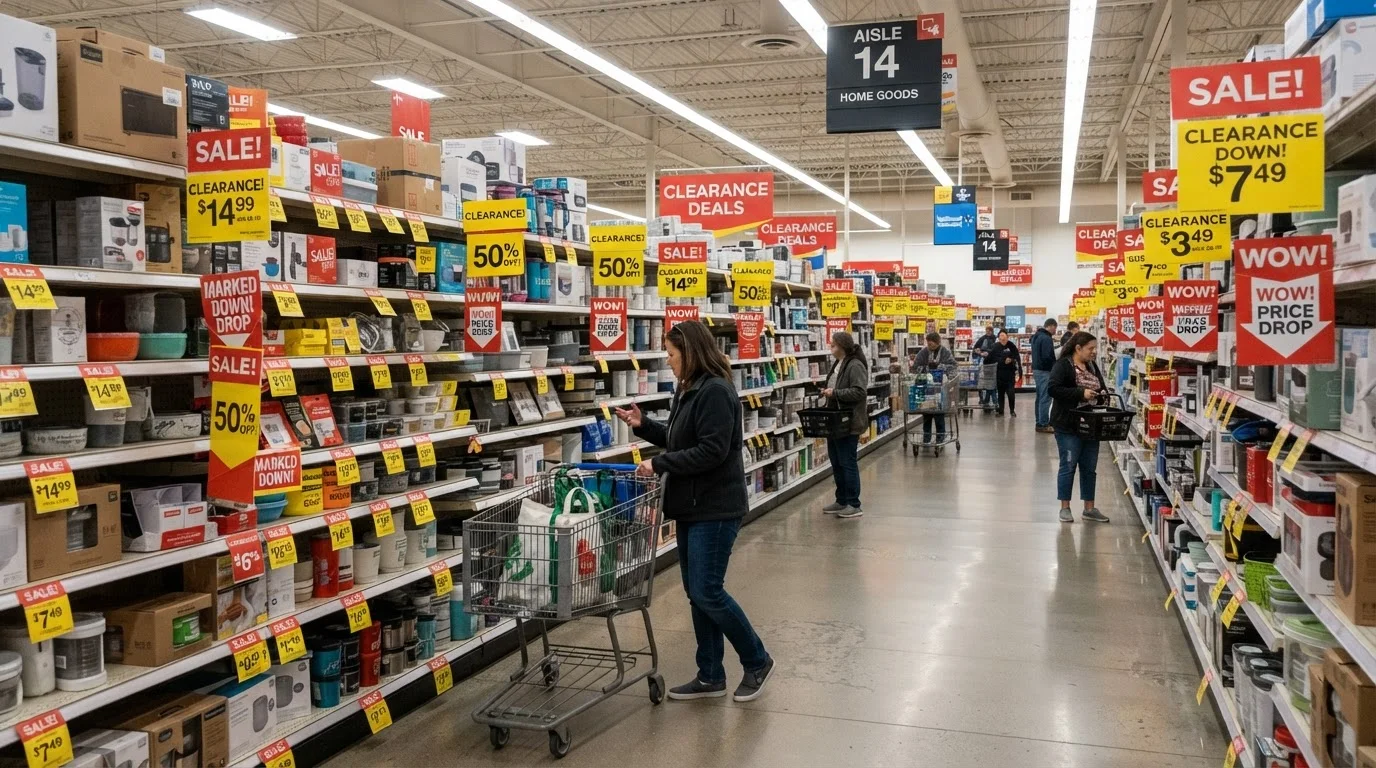
The mechanics are straightforward. A retailer sets a reference price, often described as the "original" or "compare at" price, then shows a steep percentage off. What that reference price actually reflects is rarely explained. In many cases it is a price the item was listed at briefly, sold at another channel, or simply chosen to make the discount look dramatic. The mechanics behind retail discount labels explain how these reference prices are constructed across different sale formats.
Low-stock indicators work the same way. "Only 3 left!" is sometimes accurate. It is also sometimes a default display triggered by warehouse logic unrelated to actual demand. Neither the shopper nor the timer can tell the difference.
Urgency tactics work even on informed shoppers
Awareness of a manipulation tactic does not fully neutralize it. Research in behavioral economics consistently finds that time pressure reduces deliberate decision-making even when people know a deadline is artificial. Building a pause into your process, rather than relying on willpower alone, is a more reliable defense.
Mistakes shoppers make during flash sales
The following errors come up repeatedly when families shop under time pressure. Each one is easy to avoid once you know what to look for.
Accepting the reference price at face value.
Why it happens: Retailers display the "original" price prominently, and shoppers reasonably assume it reflects what others recently paid. It often does not.
Buying something unplanned because the clock is running.
Why it happens: Time limits activate loss aversion. Shoppers fear missing a deal more than they weigh whether they actually need the item.
Skipping a return-policy check during a time-limited sale.
Why it happens: The rush to complete the purchase before the timer expires means shoppers skip steps they would normally take.
Treating a percentage discount as proof of value.
Why it happens: "50% off" reads as an objective fact, but the number only means something if the starting price was fair.
Ignoring shipping costs and minimum order thresholds.
Why it happens: Flash sale promotions highlight the item discount and bury the shipping calculation until checkout.
For a broader look at which discount-hunting beliefs hold up and which do not, the common deal-hunting myths article covers several related patterns.
Practical habits that protect your budget
A short checklist before any flash sale purchase stops most of the damage. First, look up the item's price history. Free browser extensions track historical prices on major retail platforms and show a chart of what the item has actually sold for over the past several months. If the "sale" price is close to the average, the discount is mostly presentation.
Second, set a personal minimum waiting period. Even five minutes of deliberate pause breaks the urgency loop. If the item is still worth buying after that pause, it probably was a reasonable purchase. If the impulse fades, the sale served its purpose and you did not.
Third, calculate unit price rather than relying on the percentage figure. A 40% discount on an oversized bundle can still cost more per unit than the standard size at full price. A pre-purchase savings check walks through exactly this kind of verification before you complete an order.
Finally, consider whether the item was already on your list before the sale appeared. Unplanned purchases triggered by flash sales are rarely the savings they feel like at checkout. The comparison between price tracking and waiting for sales is worth reading if you want a more systematic approach to timing purchases around genuine discounts rather than manufactured ones.
72%
Shoppers who regret impulse purchases
A 2023 Bankrate survey found that roughly 72% of American consumers have made an impulse purchase they later regretted, with online sales events among the most common triggers cited.
3 in 5
Sale prices that match or beat normal price
Price-tracking data reviewed by consumer researchers has found that a significant share of flash sale prices are at or above the item's typical non-sale price at the same or competing retailers.