
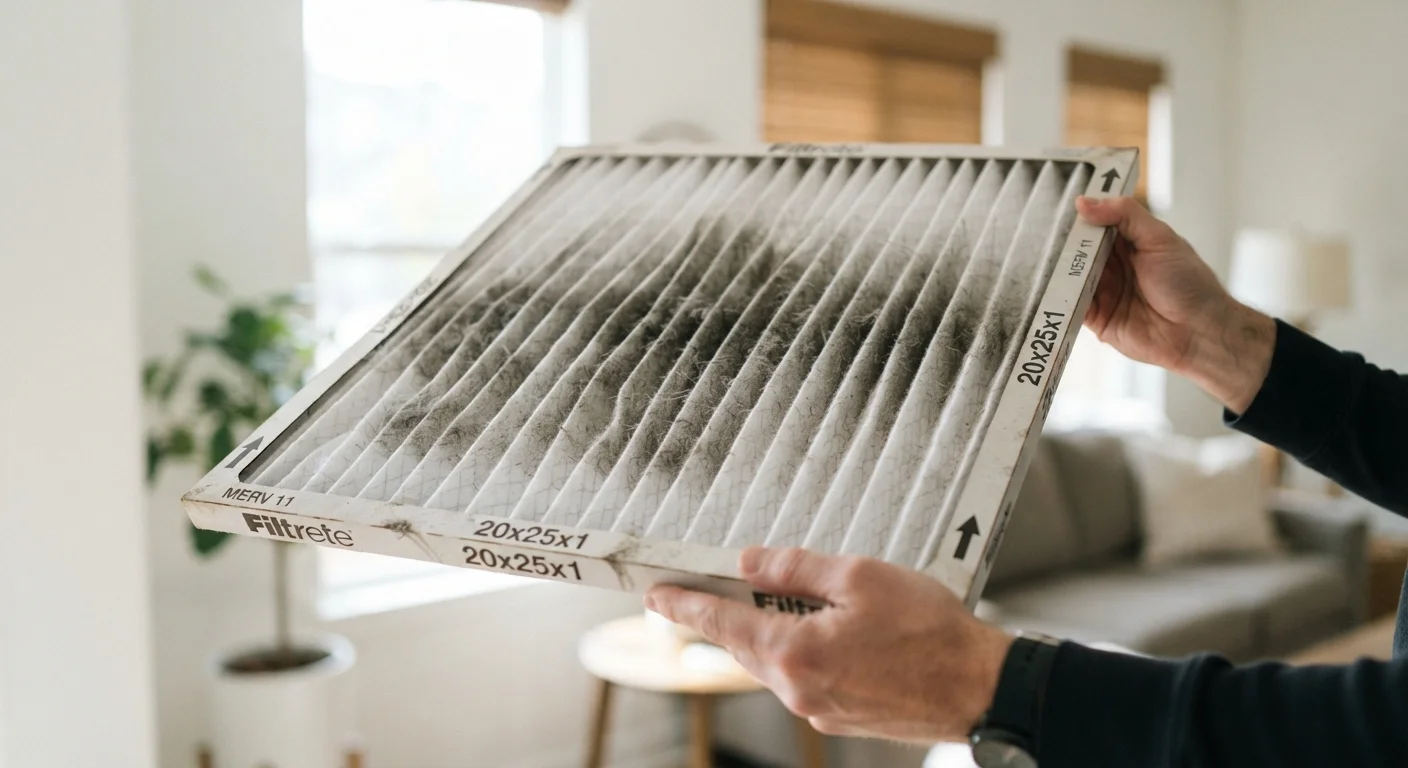
What a filter actually does
Your HVAC system circulates air through your home dozens of times a day. Each pass through the return duct pulls air across the filter, which catches airborne particles before they coat the blower motor, evaporator coil, and ductwork. The filter is not primarily there to clean the air you breathe, though that is a side benefit. Its main function is to protect the mechanical components downstream.
When the filter is clean, air moves freely. When it is clogged, the blower motor strains to pull the same volume through a blocked surface. That strain raises electricity use, generates more heat inside the motor, and accelerates wear. A filter change that costs a few dollars prevents mechanical failures that can cost hundreds.
Indoor air quality is the secondary benefit, and for households with asthma sufferers, young children, or pets, it is not a trivial one. A filter in good condition captures pollen, mold spores, and pet dander that would otherwise recirculate continuously.
Understanding MERV ratings
Every filter carries a MERV rating, which stands for Minimum Efficiency Reporting Value. The scale runs from 1 to 20. Residential systems generally fall between MERV 8 and MERV 13.
- MERV 1 to 4: fiberglass panel filters, catches large debris only
- MERV 8 to 10: standard pleated filters, removes dust, pollen, and mold spores
- MERV 11 to 13: removes finer particles including some pet dander and smoke
- MERV 14 and above: hospital-grade, not suitable for most residential systems without modification
The common mistake is buying the highest rating available without checking whether the system can handle it. A MERV 16 filter can restrict airflow so severely in a typical home system that it causes the same problems as a clogged filter. Check your equipment manual or ask an HVAC technician which range your system was designed to work with.
Match the filter to your system, not your wish list
Before buying a higher-rated filter, check your HVAC unit's manual for the maximum MERV rating it supports. If that information is not available, an HVAC technician can measure static pressure to confirm what your system tolerates. Using a filter with too high a rating causes airflow problems that a lower-rated filter would never create.
How to set a filter schedule that you will actually follow
The reason most households miss filter changes is not laziness: it is that the task has no visible trigger. A calendar reminder and a small stock of filters on a shelf are the two things that fix this consistently.
General guidelines by household type:
- Vacation home or single occupant with no pets: every 6 to 12 months for a 1-inch filter
- Average home, no pets: every 90 days
- One pet: every 60 days
- Multiple pets or a household member with allergies or asthma: every 30 days
- 4-inch or 5-inch media filter: every 6 to 12 months, depending on conditions
Set a recurring calendar event on your phone the day you install a new filter. Write the installation date on the filter frame with a marker so anyone can confirm when it was last changed. These two steps take 30 seconds and remove all guesswork.
Filter replacement fits naturally into a broader seasonal home maintenance routine. See the month-by-month home maintenance calendar for where filter checks fit alongside other recurring tasks throughout the year.
Signs your filter needs changing sooner
Even with a fixed schedule, certain conditions will cause a filter to load up faster than expected. Watch for these signals:
- Visible grey or brown coating on the filter surface when you pull it out
- Reduced airflow from vents, or rooms that seem harder to heat or cool
- The HVAC system running longer cycles than usual to reach the set temperature
- A musty or dusty smell when the system kicks on
- More dust than usual collecting on furniture and surfaces
Any of these is enough reason to swap the filter early, regardless of where you are in the scheduled interval. Seasonal shifts matter too: the weeks when pollen counts are highest or when you run the heat continuously through a cold spell will load a filter faster than mild-weather months.
Staying on top of small home systems is a similar habit to keeping up with vehicle service intervals. If you find the principle useful, the vehicle maintenance schedule guide covers the same logic for cars.
This article is for general informational purposes only. For system-specific recommendations, consult a licensed HVAC technician.